

writer, builder, mostly a lollygagger
Synthesist →
Joined August 2009
- Tweets1.8K
- Following122
- Followers287
- Likes2.4K





Pinned Tweet
free book
writersid.com/the-last-human…
apps
wriceps.com
writersid.com/aq-test
essays
sidsharma.substack.com
writersid.substack.com
podcast
awarenessquotient.substack.c…
1
91
Most people will lose to AI. Not because they aren't smart enough. Because they spent their whole career becoming more machine-like. Free book on what to do instead → writersid.com/the-last-human…

6
I’ve built something for us writers. It’s called Wriceps, a free web app of short writing exercises and word games. No sign-ups; it works on your phone, and you can challenge a friend.
wriceps.com
Try it out.
If you’d like the story of how it got made, it’s here: sidsharma.substack.com/p/raj…
1
164
We mistake life's grammar.
It's not declarative sentences stating facts.
It's all conditional clauses: "if this, then maybe that."
No periods. Just commas, semicolons, and the occasional em dash—pausing between what was and what could be.
The sentence never ends. You just stop reading.
69
The humans who become obsolete in the next two decades will not be replaced by AI. They'll be replaced by other humans who understand what's happening and make a different choice.
30
The Grammar of Life:
• Your childhood is parenthetical (an aside to the main narrative)
• Your youth is all exclamation marks!
• Your middle years are semicolons; connecting what was with what's becoming.
• Old age is an ellipsis...
• Death isn't a period. It's white space before the next paragraph.
47
The entire AI debate is running on the wrong axis. The question everyone is asking: Will AI replace humans? The question nobody is asking: which version of human is worth keeping? Those are not the same conversation.
22
Knowledge is time-bound. Wisdom isn't. The steam engine operator who knew everything about pistons in 1880 had knowledge. Socrates' question, "How should one live?" remains unanswered. One expires. The other keeps.
29
Anxiety is our brain trying to solve tomorrow's problems with yesterday's information. No wonder nothing fits.
1
23
Humanity is simultaneously regressing and evolving, depending on which headline you were reading.
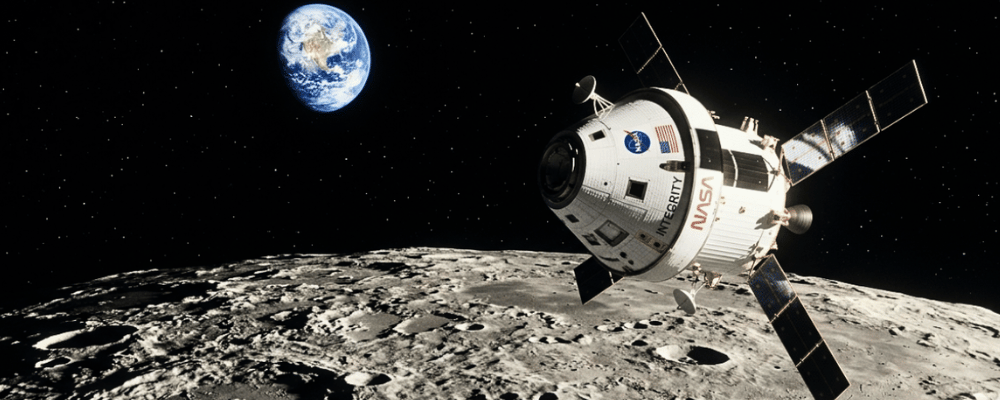
#Artemis #Nasa #USIranWar #MoonMission

Timeline of the Artemis II Mission
In this video, we show the full journey of Artemis II — a 10-day mission that takes humanity back toward the Moon. From liftoff aboard the powerful SLS rocket, to orbiting Earth, performing a lunar flyby, and returning safely home, every step of the mission is mapped out.
123
Grammar of Life:
You're born in passive voice (things happen TO you).
You spend your 20s in the future tense (planning what will be).
Your 30s are in present continuous (doing, becoming, striving).
Wisdom is learning to live in the active voice, present tense: I am. I do. I witness.
39
The hardest part of writing isn't the blank page. It's convincing yourself that your thoughts deserve to exist outside your head.
2
34
Life doesn't care about proper grammar.
• It gives you sentence fragments when you want paragraphs.
• Run-on thoughts when you need clarity.
• Questions without question marks.
• Exclamations that look like periods.
And somehow, despite breaking every rule, the meaning still comes through.
25
The Grammar of Life
Most people live their entire lives waiting for a period that never comes.
Meanwhile, life keeps adding commas - pause, pivot, continue, pause, pivot, continue.
The secret? It was always meant to be a run-on sentence. The coherence comes from the flow, not the stops.
50
We're in the convergence window: 2025-2075.
Three scenarios still open:
• Dystopia: Technology without consciousness. Unconscious acceleration. Collapse.
• Utopia: Perfect transition. Fantasy. Ignores geopolitics and human nature.
• Flourishing: Conscious navigation through inevitable crisis. Imperfect but viable.
The default trajectory is dystopia.
The choice is whether we participate consciously or drift unconsciously.
Your attention, actions, and awareness matter.
The future isn't predetermined. It's participatory.
1
68
Vedic texts described prana (life energy) flowing through nadis (subtle channels) 5,000 years ago. Modern neuroscience maps bioelectric signals through neural pathways.
Buddhist psychology described the observer-observed relationship. Quantum physics confirmed that the observer affects the observed.
"Spiritual traditions" were often scientific investigations using different methodologies.
33