

MD/PhD. Assistant professor, U of Calgary DPLM. Neuropathologist. PI. 🧠❤️, brain tumor research nerd and part-time bioinformagician. she/her
Canada
Joined September 2008
- Tweets2.8K
- Following472
- Followers655
- Likes3.8K


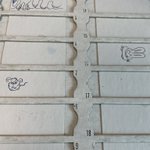


Organoids in space! Cool idea for a model though the accessibility probably wouldn’t be ideal.

This is a very unique study: it analyzes glioblastoma organoids on the International Space Station!
What if we need to go to space to find a cure for cancer lol
"the present study characterizes an advanced GBM organoid model that leverages the unique microgravity environment of space to better recreate the tumor immune microenvironment of advanced disease"
"spaceflight enhances the spatial organization of these key cell states to more closely mimic what is observed in patients."

63
Dr. Ana Nikolic retweeted

Excited to share this paper from @WinstonCheung5 (Ziwei Zhang) and Surya Chhetri in our lab: nature.com/articles/s41467-0…. It shows a cool way that epigenomic liquid biopsy can help us understand human genetics. 🧵

This is an amazing initiative for bioinformatics.

Time for the biggest drop of the week: auto-optimizations of eleven bioinformatics packages, focusing on read alignment. Each auto-optimization includes: a new unit test suite, the optimizations stacked on top, and a list of issues found during the validation.
60
Dr. Ana Nikolic retweeted

🔬📈 We mapped #bioimage analysis use in #microscopy papers. ImageJ+Fiji dominate; others are rising. Papers undercite them and lack detail to reproduce analyses.
By @T_Shakespeare & @Bruno_MSaraiva, with @inesmcunha, @caron_ajacobs & the Jacquemet lab
📄 doi.org/10.64898/2026.10.21.…

ALT First page of the preprint Mapping bioimage-analysis software adoption in microscopy by Tayla Shakespeare, Bruno M. Saraiva, Inês Cunha, Caron Jacobs, Guillaume Jacquemet and Ricardo Henriques, showing the title, authors and abstract.
Dr. Ana Nikolic retweeted

MACS 3.1.0 is released with a jaw-dropping 40-60x improvement in speed, thanks to @jmschreiber91's auto-optimize work! AI achieved in one weekend what I've been hoping for years! Now peak calling that once took minutes can be completed in seconds! github.com/macs3-project/MAC… 1/2

Dr. Ana Nikolic retweeted

Check out our Opinion paper in @Nature, where we write about:
i) The decline in physician-scientist numbers worldwide
ii) Why this might be, based on our own data and others’
iii) Steps to reverse the decline
nature.com/articles/d41586-0…
@rezamotallebov @CharlesSwanton @bealelab

Dr. Ana Nikolic retweeted

It used to cost $ 5-10k to process one spatial biology slide 5 years ago, and it's still costs $ 5-10k today. Spatial biology hasn't seen the same Moore's law-like drop in costs that NGS had (see image). Many of the diseases with the greatest burden on health are multifactorial, involving complex interactions between cell types inside 3D tissues, and spatial biology is critical for understanding diseases & designing drugs to solve these multifactorial challenges.
Data per spatial biology slide has definitely increased, but more data per slide doesn't replace the need to measure biological heterogeneity across tissues, patients and conditions. We still need to process a huge number of independent samples and slides. Unlike NGS, where the growth in data density per flow cell enabled barcoding and profiling of greater numbers of samples, spatial is limited by the number of tissue sections you can plate per slide and not easily multiplexed in the same way. This constraint might explain why spatial biology adoption has been more concentrated on applications with high-value samples (e.g. patient samples from clinical trials), rather than early drug discovery, where hundreds or thousands of slides might be needed (e.g. in high-throughput screening).
Spatial data is obviously extremely valuable and fills a key gap missed by other measurement technologies, but this bottleneck is a key blocker slowing the discovery of better drugs against complex diseases. Understanding complex disease requires systematically measuring how tissue biology varies across samples, disease states, and lots of perturbations.
This is also one of the reasons that we ended up building our own in-house custom hardware & automation at Waypoint, to make it possible to profile hundreds (and later thousands!) of spatial biology slides per month. The goal is to enable very large-scale spatial perturbational screens & new types of AI models that learn how tissues respond to these interventions.

Dr. Ana Nikolic retweeted

DINOv2 has never seen a caption, and Qwen3 has never seen an image. We still aligned their embedding spaces without a single image-caption pair.
It even works when the images and the captions come from different datasets.
Project page: dominik-schnaus.github.io/un…
⬇️
Dr. Ana Nikolic retweeted

Have you ever looked at a gene in IGV or a genome browser and wondered “What are all those (ATAC-seq/H3K27ac/CTCF ChIP-seq/…) peaks doing?” 🤔 I’m thrilled to share that we developed a new technology called Swap-seq to answer that exact question.
biorxiv.org/content/10.64898…

Dr. Ana Nikolic retweeted

After a long wait, tangermeme is out @naturemethods!
tangermeme implements the primitives of genomic sequence-to-function modeling with efficient, tested, and composable functions.
I use it every day in my work, and I hope you find it useful too.
nature.com/articles/s41592-0…

Dr. Ana Nikolic retweeted

None of this year's science Nobel Prizes have gone to women.
The number of these prizes to go to women remains at 27 out of more than 600.
See how many you can name in our quiz: nature.com/immersive/d41586-…
Dr. Ana Nikolic retweeted

BREAKING NEWS
The 2026 #NobelPrize in Physiology or Medicine has been awarded to Karl Deisseroth, Peter Hegemann and Georg Nagel “for their discoveries concerning light-gated ion channels and optogenetics.”

Dr. Ana Nikolic retweeted

So here's a direct test of whether AI can have new ideas. There are some that claim yes, because ML models already contain all the info a human brain does.
Today in Cell we published a new invention from my lab, thread below. We can simply ask, can AI think of the same thing?


Dr. Ana Nikolic retweeted

New issue of @CellCellPress out today on AI and biology, featuring several papers from @arcinstitute: State cell perturbation model, scBaseCount AI agent curated single-cell dataset, Virtual Cell Challenge 2026 commentary, and Tahoe-100M from our friends at Tahoe Bio and featured in Arc Virtual Cell Atlas. Congrats to the teams. Lots more exciting AI/bio work cooking at Arc Institute! cell.com/cell/current


Dr. Ana Nikolic retweeted

Excited to announce a new preprint that investigates the ability of sequence-to-function models (S2F; e.g., AlphaGenome) to identify causal expression modifying variants. (1\n)
biorxiv.org/content/10.64898…

Dr. Ana Nikolic retweeted

A treasure trove of health and biomedical data, the @uk_biobank, had 3 breaches of its data linked to Chinese institutions, selling participant data online. These were taken down and there's hope this remarkable resource will re-open for researchers soon @Nature, by @DianaMKwon nature.com/articles/d41586-0…

Dr. Ana Nikolic retweeted

🔥Does academia stifle creativity? This new perspective argues that academia is currently structured to select against creativity, intellectual risk-taking and bold ideas. Young scientists – who may be best positioned for new ideas – are particularly incentivized to play it safe.

Dr. Ana Nikolic retweeted

Very excited to see Spatial-ATAC-Hi-C published in @NatureMethods! Thanks to @yuefeng_1 for leading this effort. It jointly maps 3D genome organization and chromatin accessibility in tissues, revealing spatial epigenetic heterogeneity, CNV, and structural variations in tumor! 🥳

Excited to share Spatial-ATAC-Hi-C @naturemethods, spatial profiling of 3D genome organization + chromatin accessibility in tissue. Excitingly, it detects CNVs and SVs in tumors and reveals spatial heterogeneity.
Great collaboration with @RongFan8.
nature.com/articles/s41592-0…

Dr. Ana Nikolic retweeted

New preprint from a wonderful collaboration with
@AlexanderStark8 led by Franzisake Lorbeer and
@ReynaERosales. We developed BARe-seq to ask what in the DNA controls transcriptional bursting - key findings for anyone working on transcription or cis-regulatory elements. See 🧵.
