
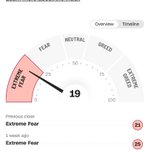



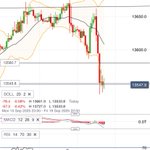


Easy to get distracted by news and narratives.
The US's ultimate aim is to increase geopolitical might/leverage (i.e. create pain for other economies - especially China). Meaning theyre happy to keep the straight closed for an extended period. All makes sense through this lens
Iran is old news now. It’s in the past, the market is priced on the future. The future is rosy. All time highs rosey. If you aren’t all in you’re late to the party, you missed the dip.
👆feels like we are approaching this sentiment. Might be a good time to take some profits.



Interesting take

This is my take on $SPX:
Everybody KNOWS the market will explode higher once the Iran conflict is over.
Everyone KNOWS it is the MO of the current administration to create urgency/volatility and then dial it back through negotiation which generally lifts $SPX off its lows to strong new highs.
Everyone KNOWS that earnings will be strong and stocks should react positively.
Everyone KNOWS that the seasonality between now and mid-July is strongly bullish.
I agree with all of these points and also believe $SPX SHOULD explode higher.
That being the case, why isn't the market ALREADY exploding higher in anticipation of what everyone KNOWS is coming.
$SPX has been below the 200-day SMA for 13 straight days. In the past 20 years, we've never been below it for this long without eventually staying below for an average of 100 days and falling an average of 15% below it.

Scary stuff

JUST IN: You do not fire your Army Chief of Staff in the middle of a war for no reason. You fire him because of what comes next.
Pete Hegseth called General Randy George on April 2 and told him to retire immediately. The Pentagon confirmed it within hours. No reason was given. Not publicly. Not privately. A senior Army official told Fox News that Hegseth offered George nothing: no misconduct, no operational failure, no policy disagreement on the record. Just a phone call and a career ending in the middle of the most significant American combat operation in two decades.
George is the 24th general or admiral Hegseth has removed. But he is not the 24th. He is the one that matters. The Army Chief of Staff. The man whose signature sits between a president’s intent and the order that sends soldiers across a beach or into a tunnel complex. The 82nd Airborne is deploying right now. Marines from the 31st MEU are staged on the USS Tripoli. JSOC operators are at forward bases in Israel, Jordan, Saudi Arabia, and the UAE. Kharg Island, 90 percent of Iranian oil exports, sits 16 kilometres off a coast that someone will have to decide whether to approach. And the four-star general whose job it was to advise whether that approach should happen was removed 48 hours after Trump told the nation the war would continue for two to three more weeks.
The replacement is Vice Chief General Christopher LaNeve. He was Hegseth’s senior military aide before this appointment. The man who carried the Secretary’s briefcase now commands the Army the Secretary is reshaping. The chain of command did not break. It shortened. The distance between a television studio and a combat order just collapsed to zero intermediaries who were not personally selected by the man giving the order.
No reason was given. That is the tell. When someone is removed without explanation during a crisis, the explanation is the crisis itself. George either objected to something or was about to. The ground option. The power plant strikes. The Kharg raid. The escalation that turned a highway bridge in Karaj into rubble on the same day he was told to leave. Something in the next two weeks requires a chief who will not push back, and the Pentagon solved that problem by installing one trained as Hegseth’s aide.
A former Fox News weekend host just fired a four-star general with combat tours in Iraq and Afghanistan, replaced him with his own former assistant, and did it during a live war in which the next decision could put American soldiers on Iranian soil for the first time in history. No hearing was held. No misconduct cited. The Army woke up on April 3 with a new chief it did not choose, in a war it did not start, preparing for a phase the previous chief apparently could not be trusted to execute.
The question is not why George was fired. Every general in the building knows why. The question is what order is coming in the next fourteen days that required removing the one man in the chain of command who might have said no.
The war has no perimeter. The chain of command has no objectors. And the next phase has no one left to stop it.
open.substack.com/pub/shanak…

Personally surprised by price action today. Maybe someone knows something I don’t. I thought based on war now likely to be longer, and oil higher we’d have seen sell off into weekend.
Went short based on orange man’s speech seeming to now confirm this will go on a long time. US won’t admit defeat and so will get pulled in further. They very much want to control the straight.
Sold April SP500 calls. Also shorted SPY and QQQ directly.
When Americans read this, which to an unbiased bystander (supporting neither side) feels very close to reality, what do they think?
Do they just stop reading as they realise it is counter to their existing narrative and don’t want to think about it?

IRAN'S FULL "OPEN LETTER" TO THE AMERICAN PEOPLE:
"To the people of the United States of America, and to all those who, amid a flood of distortions and manufactured narratives, continue to seek the truth and aspire to a better life:
Iran—by this very name, character, and identity—is one of the oldest continuous civilizations in human history. Despite its historical and geographical advantages at various times, Iran has never, in its modern history, chosen the path of aggression, expansion, colonialism, or domination. Even after enduring occupation, invasion, and sustained pressure from global powers—and despite possessing military superiority over many of its neighbors—Iran has never initiated a war. Yet it has resolutely and bravely repelled those who have attacked it.
The Iranian people harbor no enmity toward other nations, including the people of America, Europe, or neighboring countries. Even in the face of repeated foreign interventions and pressures throughout their proud history, Iranians have consistently drawn a clear distinction between governments and the peoples they govern. This is a deeply rooted principle in Iranian culture and collective consciousness—not a temporary political stance.
For this reason, portraying Iran as a threat is neither consistent with historical reality nor with present-day observable facts. Such a perception is the product of political and economic whims of the powerful— the need to manufacture an enemy in order to justify pressure, maintain military dominance, sustain the arms industry, and control strategic markets. In such an environment, if a threat does not exist, it is invented.
Within this same framework, the United States has concentrated the largest number of its forces, bases, and military capabilities around Iran—a country that, at least since the founding of the United States, has never initiated a war. Recent American aggressions launched from these very bases have demonstrated how threatening such a military presence truly is. Naturally, no country confronted with such conditions would forgo strengthening its defensive capabilities. What Iran has done—and continues to do—is a measured response grounded in legitimate self-defense, and by no means an initiation of war or aggression.
Relations between Iran and the United States were not originally hostile, and early interactions between the Iranian and American people were not marred with hostility or tension. The turning point, however, was the 1953 coup d’état—an illegal American intervention aimed at preventing the nationalization of Iran’s own resources. That coup disrupted Iran’s democratic process, reinstated dictatorship, and sowed deep distrust among Iranians toward U.S. policies. This distrust deepened further with America’s support for the Shah’s regime, its backing of Saddam Hussein during the imposed war of the 1980s, the imposition of the longest and most comprehensive sanctions in modern history, and ultimately, unprovoked military aggression—twice, in the midst of negotiations—against Iran.
Yet all these pressures have failed to weaken Iran. On the contrary, the country has grown stronger in many areas: literacy rates have tripled—from roughly 30% before the Islamic Revolution to over 90% today; higher education has expanded dramatically; significant advances have been achieved in modern technology; healthcare services have improved; and infrastructure has developed at a pace and scale incomparable to the past. These are measurable, observable realities that stand independent of fabricated narratives.
At the same time, the destructive and inhumane impact of sanctions, war, and aggression on the lives of the resilient Iranian people must not be underestimated. The continuation of military aggression and recent bombings profoundly affect people’s lives, attitudes, and perspectives. This reflects a fundamental human truth: when war inflicts irreparable harm on lives, homes, cities, and futures, people will not remain indifferent toward those responsible.
This raises a fundamental question: Exactly which of the American people’s interests are truly being served by this war? Was there any objective threat from Iran to justify such behavior? Does the massacre of innocent children, the destruction of cancer-treatment pharmaceutical facilities, or boasting about bombing a country “back to the stone ages” serve any purpose other than further damaging the United States’ global standing?
Iran pursued negotiations, reached an agreement, and fulfilled all its commitments. The decision to withdraw from that agreement, escalate toward confrontation, and launch two acts of aggression in the midst of negotiations were destructive choices made by the U.S. government—choices that served the delusions of a foreign aggressor.
Attacking Iran’s vital infrastructure—including energy and industrial facilities—directly targets the Iranian people. Beyond constituting a war crime, such actions carry consequences that extend far beyond Iran’s borders. They generate instability, increase human and economic costs, and perpetuate cycles of tension, planting seeds of resentment that will endure for years. This is not a demonstration of strength; it is a sign of strategic bewilderment and an inability to achieve a sustainable solution.
Is it not also the case that America has entered this aggression as a proxy for Israel, influenced and manipulated by that regime? Is it not true that Israel, by manufacturing an Iranian threat, seeks to divert global attention away from its crimes toward the Palestinians? Is it not evident that Israel now aims to fight Iran to the last American soldier and the last American taxpayer dollar—shifting the burden of its delusions onto Iran, the region, and the United States itself in pursuit of illegitimate interests?
Is “America First” truly among the priorities of the U.S. government today?
I invite you to look beyond the machinery of misinformation—an integral part of this aggression—and instead speak with those who have visited Iran. Observe the many accomplished Iranian immigrants—educated in Iran—who now teach and conduct research at the world’s most prestigious universities, or contribute to the most advanced technology firms in the West. Do these realities align with the distortions you are being told about Iran and its people?
Today, the world stands at crossroads. Continuing along the path of confrontation is more costly and futile than ever before. The choice between confrontation and engagement is both real and consequential; its outcome will shape the future for generations to come. Throughout its millennia of proud history, Iran has outlasted many aggressors. All that remains of them are tarnished names in history, while Iran endures—resilient, dignified, and proud."
The narrative aligns too. We have promise of a pause, creating short term optimism. This will almost certainly disappoint to some degree - e.g. fall through, take longer than expected, be a ploy in itself, or shift the focus to a lot of damage having still been done.




... retweeted

Why cant the greatest military in the history of the world, who are the very reason why the strait was closed, just reopen it ?

Keeping markets higher than one would expect


Current situation:
Markets down 5-10%.
People torn between not wanting to miss out on a fast recovery and not wanting to lose the gains made in the last 12 months.
Assumption is that if Iran war ends we quickly snap back to uptrend backed by loose monetary policy and AI…
At a discount also seems sensible - but we careful not to forget earnings can drop and suddenly forward P/Es etc start not to look so pretty.
Higher-than-wanted inflation does still fear near on inevitable. And looser-than-needed policy also. So buying winners in an…