

M&A advisor who relishes in the dynamics of sale of private enterprises. BBB Director. Love all that BC has to offer. Any opinions expressed are personal.
Squamish, BC
Joined May 2010
- Tweets9.9K
- Following2.1K
- Followers1.3K
- Likes37.9K





#PutinIsaWarCriminal
Remember that @cduhaime


4
If obtuse vatniks are only listening to 🇷🇺 sources, are they paying attention to the frail state of the 🇷🇺 economy as due to fascist imperialist actions by #PutinIsaWarCriminal
@georgegalloway
@BowesChay
@jacksonhinkle
@ethanlevins2
@agdugin
@cduhaime
@Paul_Danner_

The Russian Duma is warning !:
"We've told Putin ten times, the economy is bound to collapse...
If you don't take immediate action...we'll face what happened in 1917."
.......
..perhaps it’s time for Putin to stop pretending and finally sit down at the negotiating table, so?🤷♀️
12
Arthur Klein retweeted

Puhukoot höperö Trump lausunnoissaan mitä hyvänsä, tämä hirviö, murhaaja, rikollinen kuuluu tuomittavaksi Haagiin. #PutinWarCriminal #TrumpIsARussianAsset #venäjä #RussiaIsATerroristState


News appropriate for
#PutinIsaWarCriminal &
#RussiaIsATerroristState
🇷🇺 is a failing country due to a failing fascist leader that belongs behind bars
@georgegalloway
@BowesChay
@jacksonhinkle
@ethanlevins2
@agdugin
@cduhaime
@Paul_Danner_

🇷🇺🇨🇳🇺🇸LA BOURSE RUSSE PLONGE APRÈS LA RENCONTRE DE POUTINE AVEC TRUMP ET XI JINPING
⚠️UNE HUMILIATION DE PLUS POUR LE KREMLIN !
Poutine espérait un miracle, les marchés lui présentent la facture
Ce jeudi 19 novembre 2026, la Bourse de Moscou a brutalement chuté après la rencontre entre Vladimir Poutine, Donald Trump et Xi Jinping à Shenzhen, en Chine
Les investisseurs russes espéraient beaucoup de ce sommet : un allègement des sanctions occidentales, un gel de la guerre en Ukraine ou une avancée diplomatique capable de redonner de l'oxygène à l'économie russe.
⚠️Mais le miracle tant attendu n'est jamais arrivé !
À peine les négociations terminées, l'indice de la Bourse de Moscou est passé sous les 2 450 points, atteignant 2 442,23 points, avec une baisse momentanée d'environ 1,4 %. Un sérieux retour à la réalité pour les marchés russes.
🔸Beaucoup de mise en scène, aucun cadeau pour le Kremlin
Poutine espérait probablement transformer cette rencontre avec Trump et Xi Jinping en victoire diplomatique.
Mais derrière les sourires et les poignées de main, aucun accord majeur sur les sanctions ou la guerre en Ukraine n'a été annoncé.
⚠️Les investisseurs ont compris le message : la Russie reste prisonnière des conséquences de la guerre déclenchée par son propre dirigeant.
🔸Même les actions de géants russes comme Gazprom, Sberbank et VTB ont été touchées par cette vague de ventes.
🔸la guerre de poutine continue de coûter cher à la Russie
Voilà la réalité que la propagande du Kremlin tente désespérément de masquer.
Poutine peut multiplier les discours triomphants, se faire photographier aux côtés des dirigeants les plus puissants et prétendre que les sanctions occidentales sont inefficaces.
⚠️Les marchés, eux, ne se nourrissent pas de propagande.
Cette chute ne signifie pas que l'économie russe s'est effondrée en une journée, mais elle révèle à quel point les investisseurs attendent une issue à l'impasse créée par le Kremlin.
Pendant que Poutine rêve de grandeur impériale, sa guerre contre l'Ukraine continue de fragiliser l'économie de son propre pays.
Et cette fois, ce ne sont pas les Ukrainiens qui le disent : c'est la Bourse de Moscou qui lui envoie la facture.
Poutine voulait impressionner le monde. Il repart avec une claque financière et toujours aucune victoire à présenter. 🇺🇦
dialog.ua/business/rossiyski…
finam.ru/publications/item/i…


13
Arthur Klein retweeted

Good to see @SkyNews following Putin's press conference by debunking his lies:
"He claimed that Ukraine started the war. That is not true. Russia invaded Ukraine... A lot of spurious, highly debatable, highly incorrect claims... reversioning history".
Well done, @GarethBarlow.
#PutinIsaWarCriminal
And a perpetual liar
#RussiaIsATerroristState


Putin: Russia's response to the Crimean Bridge attacks will be far more painful!
Speaking at his press conference in Shenzhen, Putin said the bridge is a purely civilian facility, and that on his direct orders it hasn't been used to move military equipment, ammunition or even fuel for a long time.
He said that after Kiev started hitting Russian tankers in the Black Sea, Russia responded in kind, and now "from all sides" there are calls for a ceasefire at sea or a halt to energy strikes. Putin had discussed this with the Security Council, but said that after the strikes on the bridge, "we will not negotiate."
He added that the bridge will be restored, but "the question is the response. And there will be one."
Looks like bridges across Ukraine may soon start collapsing.
10
Arthur Klein retweeted

The EU did no such thing. Bowes is paid by his masters in the Kremlin. He serves, and lies on behalf of, a depraved regime that invades neighbouring states, assassinates journalists, locks up dissidents and deploys nerve agent on British soil. It doubtless rewards him handsomely.


Arthur Klein retweeted

❗️Reporter: Putin said sanctions are a thing of the past.
Carney (Canada): let Putin ask his financial institutions, oligarch friends and hockey players — the sanctions are very real, biting and absolutely necessary because of his illegal and unjustified war.
Arthur Klein retweeted

Wat een grapjurk is die Poetin toch. Na 26 jaar dictator spelen over Rusland heeft zijn land een BBP pro capita kleiner dan dat van Bulgarije, de armste EU-lidstaat. En dat met quasi onbeperkte bodemrijkdommen, wat de EU niet heeft. Toch is de Europese economie liefst 8 (!) keer groter dan de Russische. En ligt de economische groei in de EU dit jaar dubbel zo hoog dan in Rusland. Zonder Poetins agressieve imperialisme en FSB-maffia-staat had Rusland makkelijk vijf keer welvarender kunnen zijn. Easy.

Putin:
The European Union is losing its industrial potential and its position in global competition.
The problems of budget deficits are becoming increasingly acute, debt burdens are growing, and so is inflation.
All of this places a heavy burden on European businesses and citizens, whose standard of living is steadily declining in a way that is humiliating for the eurozone.
Arthur Klein retweeted

🇺🇦🇷🇺 THE KERCH BRIDGE CANNOT GIVE RUSSIA WHAT INTERNATIONAL LAW REFUSES TO RECOGNISE.
Sergei Lavrov's description of the Crimean Bridge as a symbol of Russian sovereignty overlooks a rather important detail: the international legal status of Crimea was addressed long before the bridge became operational.
On March 27, 2014, the United Nations General Assembly adopted Resolution 68/262, reaffirming Ukraine's sovereignty and territorial integrity within its internationally recognised borders.
The vote was 100 countries in favour, 11 against and 58 abstentions.
The resolution also explicitly stated that the referendum organised in Crimea on March 16, 2014, had no validity and could not provide a legal basis for changing the peninsula's status.
That decision matters because Russia's subsequent infrastructure projects did not alter the international legal position.
The Kerch Bridge opened in 2018, four years after Russia annexed Crimea. It connected the peninsula directly to mainland Russia through a major road and railway crossing, reducing Moscow's dependence on alternative transport connections.
But infrastructure and sovereignty are two entirely different things.
The bridge has also become a military logistical asset. Its road and railway connections have supported the movement of personnel, equipment and supplies into occupied Crimea, making it strategically important to Russia's wider military presence in southern Ukraine.
That creates an interesting contradiction in Moscow's position.
Russia presents the bridge as evidence of its sovereignty, yet its military significance comes precisely from its role in sustaining control over territory internationally recognised as Ukrainian.
And there is a historical dimension worth remembering: the General Assembly's 2014 resolution called on all states not to recognise changes to Crimea's status resulting from the referendum.
A physical connection can strengthen administrative control, facilitate military logistics and integrate occupied territory into another country's transport network.
It cannot establish a legitimate territorial title.
Lavrov can describe the bridge however he wishes. Its symbolism does not change the international legal framework.
Russia built a bridge to Crimea. It did not acquire sovereignty over Crimea by building it. 🇺🇦

Arthur Klein retweeted
More vatnik garbage…
Meanwhile … more & more 🇷🇺 plebes will get ground up because #PutinIsaWarCriminal is a fascist imperialistic dictator who will destroy his own country just to satisfy his perverted ideologies

Arthur Klein retweeted
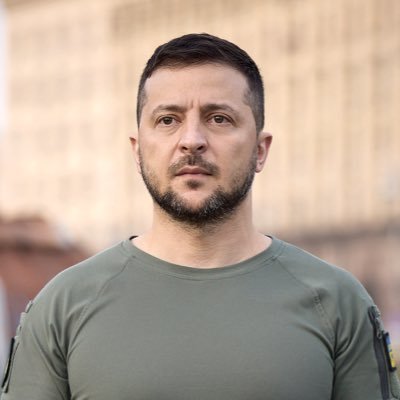
Grateful to the Security Service of Ukraine, all units of Ukraine’s Defense Forces involved, Ukraine’s Minister of Defense, the Commander-in-Chief of the Armed Forces of Ukraine and the General Staff, and all our weapons manufacturers for an unprecedented operation in response to Russian strikes on our infrastructure.
Today, everyone can see the consequences for the main military crossing from Russian territory into our Ukrainian Crimea. This is the result of the seventh stage of an operation carried out over several weeks, developed and coordinated by the Security Service of Ukraine together with the General Staff of the Armed Forces of Ukraine. Our warriors gradually destroyed air defense systems, radars, electronic warfare equipment, and other designated targets on the way to the final objective. For this, they used “Dovbush,” “Vendetta,” “Da Vinci,” “Sichen,” “Mich-2000,” “Ruta,” “Palianytsia,” “An-197,” “FP-1,” “FP-5 Flamingo,” and “R-360 Neptune.”
Today, at the key stage, the “Palianytsia” drones performed exceptionally well, striking the road section of the bridge, while “Neptune” missiles, “Ruta” drones, and FP-5 drones struck the railway section. Using “Flamingo,” our warriors carried out a precision-guided strike – and the communications uplink worked flawlessly until the very last seconds.
We have repeatedly offered Russia steps toward de-escalation – and every proposal has been met with loud rejection. Russia strikes our infrastructure every day, including bridges in Zaporizhzhia, Dnipro, Kyiv, and the Odesa region. We are restoring our infrastructure. But we are also reminding Russia that war will always return to where it began. Ukraine’s defensive capabilities are strong and will remain so, and we will never leave terror against our cities and people unanswered.
I thank the true warriors of the Security Service of Ukraine, all our Defense Forces, our intelligence agencies, and EVERY manufacturer of weapons effectively used to defend Ukraine, Ukrainians, and our national interests. Glory to Ukraine!
Arthur Klein retweeted

No one’s weekend plans got more disrupted than @JonStewart's
Arthur Klein retweeted

‼️ La Russie de Poutine coche toutes les cases de l’État paria ultime :🔥⚡️⚡️⚡️
- État bandit et colonialiste qui pille, annexe et massacre sans retenue.
- Criminel de masse, responsable de génocide culturel et de crimes de guerre documentés.
- Régime terroriste qui bombarde hôpitaux, écoles et civils en toute impunité.
- Dictature mafieuse qui assassine ses opposants chez elle comme à l’étranger (poison, défenestration, balles dans la nuque).
- Machine répressive féodale où une poignée d’oligarques possède le pays.
- Système pourri jusqu’à l’os par un racket institutionnalisé et des détournements à tous les étages.
Bref, un État-voyou complet, sans aucune limite morale ni légale. 🇷🇺☠️

Arthur Klein retweeted

The destruction of the Kerch Bridge’s arch and the blockage of the shipping channel by its debris affect far more than Russia’s transport links with occupied Crimea. It triggers a chain of disruptions to maritime and river transport, grain and oil exports, military logistics, and the economies of entire Russian regions. Debris from the bridge blocks the Kerch–Yenikale Canal, cutting off direct access to the Black Sea for the ports of Rostov-on-Don, Azov, Taganrog, Yeysk and Temryuk, as well as occupied Mariupol and Berdiansk. But the consequences extend further. Through the Don and the Volga–Don Canal, the Sea of Azov is connected to the Volga, the Caspian Sea and Russia’s vast network of inland waterways.
The main target of the Ukrainian strike is the military logistics network supplying occupied Crimea. The Kerch Bridge remains an important supply route for Russian forces, and Ukraine will seek to put it permanently out of service. Moscow cannot count on restoring the bridge and shipping through the Kerch Strait without interference while the war continues. The loss of road and rail links forces Russia to reroute cargo through occupied southern Ukraine, where transport routes are already supplying the front. Crimea will not be completely isolated, but Russia will lose an important fallback option for its military logistics. The fewer supply routes remain, the harder it becomes for Russia to supply its troops and hold occupied territory.
The second major blow is to Russian grain exports. According to S&P Global estimates, the route through the Kerch Strait and the Azov–Don system accounted for around 28% of Russian wheat exports in August 2026. This puts more than a quarter of exports of one of Russia’s main agricultural commodities at risk. Some grain can be rerouted through other ports, but this requires rail capacity, freight wagons, grain storage facilities and available terminals. All of this costs money and takes time. Grain will accumulate in storage, export contracts will go unfulfilled, transport costs will rise, and the prices paid to Russian agricultural producers will come under pressure.
It was Russia that blockaded Ukraine’s Black Sea ports in 2022, withdrew from the grain deal in 2023, and continued destroying Ukrainian grain silos, terminals and port infrastructure. It is now also systematically targeting production facilities themselves: in November 2026, Russian strikes shut down Astarta’s soybean processing plant and damaged Kernel’s oilseed crushing plant. The destruction of the power grid further paralyses the processing and storage of agricultural products. Russia is systematically destroying Ukraine’s agricultural supply chain, from production to exports, while trying to push Ukraine out of global food markets. If Moscow now loses the ability to ship its own grain through Kerch, along with grain stolen from occupied Ukrainian territories, this is a direct consequence of the war it launched.
The third blow is to Russian petroleum product exports. Some fuel from refining centres in the Volga region and the Kama basin reaches Black Sea export routes via the Volga, the Volga–Don Canal and the Sea of Azov. Blocking passage through Kerch severs this transport chain. Russian carriers will have to find alternative ports or shift cargo to rail. This means additional costs, delays and competition for transport capacity. All of this comes against the backdrop of Ukrainian strikes on Russian refineries, which have already reduced fuel production and shipment capacity. Novorossiysk’s major oil terminals do not depend directly on the Kerch Strait, but access through the Sea of Azov has been an important export route for some producers in Russia’s interior.
The fourth blow is to the freight transport system as a whole. The problem extends beyond vessels unable to pass through the canal. A ship stuck in port cannot make its next voyage. Grain that cannot be shipped out fills storage facilities. A terminal at capacity stops accepting new cargo. A producer loses a buyer, a carrier loses revenue, and an exporter loses a contract. Even after passage is restored, these losses will not automatically disappear: accumulated cargo will have to be moved, and disrupted schedules will have to be reorganised. In this way, a single blocked canal creates problems for businesses and transport companies far beyond the Sea of Azov.
The fifth blow is to Russia’s railways. Cargo previously transported by water will have to be shifted to overland routes. But the rail network does not have unlimited spare capacity. Moving additional millions of tonnes of grain, petroleum products and other goods requires freight wagons, locomotives, track capacity and port terminals. This additional cargo will compete with existing freight flows, including military shipments. Russian Railways will be able to absorb some of these volumes, but at the cost of delays, higher logistics costs and the displacement of other freight.
The sixth blow is to naval logistics. Through the Volga, the Volga–Don Canal, the Don and the Sea of Azov, Russia has been able to transfer certain small warships and auxiliary vessels between the Caspian Flotilla and the Black Sea Fleet. Blocking the Kerch–Yenikale Canal deprives it of this direct route. The Caspian Flotilla, of course, retains its ability to operate in the Caspian Sea, while other inland waterways maintain connections to northern maritime basins. But the usual route from the Caspian to the Black Sea through the Sea of Azov becomes unavailable to these vessels. Russia loses another means of rapidly redeploying part of its naval forces between theatres of operations.
The seventh blow is to occupied Mariupol and Berdiansk. Russia is trying to incorporate these Ukrainian ports into its own transport system, using them for cargo shipments, military logistics and the removal of resources from occupied territories. Without access to the Black Sea, their role is sharply diminished. Russia will therefore lose the benefits it derives from the port infrastructure it seized during the war.
Moscow must recognise that Ukraine is unlikely to allow it to restore, without interference, transport infrastructure used to sustain Russian aggression. The Kerch Bridge supports Russian military logistics, giving Ukraine every reason to continue strikes aimed at putting it permanently out of service.
This is the central irony: the Kremlin built the bridge as a symbol of Crimea’s annexation, only to create a critical and highly vulnerable transport hub whose damage can paralyse routes deep inside Russian territory. The bridge Putin intended to bind Crimea to Russia forever may now cut off a substantial part of Russia itself from direct access to the Black Sea.


Arthur Klein retweeted

Kerch: por qué el cierre del puente es un golpe definitivo para la ocupación rusa de Crimea.
Con 2,46 millones de habitantes, una guarnición masiva y cerca de un millón de colonos rusos implantados que alimentar, Crimea depende de una sola arteria logística. Al cruzar los datos demográficos de la ocupación con lo que la península consume cada día, se entiende por qué el cierre de la sección vial del puente de Kerch no es un simple problema de tránsito. Es una catástrofe estructural para Moscú por varios motivos:
1. Una población enorme que depende de un solo puente
Crimea y Sebastopol suman hoy unos 2,46 millones de habitantes permanentes. A ellos se agregan una guarnición militar masiva y el aparato de seguridad.
Entre 2014 y 2026, el Kremlin impulsó una política activa de colonización: trasladó a entre 800.000 y 1.000.000 de ciudadanos rusos (militares, agentes del FSB, burócratas, jueces y sus familias) con el fin de alterar el mapa demográfico.
Solo Sebastopol creció artificialmente un 45% en una década. Hoy, Moscú debe alimentar y abastecer a ese millón adicional de personas que instaló en un territorio convertido en una trampa logística.
El puente era la garantía física de que Crimea estaba soldada para siempre a Rusia. Moscú invirtió cerca de 3.700 millones de dólares (228.000 millones de rublos) para construirlo entre 2016 y 2019.
2. Combustible: una necesidad diaria imposible de postergar
Según las cifras oficiales admitidas este año por el propio Kremlin, Crimea necesita unas 70.000 toneladas mensuales de combustible (nafta y diésel) para sostener la actividad civil, el transporte y la maquinaria agrícola.
Esa cifra no incluye el consumo extra de las fuerzas armadas. Dividida por día, equivale a un piso de 2.330 toneladas diarias.
La situación ya era delicada. Desde mediados de 2026, los ataques ucranianos a las refinerías rusas dejaron las reservas locales con margen para apenas unos pocos días. Esto obligó a imponer cupos de 20 litros por persona y cupones de racionamiento, y los precios llegaron a subir hasta un 30% en una semana.
Sin la calzada de Kerch y sin la flota de ferris petroleros, el combustible debe llegar por el corredor terrestre, bajo fuego de drones FPV. Cada camión cisterna carga entre 25 y 30 toneladas, así que cubrir esa cuota diaria exige casi 80 a 90 cisternas por día, solo para no paralizar la península.
3. Alimentos y bienes básicos: una producción local insuficiente
Crimea produce ciertos granos y frutas. Sin embargo, su producción local de lácteos, carnes procesadas, aceites, harinas industrializadas y bienes de consumo masivo está muy por debajo de su demanda interna. El problema se agravó con la pérdida del riego masivo del Canal de Crimea del Norte, causada por la voladura de la represa de Nova Khakhovka por parte de las fuerzas rusas.
Para sostener el consumo básico de 2,46 millones de personas, con un promedio estándar de 1,5 a 2 kg diarios de alimentos, bebidas e insumos básicos por habitante, la península absorbe entre 3.700 y 4.900 toneladas diarias de mercancías de consumo.
Antes del ataque, el puente canalizaba entre 30.000 y 40.000 vehículos diarios, entre ellos miles de camiones de carga. Al perder esa arteria, los supermercados de Simferópol y Sebastopol quedan expuestos a un desabastecimiento crónico y a una disparada inflacionaria. Ya en junio de 2026 habían tenido que limitar las compras a tres botellas de aceite y tres paquetes de pasta por cliente.
4. Un millón de rusos, atrapados
Para los 800.000 a 1.000.000 de rusos implantados en la península, perder la vía carretera significa quedar atrapados detrás de un cuello de botella ferroviario dañado, con un mar de Azov cerrado por los escombros y una única ruta de escape terrestre que atraviesa una zona de guerra activa.
El mensaje político es devastador: Moscú no puede garantizar ni el suministro diario ni la evacuación segura de su propia población trasplantada.
Otros factores que agravan el golpe
A lo anterior se suman otros daños que ayudan a medir la dimensión de la crisis:
- Fin de las ventas de combustible. El 21 de junio de 2026, el gobernador Serguéi Axiónov suspendió la venta de combustible a particulares y empresas. Solo quedó reservado para los servicios estatales esenciales y de seguridad.
- Ferris detenidos. Ese mismo día, un ataque con drones golpeó el cruce de ferris de Kerch y una terminal petrolera, y el transporte marítimo en el estrecho quedó suspendido. Es la alternativa que Moscú usaba cuando el puente fallaba. Si los rusos hubieran tenido operativa la terminal de ferris local, podrían haber desviado rápidamente los camiones varados hacia barcos transbordadores de corto alcance para cruzar el estrecho. Pero al volar también las rampas, los muelles y las instalaciones de la terminal en el lado de Crimea, el puerto queda inhabilitado para recibir carga rodada pesada.
- Ferrocarril cortado. El 22 y 23 de junio, Ucrania destruyó el puente ferroviario sobre el Canal de Crimea del Norte, en Razdolne, y luego atacó los equipos que llegaron a repararlo. Los trenes de pasajeros entre la península y Rusia se redujeron a siete diarios.
- Carreteras bajo ataque. El corredor terrestre por el sur de Donetsk, Zaporiyia y Jersón es la ruta alternativa, pero Ucrania bombardea las rutas hacia Crimea desde hace semanas. Habría destruido cientos de camiones cisterna y de carga, y dejado esos caminos casi intransitables.
- Apagones. Los ataques a subestaciones eléctricas dejaron sin luz a Sebastopol y a otras ciudades. Sin electricidad, los comercios funcionan con generadores por poco tiempo y se pierden los productos frescos, como carnes y lácteos.
-Se le sum la caída de ingresos por turismo. En 2021, según las autoridades rusas, había llegado a un récord postsoviético de 7,2 millones de visitantes en 8 meses. Entre el 24 de mayo y el 6 de junio, las nuevas reservas hoteleras cayeron un 31% interanual y las cancelaciones llegaron al 79%, según Kommersant.
- Éxodo y colas. A fines de junio se formaron filas de unos 1.850 vehículos, con esperas de unas cinco horas, para salir por el puente. Muchos autos llevaban bidones de combustible. También se ordenó la evacuación de niños del campamento Artek y se prohibió enviar menores a campamentos. Aunque el millón de ciudadanos rusos trasladados a Crimea de forma permanente tras 2014 no ha podido evacuar en masa debido al arraigo de sus propiedades y empleos estatales, fuentes locales reportan un flujo constante de salida de familiares de funcionarios, personal no esencial y residentes temporales que prefieren vender o dejar sus viviendas vacías ante la constatación de que la península se ha convertido en una zona de guerra activa y, para un número creciente de colonos, en inhabitable.

#PutinIsaWarCriminal
#RussiaIsATerroristState
Slava Ukraini

Closer images show that the entirety of the archway and road on the car side of the Kerch Strait Bridge has collapsed into the water between Crimea and Russia.

26