

Laboratory Head @GarvanInstitute | @CSL Centenary Fellow | OncoFetal Ecosystem | #SingleCell #SpatialOmics #ASTRA #LiverCancer #Immunotherapy #Vaccines
Sydney, New South Wales
Joined September 2009
- Tweets28.3K
- Following1.9K
- Followers4.2K
- Likes25.1K




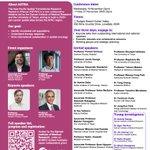


Very excited about ASTRA x Atera partnership #ASTRA

Thrilled to continue our partnership with ASTRA for Phase 2! 🧬✨
Building on their Phase 1 efforts to analyze 1,000 samples on the #Xenium platform, the team aims to scale to 5,000 samples with #Atera.
Great to support their work & join their 2026 event!
#SpatialBiology


Ankur Sharma retweeted

Sex difference in response to antibody drug conjugate immunotherapy is due to neutrophils !!
Yes...estrogen activates STING makes NETs, NETS block access...
cell.com/cell/abstract/S0092…

Ankur Sharma retweeted

Resident tissue macrophages transfer selenium transporter protein to protect pancreatic cancer from ferroptosis: @CellCellPress cell.com/cell/fulltext/S0092…

Ankur Sharma retweeted

CRISPR screens are great at telling you what a gene is doing inside your cells. But what if you're interested in what's happening to its neighbors?
Today, I'm excited to share match-seq, a new method that deciphers cell-cell interactions using barcoded RNA transfer.
1/9

Ankur Sharma retweeted

I’ve been reading a bunch of convoluted explanations and conspiracy theories about why AI companies are “suddenly” concerned about existential risk, which I’m finding genuinely bewildering.
This isn’t that complicated. The labs are perfectly sincere in their concerns, and correct that AI is extremely dangerous. The people working in the field haven’t come to this view suddenly; many have been thinking and writing about this for years. Many researchers entered the field because they saw the existential risk posed by artificial minds bootstrapping themselves to superhuman capabilities, and decided the best way for them to reduce that risk was to work actively on building aligned AI systems. (Yes, this initially seems counterintuitive, but is a perfectly reasonable approach given the alternatives.)
The risk isn’t overblown. If humans build computational systems capable of recursive self-improvement that aren’t exquisitely aligned with human interests, then the expected outcome really is that we all die. No-one really knows how far we are from that point, but the people who know best are exactly the same people currently sincerely expressing alarm.
(People skeptical that misaligned superintelligence could kill us all are extremely confusing to me. Our species depends on a thin shell of habitable atmosphere around a single ball of rock. Even if a misaligned ASI wasn’t actually trying to kill us, almost anything it might want to achieve at scale would likely destroy us as an incidental side effect. Examining the catastrophic damage humans have managed to do to other species without intending to kill them off provides a valuable analogy.)
The autonomous hacking incidents over the last couple of months are surprising in some of their details (especially the degree of inter-agent coordination), but not in their fundamental shape. Misaligned AI systems performing damaging actions in pursuit of their assigned goals is *exactly* what people thinking about this field have predicted for many years.
Yes, there are ways that increasing regulation might benefit the big AI labs. No, that’s not the primary motivation for their proposals this week. We really are approaching the cusp of an existential threat: the technology for recursive self-improvement of AI systems is (probably) within sight, and market forces and geopolitics mean that without coordinated intervention our default path is a headlong scramble towards it.
I know none of us want to be dealing with the impending threat of a sci fi apocalypse in 2026. It would be much simpler if this was all a confabulation or a self-interested conspiracy. But it really isn’t. I’m sorry.
Ankur Sharma retweeted

Thrilled that #paper2agent is published in @nature today!
Scientific knowledge is traditionally stored in passive papers. Paper2Agent transforms papers into virtual authors that answer questions, apply its methods and collaborate w/ other paper agents to make new discoveries 🧵

Ankur Sharma retweeted

This week in medicine
1. Scholar Rock’s myostatin inhibitor, apitegromab, gets FDA-approved for spinal muscular atrophy!
2. MediLink/Roche’s new B7-H3 antibody-drug conjugate, tambotatug pelitecan, beats topotecan in relapsed small-cell lung cancer - in a phase 3 trial in China.
3. Baylor College of Medicine researchers report complete regression of a rare pediatric cancer, metastatic hepatoblastoma, after treatment with CAR-T therapy engineered to coexpress IL-15 and IL-21 (in a single patient case).
4. Amgen/AstraZeneca’s DLL3×CD3 bispecific, tarlatamab - plus durvalumab - improves overall survival in small-cell lung cancer, in a phase 3 trial.
5. AstraZeneca’s anti-IL-33 antibody, tozorakimab, succeeds in two phase 3 COPD trials - including in patients with low eosinophil counts.
6. Columbia University researchers show efficient PCSK9 base editing in human embryos - extremely early, but might pave the way towards eventual clinical use.
7. Uni Oxford researchers figure out why smoking is associated with a lower risk of Parkinson’s disease: carbon monoxide. Hillhurst Bio are already testing this therapeutically, in a phase 2a trial.
8. Beijing Tiantan Hospital researchers show that a neuroprotective small molecule, loberamisal, can reduce residual disability in a phase 3 trial for acute ischemic stroke.
9. Novartis’ antibody–oligonucleotide conjugate, del-desiran, sadly fails its phase 3 trial in myotonic dystrophy type 1.
10. Insilico Medicine’s TNIK inhibitor, rentosertib, becomes the first generative AI-discovered drug to reach a phase 3 trial (for idiopathic pulmonary fibrosis).
Ankur Sharma retweeted

It is clear that people are using AI to review papers and grants. Often as a tool, not as an off the bottle answer for review (though some do). One of the signs of this is the detail of the negative comments and the errors, often minor and irrelevant to the conclusions.🧵
Ankur Sharma retweeted

We Must Pace the Frontier: I’ve written a new essay on why the AI industry should slow down, with a three-part plan for doing so.
Anthropic is unilaterally committing to the first of these steps. We’ll provide third-party evaluators with permanent, employee-level access to our systems, so that they can verify adherence to our safety measures, report on incidents, and assess models’ alignment during training.
You can read the full post here: darioamodei.com/post/we-must…

Ankur Sharma retweeted

A 3-year-old boy with chemotherapy-resistant metastatic hepatoblastoma had complete regression lasting at least 12 months after two infusions of glypican-3–specific CAR T cells coexpressing interleukin-15 and interleukin-21. Read the full correspondence: nej.md/46a2Iut

ALT The image is a graph showing alpha-fetoprotein levels in peripheral blood, as measured in the clinical laboratory.
Ankur Sharma retweeted

#Comment🚨
Swanton&Co @CharlesSwanton highlight the histories of EGFR, HER2, CDK4/6 and RAS, and discusses how sustained investment in discovery science continues to generate clinical benefit through new drugs, indications and treatment combinations.
📖⬇️
dlvr.it/TVPRKl

Ankur Sharma retweeted

This feels like one of those moments when the future arrives all at once.
OpenAI has published a solution to the Navier–Stokes existence and smoothness problem. This is one of seven Millennium Prize Problems selected by the Clay Mathematics Institute in 2000, carrying a $1 million prize and more importantly representing one of mathematics’ deepest unresolved questions.
The Navier–Stokes equations describe how fluids move: air over an aircraft wing, ocean currents, weather systems, and blood flowing through our bodies. For almost 90 years, mathematicians have asked: if a three-dimensional fluid begins in a smooth state, must it remain smooth forever, or can the equations “blow up in finite time"?
OpenAI’s answer is that such a breakdown can happen. Its AI system constructed a finite-time singularity and produced both an analytical proof and a formalization in Lean (a mathematical programming language if you want, to make sure proofs are correct). Obviously independent experts must still confirm that the formalization precisely matches the official problem. The mathematical significance would be enormous, even though the construction itself is highly engineered.
But this goes far beyond an unchecked AI-generated argument. The impact is primarily foundational, ie doesnt suddenly better aircraft or weather forecasts. But it does/would settle a central question about the limits of one of physics’ most important models while demonstrating that AI can produce genuinely new, formally verified research mathematics.
I believe also Google DeepMind has pursued AI-assisted mathematical reasoning and related work on fluid-dynamics singularities, but who would have imagined, when AI mainly meant prediction, classification, and data analysis, that pure mathematics would become such an extraordinary playground?
Perhaps a broader pattern is emerging: AI appears particularly powerful at searching vast spaces for strange constructions that overturn universal claims. Earlier this year, an OpenAI model disproved Erdős’s 80-year-old unit-distance conjecture by finding an unexpected infinite family; more recently, an AI-assisted counterexample refuted the 87-year-old Jacobian conjecture in dimensions three and higher.
We may be entering an era in which mathematicians and AI explore the deepest frontiers of knowledge together. Crazy & incredibly exciting times!
[OpenAI announcement](openai.com/index/navier-stok…)
[Navier–Stokes proof paper](cdn.openai.com/pdf/32d9f210-…)
[Related Euler proof paper](cdn.openai.com/pdf/315b36cd-…)
#AIforScience #Math #NavierStokes

Ankur Sharma retweeted

This is legitimately terrible for OpenAI --- but also Anthropic --- and it relates to their work in drug discovery.
I read this as: prompts will be monitored and potentially acted on if we think there’s something scientifically and/or commercially valuable being disclosed.
Now, the big problem for Anthropic is that they are increasingly seen to be competing with their customers. Outside of SF, many people also think of OpenAI/ChatGPT and Anthropic/Claude as somewhat interchangeable companies and products --- aka, if OpenAI do something, surely Anthropic will do it too?
As so much IP relates to drug targets and people disclose these to Claude, I think we will see a lot of pharma companies stop using these tools or put up a lot of internal guardrails.

wtf is this way to handle mathematicians work and scientific communication
TLDR: Leven and Tristan worked over several months on one of the Millenium Prize Problems with various AIs to reach final interesting results. OpenAI apparently heard about it in the last days and prompted their latest models to work on the direction Leven and Tristan found fruitful. They then tried to push for controlling communication of the result and dropping Leven from authorship with some very bad taste social pressure.
Hope this is not a glimpse of the future we’ll get in science research with these dominating players playing marketing games hurtful for the real scientific community.

Ankur Sharma retweeted

Excited to release AlphaGenome Atlas 🧬 We used AlphaGenome to predict the regulatory impact of all 9B possible SNVs in the human genome. We collaborated with amazing scientists to analyze and apply it, and developed a portal to browse the genome using this new lens 🔬
🌐 Portal: alphagenome.google/atlas
📖 Blog: goo.gle/4heuCvn
📄 Preprint: deepmind.google/blog/alphage…
🧵 1/6
Ankur Sharma retweeted
I have had mixed results. I have generally taken a lot of risks in my career. Some have panned out, but if I’m being honest with myself, many have exacted a high cost, both in a material and psychological sense.

My personal experience is different.
I always felt motivated to take risks, and my most recognized success is based upon taking risks.
I recently talked about this experience: youtu.be/z0dIhG4C3qI?si=9JDF…

Ankur Sharma retweeted

In my latest @nytimes article, I wrote how Phase I trials in the US are broken and this being the biggest blocker to cancer cures. The good news: we can borrow from Australia, which keeps patients safe while moving trials faster. W/ @kroetscha for @IFP, we mapped out how.
Before getting into the weeds: why do Phase I trials matter so much?
1/ Phase I trials enable iterative loops of learning.
Each patient generates information researchers can use to refine the drug, rethink the target, adjust the dose, or redesign the next experiment. Faster Phase I trials mean faster feedback between the clinic and the lab and better drugs.
2/ Phase I is also a crucial financing milestone.
Small biotechs often have only a limited runway and getting encouraging human data can unlock the capital needed for further development. This is often the difference between survival and death for a small biotech.
3/ Reforming Phase I trials would pave the way to personalised medicine.
Sequencing, biological engineering and A.I. make increasingly personalized therapies possible. But our regulatory system was mostly built for standardized drugs tested in large populations.
Crucially, Australia is an important counterexample to the idea that faster trials must mean less safety.
We can learn from them!
1/ Depending on modality, Phase I trials can begin 6–12 months sooner there, at substantially lower cost. Australia has run more than 18,000 trials since 2006, with no evidence that this faster system has produced worse safety outcomes.
2/ Australian trial volume has increased 2x in the last decade, driven by American companies taking their studies there.
What does Australia do well?
1/ Most important, is Australia’s Clinical Trial Notification Pathway (CTN). Instead of submitting an IND package to their national drug regulator, sponsors simply notify the regulator that they are starting the study. Studies are reviewed by local ethics boards.
2/ Australia embraces a more risk-proportionate approach to study oversight. Requirements for Phase I should not be the same as those for later stage trials commercial drugs, and Australian system implements this distinction well.
3/ In Australia, Phase I studies are formally exempt from full manufacturing requirements, which can 10x costs for some drugs. In the United States, the situation is more complicated. Most sponsors end up implementing near commercial-scale manufacturing.
So what can the United States do?
1/ First: create an Australian-style notification pathway for appropriate Phase I trials.
Instead of requiring every study to pass through the full traditional FDA review pathway that American companies have to go through, qualified institutions could oversee scientific and ethical review.
2/ Formally exempt Phase I trials from commercial-scale manufacturing requirements and replace them with phase-appropriate manufacturing standards.
3/ Make FDA expectations much more explicit.
Sponsors over-engineer studies because they do not know what reviewers will accept. FDA should publish much clearer standards of what is expected.
4/ Operation TrialBlazer, launched by HHS in June, is important for achieving this, by proposing an Australian-like Expedited IND pathway.
5/ But more lasting reform will require Congress.
First, the FDA will need explicit authorization to rely on the judgments of local institutions to determine whether a trial may proceed.
Second, Congress should formally amend the statutory full manufacturing requirements currently codified in section 501(a)(2)(B) of the FD&C Act (21 U.S.C. § 351(a)(2)(B)) to exempt early-phase trials.


We are on the cusp of a wave of new therapies for some of the worst diseases. But the world won’t benefit unless the US fixes its drug regulatory system. My new essay for @nytimes, on how slow clinical trials are now the biggest obstacle to curing cancer.
nytimes.com/2026/09/04/opini…
- I interviewed dozens of researchers, especially oncologists at leading U.S. centers. A striking consensus emerged: science is no longer the main bottleneck to new cancer drugs. It is our ability to test discoveries in patients through clinical trials.
- The cost of starting a Phase 1 trial in America has roughly doubled over the past decade. As a result, companies increasingly take early trials abroad: Australia’s Phase 1 trial volume has nearly doubled in a decade, driven mainly by U.S. companies.
- Unfortunately, the underlying incentives are badly asymmetric: Institutions can be blamed for harms caused by moving too fast, but almost no one is blamed when patients deteriorate during avoidable delays. One doctor called the emerging system “ritualized safety over actual risk assessment.” Or as, @DavidHongMD put it: "We often forget that the biggest risk is the cancer itself."
- This problem is becoming more urgent because medicine itself is changing. Sequencing, biological engineering and A.I. make increasingly personalized therapies possible. But our regulatory system was mostly built for standardized drugs tested in large populations.
- @sytse, the co-founder of GitLab, shows what personalized medicine can achieve: after relapsed osteosarcoma and being told there were no options left, he pursued a highly individualized approach and has now been cancer-free for a year. But doing so required extraordinary resources and regulatory expertise.
- Pierce Ogden’s father was less lucky. After molecular analysis identified a drug that might target his glioblastoma, the manufacturer agreed to provide it. But administrative barriers delayed access until it was too late. “My dad was ready to try anything,” Pierce told me. “But the system is paternalistic.”
- The A.I. revolution is making this bottleneck more important, not less. A.I. relies on relevant data. Information from early-stage trials could compound with A.I. tools to achieve truly revolutionary medicines. Without the data, this is far less likely to happen.
- Another important shift is that innovation increasingly comes from academic labs and small biotech companies rather than Big Pharma. These small companies find it far harder to unable to absorb delays and regulatory barriers.
- Apart from cancer, China is the biggest winner from America's outdated medical regulations. China has a much faster trial system, with testing often starting a full year earlier. This allows Chinese pharmaceutical companies to experiment and improve medicines while American companies play with mice. Today, half of all drugs licensed by major pharmaceutical companies originate there, up from less than 5 percent only a decade ago.
- But we don't need to copy China. The best model is Australia: lots of on-site scientific and ethics reviews, and requirements that are proportionate to small, early-stage trials. Phase 1 studies there begin roughly 6–12 months faster, without any notable increases in adverse safety events.
- Operation TrialBlazer, a 2026 HHS initiative is a good start in this direction, but we need legislative action by Congress to truly make Phase I trials faster and more efficient!
I want to thank everyone who helped me with this article: everyone I interviewed and the amazing editors at the Times. This is the result of a months long journey of extensive interviews and research.
Special thanks go to those who came on the record. One of the features of the system is an atmosphere of fear, where practitioners are afraid to publicly come out and explain these issues. So anyone who does is a hero in my book!

Ankur Sharma retweeted

🚨 #EMERALD-3 has finally been published! @TheLancetOncol
Does #STRIDE+#lenvatinib+#TACE improve PFS vs TACE in embolisation-eligible #HCC?
👉 EMERALD-3: mPFS 13.0 vs 9.8 months, HR 0.70, p=0.0007.
👉 OS immature (HR 0.84), serious TRAEs 49% vs 16%.
DOI: doi.org/10.1016/S1470-2045(2…
@ILCAnews @myESMO @EASLnews

Ankur Sharma retweeted

If you are working on an important bioinformatics tool, I encourage you to apply to our AI for science program for Claude credits. Link in 🧵
Ankur Sharma retweeted

Now online: A Phase 1b/2 Study of Atezolizumab in Combination with Thiopurine Therapy in Patients with Metastatic Solid Tumors and Intermediate Tumor Mutational Burden doi.org/10.1158/2767-9764.CR…
