
Measuring AI capability @answerr_ai
Boston
Joined September 2025
- Tweets234
- Following145
- Followers112
- Likes24




Mohd Qaiser Malik retweeted
Universities banning AI think they're protecting their students. They're setting them back for the exact world they're about to enter.
Everyone in the working world already runs on this stuff - marketing, sales, healthcare, even the people writing policy. It's Salesforce ten years ago. If a job required Salesforce, you learned Salesforce, because that's the direction work was heading. AI is now that big, across every field.
So take a student, block them from it for four years, then hand them a degree. They walk into a first job that assumes they're fluent, and they're starting from zero.
Do the opposite. Give the university the right stack and let students actually use AI. Teach them to question it and check its work.
If we keep our graduates off of AI right now, they won’t be able to do the job in the future.

Mohd Qaiser Malik retweeted
I sat down with vice presidents at two Fortune 500 companies.
They were struggling with the same AI problem you see with college students:
Their employees aren't AI capable yet.
And nothing is verified, so nobody inside either company knows who is.
A student pasting ChatGPT into an assignment and an employee pasting it into a report have the same problem.
This is becoming a real conversation amongst the largest corporations in the world.
Mohd Qaiser Malik retweeted
One bad hire costs a company roughly $100,000-$500,000.
So why don’t most hiring processes check how a candidate works with AI?
Today the process is:
• an ATS filters the resumes
• the team spends its time and budget on interviews
After both, they still struggle to see the tangible skills a candidate brings.
And every one of those candidates will work with AI once they start.
So a company only finds out whether its new hire can work with AI AFTER the offer is signed.
Doesn’t make sense.
Mohd Qaiser Malik retweeted
A university got on a call with me and only wanted to discuss one thing.
AI capability.
Their students are graduating into jobs that will require them to use AI.
Right now, nothing tells the university which of those students can actually work with it.
Mohd Qaiser Malik retweeted
There's no such thing as an AI skill.
Knowing Claude or Codex only puts you where everyone else already is.
Anyone can open Codex and use it the exact same way as the next person.
That's the problem with calling it a skill.
The advantage comes from using your brain on top of it.
Complex reasoning and critical thinking are human behaviors.
They're what an employer needs evidence of.
Mohd Qaiser Malik retweeted
Anyone with basic programming skills can be a developer now with Claude or Cursor. That's why the tools on your resume are the wrong thing to judge you on.
Put two people on one project with Claude.
1. The first one takes whatever Claude generates and hands it in.
2. The second one questions it and verifies it first
Both can say they built it with AI, but only one of them used their brain while doing it.
And ultimately, what makes a person valuable is their cognitive ability. Right now, more of it gets offloaded onto AI every day for the average person.
The same problem shows up far beyond engineering, in hiring and in universities. Everyone being judged has the same tools.
Someone who knows how to use AI properly can technically use any AI tool. But a tool list won't tell you which of those two are actually worth hiring.
Mohd Qaiser Malik retweeted
Since moving to the Bay 2 weeks ago, I've met 20+ other tech CEOs in San Francisco.
The same problem kept coming up.
Most of them are hiring and they can't tell which candidates are AI capable. Right now, how a candidate or an employee actually works with AI is never verified.
In SF you meet a lot of people, and you see how big the problem is.
Those conversations are a big reason we're pivoting Answerr toward hiring.
Mohd Qaiser Malik retweeted
AI detection is solving the wrong problem for universities.
~60% of students trust AI blindly.
They copy-paste the assignment question and check the answer at a very basic level.
If it reads well, it gets submitted.
Detection can't see any of that, because the student used AI either way.
Nobody measures whether or not they bothered to question / verify the answer.
Those students graduate and take the same habit into their first job.
Mohd Qaiser Malik retweeted
Every candidate you hire this year will work with AI, whatever the job title says. And interviews can’t possibly measure how well they do it.
For context:
There's no job with a laptop left that doesn't involve AI. Even accounting and audit run on it now.
Yet, hiring hasn't caught up.
An ATS filters the resumes and the team spends hours on interviews. At the end, the company still can't tell what the candidate does when a model gives them a confident wrong answer.
One bad hire costs a company roughly $100,000, and five of them cost around $500,000.
A company finds out how a new hire works with AI only after the start date.
So measure it before the hire.
Give the candidate a real task from the role and let them work through it with AI the way they would on the job. Then read the conversation and look at whether they question the answer and change it when it's wrong.
That's why we developed a 60-minute AI capability assessment.
The employer can geta a full report before they send the offer out.
Find out more here: answerr.ai/

Mohd Qaiser Malik retweeted
After meeting around 20 people in SF, we're putting more focus of our companies core into solving the AI hiring problem. Every CEO I’ve met with has described the same problem with their new hires:
They're hiring people who don't question or verify what AI gives them (their current employees are worried about their own AI capability too).
That's the problem we have built Answerr to solve. We measure how a person actually works with AI, so an employer can see who is working effectively with this new technology it before they make an offer.
If you're hiring and this sounds familiar, I'd like to hear what you're seeing.
Mohd Qaiser Malik retweeted
AI won't leave you jobless, because a world with no jobs means riots on the streets.
It takes 2 things from you instead:
• the repetitive section of your job, which it's already clearing out
• the first draft of whatever you're writing
Neither was ever what made someone valuable.
It’s your brain.
AI can take that too but only if you let it.
Right now most of that cognitive ability is being offloaded onto AI.
So keep doing your own thinking.
It's worth more now than it was before AI.
Mohd Qaiser Malik retweeted
During my MBA, I pasted a ChatGPT answer into an assignment without reading it properly. My professor gave me a B-minus and a warning.
I trusted it blindly and copied all of it.
She told me next time, please don't use AI.
And if I do use it, use it properly.
I'd say 60% of students trust AI blindly today. And most of them won't get a B-minus to catch it) They'll carry the habit straight into their first job.
This will be a major problem heading into the next era of AI in the enterprise space, especially as more and more employees start to rely on it for daily tasks.
At Answerr we now measure whether people question the model's answer.
Mohd Qaiser Malik retweeted
AI Token usage is irrelevant.
Enteprise companies should be judging employees on 4 things:
1. How they verify AI replies
2. How they can fix whatever's wrong with the response.
3. How they reason with the model
4. And when they’re not convinced, how they challenge it until it does better.
Right now, 99% of people ask a question and copy-paste whatever comes back.
Doing all four gives your team an advantage over anyone who can only ask a question.
Mohd Qaiser Malik retweeted
Every university professor I demo @AnswerrAI to asks me some version of: "so it spies on my students?" It’s actually the other way around. Right now, teachers are the ones who can't see what their students are doing.
Think about where learning actually happens now with assignments:
• A student opens ChatGPT
• They blindly work through the whole assignment in there.
• The next morning they paste a clean answer into the portal.
• The teacher sees that answer, and they never see the thinking that did / didn't happen in order to complete the assignment.
The whole process is invisible to them. And that is the ultimate goal of @AnswerrAI. To help teachers finally see 1) who's thinking and 2) who's just pasting answers in. This way, you’ll know which students will actually be prepared to enter the modern workforce, where the ability to effectively use AI will be invaluable. (and no, before anyone asks, we don't train any model on their students' work)
Interested in a demo?
Send me a message and we’ll find a time.

Mohd Qaiser Malik retweeted
We put our AI in front of 211 students at the biggest entrepreneurship school in the world for a full term.
One number caught me completely off guard.
Going in, I expected to see usage go up. What surprised me was how much more curious the students became. They started asking bigger and stranger questions.
Curiosity-driven prompting rose more than 40% over the term.
And there's a simple reason for it.
When you remove a hurdle from someone's day, they explore more.
Funny how that works.
Run a university program and you can see this same picture for your own students.
Mohd Qaiser Malik retweeted
Everyone around me wanted the safe, standard path.
Throughout my entire life, I have deliberately chosen the opposite.
• I worked on multiple projects with the Government of India.
• Then I opened an IT services company I ran for 4 years
• That paid for my move to the US, where I did my MBA at the largest entrepreneurship school in the world.
And that turned into, @AnswerrAI.
We're going to have an impact on millions of lives.
So much more to come.
Mohd Qaiser Malik retweeted
There's no such thing as an “AI skill”. And it's the biggest reason hiring for AI capabilities feels a little off right now.
Every job post wants "AI skills" or "prompt engineering." However, prompting isn't necessarily a skill you can hold onto. The models get better and better at reading intent every month, so whatever you test for today will inevitably be gone within the next few months. Almost anyone can type a question into Claude and paste the answer back.
An since everyone can prompt, the validity of prompting as a way to measure skill, lessens.
What’s actually scarce is 1) complex reasoning, and 2) the judgment to catch a model when it's clearly wrong (but sounds right). In 2026, you can’t be accepting the first “clean-looking” answer.
If I were writing a job req today, I actually would not ask whether someone can use AI. I'd sit them in front of it for an hour and watch what they do when it hands them a confident, wrong answer. Do they catch it, or forward it on and move to the next thing?
That’ll tell you more than anything.

Mohd Qaiser Malik retweeted
2027 prediction:
The companies who are "fastest" to move with AI, will completely collapse.
When your team moves "fast" with AI, that usually means they're rushing. They'll grab the first answer AI gives them and run with it, without ever stopping to check whether it was correct or not.
And you can watch this happen in real time, too.
The person being driven by the AI:
• takes the first answer as the final answer
• doesn't catch the model when it's confidently wrong
• can tell you the answer appeared, but not why it holds up
• never asks a second, sharper question
Someone actually using AI correctly assumes the first answer can be better, so they push back and keep working until it holds. They treat the model like more of a "sharp intern" they still have to manage.
The problem is those four habits never show up on a usage dashboard. You see them after a wrong answer is already out the door.
We measure them directly in a 60-minute assessment.
Want to see what that speed is costing you?
Schedule a time with our team here: answerr.ai/

Mohd Qaiser Malik retweeted
We built a startup to measure anyone’s capability with AI in 60 minutes. Most tools measure how much someone uses AI or whether the output looks polished. However, that tells you almost nothing about the person.
What tells you something is:
• how they handle the model when it's wrong but convincing
• what happens when it hands them something plausible they can't check?
• do they notice, and how fast?
So with @AnswerrAI, we measure the whole conversation.
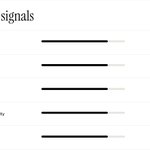
There are five things we benchmark on:
1. Judgment Quality: knowing both A) when to trust the model and B) when to stop handing it more work.
2. Question Originality: asking something better than what the model has answered a thousand times already.
3. Critical Thinking: pushing on an answer that sounds right but hasn't been verified.
4. Complex Reasoning: holding a hard problem together and dismissing the urge to take the first “clean-looking” output.
5. Learning Velocity: whether someone gets sharper over a term or not.
The whole thing is behavioral, so there's nothing for students to cram for. It watches what you do when you don't already know the answer.
This way, a dean gets an actual benchmark to measure a student against a semester later.And a hiring manager gets to see how a candidate thinks before they make an offer to them.
Go here and I'll run one for your team or class: answerr.ai/enterprise/capabi…

Mohd Qaiser Malik retweeted
Every university professor I demo @AnswerrAI to asks me some version of: "so it spies on my students?" It’s actually the other way around. Right now, teachers are the ones who can't see what their students are doing.
Think about where learning actually happens now with assignments:
• A student opens ChatGPT
• They blindly work through the whole assignment in there.
• The next morning they paste a clean answer into the portal.
• The teacher sees that answer, and they never see the thinking that did / didn't happen in order to complete the assignment.
The whole process is invisible to them. And that is the ultimate goal of @AnswerrAI. To help teachers finally see 1) who's thinking and 2) who's just pasting answers in. This way, you’ll know which students will actually be prepared to enter the modern workforce, where the ability to effectively use AI will be invaluable. (and no, before anyone asks, we don't train any model on their students' work)
Interested in a demo?
Send me a message and we’ll find a time.
