
Ignacio Tanco retweeted

The claim that life has been found on K2-18b is without foundation. This BBC article (bbc.co.uk/news/articles/c39j…) is some of the worst science journalism ever. Firstly dimethyl sulphide (DMS) and dimethyl disulphide (DMDS) are NOT biosignatures anymore than carbon dioxide is one.

Ignacio Tanco retweeted

the essence of the Ghibli magic is animism, to draw that way you need a strong empathy for the living world, and using ai will not give you that
there's an NHK documentary about the making of Spirited Away, which focuses on a scene where Chihiro feeds a medicine ball to Haku in the form of a dragon, Miyazaki meets with his animators to explain how it should look: the dragon should writhe desperately like an eel being killed, he should gag and bare his teeth like a dog being force-fed a pill
the young animators haven't seen either of these things, so they go to a local vet clinic to videotape themselves putting their hands in the mouth of a dog, trying to understand the dog's movements so they can draw them, and it becomes apparent that Miyazaki is giving his proteges a masterclass in the perception of the living world
as a result, this brief little scene is intensely alive, you can viscerally feel how much the dragon does NOT want to swallow the medicine, it embodies the spirit of an eel and a dog, but there's a deeper magic here in the way Miyazaki was teaching his way of seeing the world to the animators, who in turn helped him convey it to the audience
when we watch a Miyazaki film, it's not just a product, we're seeing the result of a process and a way of seeing and that's where the magic is, if the style is divorced from that context it can only remind us of the real thing, without the foundation of the Ghibli films imprinted in our hearts to lean on, it wouldn't hit the same
as another example, if you watch the two Fantasia films, the first one feels incredibly alive in a way the second doesn't, and i think it's because the animators in 1940 grew up outdoors and on farms and the ones in 1999 did not, they were deeply familiar with the forms of plants, the movements of animals, and the behavior of physical objects
what's sad to me is that a lot of future media will look amazing but will lack this spirit, and most of the audience won't even notice bc their ways of perceiving are based largely on media and not the real living world, perfectly congruent with ai which has nothing but media to learn from
i urge you to not take the easy way on everything, a big part of the point of art is that it forces the artist to change and grow, to look closer, to empathize more deeply, to confront the blocked parts of their soul, to absorb the spirits of the living world into their own psyche, to not just animate but to become animists


Ignacio Tanco retweeted

In video 👇 Thank you @MotulX22!
teapawt.net/MotulX22/status/190585…



Ignacio Tanco retweeted
Really hard not to make the parallel between JD Vance's speech right now at the Munich Security Conference and Putin's 2007 speech at the very same podium. teapawt.net/business/status/189042…
Both were watershed moments that fundamentally transformed the existing consensus. Putin at the time delivered the speech that marked the beginning of the end of the unipolar moment. JD Vance's speech will probably be remembered as the speech that marked the beginning of the end of the post-WW2 Western alliance.
As a European, I'm in two minds about what Vance said about Europe.
He is of course right about many things. For instance Europe's attitude with respect to Romania's elections was beyond appalling and unequivocally antidemocratic. I myself called it out repeatedly on this platform.
But - and this is a very big BUT - on Romania and much of Vance's criticism directed at Europe, the U.S. was right there alongside Europe acting jointly, and often even guiding Europe's actions. Specifically on Romania for instance, I believe that the US State Department was first in issuing a statement on December 4th (2021-2025.state.gov/statemen…) expressing its concern about "Russian involvement in malign cyber activity designed to influence the integrity of the Romanian electoral process" which led to the elections being cancelled two days later (and which, it was later proven, was completely false: it turned out that this "malign cyber activity" were paid for by the very Romanian party in power that cancelled the elections!). It's only after that State Department statement that the Europeans followed the U.S.'s lead.
So it's a bit rich, even very rich, for Vance, less than 2 months afterwards, to lecture Europeans on this without as much as acknowledging the U.S.'s own role in a lot of it.
Same could be said about European content moderation and "censorship." He conveniently forgets that much of Europe's current approach was developed in close coordination with American agencies and tech companies. The EU's content moderation framework didn't emerge in a vacuum - it was heavily influenced by American practices and pressures.
Or take Vance's criticism of European mass migration policies. He spent a big part of his speech lamenting over the attack in Munich yesterday by (apparently) a young Afghan asylum seeker, describing it as a direct "result of a series of conscious decisions made by politicians all over the [European] continent". But he conveniently fails to mention why Afghans migrated en-masse out of their country, which might have a little something to do with a certain great power that decided to wage a 20-year long war over there and completely wrecked the country... Same story for many migrants in Europe, a huge share of them being a direct result of disastrous US foreign policy decisions.
I'm also extremely uncomfortable with Vance's stated intentions to meddle in European politics. He calls out - rightly - Europe for not living up to its democratic values, yet in the same breath he's explicitly announcing America's intention to intervene in European politics by supporting certain movements against established institutions. He criticizes European elites for not respecting democratic choices while simultaneously suggesting that a Trump administration would actively work to influence those choices. How is this any different from the kind of interference he hypocritically condemns?
Perhaps most worrying of all, Vance's vision seems to completely disregard why the post-WW2 European architecture was built in the first place. Europe is the place where both world wars started, 100% of them. The past 80 years were a uniquely peaceful time in European history: due to the high density of states in a relatively small geography and the somewhat disagreeable character of many European nations (the French very much included), the continent had been in almost constant conflict for the previous millennium. I really dislike European institutions as much as the next guy but I don't forget the original spirit with which they were built: to put an end to endless war in Europe.
By positioning America as an ally of nationalist forces against these institutions, Vance isn't just ending an alliance - he's actively working to unwind the entire post-war European peace architecture, which could have immense ramifications. In fact I think we can even legitimately ask ourselves if the U.S. doesn't now have war in Europe as one of its strategic objectives. Given the U.S.'s history in triggering wars left, right and center when it believes they're in their interests, and given Vance's speech, I think the question has merits.
All in all, I'm not ashamed to say that I much prefer Putin's 2007 speech to Vance's. Whatever you may think, Putin remained within the confines of what he thought were challenges to Russia's national interests, issues like NATO expansion or American attempt at global hegemony. He didn't try to meddle in intra-Western politics or position Russia as an active force for undermining Western institutions from within. His vision was about creating a multipolar world where Russia would be one independent pole - not about dismantling the internal architecture of other poles.
Where Putin wanted to limit Western power globally, Vance seems to want to fracture the European order locally. That's a far more dangerous proposition.
I'm all for reforming Europe and I constantly call for it. But to me by far the biggest issue for Europe is its lack of sovereignty and strategic autonomy, especially vis à vis the United States, in almost all domains. If Vance's speech could have any silver lining, it would be to finally wake Europeans up to this reality: let's hope that for once Europe draws the right lesson.


Ignacio Tanco retweeted

Today in 399 BC, Socrates was sentenced to death for "corrupting the youth" of Athens.
What did he say that was so dangerous?
He taught them to think for themselves — via 3 simple steps... (thread) 🧵


Ignacio Tanco retweeted

New Glenn safely reached its intended orbit during today's NG-1 mission, accomplishing our primary objective. The second stage is in its final orbit following two successful burns of the BE-3U engines. The Blue Ring Pathfinder is receiving data and performing well.
We lost the booster during descent. We knew landing the first stage on the first try was ambitious. We'll learn, refine, and apply that knowledge to our next launch in the spring. We're thrilled with today's outcome. More: bit.ly/4hj8q0o

Ignacio Tanco retweeted

2024 was a year full of anniversaries for @ESA_Rosetta. We took the opportunity to reflect on Rosetta's legacy by asking you how you were inspired by the mission.
Discover the answers in our online exhibition 👉 blogs.esa.int/10-years-since…

ALT Screenshot of the Rosetta online exhibition. We see six images representative of the entries, three per row. On top, the text reads '10 Years Since Rosetta. An online exhibition of the human side of Rosetta’s impact.'

Ignacio Tanco retweeted

Starship’s fifth flight test was a seminal moment in iterating towards a fully and rapidly reusable launch system.
Next up: the sixth flight test of Starship is targeted to launch as early as Monday, November 18 → spacex.com/launches/mission/…
Ignacio Tanco retweeted
🛰️🌕🌍During its recent lunar-Earth flyby, #ESAJuice tested out its 16-metre RIME radio antenna to ping the Moon and listen to Earth.
Short story: it works! 🎊
Full story: asi.it/en/2024/10/juices-rim…
📷ESA/Juice/RIME & NASA/LRO/LOLA DEM

ALT The top image shows radar data from Juice’s RIME antenna scanning along the Moon’s surface on 19 August 2024, with the horizontal axis indicating the time and the vertical axis the time taken for a ‘ping’ to bounce back to Juice (indicating the altitude) [ESA/Juice/RIME]. Brighter regions align with the Moon’s topography shown in the bottom image – a digital elevation model of the Moon’s surface [NASA/LRO/LOLA DEM], showing various craters and a white line indicating Juice's flyover path.
Ignacio Tanco retweeted
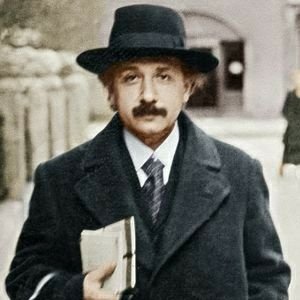
The soul of man is divided into three parts, intelligence, reason, and passion. Intelligence and passion are possessed by other animals, but reason by man alone.
- Pythagoras (570 BC - 496 BC)


Ignacio Tanco retweeted
Why is the sky blue? A demonstration.
[📹 rhettallain]
teapawt.net/i/status/1845071646614…
Ignacio Tanco retweeted

In regard to any controversy you have participated in, can you state and explain the position opposing yours in a way that its supporters would recognise as theirs?
Ignacio Tanco retweeted

BREAKING NEWS: #HeraMission LEOP successfully completed 🛰️


