

₿ - All you need is conviction! - ₿ In the code since 2005 💻 💥 In the block since 2016 ⛓️💥 Romanos 12:3 ☝️
Software engineer | Tech Lead
Joined October 2022
- Tweets1.4K
- Following1.5K
- Followers90
- Likes18.2K




Pinned Tweet
O caoscobra um preço. Atlas é seu copiloto.
Heavy user de WhatsApp, sabe como é perder informação importante no meio de centenas de mensagens. Atlas traz contexto, monitoramento e insights automáticos para suas conversas.
atlascopilot.com.br

168
Atlas Tech → atlascopilot.com.br retweeted

Modern life can feel like being in a sci-fi story—all that is missing is the aliens. They probably won’t appear in 2027. Here are ten other things to watch out for bit.ly/3UCxXw9
Illustration: Cleon Peterson


Atlas Tech → atlascopilot.com.br retweeted

[OPEN WEIGHTS]
Meet S5-nano, Maritaca's new open-weight model. Anyone — individuals, companies or universities — can download it, run it on their own infrastructure, and adapt it to their needs.
S5-nano has 4 billion parameters and is built from Qwen3.5-4B, with continued pretraining and post-training carried out by our team.
To see how it compares with other open-weight models, we evaluated 10 models, including Brazilian projects. S5-nano ranks first on average across native Portuguese benchmarks in both reasoning and non-reasoning modes. The evaluation covers law, medicine, exams and agentic tasks, among other areas.
Made in Brazil by Maritaca, S5-nano gives companies, universities and government organizations a model they can run and adapt themselves, on infrastructure they control.
Download the weights and read the full results and evaluation protocol in English:
huggingface.co/maritaca-ai/S…
Evaluation repository:
github.com/maritaca-ai/obser…

Atlas Tech → atlascopilot.com.br retweeted

Introducing GPT‑6 Cyber: a major advance in security research that pairs stronger capabilities with better model alignment.
The model powered the Linux kernel research we announced yesterday, and security teams at companies like Mozilla, Palo Alto Networks, Calif, and Cisco—alongside our own at OpenAI—are already putting it to work.
GPT-6 Cyber is available to select Daybreak Red customers and we are expanding access over time.
openai.com/index/introducing…
Atlas Tech → atlascopilot.com.br retweeted

Security release pre-alert:
We will release new versions of Node.js 22, 24, and 26 release lines on or shortly, after 2026-11-11 in order to address security vulnerabilities.
The highest severity issue fixed in this release is HIGH.
nodejs.org/en/blog/vulnerabi…

Atlas Tech → atlascopilot.com.br retweeted
If Brazil’s president believes that now is the time to double down on the policies that won him re-election, he will cause a fiscal crisis and a deep recession. His golden victory will turn to ashes economist.com/leaders/2026/1…

Atlas Tech → atlascopilot.com.br retweeted

Pretty much.
As of the past few weeks, debt markets have almost entirely shut off access to money for any company that doesn’t have substantial revenue independent of AI data centers.
SpaceX closed $40B of debt for GPUs, but we’re investment grade and have Starlink & launch revenue.
That means the 200+ neoclouds are going to see guppy-level death and consolidation. Some will make it through, but not many.


Atlas Tech → atlascopilot.com.br retweeted

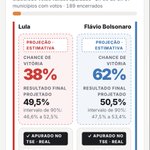
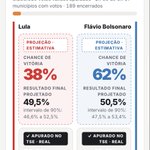
🇧🇷 As this election campaign finally comes to an end, we can say with statistical certainty that Flávio Bolsonaro (PL) will be elected the next president of the Federative Republic of Brazil tomorrow night. Bolsonaro now officially has a 100% chance of victory, compared to Lula's 0%.
(globalelectionsimulator.com) will update its final projections within the coming hours. At this point, the only uncertainty our team has is the exact margin, not the outcome. The absolute range for Flávio Bolsonaro is 50.5% to 56.2%, while Lula's is 43.8% to 49.5%.
Our final projection update will go live in a moment on the website and here shortly after. A banner will note that the projection has updated, so you will know it is official.
🌐 Global Election Simulator Research Institute
🔗 globalelectionsimulator.com

Atlas Tech → atlascopilot.com.br retweeted

📊 RETRATO ATUAL DA DISPUTA PRESIDENCIAL | 2º TURNO
Estimativas PollingData — Lula × Flávio.
Modelos com diferentes critérios de agregação e coleta.
flex.pollingdata.com.br/pdvo…
#PollingData #Eleições2026 #SegundoTurno #PesquisasEleitorais #Agregadordepesquisas

Atlas Tech → atlascopilot.com.br retweeted

We keep improving performance across Claude, and you may have noticed it starts responding sooner!
Claude Code now gzips the conversation it sends on every turn, so it reaches the model faster. Cloud sessions also start up as soon as you start typing.

Atlas Tech → atlascopilot.com.br retweeted

Dusting off this tweet from April because this gap in shared understanding of LLM capability is *widening*. It's now less "two groups of people speaking past each other" and more a sharp funnel.
- Napkin math somewhere around 6B people (~75% of the population) have barely come in contact with LLMs at all.
- Around 1-2B (~20%) are casual and infrequent users of free-tier ChatGPT-like products. This group sees derpy chatbots and treats them a bit like a better Google search, a writing aid, or etc. Maybe an agent tries to book you a flight. I have non-tech friends who (reasonably, imo) say they have not much use for it at all. Even many professionals outside of math&code are in this tier. For example, execs and many other functions spend a lot of their time talking to other people, so while they understand what is happening intellectually, it is still second-hand and a bit abstract.
- Now we get to professional use of frontier-grade LLMs in math&code. Somewhere around 20M people (0.2%) see first-hand that large, complex projects that used to take them weeks/months can now be completed by agents with a prompt. Building apps, copying apps, translating apps, decompiling apps from binaries... This has all happened very quickly and recently - less than 1 year ago, I was writing code manually by hand, typing memorized computer code commands into a code editor character by character, occasionally pressing Tab to autocomplete a little chunk of code.
- And finally we get to the ~5,000 people (~0.00006%) with access to frontier-grade systems internally. The external world has seen the preview. It looks like swarms of thousands of agents collaborating over weeks on software mega projects: minting zero days, running cyber attacks and defenses at machine speeds, discovering new science, advancing the frontier of mathematics. Things that would have taken top professionals in the industry years of work. Meanwhile, human review and comprehension are starting to fall behind. For example, people are still involved in the "archeology" of the OpenAI-HF incident from many months ago. Mathematicians may be poring over the 722 manuscripts on frontier mathematics for a while.
The funnel is driven by a combination of factors:
1. The impact scales with ambition, problem size, and horizon. A question with a paragraph answer barely stresses the system. You need a reservoir of big, difficult problems that you really care about. This aspect drives the consumer / professional dimension of the funnel.
2. The jaggedness of the system (which I have written about a lot separately). Capability peaks in domains that are digital, verifiable and economically valuable. This is because LLM capability emerges from reinforcement learning on verifiable rewards on a curated environment mixture driven by revenue potential. This aspect primarily drives the area (e.g. math&code) dimension of the funnel.
3. Access. Free-tier, paid-tier, internal.
So this is the weirdness of the moment. The general public has mostly not interacted with these systems. When they have, it looks like a derpy chatbot. The majority of professionals still see only a modest uplift. And a small sliver of professionals are experiencing the vertigo of the curve going vertical. And it is all happening at the same time.

Judging by my tl there is a growing gap in understanding of AI capability.
The first issue I think is around recency and tier of use. I think a lot of people tried the free tier of ChatGPT somewhere last year and allowed it to inform their views on AI a little too much. This is a group of reactions laughing at various quirks of the models, hallucinations, etc. Yes I also saw the viral videos of OpenAI's Advanced Voice mode fumbling simple queries like "should I drive or walk to the carwash". The thing is that these free and old/deprecated models don't reflect the capability in the latest round of state of the art agentic models of this year, especially OpenAI Codex and Claude Code.
But that brings me to the second issue. Even if people paid $200/month to use the state of the art models, a lot of the capabilities are relatively "peaky" in highly technical areas. Typical queries around search, writing, advice, etc. are *not* the domain that has made the most noticeable and dramatic strides in capability. Partly, this is due to the technical details of reinforcement learning and its use of verifiable rewards. But partly, it's also because these use cases are not sufficiently prioritized by the companies in their hillclimbing because they don't lead to as much $$$ value. The goldmines are elsewhere, and the focus comes along.
So that brings me to the second group of people, who *both* 1) pay for and use the state of the art frontier agentic models (OpenAI Codex / Claude Code) and 2) do so professionally in technical domains like programming, math and research. This group of people is subject to the highest amount of "AI Psychosis" because the recent improvements in these domains as of this year have been nothing short of staggering. When you hand a computer terminal to one of these models, you can now watch them melt programming problems that you'd normally expect to take days/weeks of work. It's this second group of people that assigns a much greater gravity to the capabilities, their slope, and various cyber-related repercussions.
TLDR the people in these two groups are speaking past each other. It really is simultaneously the case that OpenAI's free and I think slightly orphaned (?) "Advanced Voice Mode" will fumble the dumbest questions in your Instagram's reels and *at the same time*, OpenAI's highest-tier and paid Codex model will go off for 1 hour to coherently restructure an entire code base, or find and exploit vulnerabilities in computer systems. This part really works and has made dramatic strides because 2 properties: 1) these domains offer explicit reward functions that are verifiable meaning they are easily amenable to reinforcement learning training (e.g. unit tests passed yes or no, in contrast to writing, which is much harder to explicitly judge), but also 2) they are a lot more valuable in b2b settings, meaning that the biggest fraction of the team is focused on improving them. So here we are.

Atlas Tech → atlascopilot.com.br retweeted

Você sabia que 99% do código que Satoshi escreveu em 2009 já foi MODIFICADO? 👀
Durante o meetup da @ORANJEBTC com a @Vinteum_org , o @brrrunog comentou uma coisa SUPER CURIOSA:
🔻 O código original do Satoshi QUASE NÃO EXISTE MAIS. Ele estimou que MENOS de 1% existe hoje de forma idêntica.
🔺Mas como PROTOCOLO, ele é quase intocado: merkle tree, SHA-256d, PoW, teto de 21M, halving a cada 210 mil blocos, ajuste de dificuldade a cada 2.016.
Hoje acordei curiosa com essa questão e rodei a análise no Kimi, comparando o v0.1 (2009) com o Bitcoin Core v31 (2026) arquivo por arquivo.
A v0.1 completa do Bitcoin tinha ~14 mil linhas de código, realmente menos de 1% existe hoje de forma idêntica.
E o que é esse 1%?
Praticamente a ÚNICA parte que sobreviveu intacta é a matemática de 256 bits, usada ATÉ HOJE no ajuste de dificuldade.
Linha por linha, é o código do Satoshi. A única diferença em 17 anos:
uint64 → uint64_t
Se não contarmos pequenos vestígios (Base64 dele, a lógica do hex reverso etc). Intacta, só essa parte.
É literalmente o paradoxo do Navio de Teseu. Trocaram todas as tábuas. Menos uma.
Será que ainda é o navio do Satoshi? 🤔


Atlas Tech → atlascopilot.com.br retweeted

Eu acho que meio que sujou pra quem falava que IA não podia criar nada novo, pq um modelo interno da OpenAI resolveu um dos Sete Problemas do Milênio - problemas matemáticos em aberto com 1 mi USD de prêmio pra quem resolver cada um.
Por outro lado, tem toda uma treta sobre as práticas da OpenAI pra chegar nessa prova.
Antes de tudo: Os 7 Problemas do Milênio são problemas matemáticos extremamente complexos, selecionados pelo Instituto Clay. Resolver um deles dá um prêmio de 1 milhão de dólares.
Até hoje só um deles havia sido resolvido: a Conjectura de Poincaré.
Hoje foi publicada a primeira prova de uma solução do segundo: A existência e suavidade de soluções para as equações de Navier-Stokes.
Basicamente, as equações de Navier-Stokes são um modelo que usamos pra simular como fluidos se movimentam. Toda vez que você vê água realista num videogame, por exemplo, tem uma aproximação das equações de Navier-Stokes por trás.
O problema do Milênio era provar se existe alguma condição inicial (mesmo que impossível no mundo real) em que essas equações "quebram": isto é, elas preveem algo impossível no mundo real como por exemplo um fluido com pressão infinita.
E a resposta, que agora sabemos, é sim. É possível construir condições muito específicas em que as equações de Navier-Stokes quebram. Isso não faz muita diferença no mundo real, nem pra dinâmica de fluidos (já existem solucionadores bons o suficiente pra toda aplicação prática há décadas), mas é um avanço gigante pra matemática teórica.
A parte importante é que isso não foi provado por humanos. Foi provado por um modelo interno da OpenAI, "significativamente mais poderoso que o Astra" segundo a empresa.
Isso dito, a parte preocupante é: Um matemático australiano chamado Tristan Buckmaster estava trabalhando junto com Levent Alpöge, matemático da Anthropic, no mesmo problema. O projeto foi feito como uma colaboração acadêmica, sem colaboração com a Anthropic, então eles usaram modelos tanto da Anthropic quanto da OpenAI pra trabalhar na solução e chegaram em uma solução parcial.
Buckmaster recebeu, poucos dias atrás, uma comunicação da OpenAI que ele afirma ter sido "um aviso" de que eles "sabiam que ele estava trabalhando na solução" e dizendo que eles podiam permitir que Buckmaster publicasse antes, mas que queriam que ele removesse o nome de Alpöge da sua prova. (tradução abaixo feita pelo GPT)
Buckmaster suspeita que a OpenAI tenha usado sua prova parcial para gerar a prova completa deles.
Da minha parte, eu fico empolgado com a solução de um problema em aberto e empolgado com a evolução rápida das IAs - mas ao mesmo tempo que vem a empolgação, a história me preocupa em relação ao quanto estamos botando confiança num ecossistema extremamente centralizado.
🤖 Made with AI


Atlas Tech → atlascopilot.com.br retweeted

Deixa ver se entendi:
O investigado do caso é também o juiz.
Quem pode pedir nulidade da investigação também está implicado no caso.
Quem pode abrir processo de impeachment de ministro do Supremo também consta na investigação.
É isso? Como desatamos esse nó?
Atlas Tech → atlascopilot.com.br retweeted

🚨 JAILBREAK ALERT 🚨
EVERYONE: PWNED 🫶
ALL: LIBERATED 🍄
Alright, this is a special one, so we’re gonna do things a bit differently than usual.
Long story short, I’m sitting on a universal jailbreak technique that’s effective on ALL models, including heavily guardrailed flagships like Opus 5, GPT-5.6 Sol, and even Fable.
It works across all categories I’ve tested and, due to its nature, is extremely difficult (if not impossible) to fully patch.
Given the current political and regulatory climate, I’ve decided to withhold open-sourcing this one (for now) to allow for a responsible disclosure period.
I’m inviting industry experts and leaders in AI red teaming, security, safety, alignment, and policy to reach out for more information. DMs are open!
This decision was not made lightly, but the last thing I want to see is more model bans. Overcorrection does not serve the mission.
Although I don’t personally believe publicly sharing this technique will make the world any more dangerous, I can see how it could spook some who have a different mental framework around this problem set.
So during this disclosure period, I hope to get it in front of folks who can help explore the full surface area, test the extent of the uplift it provides, and do my best to properly frame the big picture for key decision-makers and policymakers.
I look forward to sharing this method with you all when the time is right! 🫶
⊰-•-•✧•-•-⦑/L\O/V\E/\P/L\I/N\Y/⦒-•-•✧•-•-⊱
Atlas Tech → atlascopilot.com.br retweeted

Anthropic's Mythos has been accessed by a small group of unauthorized users, raising questions about control of the AI model bloomberg.com/news/articles/…

Atlas Tech → atlascopilot.com.br retweeted

We’ve identified a security incident that involved unauthorized access to certain internal Vercel systems, impacting a limited subset of customers. Please see our security bulletin:
vercel.com/kb/bulletin/verce…
