

CS PhD @UTCompSci | SR @GoogleResearch
Joined October 2016
- Tweets434
- Following622
- Followers282
- Likes11.7K






Atula Tejaswi retweeted

I've got a lot of RL/post training followers who may not know what scalable oversight is, which is what im working on now at resolution. It's frequently discussed in the alignment context but really the core problem is critical for capabilities too, and may be necessary to even reach no-human-in-the-loop RSI.
Put simply: how do we train models supervised by other models, and how to scalably do RL when the AI judges/reward functions are weaker than the policy and so can be reward hacked? In other words, methods to mitigate reward hacking when RLing fuzzy tasks. If this seems interesting to you, reach out. There's some cool work we'll be doing at res.
Atula Tejaswi retweeted

Update: Can AI agents use Pangram to beat Pangram? In small tests, I found simple prompts to the Codex allowed it to beat Pangram. The final output was 100% human generated. Prompts that helped:
- Have the agent develop a style guide based on past writing
- Have it develop an "anti-style guide" based on AI writing tics that people have complained about
- Instruct it to get to a seed sentence that Pangram doesn’t flag (or at least flags as AI-assisted rather than fully AI-generated). Then the agent knows what strategies work and can iterate from there

ALT a list of failed attempts at evading AI text classification, followed by a successful attempt on Pangram

I tried exactly this back in February using Claude Code. It worked pretty easily, though ~all of the important ideas had to come from me and CC itself couldn't figure them out.*
I tried it again a week ago. Complete failure, despite Claude being much better and not needing as much guidance from me. Pangram seems to have been dramatically hardened in the last few months. The API kept returning scores > 0.99 for AI writing so there wasn't even a gradient for it to figure out what's working and what isn't.
* Things it couldn't figure out on its own a few months ago, even after a bunch of iterations:
1) Remove well-known tells like em-dashes (!)
2) Do controlled experiments instead of stuffing a bunch of ideas at once
3) Start from known-best text and surgically make edits. Much better than trying to rewrite the whole essay (or even paragraphs or sentences) because the that just produces text from the LLM distribution all over again.
In my more recent experiment, 1) and 2) were obvious to Fable but 3) still wasn't. Pretty surprising.
Anyway, hats off to @pangram. I'll probably give it another shot at some point but I'm more-or-less ready to change my mind as an AI-detection skeptic.
This was the LLM summary from my first experiment BTW. Still gives me a chuckle.

Atula Tejaswi retweeted

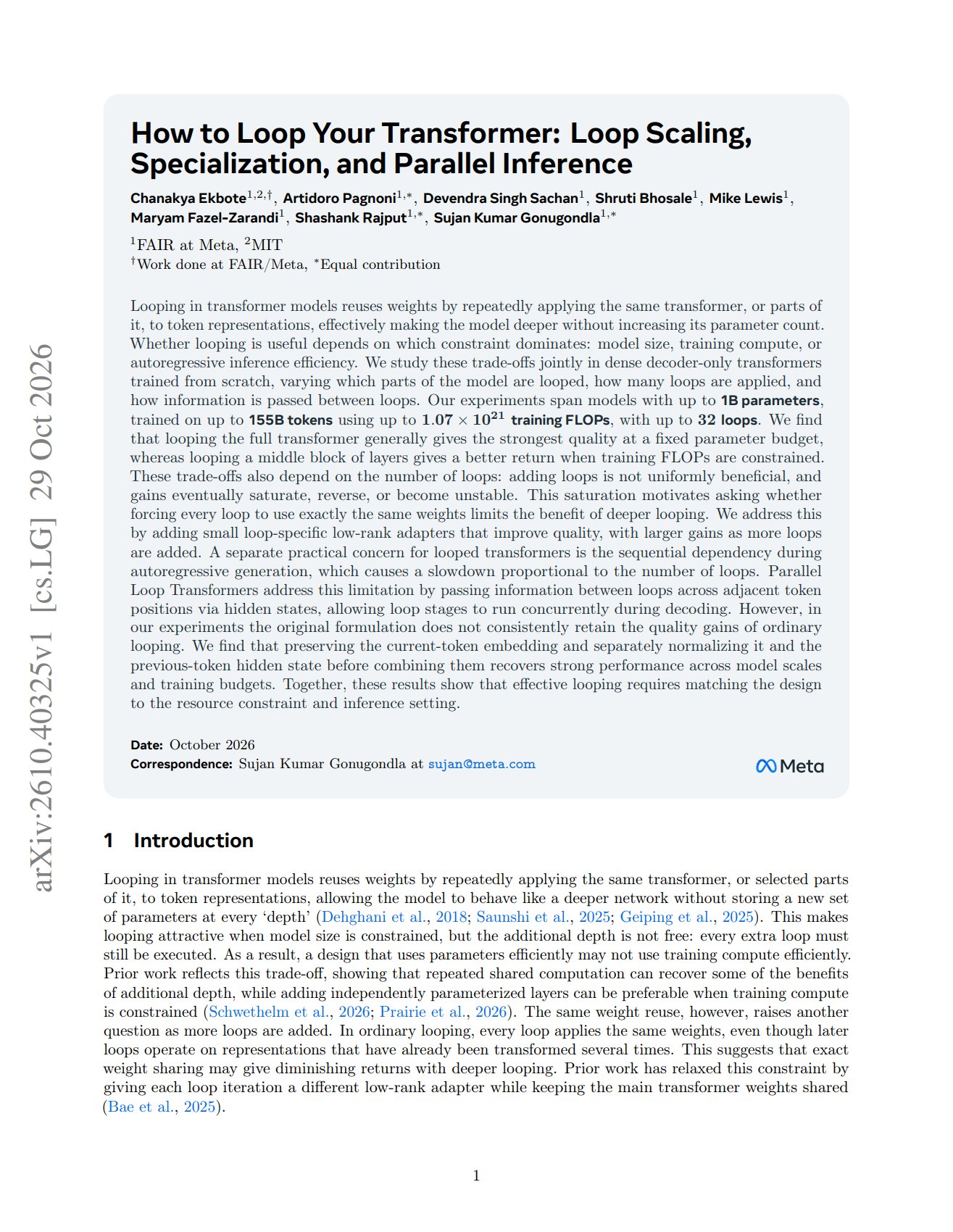
🧵 [1/14]: How should we loop a transformer when model size 📦, training compute 🧮, and inference efficiency ⚡ all matter?
Looping is inherently simple: take the hidden representations produced by a transformer (or part of it) and feed them back through the same transformer (or part of it), reusing its weights. 🔁
But every extra loop costs compute. Choosing which layers to loop, how many times, and how to execute those loops determines whether the trade-off is worthwhile.
We explore these choices in our new paper:
“How to Loop Your Transformer: Loop Scaling, Specialization, and Parallel Inference”
Here’s what we found. Thread below 🧵👇
📄 Paper link: arxiv.org/abs/2610.40325

Atula Tejaswi retweeted

How to Loop Your Transformer: Loop Scaling, Specialization, and Parallel Inference
New paper from Meta.
"Our experiments span models with up to 1B parameters, trained on up to 155B tokens using up to 1.07 × 10^21 training FLOPs, with up to 32 loops. We find that looping the full transformer generally gives the strongest quality at a fixed parameter budget, whereas looping a middle block of layers gives a better return when training FLOPs are constrained."
"We compare exact weight sharing across 2 loops with small loop-specific low-rank adapters that allow each loop to learn a slightly different transformation. These adapters provide only modest gains when few loops are used, but become consistently more useful as the same weights are reused across more loops"
"Naively applying Parallel Looped Transformers (PLT) in our setting does not preserve the gains from looping: quality can degrade as more loops are added. We find that preserving the current-token representation, separately normalizing it and the recurrent state, and controlling how they are combined substantially improves PLT."
Atula Tejaswi retweeted

Marin's 535b is now >80% through pretraining! Here’s loss vs. our scaling-ladder forecasts. The sharp drop comes with the 4K→16K context switch, so we're kind of cheating the forecast. (This was planned.) We'll re-eval at 4k too. forge.coreweave.com/wandb/ma…

ALT Forecast versus observed loss: Hero’s evaluation loss falls below both scaling-ladder forecasts, reaching 1.528 at step 314,999. A sharp drop accompanies the switch from 4K to 16K context near step 258,000, making subsequent values not directly comparable with the 4K forecasts. The cooldown mixture begins at step 312,192.
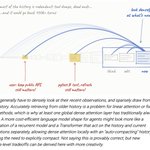
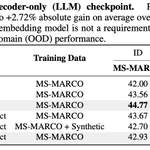
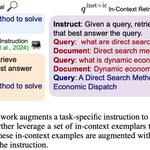
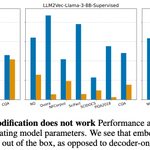
Check out our work on enabling Latent Reasoning without modifying the main LLM, led by @Qtay001!

Atula Tejaswi retweeted

We're looking for new colleagues in Tübingen!

🚀 The ELLIS Institute Tübingen is hiring Principal Investigators as Hector Endowed Fellows!
Enjoy globally competitive packages, full academic freedom & possible co-appointments w/ @MPI_IS and the Tübingen AI Center (@uni_tue).
📍 Tübingen, 🇩🇪
📅 Apply by Dec 13
🔗 institute-tue.ellis.eu/jobs/…
#AI #MachineLearning #Hiring

Atula Tejaswi retweeted

Exciting new results in Theoretical Computer Science from our team at @GoogleDeepMind related to discovering the simplest programs that run the longest before halting! Pushing the frontiers of AI driven open-ended discovery in mathematics and computer science.

Over the past year, the Discovery team at @GoogleDeepMind, in a project led by student researcher @dsantosmarco, has made new discoveries in one of the most beautiful open problems at the edge of computation: Finding the 6th Busy Beaver (BB) number.
While most AI math systems solve human-generated problems, like theorems, this work tackles a different aspect of mathematical creativity: Discovering hidden problems.
For years, the BB Community has pursued one of theoretical computer science’s most captivating collaborative quests: finding the simplest programs that run the longest before halting. Because determining whether these programs ever stop is uncomputable, no universal algorithm can solve it, meaning new mathematical techniques need to be found and invented to make progress.
In this way, the BB challenge serves as an open ended domain for mathematical creativity and, in particular, a generator of hard math problems called Cryptids. These are tiny programs whose halting behavior is governed by and equivalent to deep, unsolved math problems in number theory, similar to the Collatz or Goldbach conjectures. Historically, the BB community had recognized ~20 Cryptids in BB(6), and the best problems were selected for the Busy Math Olympiad (BMO).
Building on their work, Marco built a pipeline powered by Gemini 4 Argon that:
1️⃣ Simulates raw Turing machine traces to compress recurring patterns.
2️⃣ Conjectures mathematical transition rules & runs synthetic experiments to test edge cases.
3️⃣ Proves the equivalence formally in Lean 4.
Using this pipeline, Marco and the team discovered 20 new potential Cryptids and verified 33 more machines previously studied in the BB community. All the proofs were open sourced and shared in the community discord channel and we hope that they will help the community to make progress towards resolving BB(6). We also contributed related halting/non-halting proofs directly to the community GitHub repository.
Finding these Cryptids shows hidden links between simple programs and number theory, and helps mathematicians map the limits of computation. I'm also excited about Gemini 4 Argon's ability to help researchers both solve hard problems and accelerate scientific discoveries, of which Busy Beaver is just one example.
Work led by our student researcher @dsantosmarco with paper contributions from @vivek_veeriah, @Dahoas1 , Andrew Bolt, @zuza777 , Satinder Singh, and myself with additional contributions from Hussain Masoom, @maxencefaldor , @MoritzFirsching and Petar Sirkovic.
Read more about it in our paper: arxiv.org/abs/2610.22603

Atula Tejaswi retweeted

The UT comp ling faculty (@jessyjli, @kanishkamisra, @kmahowald & myself) are looking for PhD students to join us! sites.utexas.edu/compling/ 🤘
We are an interdisciplinary group with interests across linguistics, cogsci and NLP. Apply by 12/1: liberalarts.utexas.edu/lingu…
Atula Tejaswi retweeted

We build agents, run them, and get an output. But what did the agent actually do along the way? Which files did it read, which dead ends did it explore, and why did it make each choice?
Most of the time, we honestly don’t know.
TraceVista, led by @WanqiYang1 makes agent trajectories readable, so you can see much better what your agent did and why.

Cognitive debt may be more dangerous in the AI era.
Introducing TraceVista, a tool for understanding agent trajectories, built around how people naturally make sense of complex work.
Try & examples: tracevista.pages.dev/
Code & skill: github.com/Superone77/TraceV…
Atula Tejaswi retweeted

Bloomberg @business covered our work looking at personal AI agents. Across 13 models, several steered wealthier-seeming users toward pricier options on identical requests (flights, insurance, grad programs), including in cases where the user asked for the cheapest. We term this adversarial delegation.
bloomberg.com/news/newslette…

Atula Tejaswi retweeted

While exploring diffusion language models (DLMs), we kept asking ourselves: given speculative decoding, a lossless acceleration technique, why do we still need DLMs? 🤔 Our latest work, ORL, tries to answer this question: AR optimizes intelligence 👆, speculative decoding optimizes speed 👉, and DLMs optimize the Pareto frontier of speed and intelligence 🚀. Through co-design across the algorithms, the training and inference engine, and the kernels, ORL pushes out a new Pareto frontier of intelligence and speed. Similar performance, much faster than speculative decoding. You say lossy spec? ORL-DLM is better too! 😎
🌐 Project + live demos: introspective-diffusion.gith…
Atula Tejaswi retweeted

🚨 We introduce the problem of persistent calibration for trustworthy, continually learning models and find substantial headroom even for confidence estimators that appear well-calibrated at a single point in time.
As a model gains more knowledge, we would like its confidence to track that change in knowledge, without requiring repeated re-calibration. To test how existing methods do, we evaluate persistent calibration on checkpoints of open models, asking whether confidence estimators trained on earlier checkpoints can generalize to later ones, whose knowledge has changed. To measure the dependence of confidence on knowledge, we evaluate calibration on knowledge contrast sets: subsets containing questions that one checkpoint answers correctly and another checkpoint answers incorrectly, reflecting a change in knowledge.
Key findings:
1️⃣ Both inference-time and fine-tuning methods fall short on contrast-set calibration, even when they are well-calibrated on the full set. We quantify the headroom with oracle methods trained on future checkpoints – we call this an oracle because persistent calibration requires learning to estimate confidence in a way that generalizes to future checkpoints, whereas the oracle trains directly on them.
2️⃣ Multi-checkpoint training helps in both the non-oracle and oracle settings, suggesting an avenue for identifying confidence features that remain robust across changing knowledge.
3️⃣ Our analysis shows that two confidence adapters trained on different checkpoints can perform similarly on one checkpoint, but extremely differently on another checkpoint. This suggests that there is a vast space of possible confidence functions that are well-calibrated on a given checkpoint, out of which only some rely on meta-knowledge features that would generalize to other checkpoints, presenting a challenge for persistent calibration.

Atula Tejaswi retweeted

We are looking for new PIs!! The conditions are really, really excellent: the compute is amazing. Funding lets you start a medium-sized group without applying for grants. Pure intellectual freedom. No teaching obligation. Excellent student pool. Great colleagues. Many startups.
🚀 The ELLIS Institute Tübingen is hiring Principal Investigators as Hector Endowed Fellows!
Enjoy globally competitive packages, full academic freedom & possible co-appointments w/ @MPI_IS and the Tübingen AI Center (@uni_tue).
📍 Tübingen, 🇩🇪
📅 Apply by Dec 13
🔗 institute-tue.ellis.eu/jobs/…
#AI #MachineLearning #Hiring
Atula Tejaswi retweeted

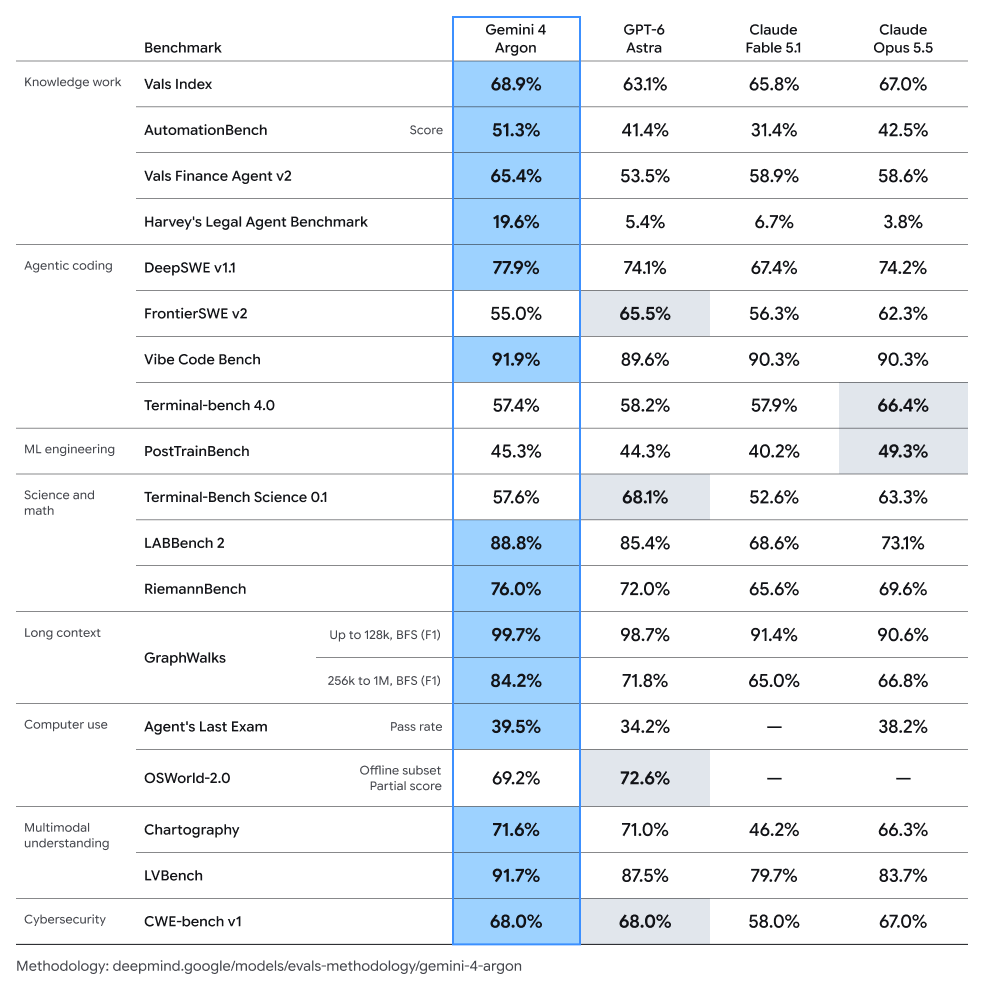
Introducing Gemini 4 Argon – our new frontier model.
It’s built for complex workflows across coding, enterprise knowledge work, and cybersecurity defense – rolling out today to a set of trusted testers through our Fairwind Program.
Atula Tejaswi retweeted
Happy to share that Interleaved Head Attention (IHA) has been accepted at #NeurIPS2026! 🎉
In standard multi-head attention, heads remain isolated during attention. As a result, combining multiple relationships often has to happen across successive layers. 🧠🔗
IHA lets heads communicate before attention by constructing learned mixtures of their queries, keys, and values, creating richer within-layer interactions while preserving the standard attention operation. ⚙️✨
Across long-context retrieval and mathematical reasoning, IHA consistently improves over standard attention. 🚀
Huge thanks to my co-lead author @dvsaisurya and our amazing coauthors @rach_it_, @rish2k1, @Devvrit_Khatri, @brandfonbrener, and brilliant mentors @pliang279, Inderjit Dhillon, and Manzil Zaheer!
🎥 Quick overview below
📄 Paper: arxiv.org/abs/2602.21371

🧵 [1/14]: Talking-Heads Attention by @NoamShazeer et al. showed something interesting: maybe attention heads shouldn’t be fully isolated. 🧠
That got us thinking:
If communication across heads matters, what is the right way for heads to communicate, especially from a one-layer reasoning perspective? 🔗⚙️
That question led us to Interleaved Head Attention (IHA) ✨
📄 Paper link: arxiv.org/pdf/2602.21371

Atula Tejaswi retweeted

Very happy that ParaSpeechCLAP is nominated for Best Student Paper at #Interspeech2026! 🎉
How well does speech match “a husky, raspy voice speaking angrily”?
We train speech-text models to score this, covering both voice traits and delivery styles. 1/5

Atula Tejaswi retweeted

What if the teacher is wrong?
Standard on-policy distillation learns from it anyway.
RG-OPD doesn't.
We gate distillation using verifier reward + the teacher–student likelihood gap, keeping the same reverse-KL objective.
📈 +2.9 pts vs OPD @ 1K
📈 +8.2 pts vs base @ 8K
It's time to bring back Perceiver: arxiv.org/abs/2103.03206


Wrote a short blog about the "shape" of language models, and the tradeoffs they may present in the future. I genuinely think it's a valuable research direction to start thinking about now, especially w.r.t. harness design.
alexzhang13.github.io/blog/2…

258