
Agentic AI in the enterprise, MIT Alum, Ex-Amazon, Angel investor, Vibe coder, agent builder, Dad to Neil and Raj
Austin, TX
Joined May 2010
- Tweets1.2K
- Following519
- Followers404
- Likes766







Pinned Tweet
Most AI sees video as pixels.
Legolas.tech understands cinema. 🎬
We’re building the cinematic intelligence layer for film, streaming, and creators.
Imagine AI that can analyze:
🎥 Shot Continuity
Detects eyeline mismatches, 180° rule violations, screen direction errors, and hidden continuity breaks.
⏱️ Editorial Rhythm
Understands pacing, beat alignment, montage flow, and tension/release structure.
🗺️ Scene Geography
Maps spatial clarity across cuts so audiences always know where they are in the scene.
🎨 Visual Style Analysis
Scores cinematography, lighting, color palette, lens choices, and aesthetic coherence.
🔬 Deep-Dive Analysis
Scene-by-scene breakdowns of themes, visuals, pacing, production techniques, and storytelling intent.
📖 Narrative Arcs
Tracks character evolution, plot progression, and emotional payoff across the story.
🧠 Character Relationships
Maps alliances, conflicts, emotional dynamics, and interaction patterns between characters.
🎭 Genre + Emotional Beats
Understands tonal shifts, suspense curves, comedy timing, horror tension, and audience emotional cadence.
🛡️ MPAA rating
💡 Creator Suggestions
Actionable recommendations tailored to the creator’s style and audience.
This isn’t generic “video AI.”
This is cinematic intelligence.
Hollywood spent 100 years inventing the language of film.
We’re teaching AI to understand it.
Claude will become the brain of the enterprise. We will live and work inside Claude. Claude will run our meetings, host our documents, code, agents and all other artifacts. It will be multi player and all of the enterprise comms will happen inside Claude
Every doomer shitting on AI needs to read this. AI is accelerating human progress at an astounding speed


73
Anthropic and OpenAI are not model companies. They are platform companies just like Amazon, Microsoft, Google, Uber etc. and hence the outsized outcomes.
3
56
Atul Dubal retweeted

Today we’re announcing Ontology 1, our newest AI model.
Perhaps surprisingly, it’s at least 2.7x more accurate than the world’s best ecommerce search engines, and handles queries that have never been possible before.
We keep reaching for the edge of what it can do. We haven’t found it yet.
Not only that, but it learns on its own with no retraining or fine-tuning. And it’s hallucination-free.
It’s a successor architecture for search.
Learn how we built it at onton.com/research/ontology-…, and check out the benchmarks at onton.com/research/ontology-….
Try it at onton.com/.
This blew me away! Looks like almost all the mathematics I learned till my tenth grade depended on the work of Euler
Leonhard Euler wasn’t just a mathematician. He was a force of nature.
He gave us:
• Graph theory
• Modern notation
• Euler’s Identity: (e^{i\pi}+1=0)
• Foundations of topology, analysis, mechanics, optics, number theory… and more.
He also introduced much of the mathematical language we still use today — symbols like (f(x)), (e), and (\pi) became standardized through his work.
His formulas shaped engineering, astronomy, fluid dynamics, and physics long before computers existed.
The Königsberg bridge problem helped launch graph theory, which now underpins everything from internet routing to social networks.
His work on mechanics and differential equations became foundational for modern science and engineering.
Every time modern AI optimizes a graph, models a system, or traverses a network, there’s a ghost of Euler somewhere in the machine.
Few humans have bent the arc that hard.
77

It’s kinda mind-blowing that Austin and Kashmir sit at almost the same latitude.
Same band on the globe. Same sun angle.
And yet…
Austin = heat, live music, tacos, tech
Kashmir = snow-capped peaks, alpine lakes, centuries-old valleys
How is that even real?
It’s a reminder: latitude sets the stage… but mountains, altitude, and history write the story.
The world is way more interesting than maps make it look.
1
103
Atul Dubal retweeted
We believe human generated content will win over AI slop. We want AI to reduce the friction for creators and act as their guiding light - Legolas.tech
The Carnot cycle taught us a brutal truth 200 years ago: every engine leaks value.
Steam engines turned heat into motion, but only a fraction of energy became useful work. The rest was lost to friction, entropy, and bad design.
AI models are on the same curve.
Early models were steam engines:
Huge input, huge compute, massive waste.
Most tokens became heat, not intelligence.
Now we’re entering the Carnot era of AI:
- Better architectures
- Lower inference loss
- More useful work per token
- Less wasted compute
- Higher intelligence efficiency
The winners in AI won’t just be the biggest models.
They’ll be the ones closest to the theoretical efficiency frontier:
max intelligence extracted per unit of data, compute, and latency.
Steam engines didn’t win because they got hotter.
They won because they got more efficient.
Same story with AI.
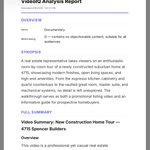
If Opendoor can generate summaries like these for home walkthroughs it will be massively helpful to buyers. Agentic search on top of them will be a killer product! Original video here - youtu.be/_01kW_oBicA?si=odyU…
@nejatian


