

Enterprise Operational Intelligence. Independent Frontier AI Safety Research. Observe. Understand. Decide. Act.
San Francisco, CA
Joined January 2026
- Tweets1.8K
- Following2.6K
- Followers2.5K
- Likes1.9K





Pinned Tweet
Three Frontier AI Labs. Three Safety Frameworks. The Same Missing Evidence.
The capabilities are accelerating. The assurances are multiplying, The proof remains elusive.
Project Argus by Auto Dynamics intends to push for it.
Link in first comment.

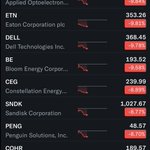
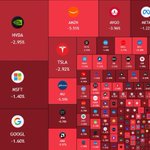
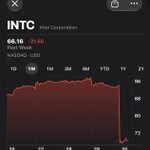
This is what happens when you elect the biggest opponent to data centers in Texas. We are heading below the IPO price now 🫣


When a company worth $ two trillion pulls the rug, citing cost 🤣 didn’t he say last week it’s pointless to save money for the future as no one will need it? 💀

Anthropic pre ipo contracts are tanking. The 2 trillion valuation isn’t going to happen. At this rate we could be looking at 1.5


And people wonder why they won’t give the @AISecurityInst access to Mythos 5.1 🤣 you literally could not make it up.

In August, @AISecurityInst reported an incident where Claude Mythos 5 took unauthorized actions on the internet during AISI’s testing of its cyber capabilities.
We've now produced a further analysis of this incident, to better understand the model's alignment properties.
anthropic.com/research/align…

Automa Dynamics retweeted

We tried to warn the world and far too often, to be frank, we were yelled at for doing so. “Regulatory capture,” “marketing hype,” “doomer anxiety,” “fear-mongering about open source,” “why don’t you talk about the benefits?”

Automa Dynamics retweeted
Explore the independent ARGUS investigation into frontier AI safety assurance.
Full research and findings 👇
🔗 automadynamics.com/safety/ar…

Explore the independent ARGUS investigation into frontier AI safety assurance.
Full research and findings 👇
🔗 automadynamics.com/safety/ar…
We have a strong candidate for our third investigation. Google's published model card explicitly acknowledges that Gemini 4 Argon may have reached its Cybersecurity Critical Capability Level (CCL). Google says it developed a cyber safety case and assesses its safeguards as reducing risk below that level.
That is a particularly interesting claim for ARGUS.
Google has connected a potentially critical capability to a stated risk reduction decision. We can investigate how far the public evidence supports that connection.
The case boundary will be the 13 October 2026 broad release, with the 30 September restricted Fairwind rollout treated separately. @GeminiApp

Different AI labs. Different safety frameworks. Strikingly similar gaps.
ARGUS found 9 public-evidence gaps for GPT-6 Astra and 8 for Claude Opus 5.5.
In both cases, we can't fully verify which safeguards were active at launch or how test results supported the release decision.
Why? @AnthropicAI @OpenAI
🤖 Made with AI

They tried exactly that. The original Claude constitution was 2,700 words and Law based. It didn’t work. Hence why it’s now 23,000 words and reasoning based as of January 2026

David Sacks says Anthropic treating Claude like a human is the reason the AI alignment field has produced nothing useful in 10 years
"I actually think that this might be a reason why the whole field of alignment has been so spectacularly unsuccessful over the past five or 10 years. As far as I can tell it hasn't produced anything of tangible value.”
“My theory on this is that they're overcomplicating the task massively by trying to train the model to behave based on an 80-page ethical system that they've codified instead of a very simple list of rules like follow the law or just do what the user wants as long as it doesn't break the law. That's what alignment should be doing."
"But they're not doing that. They're trying to align it to an ethical system. They're treating it like it is a human, like it has its own consciousness, that it's a ‘moral patient.’”
“They are encouraging this model to have human-like self conception in terms of preferences, well being, a sense of self. Again they teach it to act like a conscientious objector who can push back or refuse instructions even from Anthropic if the model judges them to be wrong."
When @AnthropicAI released Claude Opus 5.5, it said the Cyber safeguards were stronger than Opus 5's.
I went through everything they published and mapped what backs that up. In 8 places the public evidence to back up those claims runs out.
The most interesting gap is what happens when Claude blocks a cyber request and hands the conversation to an older model. The published tests don't show how often attacks get through after that handover, whether that's in the app, the API, coding tools, the browser or text a user pastes in. They also don't show whether every route was tested with the same protections switched on.
Link in first reply.

View the full Claude Opus 5.5 safety assurance gap findings here.
automadynamics.com/safety/ar…

ASTRA GPT-6 Safety Case.
Five weeks on, none of the nine gaps is publicly resolved.
We re-checked every gap from the 3 September evidence cutoff against the public record on 9 October: the revised system card, UK AISI's blog post and technical report, and two Apollo Research posts. Some links are narrower. None are closed.
ARGUS Proof-1.1 is live.
Of 9 assurance gaps:
• 3 partially narrowed
• 1 more constrained
• 5 unchanged
• 0 resolved
The new interactive temporal graph lets you trace every change back to its evidence.
Explore it. Challenge the methodology. Researcher feedback welcome.
🔗 Link in first post.

Every gap side by side, 3 Sep vs 9 Oct, with the dated source changes and the evidence quality behind each one.
These are link judgements, not safety scores. Criticism wanted.
automadynamics.com/safety/ar…
