

Discovering the world's best high-end experiences • Built the fastest independent label to hit 1B Spotify streams • Now curating luxury events
Event pipeline →
Joined April 2015
- Tweets782
- Following216
- Followers3.8K
- Likes6.3K





Pinned Tweet
There are only 5 airports in the world you'd hope to get delayed in.
Most airports are somewhere you wait to leave. These five make 6 hours feel like not enough.
Here they are, ranked worst-to-best:
#1 Singapore Changi (SIN)
If you had $100,000 in loose change, what would you do with it?
Here’s one option: spend it all on one night at The Mark Hotel in New York.
Actually, you’d still be $14,767 short.
In April 2025, Guinness World Records certified its penthouse as the most expensive hotel room in the world, at $114,767 a night.
So what does that actually get you?
The top two floors of the hotel. Over 10,000 square feet.
Five bedrooms. Six bathrooms. Four fireplaces. A living room with 26-foot ceilings that converts into a full ballroom.
A 2,500-square-foot rooftop terrace overlooking Central Park and the Met.
Furniture custom-designed by Jacques Grange, the interior designer whose clients have included Yves Saint Laurent.
And the perks go beyond the room: a personal butler, airport transfers, and private after-hours tours of the Metropolitan Museum of Art.
At this price, you’re not booking a room. You’re borrowing the best address in New York.


There are only 5 airport lounges in the world worth arriving early for.
Most lounges are just a nicer place to wait. These five make you wish your flight was delayed.
Here they are, ranked best to worst:
#1 Cathay Pacific The Wing, Hong Kong
Most airlines spend on the seat in the air.
The best ones spend on the hour before you board.
The journey doesn’t start at take-off.
It starts the moment you walk into the airport.
Thank you for reading!
I write about and aspire to host the world’s best experiences.
Follow me @averyx99 so you don’t miss the next one.
Qatar Airways built a business class seat so good, it made its own first class pointless.
It launched it just weeks after four neighbouring countries banned the airline from their airspace.
And its business class has been voted best in the world 13 times.
Here's the story of the QSuite (and the lesson most businesses miss):
On June 5, 2017, Saudi Arabia, the UAE, Bahrain and Egypt cut ties with Qatar overnight.
For Qatar Airways, it was a nightmare: Its planes were banned from its neighbours’ skies. 19 routes disappeared. The flight paths in and out of Doha went from 18 to just 2.
Most airlines would have cut costs and waited it out.
Two weeks later, Qatar flew a Boeing 777 to the Paris Air Show to show the world its new business class.
They called it the QSuite.
What it introduced:
— A sliding door on every seat
— The first double bed ever offered in business class
— Centre panels that fold away, turning four seats into a private room for a family or a team
— A patented design rivals couldn't copy
That same week, Qatar was named the World's Best Airline.
Now here's the part nobody talks about:
Qatar already sold first class. The QSuite made it almost impossible to justify.
So they stopped trying.
Within a year, Qatar began pulling first class from every aircraft except its A380s. By 2023, the CEO said its next-generation planes wouldn't have first class at all.
His logic: if business class already gives you everything first class does, why build a cabin above it?
"I don't see the necessity."
Think about that.
Etihad built the most expensive seat in the sky and let it fly empty for the attention.
Qatar went the other way. Instead of raising the ceiling, it raised the floor and put a first class experience where most of its premium passengers actually sit.
The result: it’s been voted World’s Best Business Class year after year, by millions of passengers.
Most businesses obsess over their top tier.
Qatar made its middle tier so good, the top tier stopped making sense.
Your premium offer gets people talking. But your core offer is what they tell their friends about.
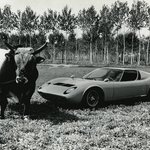
Lamborghini’s first car was unveiled without an engine in it.
Three years later, the company built a car so radical, many called it the world’s first supercar.
It’s 1963, at the Turin Motor Show in Italy, one of the biggest car shows in the world. Ferruccio Lamborghini, a wealthy tractor maker who’d fallen out with Enzo Ferrari, is ready to reveal his first car.
But there's one problem, the engine he'd built doesn't fit under the bonnet.
So it sits on display next to the car.
Over the next two years, Lamborghini builds comfortable, elegant road cars. They're impressive, but not yet legendary.
Meanwhile three of his young engineers start a side project in their spare time: a car with a powerful racing-style engine placed behind the driver, not in front.
Ferruccio isn’t convinced. He has no interest in racing cars. But he lets them show it.
1965, back at the Turin Motor Show. They reveal just the frame of the car. The skeleton and the engine.
Four months later, the finished car appears at the Geneva Motor Show: the Lamborghini Miura.
It’s the car that put Lamborghini on the map, and the car that made the word “supercar” famous.
Sometimes the most important thing you can do as a founder is trust the people who see what you can’t.


Three F1 world titles. Each one shaped by a decision made off the track.
One of them is now a £64m lawsuit.
1 • First to cross the line but still lost the title
2 • Still being fought in court 18 years later
3 • One official. One call. One champion.
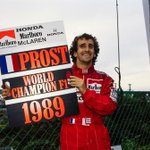
1989, Suzuka:
Senna and Prost (team-mates) collide at the final corner. After the crash, Senna rejoins by driving through the escape road and wins the race. Then race officials disqualify him for the shortcut. Prost is champion, and Senna blames the sport’s French president.
2008, Brazil:
Massa wins his home race and, for around 30 seconds, he’s world champion. But further back, Hamilton passes one more car on the final lap. Fifth is enough. He takes the title by one point.
What few knew at the time: weeks earlier in Singapore, Renault had Piquet Jr crash on purpose while Massa was leading. Massa claims F1’s bosses knew and kept quiet, and that it cost him the title. He’s now suing F1, the FIA and Bernie Ecclestone
2021, Abu Dhabi:
Hamilton and Verstappen arrive level on points. Hamilton is cruising, until a late crash brings out the safety car. With team bosses lobbying race control over the radio, the race director lets only some lapped cars through and restarts the race a lap early. Verstappen passes on the final lap.
The FIA later called it human error. The race director was removed and the result stands.
After 2021, direct radio contact between teams and the race director was banned, and software was introduced to automate the process that failed.
But rules don’t enforce themselves. People do, often under pressure and in seconds.


The original sentence in Schumacher’s letter:
“I will sign the driver agreement with you…”
“The” became “a”. The line saying it’d be Jordan’s version of the deal was crossed out.
Now he only had to sign a contract (any contract)
The kicker? Jordan’s own lawyer agreed to it.


Eddie Jordan gave Michael Schumacher his F1 debut.
Two weeks later, he’d lost him. Over one word.
August 1991. Jordan, a brand-new team, had just lost one of its drivers to a jail sentence. Eddie needed a replacement for the Belgian Grand Prix, fast.
He took a chance on a 22-year-old German sportscar driver. He later admitted he took him because he needed the money (Mercedes paid $150,000 for the seat).
Schumacher qualified 7th on his debut, at a track he’d never driven.
The whole paddock noticed.
Eddie thought he had him secured. He’d agreed in principle with Mercedes, who backed Schumacher, to keep him for the rest of the season.
But no contract was signed.
The letter of intent said Schumacher would sign “a contract”, not “the contract”. His manager later said that one-word difference is the only reason he didn’t have to stay.
Jordan went to court and lost. There was no contract to enforce.
The fight got so messy that F1 changed its rules. From 1992, every driver contract had to be officially registered.
By then, it was too late for Eddie. Schumacher had raced for Benetton in the next Grand Prix, and went on to win 91 races and 7 world titles.
All because of the difference between “a” and “the”.
In 1989, a man who admitted he knew nothing about racing was brought in to run a Formula 1 team.
Within six years, his team had won back-to-back world championships.
His name was Flavio Briatore, and how he did it is a lesson in hiring.
Briatore didn’t come from motorsport. He’d run Benetton’s clothing business in America. In the paddock, he was dismissed as a T-shirt salesman.
Then, in 1991, a 22-year-old German made his F1 debut for Jordan and qualified 7th.
One race. That was all Flavio Briatore needed to see.
Nobody in Briatore’s team was convinced. He signed him anyway, before Jordan could lock him into a contract. According to Briatore, the deal was done at 3 or 4 in the morning.
Then he backed his judgement: he built the entire team around him.
That driver was Michael Schumacher. He holds 19 of Benetton’s 27 Grand Prix wins and both of its drivers’ titles.
Eight years later, Briatore did it again. He signed an 18-year-old called Fernando Alonso, built Renault around him, and won two more titles.
Same playbook both times:
> Spot talent before it’s obvious
> Move faster than everyone else
> Then build around it
Briatore hired for what he saw, then committed completely.
Netflix’s new documentary, Schumacher ’94, tells the story of the season that made him a legend.
You could argue that the legend started three years earlier, with one race from Schumacher and one decision from a former clothing executive.


The city you live in decides:
> Who you compare yourself to
> What “successful” looks like
> How fast you think you should be moving.
These are subtle effects that are rarely noticed until you leave.
Your CV shows what you’ve done.
Your city shows what you’re willing to do next.
Follow @averyx99 for more like this.
Where you live says more about your ambitions than your CV.
Every city quietly rewards one kind of ambition and punishes another.
Some of you should really move.
This is what your choice of city says about you:

4/ Bali
You've exited the game.
Once you set up shop in Bali, it's very rare that you pull yourself back to the ambition that you entered with.
Arrive with momentum and it can work.
Arrive looking for it and you're unlikely to find it here.

3/ Miami
You want your ambition to be seen.
In New York, the richest person in the room could be wearing a hoodie.
In Miami, everyone dresses for the life they want.
People move there for the energy, love it, and leave within a few years.


