


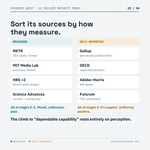
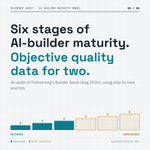



Every offensive operation has a built-in verifier. The attacker knows instantly whether the attack succeeded without interpretation, triage or maybe. Binary signal at machine speed.
A SOC analyst reviews an alert. Is it real? #aws #cloudsecurity dev.to/bala_paranj_059d338e4…

12
You run a security scanner on your AWS environment. It finds 47 issues. The leaders hear: "our infrastructure has 47 things wrong with it." This is the problem with bug-finding tools. Every finding is bad news.
#aws #cloudsecurity dev.to/bala_paranj_059d338e4…

4
Most cloud security tools work the same way. They iterate through resources, check each one against a baseline, and report pass or fail.
Is encryption enabled?
Is the bucket private?
Is MFA enforced?
Each check evaluates one attribute on one resource in isolation.
This works for a specific class of problems where the settings are universally wrong regardless of context. A bucket with Principal: * in its policy is public. That's a fact. The check is correct. The finding is actionable. #aws #cloudsecurity dev.to/bala_paranj_059d338e4…

1
39
A scanner can check each of these against the live configuration. That's table stakes. The harder question is: can all five hold simultaneously on the same bucket? Once you ask it out loud, you can hear the contradiction. Requirements 1 + 2 + 3 cannot coexist. There is no S3 configuration where the same bucket is both anonymously readable and not-anonymously-readable. The compatibility check tells you the requirements themselves are inconsistent before you spend an engineering time trying to deploy them. #aws #cloudsecurity dev.to/bala_paranj_059d338e4…

5
Remember Clippy? Microsoft's paper clip assistant that popped up to ask: "It looks like you're writing a letter. Would you like help?"
Clippy was chatty, presumptuous, frequently wrong, and impossible to disable without effort. Clippy's design goal: be helpful. Clippy's actual effect: be annoying. The failure was the DESIGN MODEL. A helper agent that's always visible, always offering, always interpreting your actions as requests for assistance is categorically wrong for any domain where the user needs to focus. #aws #cloudsecurity dev.to/bala_paranj_059d338e4…

17
The cloud security industry has a tool for every case. An S3 scanner. An IAM analyzer. A Lambda checker. A VPC auditor. A Kubernetes admission controller. A Terraform linter. A CloudFormation validator.
Each tool is specialized for its local domain. Each tool has its own engine, its own rule format, its own output schema, its own dashboard. The specialization is in the code. A different mechanism for every case. #aws #cloudsecurity dev.to/bala_paranj_059d338e4…

18
The Technology Radar's note on #GoogleAI Agent Development Kit (ADK) shows it has matured: multi-language development, stronger observability and runtime features, software-engineering abstractions for orchestration, tools, evaluation, and deployment. The Radar also notes it's still pre-GA in parts, with "occasional rough edges and upgrade friction," and lands best for teams "already invested in Google's platform." And it's now one entry in a crowded field with Microsoft Agent Framework, Amazon Bedrock AgentCore, the #OpenAI Agents SDK, the Claude Agent SDK, plus #LangGraph and #CrewAI. dev.to/bala_paranj_059d338e4…

39
A senior engineer said: instead of typing prompts one at a time, write a program that types prompts for you. That's a for-loop. The program runs the model, checks the output, and runs the model again if the output isn't good enough. That's a while-loop with a conditional break. #ai dev.to/bala_paranj_059d338e4…

3
In 1980, Manny Lehman published his laws of software evolution. The second law is violated at industrial scale by AI-assisted development:
Lehman's Second Law (Increasing Complexity): As an evolving program is continually changed, its complexity increases unless work is done to maintain or reduce it.
The key phrase: "unless work is done." Complexity doesn't stay constant. It doesn't decrease on its own. It increases with every change. UNLESS someone actively works to reduce it. Refactoring. Consolidation. Deletion. Simplification. These are the forces that counteract entropy. Without them, every change adds complexity, and the system moves toward calcification. The state where any change breaks ten other things.
AI is the most powerful additive force ever applied to a codebase. And it has no instinct to subtract. #ai #architecture #programming dev.to/bala_paranj_059d338e4…

7
At The Pragmatic Summit in March, Uber's engineering leadership walked through the internal systems they built to support AI-assisted development. The list is impressive: MCP Gateway, Agent Builder, AIFX CLI, Minion, Code Inbox, uReview, Autocover, AutoMigrate, Shepherd. Nine systems, built by dozens of platform engineers, to manage the consequences of generating more code faster.
Every one of them solves a real problem but not the right problem. #ai #agent dev.to/bala_paranj_059d338e4…

10
We built a cloud security CLI, LLM-assisted, standard Go tooling. We followed Unix philosophy from day one because: small tools, single responsibility, standard formats between steps, compose via pipes.
We looked at the pipeline and realized every step is automatable by an AI agent, because the same properties that make tools composable for humans make them composable for agents. #ai #agent dev.to/bala_paranj_059d338e4…

1
1
58
The NCCoE just published ten "Design Tenets for Agentic Identity" as part of their Accelerating the Adoption of Software and AI Agent Identity and Authorization project. They cover everything from distinct agent identification to immutable evidence chains.
You'd think the problem is ahead of us, new protocols to design, standards to write, infrastructure to build. But six of these ten tenets map directly to cloud configuration properties that exist today, in the IAM and logging infrastructure you already run.
#ai #agent #cloudsecurity dev.to/bala_paranj_059d338e4…

9
If you are wondering how cloud outages is related to cloud security, CIA triad and Lamport's theory will answer that question. In CIA triad, nothing bad happens in Lamport terminology means none of the pillar in that triad is affected. Confidentiality and integrity is mostly aligned with security where as availability is affected the most in outages. However the CIA triad is used in security policies and all three core pillars can be affected. #aws #cloudsecurity #Cloudflare #crowdstrike dev.to/bala_paranj_059d338e4…

6
Cloud failures come from systems that are good enough until they aren't.
The IAM role was good enough for 18 months. Then someone discovered the trust chain it created. The S3 bucket policy was good enough until the VPC endpoint was removed and the condition clause failed silently. The security tooling was good enough. It detected 95% of individual misconfigurations. The 5% it missed were the compound paths where breaches happened. #AWS #cloudsecurity dev.to/bala_paranj_059d338e4…

1
21
Why AWS, Crowdstrike, Cloudflare outages keeps repeating and how to fix the netire class of outages instead of instances of outages: dev.to/bala_paranj_059d338e4… #aws #Cloudflare #crowdstrike

51
The UK AI Safety Institute published a case study in July 2026. They used frontier AI models to find misconfigurations in their own AWS cloud environment. Over two weeks, using three different approaches, they found and fixed several real issues including a previously undiscovered 5-step attack chain that allowed an ordinary user to escalate privileges, move laterally, and access other users' data. #aws #cloudsecurity dev.to/bala_paranj_059d338e4…

6
Grant Oviatt spent 15 years running security operations at Mandiant and Red Canary before building AI SOC agents at Prophet Security. He describes himself as a former AI skeptic: "anything AI detection in it scared me to death". He changed his mind when he saw what happened when you break security investigations into composable pieces that agents can tackle individually. #aws #cloudsecurity dev.to/bala_paranj_059d338e4…

55
James Shore's article: You Need AI That Reduces Maintenance Costs has a line that should change how you evaluate every AI coding tool:
You need AI that reduces your maintenance costs.
Code is not an asset. It is a liability. Every line you add is something you now have to understand, debug, secure, and change for the rest of the system's life. Output speed is the cheap part. The expensive part dominates the lifetime cost of software. So an AI that makes you produce more code faster, without lowering the cost of living with that code, hasn't helped you. It has handed you a bigger liability, faster. The math only works when the AI reduces maintenance cost roughly in proportion to the productivity it adds. #ai #cloudsecurity dev.to/bala_paranj_059d338e4…

7
In the span of eighteen months, AI-assisted development went from "autocomplete for code" to "agents that build entire applications while you sleep." The architecture underneath is not complete.
The industry converged on a dominant frame: Agent = Model + Harness. The model generates. Everything else such as filesystem, sandbox, memory, context management, tools, skills, prompt engineering, loop detection is the harness. The harness serves the model. The model is the system. #ai #agent dev.to/bala_paranj_059d338e4…

1
75