

Cooking content for @ChumpCoinX @Chonketha @HusherExchange @LaunchOnSumo @HumidiFi @spx6900 @joecoin_ @bobocouncil
Wuhan China
Joined October 2023
- Tweets48.3K
- Following3.2K
- Followers4.5K
- Likes93.3K






G retweeted
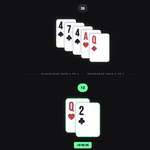
NFL SNF 🏈 Seahawks defeat Chiefs ✅ +3 units
Seahawks last home win on 1/17 under this referee -> Mahomes stayed on 117 wins
(Last game was in preseason on 15th of august (158) at Seahawks -> Reid got 158th loss)


G retweeted
Introducing Coding Uni 🧩 Learn codes, patterns, cycles & historical connections behind my decodes.
I’ll still share some research here, but all my picks and in-depth analysis will be on there.
Link below 👇
patreon.com/charlescodinguni
G retweeted

Keeta Stablecoins sit in the same account as your dollars, euros, and crypto. Hold them, send them, and switch between them in Keeta Personal and Keeta Business today.
wallet.keeta.com


G retweeted

$ROBEN 10X from here or I'm gay
0x8E6A06f6855AA5F4B80d3963DA7E34c593555cce

G retweeted
How player-driven is an economy if the publisher can reverse your trades or force you to use their currency?
Trade in our MMO is settled instantly, and you can use the currency of your choice
G retweeted

LET’S BREAK DOWN WHAT MAKES KUSD DIFFERENT FROM USDC AND TETHER, IN PLAIN ENGLISH.
Most stablecoins you already know work like this. A company takes your dollars, holds onto them, and gives you a token back. But what’s actually sitting behind that token isn’t just cash in a vault. USDC is backed by a mix of US Treasury bills and cash. Tether goes even further, its reserves include Treasury bills, Bitcoin, secured loans and gold. So when you hold USDC or Tether, you’re trusting a company to manage an investment portfolio on your behalf and always have enough value to cover what you’re owed.
KUSD works differently, and this is the part worth understanding. It isn’t backed by a portfolio of assets the issuer invests. It’s backed 1:1 by actual dollars sitting in a regulated bank account. One KUSD means one real dollar held at a bank, full stop. Not a dollar’s worth of Treasury bills, not a dollar’s worth of gold, an actual dollar in an actual account.
Think of it like the difference between an IOU backed by a mixed investment fund versus a digital receipt for money that’s physically sitting in your bank right now. Both might work fine most of the time. But the second one is simpler, easier to understand, and has fewer places for something to go wrong.
This matters more than it sounds. When Silicon Valley Bank collapsed in 2023, billions of dollars of USDC’s reserves got stuck there and the token briefly lost its peg. That happened because of how reserve backed stablecoins are structured, the issuer’s whole operation sits between you and your money. A model built on direct bank deposits, with the bank itself accountable for redeeming you 1:1, closes a lot of that gap.
This is also why it’s called a tokenized commercial bank deposit rather than a stablecoin in the traditional sense. It isn’t trying to create a new digital dollar that mirrors the real one. It’s putting the actual money the economy already runs on, regular bank deposits, directly on a blockchain so it can move instantly, anywhere, without losing what it represents along the way.
$KTA @schenkty @KeetaNetwork

