

Sharing photos of America's pastime.
Earth
Joined January 2017
- Tweets35.9K
- Following2.5K
- Followers111K
- Likes2.1K
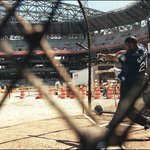



Ken Griffey Jr. takes batting practice on the unfinished field at Safeco Field in 1998 — a full year before the park opened, testing how the ball would carry in the ballpark already being called The House That Griffey Built.
The park rose because the Kingdome was falling apart: ceiling tiles crashed from its roof in July 1994, and after King County voters narrowly rejected a stadium tax in September 1995, Griffey's “Refuse to Lose” Mariners erased a 13-game deficit, reached the playoffs for the first time and beat the Yankees in the Division Series — Griffey scoring from first base on Edgar Martinez's double to win Game 5. Six days later, the state legislature approved a funding package anyway. Ground was broken on March 8, 1997, with Griffey the star of the ceremony, and the $517.6 million park went up just south of the Kingdome, with real grass and a retractable roof. Griffey, Martinez and Jay Buhner talked the architects into pulling center field in from 422 feet and lowering the outfield wall, but when the Mariners' hitters took an impromptu batting practice at the construction site in mid-1998, they came back worried: the ball did not carry the way it had indoors. Griffey still hit 56 home runs in 1998, for the second straight season, leading the league again and finishing fourth in the MVP voting. Safeco Field opened on July 15, 1999, with San Diego winning the first game 3-2; Russ Davis hit the park's first home run two days later, and Griffey hit his own first Safeco homer on July 18, off Arizona's Omar Daal — three weeks after he had hit the last home run in Kingdome history. He got only half a season in the new park: that November he turned down an eight-year deal worth more than $135 million and asked to be traded closer to his Orlando home, and on February 10, 2000, Seattle sent him to his hometown Cincinnati Reds for Mike Cameron, Brett Tomko, Antonio Perez and Jake Meyer.
⚾ Griffey hit 56 home runs in 1997 and 56 more in 1998, won an MVP and 10 Gold Gloves, but never played in a World Series — the greatest player never to reach the Fall Classic? 👇️

Randy Johnson delivers a pitch for the Seattle Mariners in the 1990s — the Big Unit in the decade Seattle turned him from the wildest thrower in baseball into its most feared left-hander.
Seattle acquired him from Montreal on May 25, 1989, in a package with Brian Holman and Gene Harris for ace Mark Langston. On June 2, 1990, Johnson threw the first no-hitter in Mariners history, a 2-0 win over Detroit — even as he led the American League in walks three straight seasons. Late in 1992, Nolan Ryan and Texas pitching coach Tom House taught him to land on the ball of his front foot instead of his heel, and everything changed: in 1993 he went 19-8 with a 3.24 ERA and 308 strikeouts, and at the All-Star Game in Baltimore on July 13 he sailed a fastball over John Kruk's head while Kruk bailed out of the box. In 1995 he won the Cy Young Award at 18-2 with a 2.48 ERA and 294 strikeouts, then, on one day's rest, walked out of the bullpen in the ninth inning of Game 5 of the Division Series against the Yankees on October 8, pitched three innings, struck out six and got the win when Edgar Martinez's two-run double — The Double — gave Seattle its first postseason series win. Back surgery cost him most of 1996; he came back in 1997 to go 20-4 with a 2.28 ERA and 291 strikeouts, finishing second in the Cy Young voting. Seattle traded him to Houston on July 31, 1998, for Freddy Garcia, Carlos Guillen and John Halama, and he went 10-1 with a 1.28 ERA down the stretch. He left the Mariners with 130 wins and 2,162 strikeouts — at the time, both franchise records.
⚾ Johnson struck out 2,162 hitters as a Mariner and finished his career with 4,875, second only to Nolan Ryan — is the Big Unit the greatest left-handed pitcher of all time? 👇️

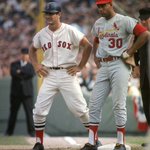
Carl Yastrzemski stands on first base at Fenway Park during Game 1 of the 1967 World Series on October 4, 1967, Cardinals first baseman Orlando Cepeda holding him on — the American League's Most Valuable Player face to face with the National League's, the two MVPs of 1967 sharing a base. (Photo by Neil Leifer — Sports Illustrated/Getty Images)
Yastrzemski had just authored a Triple Crown season — a .326 average, 44 home runs to tie Harmon Killebrew and a league-leading 121 RBIs, a feat no hitter would match until Miguel Cabrera in 2012 — while also leading the AL in runs, hits, and on-base and slugging percentage. He fell one vote short of a unanimous MVP, a Minneapolis writer's ballot for Minnesota's Cesar Tovar the lone dissent. Cepeda, acquired from San Francisco for pitcher Ray Sadecki in May 1966, hit .325 with 25 homers and an NL-best 111 RBIs and took every first-place vote — the NL's first unanimous MVP since Carl Hubbell in 1936. October divided them. Bob Gibson won this opener 2-1, the first of three complete-game victories that made him the Series MVP. Yastrzemski hit .400 with three home runs — two in Game 2 behind Jim Lonborg's one-hitter, the third leading off Boston's three-homer fourth inning in Game 6 — while Cepeda went 3-for-29 (.103) and Lou Brock stole a Series-record seven bases. Lonborg, the winner of Games 2 and 5, started Game 7 on two days' rest, and Gibson beat him 7-2, homering himself, to end the Impossible Dream one win short — Boston's first pennant since 1946 had been a 100-to-1 shot in the spring.
⚾ Yastrzemski won the Triple Crown and hit .400 in defeat, Cepeda won the ring while going 3-for-29 — whose 1967 would you rather have, the heroics or the title? 👇️

Joba Chamberlain sprays himself with bug spray on the mound at Jacobs Field in Cleveland on October 5, 2007, in the eighth inning of Game 2 of the American League Division Series — the night a swarm of Lake Erie midges turned a playoff game into the “Bug Game.” (Photo by John Biever — Sports Illustrated/Getty Images)
The rookie reliever had allowed one earned run all season, a 0.38 ERA in 24 innings since his August debut, and the Yankees protected him with strict usage limits the papers dubbed the “Joba Rules.” He entered in the seventh and struck out Franklin Gutierrez to strand two runners, protecting a 1-0 lead built on Melky Cabrera's third-inning home run off Fausto Carmona — the Yankees' only run, and one of just three hits Carmona allowed in nine innings. Then the eighth arrived, and so did the midges: non-biting flies hatched from Lake Erie, drawn by an 81-degree October evening and the ballpark lights until they coated Chamberlain's neck and swarmed his face. Play was never stopped. Chamberlain walked Grady Sizemore on four pitches, wild-pitched him to second, and after a sacrifice bunt and with two outs, threw a second wild pitch that let Sizemore score the tying run — a run scored without a hit. Mariano Rivera held Cleveland scoreless for two innings, but in the 11th, Travis Hafner's bases-loaded, two-out single off Luis Vizcaino scored Kenny Lofton for a 2-1 win before 44,732 fans. Cleveland took the series in four games — Joe Torre's last as Yankees manager — then led Boston 3-1 in the ALCS before losing three straight. Chamberlain never again reached his rookie heights: a 2008 shoulder injury, a full season starting in 2009, a World Series ring that fall, Tommy John surgery in 2011 and a dislocated ankle in a trampoline accident the next spring. The midges are still Cleveland lore — when they reappeared at the same park during the 2024 ALDS, Chamberlain's advice was: “Grab some dryer sheets or vinegar.”
⚾ The umpires never stopped play while Chamberlain pitched blind through the swarm — should the game have been halted until the midges cleared? 👇️

Kirk Gibson leaps in triumph at Tiger Stadium on October 14, 1984, after circling the bases on his eighth-inning, three-run home run off Rich “Goose” Gossage in Game 5 of the World Series — the swing that all but sealed the Detroit Tigers’ first championship since 1968. (Photo by Mary Schroeder)
Gibson was a Michigan State All-American wide receiver who had been drafted by the Tigers and by the NFL’s St. Louis Cardinals alike, and he hit .282 with 27 home runs and 91 RBIs in 1984. He opened Game 5 by driving Mark Thurmond’s first pitch to right-center for a two-run homer with Alan Trammell aboard. San Diego tied it 3-3, but in the fifth Gibson singled and scored the go-ahead run, tagging up on pinch-hitter Rusty Kuntz’s sacrifice fly — a pop fly to second base. Lance Parrish homered off Gossage in the seventh, Kurt Bevacqua answered off Willie Hernández in the eighth to cut it to 5-4, and in the bottom half Marty Castillo walked, Lou Whitaker reached on a bunt and Trammell sacrificed the runners to second and third. With one out and first base open, Padres manager Dick Williams came to the mound to order an intentional walk, but Gossage — who had struck Gibson out in his first major-league at-bat in 1979 — talked him out of it. Gibson flashed ten fingers at manager Sparky Anderson, a $10 bet that Gossage would pitch to him, and Anderson yelled back, “He don’t wanna walk you!” The 1-0 fastball landed in the right-field upper deck, Gibson finished with three hits, three runs and five RBIs, Aurelio López got the win in relief and Hernández the save before 51,901 fans, and Trammell was named the Series’ Most Valuable Player. The title capped a 104-win season that started 35-5 and never left first place, and made Anderson the first manager to win a World Series in both leagues. Four years later, on October 15, 1988, Gibson hobbled to the plate for Los Angeles on two injured legs and hit his walk-off homer off Dennis Eckersley in Game 1 — his only at-bat of that Series.
⚾ A 35-5 start, 104 wins and a title won wire to wire — are the 1984 Tigers the most underrated champions of the modern era? 👇️

Mickey Mantle rounds third base at Dodger Stadium on October 6, 1963, after homering off Sandy Koufax in Game 4 of the World Series, while Koufax watches from the mound. The seventh-inning home run tied the game 1-1, and it was the 15th World Series home run of Mantle's career, tying Babe Ruth's record.
It was the only tie the Yankees managed all Series. Whitey Ford allowed just two hits, but one of them was Frank Howard's fifth-inning drive into the second deck, and Mantle — who had played only 65 games after breaking his foot on a fence in Baltimore on June 5, and whose only hit of the Series had been a bunt single — answered with one out in the seventh. The tie barely outlasted the inning. Jim Gilliam's high bouncer was gloved by a leaping Clete Boyer, whose throw was true, but Joe Pepitone lost it in the white-shirted crowd — “It was a perfect throw. I didn't see it,” Pepitone said — and Gilliam raced to third and scored on Willie Davis's sacrifice fly. Koufax, pitching with a novocaine shot in an open sore on his push-off foot, finished a six-hit complete game with eight strikeouts and no walks, striking Mantle out in the ninth with the tying run aboard. The 2-1 win completed the first World Series sweep ever suffered by the Yankees, who scored four runs in four games and never led once. Koufax, who had struck out a Series-record 15 in Game 1 at Yankee Stadium, allowed three earned runs across two complete games and was named the Series' Most Valuable Player. Mantle took the record for himself a year later with a walk-off homer in Game 3 of the 1964 Series, and finished with 18 World Series home runs, a mark that still stands. “I never saw pitching like that,” Mantle said of the Dodgers afterward. “These guys are the best I have ever seen.”
⚾ Mantle tied Ruth that afternoon and passed him a year later, finishing with 18 World Series home runs — will that record ever be broken? 👇️

Jackie Robinson at home in St. Albans, Queens, in late 1949, with the honors of the season just ended around him — the greatest of them the National League Most Valuable Player Award, announced on November 18, 1949. Two and a half years after breaking baseball's color barrier, he had become the first Black player ever named his league's Most Valuable Player.
The numbers said it plainly. Robinson won the National League batting title at .342 — the only batting title of his career — with 203 hits, 122 runs scored, 16 home runs, a career-best 124 runs batted in and a league-leading 37 stolen bases, and the writers gave him 12 of 24 first-place votes and 264 points to Stan Musial's 226. That spring he had rebuilt his swing under Hall of Famer George Sisler, learning to wait on the pitch and drive the ball to right field, and jumped from .296 in 1948 to the batting crown. In July, Ebbets Field hosted the first All-Star Game with Black players: Robinson started at second base for the National League alongside Dodgers teammates Roy Campanella and Don Newcombe, with Cleveland's Larry Doby representing the American League. Six days later he was in Washington, testifying before the House Un-American Activities Committee in the Paul Robeson affair — and telling Congress that Black Americans had been angry about Jim Crow long before Communists came along. Brooklyn took the pennant by one game over St. Louis, then lost the World Series to the Yankees in five games. It was the summit of a ten-year career that began with the inaugural Rookie of the Year Award in 1947 — an award that now carries his name — delivered Brooklyn's only championship in 1955, and ended in January 1957, when, traded to the rival New York Giants, Robinson retired rather than report. In 1962 Cooperstown elected him on the first ballot, the first Black player inducted. He died on October 24, 1972, at 53 — fifty-four years ago yesterday.
⚾ A batting title, a stolen-base crown, an MVP, a pennant and the first integrated All-Star Game — is 1949 the most consequential season any ballplayer has ever had? 👇️

Game 1 of the 1985 World Series, Royals Stadium in Kansas City, October 19, 1985: César Cedeño of the St. Louis Cardinals splits his bat lining a double down the left-field line — the go-ahead hit in a 3-1 win over the Kansas City Royals. (Photo by Ronald C. Modra — Sports Illustrated/Getty Images)
Kansas City struck first on Steve Balboni's RBI single in the second, and Willie McGee's groundout tied it in the third. In the fourth, Tito Landrum doubled with one out, and Cedeño — playing in the first World Series game of his 16-year career — drove him home off Danny Jackson for a 2-1 lead St. Louis never gave back. John Tudor allowed one run over 6⅔ innings, rookie Todd Worrell finished the job, and Tom Herr scored an insurance run in the ninth to close out the 3-1 win before 41,650 fans. Seven weeks earlier, Cedeño had been a 34-year-old pinch-hitter batting .241 on Cincinnati's bench when St. Louis lost slugger Jack Clark to a rib injury; acquired on August 29 for a minor-league outfielder, he hit .434 with six home runs in 28 games, mostly at first base, and manager Whitey Herzog said the Cardinals would have finished out of first without him. It was a last blaze from the Houston phenom Leo Durocher once rated alongside Willie Mays: Cedeño debuted at 19 in 1970, hit .320 with 22 home runs and 55 steals in 1972, won five straight Gold Gloves in center, and remains the only player ever with three straight 20-homer, 50-steal seasons. A December 1973 night in Santo Domingo, when a 19-year-old woman was killed as his revolver discharged in a motel room and he was convicted of involuntary manslaughter, shadowed everything after, and he finished with 2,087 hits, 199 home runs and 550 stolen bases. His Game 1 double was his only RBI of the Series, and St. Louis's 3-1 lead slipped away — Kansas City took Game 6 behind Don Denkinger's disputed call at first base and routed the Cardinals 11-0 in Game 7.
⚾ St. Louis led the 1985 Series three games to one, then lost Game 6 on the Denkinger call and Game 7 by 11-0 — is that still the toughest World Series collapse you have seen? 👇️

Bo Jackson of the Kansas City Royals and Don Mattingly of the New York Yankees at the 1989 All-Star Game, Anaheim Stadium, July 11, 1989 — the phenomenon and the craftsman, on the night the Midsummer Classic became the Bo Jackson show.
The National League scored twice in the top of the first, and with two men in scoring position Jackson ran down Pedro Guerrero's liner in left-center to end the inning, saving two runs. Leading off the bottom of the first, he drove a Rick Reuschel sinker 448 feet to center — "Bo Jackson says hello!" Vin Scully called it, with former President Ronald Reagan beside him in the booth — and Wade Boggs homered right behind him, the first back-to-back home runs ever to open a team's inning in an All-Star Game. An inning later Jackson beat out a double-play grounder to drive in the go-ahead run and stole second, joining Willie Mays as the only players to homer and steal a base in the same All-Star Game. Nolan Ryan, at 42, threw two scoreless innings to become the oldest pitcher ever to win an All-Star Game, and the American League won 5-3 before 64,036 fans, with Jackson the MVP. He hit .256 with 32 home runs and 105 RBIs for the Royals that season, Nike's "Bo Knows" campaign made its television debut that very night, and that fall he rushed for a career-high 950 yards for the Raiders. A year later he was named to the Pro Bowl, the only athlete ever named an All-Star in two major professional sports — but he never played in it: on January 13, 1991, a tackle in a playoff game against Cincinnati dislocated and fractured his hip, ending his football career and, hip replacement and White Sox comeback aside, his prime in baseball too. Mattingly came off the bench in the sixth inning of his sixth straight All-Star Game. The 1984 batting champion and 1985 AL MVP hit .303 with 23 home runs and 113 RBIs in 1989, his last great season before his chronically bad back took over for good; he retired after 1995, and Cooperstown has never called.
⚾ Bo burned for barely four years and Mattingly's back cut his prime short too — give one of them a healthy career: which one changes baseball history more? 👇️

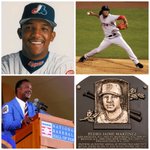
Happy 55th Birthday to Hall of Famer Pedro Martinez, born this day in Manoguayabo, Dominican Republic. What are you thoughts and memories of Pedro Martinez?

The front page of the New York Daily News on Monday, October 2, 1961, carried the news in a single headline: MARIS RAISES THE MARK TO 61. Under it, Roger Maris grins in the Yankee clubhouse beside Sal Durante, the 19-year-old Brooklyn truck driver holding the ball that had just carried Maris past Babe Ruth.
The day before, in the last game of the season at Yankee Stadium, Maris drove a fourth-inning pitch from Boston's Tracy Stallard into the right-field bleachers for home run No. 61 — the only run of a 1-0 Yankees win, watched by just 23,154 fans. Durante had swapped seats with his fiancée Rosemarie moments earlier, caught the ball barehanded, and tried to hand it back in the clubhouse. Maris refused: "Keep it, kid — put it up for auction." Durante sold it for $5,000 to Sacramento restaurateur Sam Gordon; the ball now rests in the Hall of Fame at Cooperstown. The summer had been a siege. Ruth hit 60 in a 154-game season in 1927, and Commissioner Ford Frick, an old friend of Ruth, ruled that July that a record set beyond 154 games would be listed separately — the famous asterisk never actually appeared in any record book. Maris hit No. 59 at Baltimore on September 20 and No. 60 off Jack Fisher on September 26, but the deadline passed with him one short, the strain leaving his hair falling out in clumps. Mickey Mantle, his M&M Boys partner, had stalled at 54, sidelined by a hip abscess. Maris still won a second straight MVP award, and the Yankees beat Cincinnati in a five-game World Series. His 61 stood as the major-league record for 37 years, until Mark McGwire hit 70 in 1998; Barry Bonds hit 73 in 2001, and Aaron Judge's 62 in 2022 finally broke the American League mark — Durante lived to see it, dying that December at 80. Not until 1991 did baseball list Maris as the undisputed record holder, six years after his death, and though the Yankees retired his number in 1984, Cooperstown has never voted him in.
⚾ Two straight MVP awards, a record that stood for 37 years, and still no plaque at Cooperstown — is Roger Maris the Hall of Fame's biggest omission? 👇️

Comiskey Park under construction on Chicago's South Side in the spring of 1910 — a ballpark rising in steel and concrete on a former city dump at 35th Street and Shields Avenue, where White Sox owner Charles Comiskey was building the game a palace.
Comiskey hired architect Zachary Taylor Davis — who would design Wrigley Field four years later — and sent him touring the country's ballparks with pitcher Ed Walsh. Ground was broken on February 15, 1910, the cornerstone was laid on St. Patrick's Day, and the fireproof park went up in about four months despite a five-week steelworkers' strike, at a cost of $750,000 — a pitcher's park, 362 feet down the lines and 420 to center, exactly as Walsh wanted. It opened as White Sox Park on July 1, 1910, and the housewarming was spoiled: Barney Pelty of the St. Louis Browns threw a five-hitter to beat Walsh 2-0 before an official crowd of 24,900. Soon renamed for Comiskey and billed as the Baseball Palace of the World, the park then held 80 seasons of Chicago baseball: the 1917 World Series title, the 1919 Black Sox scandal, the first All-Star Game on July 6, 1933 — where Babe Ruth hit the first All-Star home run in a 4-2 American League win — night baseball's arrival on August 14, 1939, the 1959 pennant, Bill Veeck's exploding scoreboard in 1960, and Disco Demolition Night on July 12, 1979. The last of its 6,247 major-league games came on September 30, 1990, a 2-1 win over Seattle before 42,849 fans; demolished in 1991 as the oldest park in the majors, its home plate is now marked by a marble plaque in a parking lot across 35th Street from the new stadium.
⚾ Comiskey was still the oldest park in the majors when the wrecking ball came in 1991 — should it have been saved, the way Fenway Park and Wrigley Field were? 👇️

Babe Ruth and Lou Gehrig beside a Pullman car at a railroad station in Chicago, the Yankees on the road in the days when baseball traveled by train. Ruth, who never missed a chance to get in a round of golf, grips a putter on the platform while Gehrig stands alongside — the two biggest stars in the game, in town to face the White Sox at Comiskey Park.
In the 1920s the Yankees lived on the rails — Pullman sleepers, card games, overnight runs west to Chicago, St. Louis, Detroit and Cleveland. Chicago trips produced some of their best stories: in early May 1929, Gehrig stepped off the train after the 800-mile overnight ride from New York and hit three home runs at Comiskey Park on May 4, in a game the Yankees needed every one of them to win. Ruth's golf was nearly as famous as his bat — he took up the game in his early Yankee years, played constantly on the road, and in spring training at St. Petersburg he would rise early for 18 holes, drive the ball as far as many pros and shoot in the mid-70s, though he was a poor putter who would toss his club away in disgust. Together the two men were the heart of Murderers' Row: in 1927 Ruth hit his record 60 home runs and Gehrig hit 47, the pair tied at 44 apiece with 23 games left before Ruth pulled away; in 1931 Gehrig drove in 185 runs, an American League record. Ruth finished with 714 home runs and Gehrig with 493, and between ballparks they traveled, ate, played cards and golfed together.
⚾ Ruth's 60 and Gehrig's 47 made 107 home runs from two men in 1927 — the greatest one-two punch the game has ever seen? 👇️

George Brett batting for the Kansas City Royals in Game 5 of the 1985 World Series at Busch Stadium in St. Louis, on October 24, 1985 — forty-one years ago last night. The Royals trailed the Cardinals three games to one, and one more loss ended their season, before 53,634 fans.
Kansas City struck in the first — Lonnie Smith and Willie Wilson singled, Brett's fly ball moved both runners up, and Frank White's groundout scored Smith — and after St. Louis tied it on back-to-back doubles by Tom Herr and Jack Clark, the Royals broke it open in the second: a Jim Sundberg double, a Buddy Biancalana single and Wilson's two-run triple chased starter Bob Forsch in a 6-1 win. Danny Jackson threw a complete-game five-hitter with five strikeouts, and in the seventh he struck out the side on nine pitches — the first immaculate inning in World Series history. The Cardinals walked Brett intentionally with the bases loaded in the fourth rather than pitch to him; in the seventh he crashed into the dugout chasing a foul pop, stayed in the game, and singled in the ninth. It capped his October: the ALCS MVP after batting .348 with three home runs against Toronto, including a 4-for-4, two-homer Game 3, he hit .370 in the World Series and went 4-for-5 in Game 7. Two nights after this game came Don Denkinger's call and Dane Iorg's single in Game 6, then an 11-0 rout in Game 7 behind Series MVP Bret Saberhagen — the Royals' first championship. Brett had already won the 1980 MVP award with a .390 average; he remains the only man to win batting titles in three decades (1976, 1980, 1990), finished with 3,154 hits and a .305 average, touched off the Pine Tar Game on July 24, 1983, and entered the Hall of Fame in 1999 on the first ballot, with 98.2 percent of the vote. (Photo by Ronald C. Modra/Getty Images)
⚾ Down three games to one in the ALCS and again in the World Series, Brett carried Kansas City back both times — is he the greatest clutch hitter of his generation? 👇️

Alex Rodriguez and Derek Jeter in 1997 — the two young shortstops who had taken over the American League, Seattle's on one coast and New York's on the other, and close friends besides. They had first met in 1993, when Jeter was a Yankees farmhand and Rodriguez was a Miami high school senior, and by 1997 they were crashing at each other's places whenever their teams crossed paths. "We were like blood brothers," Rodriguez said later.
Their 1996 seasons explain the fuss. Rodriguez won the batting title at .358 with 36 home runs and 123 RBIs, and lost the American League MVP vote to Texas slugger Juan Gonzalez by three points, 290 to 287, among the closest votes ever. Jeter hit .314, was the unanimous American League Rookie of the Year, had a 12-year-old fan, Jeffrey Maier, reach out and pull his ALCS drive against Baltimore into the seats, and ended the month a World Series champion. In 1997 Rodriguez hit .300 with 23 home runs and Jeter .291, as the Yankees fell to Cleveland in the Division Series. The friendship cracked in 2001, when Rodriguez, by then in Texas, told Esquire that Jeter had "been blessed with great talent around him" and had "never had to lead." In February 2004 they became teammates at last — New York traded for Rodriguez, and the two-time Gold Glove shortstop volunteered to move to third base so Jeter could stay put — and in 2009 they won a World Series together. After that their roads split. Jeter played 20 seasons, all in pinstripes, and in 2020 he was voted into the Hall of Fame on 396 of 397 ballots, one vote short of unanimous. Rodriguez finished with 696 home runs and three MVP awards, but the Biogenesis scandal cost him the entire 2014 season in the game's longest drug suspension, and in the January 2026 voting he drew 40.0 percent, still far from Cooperstown. In retirement they have made their peace — Rodriguez has apologized, on camera, for the old words, and his election-day note to Jeter closed, "I needed you more than you needed me."
⚾ Rodriguez finished with 696 home runs and three MVP awards — should he someday join Jeter in Cooperstown? 👇️

Forty years ago tonight — October 25, 1986, Shea Stadium, Game 6 of the World Series, before 55,078 fans. The Boston Red Sox led the Series three games to two and led the game 5-3 in the bottom of the 10th, and when Wally Backman and Keith Hernandez flied out, Boston stood one out from its first championship since 1918 — the Shea scoreboard briefly flashed its congratulations to the new champions. Then Gary Carter singled off Calvin Schiraldi, pinch-hitter Kevin Mitchell singled, and Ray Knight, down 0-2, a strike from the end, singled Carter home. Bob Stanley relieved, and with the count 2-2 on Mookie Wilson — Boston one strike away again — his pitch ran inside, Wilson leapt clear, and the wild pitch scored Mitchell to tie the game. On the 10th pitch of the at-bat, Wilson rolled a little grounder up along first that skipped through Bill Buckner's legs, and Knight raced home from second. Mets 6, Red Sox 5.
Boston's two runs in the top of the 10th — Dave Henderson's leadoff homer off Rick Aguilera and Marty Barrett's two-out single after a Wade Boggs double — had seemed to settle it. Manager John McNamara left Buckner, playing on two bad ankles, at first base, though Dave Stapleton had replaced him for defense in all seven of Boston's wins that postseason. By the time the ball reached Buckner the game was already tied, yet the error made him the face of the Curse of the Bambino: years of taunts and death threats followed, swallowing a 22-year career with 2,715 hits and the 1980 batting title. Time repaired it. Buckner finished his career back in Boston in 1990, Fenway gave him a long ovation for the 2008 Opening Day first pitch after the drought finally ended in 2004, and he and Wilson became close friends. The ball sold at auction in 2012 for $418,250. Two nights later the Mets took Game 7, 8-5, Knight the Series MVP. Buckner died on May 27, 2019, after battling Lewy body dementia.
⚾ The game was already tied when the ball reached him — should Bill Buckner be remembered for one error, or for 2,715 hits? 👇️

Manny Ramirez at George Washington High School in Washington Heights, Upper Manhattan, in the spring of 1991 — a senior season for the ages. Playing for coach Steve Mandl at the same school Rod Carew had attended a generation earlier, Ramirez hit .650 with 14 home runs and 40 RBIs in just 22 games and was named New York City's Public School Player of the Year. That June, Cleveland took him with the 13th pick of the draft and signed him for $250,000.
He had been born in Santo Domingo and moved to Washington Heights at 13, and the rise was fast. Ramirez debuted for Cleveland on September 2, 1993, going hitless in Minnesota; the next day at Yankee Stadium, minutes from his neighborhood, he collected his first hit — a ground-rule double — then homered twice, off Mélido Pérez and Paul Gibson, with family and neighbors filling the stands. By 1995 he was a star on Cleveland's pennant winner, batting .308 with 31 home runs and 107 RBIs. In 1999 he drove in 165 runs, the most by any player since Jimmie Foxx in 1938, and in 2000 he hit a career-high .351. Boston signed him that December for eight years and $160 million, and in 2004 he was the World Series MVP as the Red Sox won their first championship in 86 years; a second title followed in 2007. He finished with a .312 average, 555 home runs and 1,831 RBIs, with 12 All-Star selections and nine Silver Slugger Awards. Then came the fall: a 50-game suspension with the Dodgers in 2009 after a positive test for a banned substance, reported as the fertility drug hCG, and in April 2011, five games into his season with Tampa Bay, a second positive test brought a 100-game suspension — and Ramirez retired rather than serve it. The writers kept him on the Hall of Fame ballot for 10 years, but in his final vote, in January 2026, he drew 38.8 percent, far short of the 75 percent Cooperstown requires.
⚾ He finished with 555 home runs and two suspensions — should Manny Ramirez be in the Hall of Fame? 👇️

Don Drysdale, 19 years old, at spring training with the Brooklyn Dodgers at Dodgertown in Vero Beach, Florida, in 1956, trying to win a job with the defending world champions. Signed out of Van Nuys High School in 1954 for a $4,000 bonus, he learned on the final day of camp that he had made the team.
He belonged. Drysdale debuted at Ebbets Field on April 17, pitching a scoreless ninth inning against the Phillies, and six days later won his first start at Connie Mack Stadium — a complete-game 6-1 victory over Philadelphia with nine strikeouts, plus his first major league hit. That May the Dodgers picked up 39-year-old Sal Maglie, gave him the locker next to the rookie, and “The Barber” taught Drysdale the art of pitching inside. The pupil's own rule: “If one of my teammates got knocked down, then I knocked down two on the other team.” Drysdale finished 5-5 with a 2.64 ERA, pitched in relief in Game 4 of the World Series against the Yankees, and went on to hit a National League-record 154 batters in his career. He followed the club to Los Angeles, helped win World Series titles in 1959, 1963 and 1965, won the 1962 Cy Young Award at 25-9, and beat the Yankees 1-0 on a three-hit shutout in Game 3 of the 1963 Series. In 1968 he threw six straight shutouts and ran his scoreless streak to 58⅔ innings, breaking Walter Johnson's record of 55⅔ — a mark Orel Hershiser finally passed 20 years later. A torn rotator cuff ended his career in 1969, at 33; he finished with 209 wins and 2,486 strikeouts, was elected to the Hall of Fame in 1984, and died of a heart attack in Montreal on July 3, 1993, while traveling as a Dodgers broadcaster.
⚾ Six straight shutouts and 58⅔ scoreless innings in 1968 — will any pitcher ever throw six straight shutouts again, or even two? 👇️

Miguel Cabrera holds his Triple Crown crown at Comerica Park on October 27, 2012, flanked by Frank Robinson and Commissioner Bud Selig before Game 3 of the World Series. Cabrera had just become the first player in 45 years to lead his league in batting average, home runs and runs batted in, and Robinson — the 1966 Triple Crown winner — was there to hand the crown to its newest owner. "It's an honor to be sitting here with a Hall of Famer and commissioner," Cabrera said.
Cabrera finished 2012 batting .330 with 44 home runs and 139 RBIs. The last man to sweep those three categories was Boston's Carl Yastrzemski in 1967, at .326 with 44 home runs and 121 RBIs — the year after Robinson did it for Baltimore at .316 with 49 home runs and 122 RBIs. Cabrera sealed the crown on the season's final day in Kansas City, and the league had his three numbers engraved on the crown itself. Weeks later he won the American League MVP award in the defining debate of the analytics era, taking 22 first-place votes and 362 points against six and 281 for rookie Mike Trout, whose speed, defense and all-around game fueled an argument that still divides fans. In 2013 Cabrera batted .348 with 44 home runs and 137 RBIs and won the MVP again, the first American Leaguer to repeat since Frank Thomas in 1993-94, on his way to four batting titles. The 2012 Series ended in a San Francisco sweep — Cabrera took the called third strike for the final out — but the milestones kept coming: his 500th home run in Toronto on August 22, 2021, and his 3,000th hit, a single off Colorado's Antonio Senzatela on April 23, 2022, made him the seventh player in history with 3,000 hits and 500 home runs. He played his final game on October 1, 2023, finishing with 3,174 hits and 511 home runs. (Photo by JC Salas/Icon SMI)
⚾ Cabrera finished with 3,174 hits and 511 home runs — where does he rank among the greatest right-handed hitters of all time? 👇️

Phil Esposito, Bruno Sammartino and Willie Mays at Bally's Park Place in Atlantic City in 1983 — three New York giants of the 1970s together again, promoting the "21" Club's second annual Greatest Sports Legends reunion. In the decade just past they had shared one city: Mays finishing his career with the Mets, Esposito starring for the Rangers and Sammartino ruling Madison Square Garden.
Mays was in Atlantic City on business. On October 29, 1979, he signed a 10-year, $1 million contract to greet guests and entertain high rollers at Bally's, weeks before the casino opened — and Commissioner Bowie Kuhn forced a choice: the casino or baseball. Mays gave up the Mets coaching job he had held since retiring in 1973, and Kuhn placed him on the ineligible list, out of the game he had graced for two decades. Mickey Mantle took a similar job at the Claridge casino in 1983 and was banned the same way; not until March 18, 1985 did Commissioner Peter Ueberroth reinstate them both. The men beside him needed no introduction. Esposito was the first NHL player to a 100-point season, with 126 points in 1968-69; he won five scoring titles and two Stanley Cups with Boston, led Canada in scoring in the 1972 Summit Series, took the Rangers to the 1979 Stanley Cup Final and retired in January 1981 with 717 goals, second only to Gordie Howe. Sammartino held the WWWF championship for 2,803 days in his first reign, 1963 to 1971, and 1,237 days in a second — more than 11 years as champion — and sold out Madison Square Garden 187 times. Mays brought 660 home runs, two Most Valuable Player awards, 24 All-Star selections and the Catch from Game 1 of the 1954 World Series.
⚾ Mays lost his place in baseball for greeting guests at a casino — did Commissioner Bowie Kuhn go too far? 👇️
