A great study idea from Zachary Avigan and the Mount Sinai group:
What does it mean when deep responding patients have MRD 'positivity' below the limit of detection on clonoSEQ?
Not all results are the same!
Unique sequences with disease detected below LOD (typically <1 cell/million I presume): high risk of relapse
Less-unique sequences with disease detected below LOD: no difference from 'true' MRD negativity.
It has been a real delight to have had @UCCancerCenter be a part of the anito-cel journey. Now we await the results of the phase 2 and the PDUFA date - December 23!
In a phase 1 study of anito-cel, a CAR T-cell therapy, for relapsed or refractory myeloma, all 38 patients had a response. Severe cytokine release syndrome and immune effector cell–associated neurotoxicity syndrome were rare. Full study results: nej.md/4ArvK6r
Science behind the Study: Anito-cel for Multiple Myeloma nej.md/4hF5Gxj

ALT A graph from an Original Article published in the New England Journal of Medicine article titled "Phase 1 Study of Anito-cel, a D-Domain BCMA CAR T Cell for Refractory or Recurrent Myeloma." The graph shows progression-free survival among all patients who received anito-cel. The NEJM identity sits at the bottom.
In a phase 1 study of anito-cel, a CAR T-cell therapy, for relapsed or refractory myeloma, all 38 patients had a response. Severe cytokine release syndrome and immune effector cell–associated neurotoxicity syndrome were rare. Full study results: nej.md/4ArvK6r
Science behind the Study: Anito-cel for Multiple Myeloma nej.md/4hF5Gxj

ALT A graph from an Original Article published in the New England Journal of Medicine article titled "Phase 1 Study of Anito-cel, a D-Domain BCMA CAR T Cell for Refractory or Recurrent Myeloma." The graph shows progression-free survival among all patients who received anito-cel. The NEJM identity sits at the bottom.
Ben Derman retweeted
#MyelomaTips: I have seen several referrals recently for myeloma based on isolated incidental finding of hypercalcemia.
➡️Isolated hypercalcemia is rarely myeloma.
➡️If hypercalcemia is the only abnormal finding with no anemia, renal impairment, or bone lesions; myeloma is an unlikely explanation.
➡️In iStopMM (n=2,546 MGUS pts), only 3% with persistent hypercalcemia had MM and every single one also had bone lesions/other CRAB features (Blood 2022;140:10099)
➡️Look elsewhere before anchoring on MM.
#MedTwitter #MultipleMyeloma #MMSM #MedEd
Drs. Tarek H. Mouhieddine and Kenneth C. Anderson summarize treatment for multiple myeloma, highlighting four-drug induction therapy, evolving transplantation strategies, tailored maintenance therapy, and in relapse, earlier use of BCMA-directed immunotherapy.
Read the Review Article “Treatment Decisions in Multiple Myeloma”: nej.md/4cDwLOF
Ben Derman retweeted
Profound sorry that my mentor, friend, and colleague, the legend Bob Kyle passed away. His contributions to patients, medicine, myeloma, @IMFmyeloma @MayoClinic myeloma group, and the institution are monumental. A role model who will be remembered for his integrity and commitment to patients. I owe my career to him. He leaves behind a legacy of experts at Mayo Clinic as well as world over who were influenced greatly by him.
See thread for links to a video an article on him that I wrote for @MayoProceedings
Post your memories below.
Ben Derman retweeted
Multiple Myeloma EHA and ASCO® 2026 Highlights and Controversies: How Do MonumenTAL-3 and Other New Data Reshape CAR T and Bispecific Use at Early Relapse? vumedi.com/video/multiple-my… via @vumedi a chat with @DrOlaLandgren Dr. Ken Shain and @bdermanmd
Ben Derman retweeted
Prognostic Significance of Cell-Free DNA Derived 5-Hydroxymethylcytosine Signatures in Newly Diagnosed Multiple Myeloma. Co-authored by @bdermanmd.
Read the full article. bit.ly/4fFGAw4
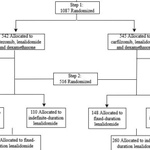
Congratulations to the ENDURANCE investigators on an impactful trial - they should be applauded for running a successful cooperative group phase 3 trial with two randomizations! My thoughts below...
ENDURANCE enrolled patients without high-risk disease and without intention for ASCT.
The 1st randomization evaluated KRd vs. VRd (no difference in PFS).
The 2nd randomization evaluated 2 years vs indefinite lenalidomide maintenance with OS as the primary endpoint. After 9 years of follow-up, there is no difference in OS!
Let's dive in and take a closer look...
nejm.org/doi/full/10.1056/NE…
Patients in the indefinite arm certainly had more cumulative lenalidomide exposure, though 44% of patients in indefinite arm had less than or equal to 24 months of therapy.
There is also an interesting phenomenon of nominal PFS difference in the VRd subgroup but not the KRd subgroup.
Surprisingly, no differences in second cancers between groups.
All in all, my take is that this study provides some evidence that indefinite maintenance therapy in patients with standard risk disease who did not receive a transplant may not extend survival.
I want to believe this is true for all patients....but...
There are some systematic issues inherent to the complexities of large cooperative group trials that we must acknowledge too.
For now, I will continue to use sustained MRD negativity to trigger discussion regarding discontinuation of therapy.
Happy to present results from one of the projects I worked on during my time at the University of Chicago at #EHA2026 in Stockholm. Grateful for the opportunity—special thanks to Ben Derman for his support and mentorship.
@bdermanmd – at Stockholm, Sweden
Additions from the LINKER-AL2 presentation:
Rapid reduction of FLC, VGPR+ rate 100%, CR rate 90%, no progression events (!) and high rates of renal and cardiac responses.
Replying to @bdermanmd
4) LINKER-AL2: Linvoseltamab in relapsed AL amyloidosis. (Wechalekar, Lee, 7502)
BCMA bispecifics are like magic in this population.
In 20 pts:
✅ No DLTs or ICANS
✅ CRS/IRR were Grade 1–2, mostly during step-up dosing
✅ heme OR: 100% with 80 mg; 92% with 240 mg
✅ Median time to hemeCR ~3 weeks
Small cohort + short follow-up, but the signal is notable: rapid plasma cell clone suppression in a disease where fast iFLC normalization matters.
Updates from the anselamimab presentation:
This was a pre-specified subgroup analysis.
These curves for the kappa LC subgroup are impressive, and track with symptomatic improvements.
Perhaps there is a real signal here.
The paper is out now: ascopubs.org/doi/10.1200/JCO…
Replying to @bdermanmd
5) Anselamimab in κ light-chain amyloidosis.
Remember: Anselamimab is a monoclonal antibody designed to remove amyloid fibrils.
The phase 3 study was negative (no difference in mortality in stage 3a/3b amyloid).
But a post-hoc analysis shows anselamimab-treated patients with κ iFLC had a 62% reduction in mortality and a 71% reduction in risk for cardiovascular hospitalization.
My take: An interesting signal, but far from definitive. These 'amyloid eaters' have disappointed us so far, but the story is not over!
We now have release of SUCCESSOR-2 data!
Mezi + weekly Kd vs twice weekly Kd
- 85% anti cd38 refractory
- mPFS 18 vs 8 months (control arm did the same as MajesTEC-9)
My take: 18 months is nothing to scoff at, and compares favorably with KPd data. It still leaves something to be desired compared to other options in the same lines BUT one more time for those in the rafters - we can stop using Kd and VPd as comparator arms now?
Replying to @bdermanmd
3) SUCCESSOR-2. Mezi-Kd vs. Kd. It's a late breaker so stay tuned for the data.
This will be an important study as it will serve as the FIRST randomized study of carfilzomib with an IMiD/CELMoD.
This could help to establish an effective regimen for anti-CD38 refractory patients that isn't T-cell redirecting.
Elements to pay attention to:
- % anti-CD38 exposed/refractory?
- PFS / OS
Working on this study was truly a labor of love!
Durca-cel is a BCMA-directed CAR T that was manufactured exceedingly quickly, and this phase I study came at a time when we had very limited slot availability for commercial CAR T. While the PFS was ‘only’ 12 months, we were able to get patients with very challenging disease to CAR T. I think this truly changed the trajectory of their entire disease course. IEC-HS was more common with this product, and we learned a great deal about optimal management of this entity.
Shoutout to @adamssperling who put so much effort into this study and to Novartis for their collegiality and support.
science.org/doi/10.1126/scit…
Ben Derman retweeted
🧬 Is CAR-T moving beyond relapsed myeloma and into high-risk smoldering disease?
In Part 2 of the Miami Myeloma Cross-Country series, Dr. Dickran Kazandjian (@dikokaz) leads a discussion with Drs. Ola Landgren (@DrOlaLandgren), Kenneth Shain, and Benjamin Derman (@bdermanmd) on the potential role of CAR-T in high-risk smoldering myeloma.
The panel explores the promise—and challenges—of earlier intervention, including MRD negativity, neurologic toxicity concerns, and whether aggressive treatment can truly alter disease course.
🎥 Watch on Vumedi: tinyurl.com/yn3sau64
🔗 Visit the Miami Myeloma Cross-Country Vumedi Channel to keep up with hot topics in Myeloma: tinyurl.com/yc2bxf3u
Featuring experts from @SylvesterCancer / @UMiamiHealth, @MoffittNews, and @UCCancerCenter / @UChicagoMed
With thanks to organizations advancing myeloma research and care, including @theMMRF, @IMFmyeloma, @HealthTree, @ASH_hematology, @AmericanCancer, @Myeloma_Society and @ConquerCancerFd
#MMSM #CAR_T
Excited to welcome everyone to beautiful Chicago for the @ASCO Annual Meeting!
I wanted to highlight some of the most intriguing abstracts in myeloma being presented over the weekend. Let's go!
9) Final analysis of CEPHEUS (Dara-VRd vs VRd in transplant deferred patients) - Usmani 7513
What's new from this data?
We now know that 6-year PFS for Dara-VRd is 59%.
Median PFS for high-risk: 58 months
Median PFS for ISS 3: 66 months
These are useful benchmarks as we talk to patients about the benefits of quad vs triplet in frontline therapy for older adults.
asco.org/abstracts-presentat…
10) Cyclophosphamide for 'unrestrained' ALC after Cilta-cel? (Tan, 7543)
22 patients had high ALC (>3K) post-cilta-cel and received cyclophosphamide 500 mg IV/PO x1.
Delayed neurotox occurred in 4 pts (18%), including 1 case of IEC-cranial nerve palsy and 3 with parkinsonism.
Similar outcomes with prophy dex
My take: We still need to find alternative strategies for unrestrained ALC, preferably that don't irrevocably damage CAR T-cells.
asco.org/abstracts-presentat…