

IIT Dhanbad '26 • AI Safety Fellow @sentientfutures Prev AI Safety @ApartResearch • https://xitter.cf/t.co/CjniY1Pwce I am going to win.
Joined November 2023
- Tweets509
- Following445
- Followers40
- Likes1.1K



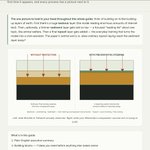
when a new mech interp paper drops and u finally understand enough to get excited..

interpretability might be the most important scientific problem in the world right now, as I don't think we can solve alignment if we don't know what we're building. I think I have good news about it. I co-authored early work in mechanistic interpretability at OpenAI and came away pessimistic, because neural networks appeared to fold into arbitrary tangled knots. years later, I started openai's first large-scale automated interpretability project, finding about 2% of neurons legible with the primitive tools we had
with modern agentic tools and a much closer look, the picture looks totally different. the vast majority in models up to trillions of parameters are legible, and their circuits beautiful. many famous examples of tangled neurons turned out to be misunderstood. The roadblocks I expected mostly aren't there. I now think ambitious interpretability will be solved by the time we need it most, and possibly quite soon, as automated scientists keep improving. it may be a bitter lesson for interpretability: the simple thing, at absurd scale, works
already-clean.goodfire.com/

working on mech interp rn and seeing stuff like this is so exciting..
the cat/car neuron example is so cool. two seemingly unrelated things, and then u look closer and there's a shared V shape. so much more to understand and try.
interpretability might be the most important scientific problem in the world right now, as I don't think we can solve alignment if we don't know what we're building. I think I have good news about it. I co-authored early work in mechanistic interpretability at OpenAI and came away pessimistic, because neural networks appeared to fold into arbitrary tangled knots. years later, I started openai's first large-scale automated interpretability project, finding about 2% of neurons legible with the primitive tools we had
with modern agentic tools and a much closer look, the picture looks totally different. the vast majority in models up to trillions of parameters are legible, and their circuits beautiful. many famous examples of tangled neurons turned out to be misunderstood. The roadblocks I expected mostly aren't there. I now think ambitious interpretability will be solved by the time we need it most, and possibly quite soon, as automated scientists keep improving. it may be a bitter lesson for interpretability: the simple thing, at absurd scale, works
already-clean.goodfire.com/
so you can put up ads in chatgpt for 30$ ?...


We are starting to test ads in ChatGPT free and Go (new $8/month option) tiers.
Here are our principles. Most importantly, we will not accept money to influence the answer ChatGPT gives you, and we keep your conversations private from advertisers.
It is clear to us that a lot of people want to use a lot of AI and don't want to pay, so we are are hopeful a business model like this can work.
(An example of ads I like are on Instagram, where I've found stuff I like that I otherwise never would have. We will try to make ads ever more useful to users.)
soon chatgpt is going to be spamming u with ads..
for free and plus users.
and thats bad cause its gonna be so specific about the ads it gives you with the amount of context it has.....

Now everyone gets to try Gemini 4 Argon
W @GeminiApp


We’re rolling out Gemini 4 Argon in Antigravity to paid Google AI Pro subscribers today. Demand has been incredible and we've scaled capacity deliberately to get here. We’ve rolled out a separate weekly-only Argon quota for Pro on top of the existing Gemini bucket for 3.8 Flash so you have the best of Gemini for all your tasks.
take action, you can do whatever you want too.
cuz why not you.
dont be scared about ,what other ppl think about you.
dont be afraid of failure
take action , work towards your goal.
life is simple were all gonna die one day so chill, do whatever you want to do and just have fun..
😮💨deep breath!😮💨
😃😼its not that serious !!!🤩🤩
just finished a part of an experiment i've been working on....
i've been grinding, trying to put in the work and get results like never before. but there's still so much to optimize, so much more to understand, and so much more to try out. it's all so exciting that i completely lose track of time when i'm working on this kind of stuff.
gotta sleep now though, or else i won't be able to function tomorrow....
gn.
In a world full of LARPs, do what you wanna do.
Don't get pushed by the wind into faking interests just to chase followers and impressions.
Stop performing for everybody else.
Actually do the work, increase your real-life value, and build what you actually want to build. Just be you.
this is exactly what i've been doing. cool to see the best doing it too
i read a lot of stuff and just ask it to explain with diagrams. and "please explain any concepts that come along the way too, simply and clearly, with diagrams"
the html part was an accident. i once asked for clean diagrams, flowcharts and visualisations and it gave me html on its own. i was like damn, it made a whole website for this? isn't that overkill? then i opened it. so well structured, full of diagrams, and i actually had fun reading it. didn't feel like work
in the video: same question three ways. plain explain, "in html", and with research mode on. the html one is what i actually learn from. with research on i got a written report and no page, so i keep it off when i want to understand something
my custom instructions (you can add this to urs instructions too..):
{
Whenever you explain something to me (a concept, a paper, code, or your own output):
- Use diagrams, flowcharts and visuals wherever they make it clearer.
- Explain every concept and term that comes up along the way, simply and clearly, the first time it appears (with a diagram if it helps).
- Start with the simple version, then build up to the full depth. Don't stop at the surface or water down the hard parts.
When I say "in html", make it an interactive web page.
When I share a research paper, teach me the whole thing from start to finish, including the background I need. Not a summary, unless I ask.
}

We'll be spending a lot more time trying to understand the outputs of language models. A few thoughts, tips & tricks:
Writing. Something I've had success with: Ask your LLM to explain something in ASD-STE100, it's a controlled language specification originally developed for aerospace maintenance documentation. LLMs well-versed in this language and it comes with heavy constraints on clean writing style that I often find a lot more readable. Sometimes I've tried to soften it a bit e.g. ask for "80% of the way to ASD-STE100" because the spec is quite stringent. But even better:
Diagrams / images. Instead of writing, ask your LLM to create a diagram. These can be a lot easier to process, parse, and understand. But even better:
Web pages. Ask for output "in HTML" to get a beautiful, interactive webpage. LLMs are getting really good at frontend and can create beautiful experiences, animations, etc. But even better:
Explainer videos. The output format I am most bullish on is fully custom / bespoke explainer videos generated on any arbitrary topic. Experiment with things like "Create a 3b1b style video explainer on X. Use my ElevenLabs API key for audio narration". (you'd need an API key for the latter or you can ask your LLM to find you decent free alternatives that use your local compute). This is actually starting to work!
In summary:
- As LLMs get better, they will do more and more of the legwork autonomously, and a lot more of our work will rise up the abstractions into oversight and understanding.
- Luckily, LLMs can help here too because as intelligence and code are increasingly abundant, you can ask for large, custom, discardable software artifacts (e.g. web apps, video explainers) that would have never made sense to create before. Push the boundaries here and you'll be surprised.


Your brain remembers things better when you guess first, even if the guess is wrong.
It's called the pretesting effect. Before you read the answer or watch the explanation, stop and make a guess. Then check it.
I know this works, but I often forget to do it while studying. From now on, I will. This post is my reminder, and yours too.


