

Behavioral Economics Researchers @kielinstitute for the World Economy. https://teapawt.net/t.co/Xut0ensepU; https://teapawt.net/t.co/O3ArDihWH7
Kiel, Schleswig-Holstein
Joined August 2015
- Tweets562
- Following159
- Followers1.1K
- Likes117



Pinned Tweet
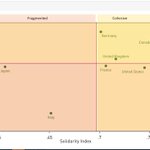
Paper by our fellows Lima De Miranda & @DJSnower published in @PNASNews: "The societal responses to COVID-19: Evidence from G7 countries". Countries reacted similarly on GDP & emissions, but tribalism increased overall. 1/ pnas.org/doi/10.1073/pnas.21…

1
Kiel Behavioral Econ retweeted

Six fundamental beliefs that bias our view of the world:
1. My experience is a reasonable reference.
2. I make correct assessments of the world.
3. I am good.
4. My group is a reasonable reference.
5. My group is good.
6. People's attributes (not context) shape outcomes.

Psychologists have posited hundreds of cognitive biases over the years. A fascinating new paper argues that they all boil down to one of a handful of fundamental beliefs coupled with confirmation bias. doi.org/10.1177/174569162211…

"The policiticized pandemic":Article by our fellows @davidpipke & @GGrimalda published in European Economic Review. Temporary embargo-free version accessible 👉sciencedirect.com/science/ar… Joint with @MatthiasSutter @LPBetterWorld @MattSutter_MPI & Fabrice Murtin @OECD.

Very pleased with the publication of the article "The policiticized pandemic", in which we tried to disentangle the relationship btw political orientation & altruism wrt health-protective behavior during COVID-19 in the US. Embargo-free read👉sciencedirect.com/science/ar…

2
396
Kiel Behavioral Econ retweeted

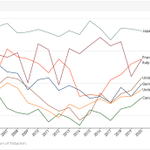
Fascinating figure on readability from Plavén-Sigray et al. (2017), who analyzed 700k+ abstracts published between 1881-2015 from 123 scientific journals.
I am unsure how economics fares today, but given our potential impact we should always combat this trend. #Econ4everyone!

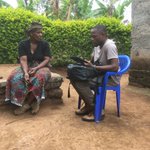
Our research fellows Susann Adloff & Aloyce Patrick successfully completed 700+ interviews from people who work, live and travel at mount Kilimanjaro for the interdisciplinary project Kili SES👉🏽kili-ses.senckenberg.de/ exploring the relationship between people and nature. (1/2)”

This data was collected in collaboration with other early carrier scientists from @leuphana University, Senckenberg Institute @geobiodiversity & @uni_kassel and provides input for at least 9 PhD thesis’s and hopefully many more papers.(2/2)”

1
185
Tribalism is defined as the difference between ingroup solidarity (i.e. social support received by friends and family) and outgroup solidarity (giving behavior, satisfaction with efforts to deal with the poor, and minority rights). 2/

1

Fascinating keynote by Gabriele Camera (@ChapmanU) in last keynote of @EcScienceAssoc conference: Money (=symbolic object with no instrinsic value)⬆️ cooperation even when reciprocity is impossible, through transmitting information on past cooperative behavior. #esabologna

7
Kiel Behavioral Econ retweeted

Doing a meta-analysis but need a little help? We've shared 9 templates for you to use, from prereg to code to data. Hopefully this can give you a head start and make sharing easier when you submit! Paper just published: psycnet.apa.org/record/2020-… #MetaAnalysis #SystRev #OpenScience

Considerable misalignment exists between investment in "attack" & "defense" in international experimental simulations of war:@a_romano90
@ICSD_Conference #ICDCPH.This & amount invested in attack/defense is explained by macro-factors such as instuttional quality & reputation.


Keynote talk by Andreas Diekmann (@UniLeipzig) @ICSD_Conference #ICDCPH on how social norms sustain both coordination and cooperation. 1/

Some stickiness is also found in lab experiments, but it doesn't last too long. After an environment switch, players adapt to the new situation relatively quickly, even in the presence of asymmetry. 11/

1
