

Co-founder & CEO, cord | Follow for posts on discovering your best work
Joined February 2009
- Tweets1.8K
- Following773
- Followers1.2K
- Likes3K







The biggest challenge for hiring managers isn’t knowing what to ask,
it’s staying consistent and objective during interviews.
When you’re juggling back-to-back interviews, it’s easy to:
↘️ Drift into unstructured, free-form chats that favor more talkative personalities
↘️ Let your gut feel or first impressions outweigh the facts you’ve gathered
↘️ Slip into off-script questions that introduce bias or legal risk
So here it is:
The Ultimate Job Interview Cheat Sheet for Hiring Managers
#hiringmanagers #jobinterviews

Y Combinator isn’t just investing in startups,
they’re predicting the future of work.
Every year, YC puts out a call for the types of companies they want to fund.
The latest batch?
It's all about AI, but not in the way you might expect.
They’re not looking for tools.
They’re looking for entire companies built from the ground up with AI at the core.
This matters if you're figuring out your next move;
what job to go after, what skill to train for, or what company to join.
Here are the 12 company types you’ll see—and the skills and roles you’ll want to target:

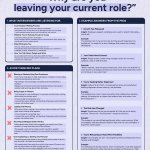
“So… why are you leaving your current role?”
Your answer to this question says more about you than an application form ever could.
It can either build trust or quietly raise red flags.
It reveals your judgment, mindset, and emotional intelligence—all in 20 seconds.
That’s why getting this right matters.

AI isn’t just a tool anymore.
It’s a professional skill. A mindset. A career.
According to the World Economic Forum:
↳ By 2030, 170 million new jobs will be created, but 92 million will disappear. ↳ Nearly 40% of today’s skills will be obsolete. ↳ And 59% of workers will need reskilling.
Your ability to work with it, not around it, will determine how relevant you stay.

This is what it means for our career's:
1️⃣ AI literacy and data fluency are now core skills, not bonuses.
2️⃣ Soft skills like resilience, creative thinking, and systems-level problem-solving are rising fast in demand.
3️⃣ Leadership that can think with AI - strategically, ethically, and creatively - will define the next generation of executives.
4️⃣ The hiring process is shifting. Recruiters are screening for adaptability, not just credentials.
5️⃣ In interviews, it’s not only what you know, it’s how quickly you can learn, adapt, and lead in a tech-driven world.
We’re not preparing for the future of work.
We’re living in the middle of it.
Top performers often stumble on this question not because they lack an answer,
but because they don’t know what is really being tested.
We’ve all heard bad answers to this one:
“I’m a perfectionist.”
“I work too hard.”
“I care too much.”
They sound rehearsed - because they are - and don’t help you stand out.
When interviewers ask what your weaknesses are:
❌ They’re not fishing for flaws
❌ It’s not an invitation for humblebrags
💡They’re testing your self-awareness, humility, and willingness to grow, traits that actually determine long-term success.
#jobinterview #jobsearch

If someone asked you what your greatest strength is,
would you know the answer without hesitation?
Most of us pause - not because we lack strengths, but because we rarely take the time to recognise and articulate them.
Here’s a proven framework to formulating your answer:

Talented people don’t fail interviews because they’re unqualified,
They lose out because they don’t know how to tell their story.
Here’s the truth about job interviews most people miss:
It’s not just about your experience.
It’s how you tell the story.
If you want to stand out—especially in a competitive job market,
you need more than bullet points.
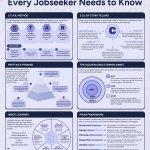
You need stories that stick.
Here are 6 storytelling frameworks every job applicant should know:
#jobsearch #work

The most underrated interview hack?
A humble checklist.
Checklists bring clarity, reduce stress, and make sure nothing important slips.
Here’s a simple but powerful checklist that’s been used by thousands of successful candidates:
#jobinterview

The interview isn't over when you close Zoom or walk out the door.
Yet most people treat what happens next as optional.
Big mistake.
What you do next could be the difference between an offer and being forgotten.
Here are 20 specific DOs and DON'Ts after a job interview.

Job interviews are won in the details; posture, pauses, and presence.
But this is where even the strongest candidates slip up.
You can have all the right experience — but if your delivery is off, your message won’t land.
The good news?
These are skills you can learn quickly — if you know what to look out for.
Here’s what to do, what to avoid, and how to be present *during* the conversation.

✅ DO THIS | ❌ NOT THAT
1️⃣ Make eye contact naturally
❌ Don’t stare or look around the room
2️⃣ Ask clarifying questions if needed
❌ Don’t fake understanding to look smart
3️⃣ Maintain professional body language
❌ Don’t slouch, fidget excessively, or cross your arms
4️⃣ Pause briefly before answering complex questions
❌ Don’t rush or blurt out the first thing that comes to mind
5️⃣ Do stay present until the very end
❌ Don’t mentally check out after the tough questions
⭐️ Use the STAR Method - Properly
When to Use the STAR Method
✅ Behavioral questions (“How did you handle…?”)
✅ Problem-solving questions
✅ Leadership, conflict, or teamwork stories
✅ Anything that asks you to describe a real past experience
When Not to Use STAR
❌ Yes/No or opinion-based questions (e.g., “What are your strengths?”)
❌ Technical questions that require explaining how something works or showing logic
❌ Hypothetical questions (“What would you do if…?” — these are better answered with logical reasoning, not past examples)
According to LinkedIn:
nearly two-thirds of hiring managers say the biggest reason candidates fail interviews is a lack of preparation beforehand.
Not bad answers.
Not poor experience.
Just poor prep.
Too many brilliant people stumble because they prepare as an afterthought.
Here are the DO’s and DON’Ts that matter before the first question is even asked.

Most candidates trip up on the first question, not because they lack experience..
but because they don’t know what NOT to say.

Let’s talk about one of the most confusing interview questions …
“Tell me about yourself.”
🗣 Understandably, most people:
🚫 Recite their entire background.
🚫 Or they start from school.
🚫 Or they give a vague, personal life story.
It’s well-meaning, but it misses the point.
🔁 Quick Fix Formula: Present → Past → Future
1️⃣ Where you are now
2️⃣ A quick look at your past experience
3️⃣ Why you’re excited about this opportunity
🧠 Pro Tip:
↳ They are not hiring your past.
↳ They are hiring your potential to solve their current problems.
↳ Use your intro to show them you get that.
Saying the right thing matters, but so does knowing what to avoid.
What do successful candidates do that others don’t?
They prepare answers to specific interview questions.

✅5️⃣ Leadership/Management Questions
Whether you're leading now or aiming to, these show how you work with others.
⚡️ Prep Tips:
↳ Think in terms of influence, not just authority.
↳ Highlight team outcomes, not just personal wins.
❓ Sample Questions:
↳ How do you motivate a team?
↳ Tell me about a time you had to resolve a team conflict.
✅6️⃣ Logistical Questions
These are practical, but they signal how realistic and aligned you are.
⚡️ Prep Tips:
↳ Know your numbers (salary expectations, availability, location).
↳ Be honest, but flexible when it counts.
❓ Sample Questions:
↳ What’s your availability to start?
↳ Are you open to hybrid/remote/in-office?