






Pinned Tweet
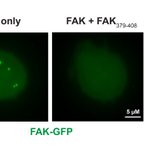
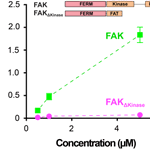
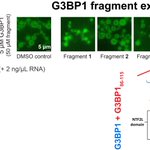
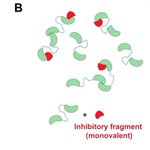
Thrilled to announce that the Savinov lab is now live at @UTAustin! Our lab @UT_MBS employs massively parallel experimental and AI methods to discover and design protein fragments as universal regulators of protein interactions in health and disease. savinovlab.com/ (1/n)

Andrew Savinov retweeted

Excited to share a new preprint from our lab, led by our staff scientist Nseer Iqbal: the first high-resolution structure of a bacterial flotillin assembly. bit.ly/4C8hkck
My department at UT Austin, Molecular Biosciences, is conducting two faculty searches this year! One in immunology, and one in biochemistry:
apply.interfolio.com/193116
apply.interfolio.com/194148
1
5
489
Andrew Savinov retweeted

Growth, what’s the limit?
No space: ribosomes pack’d tight.
Big: geometry.
aka
Proteomes reflect size-based growth constraints across diverse microbes
biorxiv.org/content/10.64898…

Andrew Savinov retweeted

Do you use self-labeling proteins (SLPs) like HaloTag and SNAP-tag? Then check out Jody's new preprint to learn about LUCI-tag! Jody built LUCI-tag starting from K-Ras(G12C), using protein design to erase K-Ras from biology 🤯!

Excited to share a preprint of my main PhD work in @nickpolizzi_'s lab - introducing LUCI-tag, a new orthogonal self-labeling protein tag based on K-Ras(G12C) and its covalent inhibitors! biorxiv.org/content/10.64898… (1/16)

DNA and RNA sequence alone is (woefully) insufficient to predict gene expression.
What have we been missing?
Check out this exciting new work from @GeneWeiLiLab for a major advance illuminating one piece of the puzzle: the influence of long-range RNA structure on translation!

In our latest study, published in @MolecularCell, we reveal that mRNA sequences hundreds of nucleotides from the start codon can act as potent repressors of gene expression through long-range base pairing to the ribosome binding site (RBS)... (1/4)
Andrew Savinov retweeted

Very excited to share the first preprint from our group!
How do active synapses meet their rapidly changing metabolic needs? We find that neuronal activity engages eIF4G2-dependent local translation of mitochondrial proteins and uORF-encoded micropeptides in dendrites. This translational program remodels nearby mitochondria, which in turn sustain calcium signaling, revealing a reciprocal connection between local translation and mitochondrial function.
biorxiv.org/content/10.64898…
The micropeptides opened an especially exciting new direction for our lab, with more work coming soon so stay tuned!
Very proud of Madison Jones for her fantastic work and perseverance through some truly challenging experiments, grateful to Natalie Noble for jump-starting the project in its early stages, and, as always, delighted to work with Robert Darnell!
#proximitylabeling #RNA #localtranslation #mitochondria
Andrew Savinov retweeted

Today, in collaboration with @Keasling_Lab, we are excited to report the design of an 8-domain, ~2,500 AA polyketide synthase (PKS) that produces δ-valerolactam, a nylon precursor not naturally synthesized by PKSs. gLM2 designs successfully achieve ~10x increase in product titer compared to the starting rational design. Preprint: biorxiv.org/content/10.64898…
Andrew Savinov retweeted

Excited to celebrate former Li Lab postdoc @bioSavinov opening his own lab at @UTAustin!
Congratulations to Andrew and the Savinov lab — you're already doing amazing science, and we can't wait to see what's next.

Thrilled to announce that the Savinov lab is now live at @UTAustin! Our lab @UT_MBS employs massively parallel experimental and AI methods to discover and design protein fragments as universal regulators of protein interactions in health and disease. savinovlab.com/ (1/n)
Andrew Savinov retweeted

Excited to announce that the Rikki Garner lab has opened its doors in beautiful Austin, TX! Our interdisciplinary lab @UTAustin @UT_MBS investigates tissue fluidity as a universal physical regulator of multicellular patterning in health and disease. rikkigarnerlab.org/ 1/n
We are also excited to hire a highly motivated and organized individual to push forward exciting work in human cell culture and act as lab manager tinyurl.com/yc5c5p2f. Keep an eye on other openings at savinovlab.com/people and feel free to reach out directly! (4/n)
Andrew Savinov retweeted

Read our latest: Recurrent non-canonical proteoforms in acute myeloid leukemia identified by integrative proteogenomics biorxiv.org/content/10.64898…

Andrew Savinov retweeted

What if the proteome encodes more biology than we can see from proteins alone?
What if protein degradation is not simply cellular disposal, but also a source of biological function?
Every cell is continuously breaking down and remodeling proteins, generating a vast and dynamic pool of peptide fragments. We propose that some of these fragments are not inert byproducts, but bioactive molecules with important roles in biology.
In our new Essay in @PLOSBiology, “Encrypted immunity mediated by peptides,” Zhenrun J. Zhang, @YMerbl, and I explore this idea through the emerging framework of encrypted immunity: bioactive peptides hidden within larger proteins that can be released through proteolysis and contribute to antimicrobial defense, immune signaling, inflammation, and potentially broader aspects of physiology.
AI and machine learning are helping us explore this hidden molecular space at a scale that was previously inaccessible, uncovering candidate peptides in humans, microbes, archaea, venoms, and even extinct organisms.
But identifying sequences is only the beginning.
The deeper questions are biological: Which peptides are actually produced in vivo? When and where are they generated? How is their release regulated? What functions do they perform? And how do we distinguish meaningful biological signals from the background of protein turnover?
Answering these questions will require computation and experimentation to advance together.
To me, this points to a broader opportunity for AI in biology: using machines not simply to predict biology, but to help us uncover its hidden organizing principles—and ultimately learn how to engineer them for human health.
If this framework holds, it could deepen our understanding of how biological information is encoded and deployed, while opening new directions for therapeutics and diagnostics.
Much remains to be learned, and I’m excited about what comes next.
Weizmann Institute of Science, @Penn, @CBE_Penn, @PennBioeng, @PennEngineers, @PennMedicine, @PennChemistry, @PennMicro, @PennPsych, @PennSAS.
journals.plos.org/plosbiolog…

Andrew Savinov retweeted
My lab and @GeneWeiLiLab at @MITBiology are recruiting a joint postdoctoral fellow to develop foundational datasets for modeling bacterial phenotypes from genotype. We are seeking candidates with experience in technology development, high-throughput library generation, and metabolomics.
Job posting: careers.peopleclick.com/care…
Andrew Savinov retweeted

Some of the most important things in life feel ordinary, until you stop and think about what makes them possible. A cure. A car. A comet. Someone right now is chasing answers to questions we haven't even asked yet. This is #CuriosityOnAMission. 🔬
What are you curious about? curiositymission.org/