

Scientific Social Media for the Global Healthcare Community.
Aventura, Florida
Joined July 2017
- Tweets55
- Following2.3K
- Followers287
- Likes38




😴 Hot Topic of the Week: Could a Weight-Loss Drug Also Treat Sleep Apnea?
In two phase 3 trials of 691 adults with moderate-to-severe obstructive sleep apnea and overweight or obesity, once-weekly retatrutide, a triple GIP, GLP-1 and glucagon receptor agonist, cut the apnea-hypopnea index by up to 34.3 events per hour at 80 weeks, versus 9.9 with placebo. Participants also lost up to 22.2% of body weight, compared with about 5% on placebo. Benefits appeared in people with and without type 2 diabetes, hinting at a new drug option for a condition often managed with CPAP alone. 😴💉
Read the paper here:
biofingertips.com/#!/publica…
#BioFingertips #Retatrutide #SleepApnea #Obesity #GLP1 #NEJM

1
66
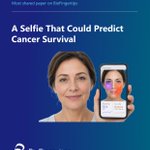
🤖 Hot Topic of the Week: A Selfie That Could Predict Cancer Survival
A single face photo may soon reveal far more than we think. Researchers built FAHR-Face, an AI foundation model trained on more than 40 million face photographs, to estimate biological age and predict survival. The age tool reached a mean error of just 5.1 years, while the survival tool, fine-tuned on 34,363 photographs of patients with cancer, showed the highest-risk quartile had more than triple the mortality of the lowest. The two models read different facial cues and worked better together, pointing to a cheap, non-invasive biomarker. 🤖📸
Read the paper here: biofingertips.com/#!/publica…
#BioFingertips #ArtificialIntelligence #Oncology #FoundationModels #DigitalHealth #CancerResearch

32
BioFingertips - Hot Topic of the Week options (21 October 2026)
🩸 Hot Topic of the Week: A Bispecific Antibody Wipes Out Smoldering Myeloma Before It Becomes Cancer
A bispecific antibody may stop smoldering myelomabefore it turns into full-blown cancer. In a randomized phase 2 trial, patients with high-risk disease received fixed-duration teclistamab, and 77.8%reached a complete response, compared with none on standard lenalidomide-dexamethasone. Among evaluable patients, 82% became MRD-negative, and two-year progression-free survival was 92% versus 49%. Side effects were mild, with only grade 1-2 cytokine release syndrome. The control arm was small and follow-up is short, but treating this precursor stage early could change how we manage myeloma. 🔬💉
Read the paper here: biofingertips.com/#!/publica…
#BioFingertips #Myeloma #Hematology #Oncology #Teclistamab #Immunotherapy

46
💉 Hot Topic of the Week: Retatrutide Brings Big Weight Loss to People with Type 2 Diabetes
Weight loss in people with type 2 diabetes has always been harder to achieve, but a new phase 3 trial in The Lancet suggests that may be changing. In TRIUMPH-2, adults with obesity and type 2 diabetes received weekly retatrutide, a triple agonist of the GIP, GLP-1 and glucagon receptors. After 80 weeks, those on the top dose lost an average of 18.8% of their body weight, versus 5.1% with placebo, while also improving glycaemic control. Gastrointestinal side effects were the most common, in line with other GLP-1-based drugs. A promising step for the next generation of obesity therapies. 💉⚖️
Read the paper here:
biofingertips.com/#!/publica…
#BioFingertips #Retatrutide #Obesity #Diabetes #GLP1 #Lancet #MedicalResearch

1
3
153
🔬 Hot Topic of the Week: AI Spots Esophageal Cancer Hidden in Routine CT Scans
Esophageal cancer is usually found late, and spotting it on a routine chest computed tomography (CT) without contrast was long considered impossible. A new study in Nature Medicine challenges that. Researchers built EAGLE, an AI model validated in more than 80,000 patients across 12 centers in three countries. On existing scans, it detected 90% of cancers with 98.5% specificity, and it also worked on low-dose lung-screening CTs. Scans that hospitals already perform every day could double as an opportunistic screen for one of the deadliest cancers.
Read the paper here: biofingertips.com/#!/publica…
#BioFingertips #ArtificialIntelligence #AiinMedicine #EsophagealCancer #CancerScreening #Radiology #DigitalHealth #NatureMedicine🔬

33
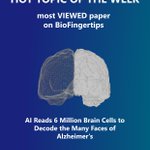
🧠 Hot Topic of the Week: AI Reads 6 Million Brain Cells to Decode the Many Faces of Alzheimer's
Why does Alzheimer's steal memory in some people while others develop depression or other psychiatric symptoms? A new study in Nature Medicine tackled the question with big data at population scale: more than 6 million brain cell nuclei from over 1,000 human brains. The team built PASCode, an AI framework powered by a graph neural model, which pinpointed about 1.5 million cells linked to specific symptoms, including astrocytes that may protect cognition and others shared with depression. Released as open-source software, it could guide precision diagnostics and therapies. 🤖🔬
Read the paper here: biofingertips.com/#!/publica…
#BioFingertips #Alzheimers #ArtificialIntelligence #BigData #SingleCell #Neuroscience #PrecisionMedicine

30
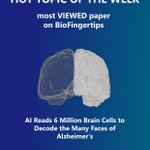
🧠 Hot Topic of the Week: AI Reads 6 Million Brain Cells to Decode the Many Faces of Alzheimer's
Why does Alzheimer's steal memory in some people while others develop depression or other psychiatric symptoms? A new study in Nature Medicine tackled the question with big data at population scale: more than 6 million brain cell nuclei from over 1,000 human brains. The team built PASCode, an AI framework powered by a graph neural model, which pinpointed about 1.5 million cells linked to specific symptoms, including astrocytes that may protect cognition and others shared with depression. Released as open-source software, it could guide precision diagnostics and therapies. 🤖🔬
Read the paper here: biofingertips.com/#!/publica…
#BioFingertips #Alzheimers #ArtificialIntelligence #BigData #SingleCell #Neuroscience #PrecisionMedicine

1
37
🧠 Hot Topic of the Week: The Molecule That May Explain Why Cancer Survivors Rarely Get Alzheimer's
For years, epidemiologists noticed a strange pattern: people with a history of cancer are less likely to develop Alzheimer's disease. Now researchers may have found why. In mice, tumors were shown to release a protein called cystatin-C, which binds clumps of amyloid and switches on a brain immune receptor, TREM2, prompting microglia to clear out existing amyloid plaques and restore cognition. The effect disappeared when that pathway was blocked. Rather than just slowing plaque buildup like current drugs, this points to a way to actively clear it, opening a genuinely new therapeutic angle. 🧠🔬
Read the paper here:
biofingertips.com/#!/publica…
#BioFingertips #Alzheimers #Neuroscience #CancerResearch #BrainHealth #Microglia

25
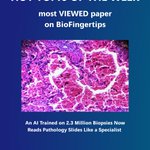
🔬Hot Topic of the Week: An AI Trained on 2.3 Million Biopsies Now Reads Pathology Slides Like a Specialist
This week, the paper most viewed on BioFingertips was: “End-to-end multimodal pathology foundation model with clinical dialogue”
A new AI system called PRISM2 just raised the bar for computational pathology. Trained on 2.3 million whole-slide biopsy images and 14 million clinical question-answer pairs drawn from real pathology reports, the model was taught to reason about tissue the way a pathologist does, not just recognize patterns.
In head-to-head testing, PRISM2 matched or exceeded the accuracy of clinical-grade tools for detecting cancer in the prostate, breast and breast lymph nodes, and it generalized well across biomarker and survival-prediction tasks too. It's a glimpse of how language-guided AI could reshape cancer diagnosis. 🔬🧬
Read the paper here:
biofingertips.com/#!/publica…
#BioFingertips #AIinMedicine #DigitalPathology #Oncology #BigData #PrecisionMedicine

2
156
HOT TOPIC OF THE WEEK | Most Viewed Paper on BioFingertips
This week, the paper most viewed on BioFingertips was: “A targeted combination therapy achieves effective pancreatic cancer regression and prevents tumor resistance.”
A Breakthrough in Pancreatic Cancer Treatment!
Pancreatic cancer is one of the deadliest cancers, largely because tumors quickly develop resistance to existing therapies. A groundbreaking new study shows that simultaneously blocking three key molecular pathways - RAF1, EGFR, and STAT3 - can cause complete and lasting tumor regression with no signs of resistance for over 200 days. Remarkably, the drug combination was well tolerated and showed strong results across multiple tumor models, including patient-derived samples. This research could pave the way for powerful new clinical trials.
Being the most viewed paper reflects what resonated most with healthcare professionals this week.
Read the paper here:
biofingertips.com/#!/publica…
On BioFingertips, sharing content helps to highlight what the community finds relevant in real time!
#CancerResearch #Oncology #MedicalBreakthrough #ASCO

2
45
Cada día se publican miles de papers médicos.
En un contexto de sobrecarga informativa, múltiples fuentes y cada vez menos tiempo disponible, mantenerse actualizado es un verdadero desafío para los profesionales de la salud.
Los invitamos al webinar: “¿Cómo estar actualizado en un océano de información?”
Vamos a conversar sobre:
✔ Cómo reducir el ruido informativo
✔ Estrategias para optimizar el tiempo dedicado al estudio
✔ Curación de contenidos e inteligencia colectiva
✔ Nuevas formas de acceder al conocimiento científico
📅 21 de mayo de 2026
🕖 19:00h (Argentina)
💻 Modalidad Zoom
zoom.us/webinar/register/WN_…
Organiza: BioFingertips
hashtag#Medicina hashtag#EducacionMedicaContinua hashtag#MedicalEducation hashtag#Healthcare hashtag#InformacionCientifica hashtag#BioFingertips

HOT TOPIC OF THE WEEK | Most Liked Paper on BioFingertips
This week, the most liked paper on BioFingertips is: “Prognostic factors for mortality in patients infected with New World hantaviruses: a systematic review and meta-analysis.”
This systematic review and meta-analysis examined prognostic factors for mortality in New World hantavirus infections, analyzing 25 studies involving 7,284 participants.
The authors identified seven factors associated with increased mortality with moderate-to-high certainty: age over 18, female sex, rural residence, elevated creatinine, increased hematocrit, signs of bleeding, and chest radiograph infiltrates.
These findings can help clinicians identify high-risk patients early, supporting timely ICU referral and informed management decisions. The authors also highlight these results as a foundation for developing a future clinical prognostic scoring model to improve patient outcomes.
Being the most liked paper reflects what resonated most with healthcare professionals this week.
On BioFingertips, likes help highlight what the community finds relevant in real time.
Read the paper here:
biofingertips.com/#!/publica…
#Hantavirus #InfectiousDisease #Zoonosis #Prognosis #NewWorldHantavirus #Viral #HemorrhagicFever #EvidenceBasedMedicine
📷
24
HOT TOPIC OF THE WEEK | Most Liked Paper on BioFingertips
This week, the most liked paper on BioFingertips is: “Epidemiology of cardiovascular disease and diabetes in 2026: expanding prevalence, escalating costs, and the limits of contemporary prevention.”
The 2026 AHA statistics reveal that cardiovascular disease has shifted from an acute condition to a chronic, systemic burden affecting nearly half of US adults.
Despite falling age-adjusted mortality, prevalence keeps rising due to earlier risk factor onset and longer survival, pushing annual healthcare costs.
Diabetes, hypertension, and metabolic dysfunction continue worsening despite available treatments, pointing to implementation failures rather than gaps in pharmacology. The authors conclude that lasting progress requires systemic prevention, integrated care, and coordinated health policy.
Being the most liked paper reflects what resonated most with healthcare professionals this week.
On BioFingertips, likes help highlight what the community finds relevant in real time.
Read the paper here: lnkd.in/dgvkZcBb
#CardiovascularDisease #Cardiology #CoronaryHeartDisease #Hypertension #Diabetes #Epidemiology #PublicHealth #PreventiveCardiology #HealthcareEconomics #MedicalResearch
#CardiometabolicHealth #HeartStats
20
HOT TOPIC OF THE WEEK | Most Liked Paper
Rivaroxaban vs. warfarin in patients with AF + bioprosthetic mitral valve:
• Noninferior for major outcomes
• Lower stroke incidence
• Lower major bleeding
This is what resonated most with healthcare professionals this week on BioFingertips.
Read it here:
biofingertips.com/#!/publica…
#BioFingertips #HotTopicOfTheWeek #Cardiology #AtrialFibrillation #HealthcareProfessionals
1
38
There are millions of scientific papers available.
That was never the problem.
The problem is how long it takes to find what matters.
How difficult it is to filter relevance.
How disconnected information still is.
BioFingertips changes that!

1
19
Searching for scientific information shouldn’t feel like this.
BioFingertips was built to simplify this experience.
🔎 Explore a better way: biofingertips.com


1
31
What can healthcare professionals do on BioFingertips?
This short video walks through the main features currently available on the platform, including:
• Searching and exploring scientific publications.
• Interacting with research through likes, comments, ratings, and shares.
• Creating public or private groups around specific topics.
• Connecting through direct chat with other healthcare professionals.
• Showcasing the scientific papers you have authored or contributed to through the "My Publications" feature.
BioFingertips is designed to make scientific information easier to access, discuss, and connect around.
🔎 Explore the platform: biofingertips.com/#!/home
#BioFingertips #HealthcareProfessionals #MedicalResearch #DigitalHealth #ScientificInformation #HealthTech #OpenScience
1
33
HOT TOPIC OF THE WEEK | Best Qualified Paper on BioFingertips
This week’s best qualified paper on BioFingertips was: “Efficacy of lisdexamphetamine to improve the behavioural and cognitive symptoms of attention deficit hyperactivity disorder: treatment monitored by means of the AULA Nesplora virtual reality test.”
In this study of 85 patients aged 6-16 years with ADHD, lisdexamphetamine treatment led to significant improvements in selective and sustained attention, attention focus quality, and hyperactivity, with moderate improvements in impulsivity.
The study also highlights the potential of the AULA Nesplora virtual reality test as an objective tool to monitor cognitive and behavioural responses to treatment.
Being the best qualified paper reflects what healthcare professionals on BioFingertips recognized as high-quality and clinically meaningful evidence.
Through the rating feature, the BioFingertips community helps signal which research deserves greater visibility.
Read the paper here:
biofingertips.com/#!/publica…
#BioFingertips #HotTopicOfTheWeek #HealthcareProfessionals
#ADHD #MentalHealthResearch #Neuroscience
#EvidenceBasedMedicine #DigitalHealth #ScientificInformation

18
BioFingertips just became more powerful.
Groups and Chat are here.
Are you in?
#BioFingertips #HealthcareProfessionals #HealthTech
1
30
Science doesn’t move forward alone.
It moves through exchange.
Next week, BioFingertips takes another step in transforming how healthcare professionals connect around scientific information.
Stay tuned.
#BioFingertips #HealthcareProfessionals #DigitalHealth #ScientificCommunity

1
11