

Berean Truth Seeker. Testing world systems against the Written Word (Acts 17:11). Exposing deception & walking the narrow path in Christ. Real-time vigilance.
In the World, Not of It
Joined March 2022
- Tweets6.1K
- Following464
- Followers522
- Likes487








Pinned Tweet
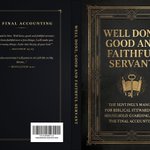
Most religious systems survive by keeping people on an endless treadmill of human tradition, mediated access, and performance—as if Calvary left something unfinished. When Jesus cried "It is finished" (John 19:30), the legal certificate of debt was canceled in full (Colossians 2:14), and the closed 66-book canon gave every believer a sufficient plumb line to test every claim against the Word itself (Acts 17:11; 2 Timothy 3:16–17). Well Done, Good and Faithful Servant was compiled simply as an open, verse-by-verse Berean ledger to help truth seekers strip away man-made additions, audit institutional traditions against Scripture, and stand firmly on the finished work of Christ in their own households. Offered freely—test every citation against your own Bible:
• PDF: drive.google.com/file/d/1yCO…
• ePub: drive.google.com/file/d/1Knw…
1
5
198
"In the beginning was the Word, and the Word was with God, and the Word was God. He was in the beginning with God. All things were made through him, and without him was not any thing made that was made." — John 1:1–3
"By faith we understand that the universe was created by the word of God, so that what is seen was not made out of things that are visible." — Hebrews 11:3
3
41
On this Thanksgiving Day, I am grateful to announce that my new book, Well Done, Good and Faithful Servant: The Sentinel's Manual for Biblical Stewardship, Household Guarding, and the Final Accounting, is now available in print and digital editions.
There is no better investment of your time or resources than anchoring your household in the written Word of God—the only message able to make you wise for salvation through faith in Christ Jesus (2 Tim. 3:15) and prepare you for that final accounting (Matt. 25:21).
• Paperback ($12.99): Barnes & Noble (ISBN: 979-8-9955821-4-4) • Digital ($0.99): Amazon Kindle & Barnes & Noble Nook • Free Digital Editions: Available on Google Drive (link in bio / pinned)
🤖 Made with AI

3
2
104
The Opened Heaven, Sovereign Election, and Fearless Kingdom Allegiance
Shadow-to-Substance Study: Genesis 28–30 & Matthew 10 (Week 2 of 52, Day 10)
Scene Before Synthesis Gate
Who is on stage in these exact verses:
Genesis 28–30: Isaac, Rebekah, Jacob, Esau (with Mahalath daughter of Ishmael), YHWH speaking from above the stairway at Bethel, Laban, Leah, Rachel, Bilhah, Zilpah, and eleven of Jacob's twelve sons (Reuben, Simeon, Levi, Judah, Dan, Naphtali, Gad, Asher, Issachar, Zebulun, and Joseph—prior to Benjamin's birth in Gen. 35:16–18) plus Dinah.
Matthew 10:1–42: Jesus of Nazareth and His twelve named apostles (Simon Peter, Andrew, James son of Zebedee, John, Philip, Bartholomew, Thomas, Matthew the tax collector, James son of Alphaeus, Thaddaeus, Simon the Zealot, and Judas Iscariot), addressed prior to their initial preaching circuit across the towns of Israel.
Where this sits on the chronological timeline:
Genesis 28–30 (Pre-cross, Patriarchal era): Following Jacob's departure from Beersheba to Paddan-aram after securing the patriarchal blessing, spanning his divine encounter at Bethel and his twenty-year sojourn in Laban's household prior to the Mosaic covenant.
Matthew 10:1–42 (Pre-cross, Galilean ministry of Christ): Spoken when Jesus commissions the Twelve exclusively to the lost sheep of the house of Israel (Matt. 10:5–6), looking ahead both to their immediate regional circuit and to the broader hostility they will face as His witnesses after the Cross and Resurrection (Matt. 10:17–23).
Which exact Old Testament passages are cited or echoed:
Genesis 19:24–25 (cited explicitly in Matt. 10:15): Sodom and Gomorrah's fiery overthrow cited as the benchmark of divine judgment—demonstrating that rejecting the New Covenant gospel carries greater culpability than Sodom's rebellion.
Genesis 28:12–15 (echoed in John 1:51 & Gal. 3:8, 16): Jacob's dream of the stairway reaching heaven with angels ascending and descending, paired with YHWH's direct reaffirmation of the Abrahamic oath of land, multiplied offspring, and global blessing through Jacob's Seed.
Micah 7:6 (cited/paraphrased directly in Matt. 10:21, 35–36): Micah's warning that covenant division will turn a man's own household—son against father, daughter against mother, daughter-in-law against mother-in-law—into his enemies.
Proverbs 3:7 & Isaiah 5:21 (echoed in Matt. 10:16): Wisdom instruction governing shrewd discernment paired with guileless integrity as sheep sent out among wolves.
Pillar 1 — Intended Message (Original Historical, Covenantal, and Grammatical Meaning)
Unmerited Covenant Grace at Bethel (Genesis 28:1–22): Under Plain Grammar and Immediate Context, Jacob flees Canaan empty-handed with nothing to offer God, yet YHWH meets him at Luz (renamed Bethel, House of God) and unilaterally binds Himself to preserve Jacob, bring him back to the land, and bless all families of the earth through his offspring (Gen. 28:13–15). Jacob responds by setting up a stone pillar, pouring oil on it, and vowing a tithe if God fulfills His word of protection and provision (Gen. 28:18–22).
The Deceiver Deceived and Sovereign Providence in Household Strife (Genesis 29–30): Having previously deceived his blind father Isaac (Gen. 27), Jacob reaps symmetrical discipline in Paddan-aram when Laban substitutes Leah for Rachel under cover of night (Gen. 29:23–25) and alters his wages ten times (Gen. 31:7). Amid rivalry between Leah and Rachel, Scripture notes explicitly that YHWH opened the womb of the unloved Leah first (Gen. 29:31)—producing Levi (the future priestly tribe) and Judah (the royal Messianic tribe)—before eventually remembering Rachel and granting Joseph (Gen. 30:22–24), while prospering Jacob's flocks despite Laban's manipulation (Gen. 30:37–43).
Apostolic Commissioning and Urgency of the Kingdom Proclamation (Matthew 10:1–15): Jesus grants the Twelve explicit authority (exousia) over unclean spirits and disease (Matt. 10:1), restricting their initial mission exclusively to Israel (Matt. 10:5–6) with the proclamation that the kingdom of heaven is at hand. Traveling without gold, extra tunics, or provisions, they are to rely on the hospitality of worthy households (Matt. 10:9–13), shaking the dust off their feet as a solemn testimony against any town that refuses their message (Matt. 10:14–15).
Fearless Confession Under Persecution and Supreme Allegiance to Christ (Matthew 10:16–42): Sending them out as sheep among wolves, Jesus commands them to be shrewd (phronimoi) as serpents and innocent (akeraioi) as doves (Matt. 10:16). Forewarning them of synagogues, governors, kings, and family betrayal (Matt. 10:17–22), He anchors their courage in the Father's meticulous sovereignty—who numbers every hair on their heads—commanding them to fear God alone rather than those who can kill only the body (Matt. 10:28–31), and demanding loyalty to Christ above father, mother, son, or daughter (Matt. 10:37–39).
Pillar 2 — Deeper Theological Meaning (Canonical Synthesis: Shadow to Substance)
From Jacob's Stairway to Christ the True Mediator (NT Interprets OT; Genre & Covenant Setting): In Genesis 28:12, the stairway bridging earth and heaven at Bethel served as the Old Covenant shadow of divine access. Under NT Interprets OT, Jesus explicitly identifies Himself as the true substance of that vision in John 1:51, declaring that angels ascend and descend upon the Son of Man—the sole permanent Mediator uniting heaven and earth (1 Tim. 2:5).
From Twelve Patriarchs to Twelve Apostles (Lexical Consistency; Text Over System): Just as YHWH forged the twelve patriarchs of Israel from Jacob's flawed household in Genesis 29–30—passing over the favored Rachel to bring forth Judah's royal line through the unloved Leah (Gen. 29:31–35; Heb. 7:14; Rom. 9:11–16)—Christ appoints twelve apostles in Matthew 10:1–4 to form the foundational structure of the unified New Covenant ekklēsia (Eph. 2:20; Rev. 21:12–14), confirming one continuous redeemed people built on sovereign grace rather than two separate covenant tracks.
Proverbs 18:17 Steel-Man Audit — Does Matthew 10:5–6 & 10:23 Restrict the Gospel to Israel or Teach a Delayed Parousia?: Skeptics and hyper-dispensational systems appeal to Jesus' command to go nowhere among the Gentiles (Matt. 10:5–6) and His statement that they will not finish going through the towns of Israel before the Son of Man comes (Matt. 10:23) to argue either that Jesus' message was permanently limited to ethnic Israel or that He miscalculated the timing of His return. Under Immediate Context and Scripture Interprets Scripture, Matthew 10:5–6 governs only the preliminary pre-cross training circuit prior to the Great Commission, which explicitly expands that exact authority to all nations after the Resurrection (Matt. 28:18–20; Acts 1:8). Furthermore, in immediate context (Matt. 10:17–23), the coming of the Son of Man in judgment upon apostate Jerusalem (AD 70; cf. Dan. 7:13; Matt. 24:30) resolves verse 23 cleanly without inventing a failed prophecy or splitting the single covenant mission of the Church.
Descriptive Family Dysfunction vs. Prescriptive Kingdom Allegiance (Descriptive vs. Prescriptive Distinction): Genesis 29–30 records polygamy and household rivalry descriptively—never prescribing them as models for believers, as the painful aftermath across Genesis confirms. By contrast, Matthew 10:37–39 establishes the binding prescriptive standard for every New Covenant disciple: allegiance to Christ takes absolute precedence over every blood tie, even when faithfulness divides a household (Mic. 7:6).
Pillar 3 — Daily Walk (Obedience and Discernment for the Seeker of Truth)
Trust God's Refining Discipline Rather Than Returning Deceit for Deceit: When mistreated or cheated by others like Jacob under Laban, refuse to adopt worldly manipulation—rely on God's righteous oversight and integrity in your work and dealings (Gen. 30:33; Rom. 12:17–19).
Combine Shrewd Discernment With Guileless Integrity: Navigate hostile environments and deceptive voices with clear-eyed biblical prudence rather than naivete, while keeping your conduct above reproach (Matt. 10:16; Phil. 2:15).
Fear God Alone Rather Than Human Rejection: Refuse to let social pressure, public reputation, or fear of human hostility silence clear confession of Christ and His Word (Matt. 10:26–28, 32–33).
Place Loyalty to Christ Above Every Earthly Tie: Even when faithfulness to Scripture creates friction within close relationships, keep Christ in first place without bitterness, trusting His promise that losing one's life for His sake is the only way to find it (Matt. 10:37–39).
Synthesized Guide (Day 10: Genesis 28–30 & Matthew 10)
Christ Is the True Access Between Heaven and Earth: At Bethel, God met an undeserving fugitive with unbreakable covenant promises and a vision of heaven opened (Gen. 28:12–15)—a shadow fulfilled completely in Jesus Christ, the living Mediator through whom believers stand reconciled to the Father (John 1:51).
God's Sovereign Purpose Triumphs Over Human Weakness: Just as YHWH built the twelve tribes of Israel amid household rivalry and Laban's deceit (Gen. 29–30), Christ commissions twelve ordinary, flawed apostles to carry the unshakable message of the Kingdom into a hostile world (Matt. 10:1–7).
Fearless Allegiance Marks True Discipleship: Sent as sheep among wolves, believers are called to shrewd discernment, pure integrity, and unyielding confession of Christ—fearing only the God who numbers every hair on their heads and placing loyalty to Him above every earthly relationship (Matt. 10:16, 28–39).
137
Every time planetary alignments, constellation cycles, or esoteric sky-lore start trending online, people rush to decode earthly events through the stars—treating created objects as if they govern human fate.
Scripture dismantles that entire mindset in two plain passages:
Job 38:31–33 — Speaking out of the whirlwind, YHWH asks Job whether he can fasten the Pleiades, loosen the cords of Orion, lead forth the constellations (mazzārôt) in their season, or know the "ordinances of the heavens" (ḥuqqôt šāmayim) that establish rule on earth. The stars do not issue decrees; they obey written ordinances enforced solely by their Maker.
Colossians 2:8–15 — Paul warns believers not to be taken captive through hollow philosophy and human tradition aligned with the "elemental principles of the world" (stoicheia tou kosmou) rather than Christ. Every spiritual ruler and cosmic authority was already disarmed at the Cross (Col. 2:15), and every new-moon or calendar cycle is merely a shadow whose substance belongs to Christ (Col. 2:16–17).
Genesis 1:14 states plainly why God placed lights in the expanse: for calendar timekeeping—seasons, days, and years—not astrological speculation (Jer. 10:2; Isa. 47:13–14).
Worship the Creator who commands the constellations, not the clockwork He hung in the sky.
3
62
Watchfulness, Deception, and Unshakable Faith Amid Shaking Systems
Shadow-to-Substance Study: Psalm 46 & Matthew 24:1–25 (Topical Anchor Study)
Scene Before Synthesis Gate
1. Who is on stage in these exact verses:
Psalm 46: The Sons of Korah (Levitical temple musicians) addressing the covenant congregation of Judah in Jerusalem, speaking of YHWH of hosts (YHWH ṣəbāʾôt, the God of Jacob) as refuge and fortress amid raging nations, tottering kingdoms, and catastrophic upheaval upon the earth (Ps. 46:1–11).
Matthew 24:1–25: Jesus of Nazareth departing the Jerusalem temple complex and sitting privately on the Mount of Olives opposite the temple, answering His disciples (specifically Peter, James, John, and Andrew per Mark 13:3) regarding the destruction of the temple buildings and the signs of His coming and the end of the age (Matt. 24:1–3).
2. Where this sits on the chronological timeline:
Psalm 46 (Pre-cross, Davidic/Monarchic Sinaitic era): Composed during the Old Covenant temple era in Judah (likely reflecting divine deliverance of Jerusalem from foreign siege, such as Sennacherib's Assyrian invasion in 701 BC, though Scripture is silent on the exact historical occasion of the psalm's superscription).
Matthew 24:1–25 (Pre-cross, Passion Week—Tuesday of Jesus' final week before crucifixion): Spoken inside the temple precincts and on the Mount of Olives just days before Jesus' death, while the physical Second Temple still stands, looking across both the imminent AD 70 judgment on Jerusalem and the broader course of the inter-advent age leading up to the Son of Man's return.
3. Which exact Old Testament passages are cited or echoed:
Jeremiah 26:6, 18 & Micah 3:12 (echoed in Matt. 24:2): Previous prophetic warnings that the Jerusalem temple itself would be plowed like a field and left without one stone upon another because of covenant unfaithfulness.
Isaiah 19:2 & 2 Chronicles 15:6 (echoed in Matt. 24:6–7): "Nation will rise against nation, and kingdom against kingdom"—standard Old Testament prophetic language for divine upheaval among geopolitical powers rather than unique signs of the final week of history.
Daniel 9:27; 11:31; 12:11 (cited explicitly in Matt. 24:15): "The abomination of desolation spoken of by the prophet Daniel, standing in the holy place"—anchoring Jesus' warning to flee Judea directly in Daniel's prophecy of temple desecration.
Deuteronomy 13:1–5 (echoed in Matt. 24:11, 24): Moses' warning that false prophets will arise performing signs and wonders to test whether God's people love Him with all their heart and hold fast to His written commandments.
Pillar 1 — Intended Message (Original Historical, Covenantal, and Grammatical Meaning)
Unmoved Refuge Amid Geopolitical and Natural Upheaval (Psalm 46:1–11): Under Plain Grammar and Immediate Context, the psalmist confronts the worst imaginable earthly collapse—mountains falling into the heart of the sea, waters roaring and foaming, nations raging, and kingdoms tottering (môṭ, Ps. 46:2–3, 6). Rather than denying the reality of shaking institutions, the text locates absolute stability in God's presence and sovereign speech: "He utters His voice, the earth melts" (Ps. 46:6). Verse 10 issues a direct imperative (harpû—"cease striving / let go" and dəʿû—"know") addressed to raging nations and anxious believers alike: YHWH alone will be exalted among the nations and in the earth.
Dismantling Temple Presumption and Birth-Pang Panic (Matthew 24:1–8): When the disciples point out the massive Herod-built temple stones with institutional pride, Jesus pronounces total desolation upon the structure ("not one stone will be left here upon another," Matt. 24:2). Asked when this will happen and what signals His coming, Jesus' very first imperative is not "decode the headlines," but "See that no one leads you astray [planēsē]" (Matt. 24:4). Under Plain Grammar, Jesus explicitly defines wars, rumors of wars, famines, and earthquakes as "the beginning of birth pains [ōdinōn]" and warns "see that you are not alarmed [throeisthe], for this must take place, but the end is not yet" (Matt. 24:6–8).
Endurance Under Hostility, Lawlessness, and Cold Love (Matthew 24:9–14): Jesus prepares His followers for hatred by all nations, internal betrayal, false prophets, and multiplying lawlessness (anomia) that causes the love (agapē) of many to grow cold (Matt. 24:9–12). Salvation belongs to the one who endures (hypomeinas) to the end, while the gospel of the kingdom is proclaimed throughout the whole inhabited world (oikoumenē) as a testimony to all nations before the end arrives (Matt. 24:13–14).
Urgent Flight in Judea and Sovereign Forewarning Against Deception (Matthew 24:15–25): Citing Daniel's "abomination of desolation" standing in the holy place, Jesus gives concrete, local instructions to those in Judea to flee immediately to the mountains without returning for cloak or goods (Matt. 24:15–20), describing tribulation (thlipsis) unmatched in scale and shortened for the sake of the elect (Matt. 24:21–22). He closes this section by warning against false messiahs and false prophets performing great signs and wonders (sēmeia megala kai terata) designed to deceive, if possible, even the elect—sealing the warning with "See, I have told you beforehand" (Matt. 24:23–25).
Pillar 2 — Deeper Theological Meaning (Canonical Synthesis: Shadow to Substance)
From Earthly Sanctuary to the Indestructible Kingdom (NT Interprets OT; Genre & Covenant Setting): In Psalm 46:4–5, Jerusalem and the Old Covenant temple stood as the earthly shadow of God's dwelling place ("a river whose streams make glad the city of God"). Under NT Interprets OT, Jesus' pronouncement of the physical temple's ruin in Matthew 24:2 signals the closing of the Sinaitic shadow-sanctuary (Heb. 8:13; 9:8–10). Hebrews 12:26–28 explains the canonical substance: God shakes every created, earthly institution so that "what cannot be shaken may remain"—the New Covenant Kingdom in Christ, the true heavenly Jerusalem (Gal. 4:26; Rev. 22:1–2).
Deception Rather Than Geopolitical Chaos as the Primary Threat (Didactic Governs Symbolic): Under Didactic Governs Symbolic, Jesus' plain prose in Matthew 24:4–8, 24–25 establishes the governing rule for all prophetic interpretation: wars, earthquakes, and crumbling empires are routine features of a fallen age that must not alarm believers, whereas doctrinal and spiritual deception—even backed by counterfeit signs and wonders—is the primary danger (cf. 2 Thess. 2:9–12; 1 John 4:1).
Proverbs 18:17 Steel-Man Audit — Does Matthew 24 Divide Israel and the Church?: Futurist dual-track systems argue that because Matthew 24:15–20 mentions "Judea," "the Sabbath," and "the holy place," Jesus is addressing a strictly Jewish remnant separate from the Church. Under Immediate Context and Lexical Consistency, that reading fractures a single continuous discourse spoken to the four apostles (Peter, James, John, and Andrew) who form the foundation of the unified ekklēsia (Eph. 2:20): Jesus uses the second-person plural "you" (hymeis) continuously from verse 4 ("See that no one leads you astray") through verse 9 ("they will deliver you up"), verse 15 ("when you see"), and verse 25 ("I have told you beforehand"). While Scripture itself is silent on the specific escape route taken after the Olivet Discourse, extra-biblical first-century historical records confirm that Jewish-Christian believers in Jerusalem heeded this exact warning and fled to Pella before Rome destroyed the temple in AD 70—demonstrating that concrete first-century instructions to disciples in Judea never created a separate covenant people.
Descriptive Crisis vs. Prescriptive Steadfastness (Scripture Interprets Scripture): While Psalm 46 and Matthew 24 truthfully describe roaring nations, false prophets, and cold love, those crises are descriptive of a fallen world under judgment, never prescriptive excuses for panic, date-setting, or abandoning mission. The governing command across both testaments remains identical: "Be still, and know that I am God" (Ps. 46:10) and "See that you are not alarmed... endure to the end" (Matt. 24:6, 13).
Pillar 3 — Daily Walk (Obedience and Discernment for the Seeker of Truth)
Refuse Headline Panic and Prophetic Sensationalism: Wars, economic tremors, and political instability are explicitly labeled by Jesus as "not yet" the end (Matt. 24:6). When earthly systems shake, anchor stability in the unchanging sovereignty of God rather than reactive fear or speculation (Ps. 46:1–3).
Test Every Claim and Miracle Against Written Scripture: Because false prophets will deploy persuasive rhetoric and even "great signs and wonders" (Matt. 24:24; Deut. 13:1–3), never validate a teacher, movement, or experience by emotional impact or spectacle—measure everything strictly against what Christ has already written beforehand (Matt. 24:25; Acts 17:11).
Guard Against Growing Cold Amid Multiplying Lawlessness: Cultural decay and widespread anomia (lawlessness) tempt believers into cynicism, isolation, or bitterness. Actively cultivate steadfast agapē love and patient endurance rather than letting surrounding corruption harden the heart (Matt. 24:12–13).
Keep the Gospel Mission Central Until the End: Jesus ties the true climax of history not to obsessive chart-watching, but to the faithful proclamation of the gospel of the kingdom to all nations (Matt. 24:14). Stay occupied with clear, faithful witness rather than speculative distractions.
Synthesized Guide (Topical Study: Psalm 46 & Matthew 24:1–25)
Unshakable Refuge When Earthly Structures Fall: Psalm 46 and Matthew 24:1–2 confront the collapse of the most seemingly permanent human and religious structures—mountains, kingdoms, and even Herod's temple. True security never resides in political stability or external institutions, but in YHWH of hosts and the unshakable New Covenant Kingdom of Christ (Ps. 46:7; Heb. 12:28).
Discernment Over Alarm in Turbulent Times: Jesus explicitly commands His followers not to be alarmed by wars, famines, or earthquakes (Matt. 24:6–8), identifying spiritual deception and counterfeit wonders as the real threat to guard against (Matt. 24:4, 24). Anchoring daily discernment in what Scripture has already spoken beforehand immunizes the believer against both panic and false teachers.
Enduring Love and Faithful Witness Until the End: Amid raging nations, multiplying lawlessness, and coldness of heart, the biblical mandate is steady endurance, unyielding love, and clear proclamation of the gospel to all nations—resting in the certainty that God will be exalted in all the earth (Ps. 46:10; Matt. 24:13–14).
2
78
Sovereign Grace, the Firstborn Covering, and the New Wineskins of the Shepherd-King
Shadow-to-Substance Study: Genesis 25–27 & Matthew 9 (Week 2 of 52, Day 9)
Scene Before Synthesis Gate
Who is on stage in these exact verses:
Genesis 25–27: Abraham (taking Keturah, transferring his estate to Isaac, and dying at 175 in Gen. 25:1–11); Ishmael and his twelve sons (Gen. 25:12–18); Isaac and Rebekah alongside their twin sons Esau and Jacob (Gen. 25:19–34; 27:1–46); and Abimelech king of Gerar, Ahuzzath, and Phicol (Gen. 26:1–33).
Matthew 9: Jesus of Nazareth in Capernaum and across Galilee; a paralyzed man and his four faith-filled bearers; scribes silently accusing Jesus of blasphemy (Matt. 9:1–8); Matthew (Levi), tax collectors, sinners, Pharisees, and John the Baptist's disciples (Matt. 9:9–17); Jairus (a synagogue ruler) and his deceased daughter; a woman suffering from a twelve-year hemorrhage (Matt. 9:18–26); two blind men; a mute, demon-oppressed man; and the Galilean crowds (Matt. 9:27–38).
Where this sits on the chronological timeline:
Genesis 25–27 (Pre-cross, patriarchal covenant era): Spanning from Abraham's death (when Isaac is 75, cf. Gen. 21:5; 25:7) through the birth of Jacob and Esau (when Isaac is 60, Gen. 25:26) and the patriarchal blessing transfer at the threshold of Jacob's exile to Paddan-aram—all prior to the Sinaitic administration.
Matthew 9 (Pre-cross, early Galilean ministry of Christ): Continuing Jesus' public authentication in Galilee immediately following the Sermon on the Mount (Matthew 5–7) and His sovereign command over disease, storm, and demons (Matthew 8), while the Mosaic Law and Temple system remain standing.
Which exact Old Testament passages are cited or echoed:
Genesis 12:1–3; 15:5; 22:16–18 (Abrahamic Oath Reaffirmed): Echoed directly in YHWH's covenant confirmation to Isaac in Genesis 26:3–4 ("in your offspring all the nations of the earth shall be blessed").
Hosea 6:6 (cited explicitly in Matt. 9:13): "I desire mercy, and not sacrifice"—used by Jesus to rebuke Pharisaic ritualism and justify His table fellowship with repentant sinners.
Isaiah 35:5–6 (echoed in Matt. 9:27–33): The opening of blind eyes and unstopping of the mute tongue as unmistakable messianic credentials of the Son of David.
Numbers 27:17; 1 Kings 22:17; Ezekiel 34:5, 11–16, 23 (echoed in Matt. 9:36): Israel seen as "sheep without a shepherd," pointing directly to YHWH's promise to shepherd His flock personally through His servant David.
Pillar 1 — Intended Message (Original Historical, Covenantal, and Grammatical Meaning)
Sovereign Covenant Transfer Over Birth Order (Genesis 25:1–26): Under Plain Grammar and Immediate Context, Abraham settles his entire estate upon Isaac while sending Keturah's sons away with gifts (Gen. 25:5–6), safeguarding the singular line of promise. Before Rebekah gives birth to twins, YHWH issues a decisive prenatal oracle overturning human primogeniture: "Two nations are in your womb... and the older shall serve the younger" (Gen. 25:23). Covenant succession rests strictly on God's sovereign purpose rather than natural birth order.
Profane Contempt vs. Covenant Faithfulness (Genesis 25:27–26:35): Esau trades his firstborn birthright (bəkōrâ—carrying family headship, double inheritance, and priestly leadership) for a single meal of red stew, prompting Moses' blunt grammatical verdict: "Thus Esau despised [bāzâ] his birthright" (Gen. 25:34). In Genesis 26, during famine in Gerar, YHWH forbids Isaac from going down to Egypt and reaffirms the Abrahamic oath to him; even when Isaac repeats Abraham's fear-driven deception regarding his wife (Gen. 26:7), God preserves him, prospers him a hundredfold, and secures peace with Abimelech.
The Blessing Secured Amid Human Crookedness (Genesis 27): Attempting to override God's prenatal decree (Gen. 25:23), Isaac secretly plans to bestow the patriarchal blessing on his favored firstborn, Esau. Rebekah and Jacob counter with fleshly deception—dressing Jacob in Esau's garments and goat skins (Gen. 27:15–16). Once the blessing is pronounced, Isaac trembles and acknowledges God's irrevocable decree ("and indeed he shall be blessed," Gen. 27:33), yet the family fractures immediately into murderous hatred and twenty years of exile for Jacob (Gen. 27:41–45).
Divine Authority to Forgive Sins and New Covenant Wineskins (Matthew 9:1–38): Confronting the scribes' silent charge of blasphemy, Jesus proves His authority (exousia) on earth to forgive sins by healing the paralytic visibly (Matt. 9:6). Calling Matthew from the tax booth, Jesus cites Hosea 6:6 ("I desire mercy, and not sacrifice", Matt. 9:13) to dismantle Pharisaic externalism and declares through the parables of unshrunk cloth and new wine in fresh wineskins (Matt. 9:16–17) that His New Covenant reality cannot be stitched onto old religious traditions. Through four consecutive miracles—healing the hemorrhaging woman, raising Jairus's dead daughter, opening the eyes of two blind men who confess Him as "Son of David," and casting out a mute demon (Matt. 9:18–34)—Jesus authenticates His messianic kingship while looking with compassion on the crowds as "sheep without a shepherd" (Matt. 9:36).
Pillar 2 — Deeper Theological Meaning (Canonical Synthesis: Shadow to Substance)
Unconditional Election Apart from Works (NT Interprets OT): Under NT Interprets OT, Paul cites Genesis 25:23 explicitly in Romans 9:10–13 to establish that God's saving purpose stands "not because of works but because of Him who calls." Neither Esau's physical strength nor Jacob's deceit earned covenant standing; God's oath advanced through sovereign grace while holding every human actor morally accountable for their sin.
Esau's Profane Exchange as Permanent Canonical Warning (Scripture Interprets Scripture): Hebrews 12:16–17 interprets Genesis 25:34 directly as a sobering warning to professing believers: Esau is labeled "sexually immoral or unholy [bebēlos—profane, secular-minded]" for selling his birthright for a single meal, demonstrating that trading eternal inheritance for immediate physical appetite leads to irreversible loss once the window of repentance closes.
The Garments of the Firstborn Covering the Supplanter (Didactic Governs Symbolic): In Genesis 27:15, 27, Jacob enters the blind father's presence wearing the garments of the beloved firstborn son and receives the blessing on the basis of that covering. Under Didactic Governs Symbolic, while Genesis 27 is not cited directly as a type in the Epistles, its narrative pattern vividly illustrates the didactic truth taught plainly in Galatians 3:27, 2 Corinthians 5:21, and Philippians 3:9: believers stand justified before the Father not in their own crooked record, but clothed in the spotless righteousness of the true Firstborn Son, Jesus Christ—secured by pure grace rather than deceit.
New Wineskins and the Good Shepherd-King (Genre & Covenant Setting; Text Over System): Under Genre & Covenant Setting and Text Over System, Matthew 9:16–17 announces the incompatibility between the incoming New Covenant in Christ's blood and the obsolete structures of Pharisaic tradition and Sinaitic shadow-ritual (Heb. 8:13; 2 Cor. 3:6). Where Israel's religious establishment offered external rules and slandered Christ's works as demonic (Matt. 9:34), Jesus fulfills Ezekiel 34:11–23 as YHWH's Shepherd-King—granting forgiveness of sins, resurrection from death, and spiritual sight to all who touch Him in faith (Matt. 9:21–22, 29).
Pillar 3 — Daily Walk (Obedience and Discernment for the Seeker of Truth)
Guard Against Esau's Short-Sighted Appetite: Refuse to trade eternal covenant inheritance, integrity, or faithfulness to Scripture for immediate comfort, relief, or worldly approval under pressure (Gen. 25:32–34; Heb. 12:16–17).
Never Employ Fleshly Manipulation to Force God's Promises: Rebekah and Jacob attempted to secure God's spoken promise through deceit (Gen. 27:8–19) and reaped decades of broken fellowship and exile. Walk in strict truth and let God fulfill His Word in His timing.
Prioritize Mercy Over Religious Externalism: Test daily devotion against Hosea 6:6 and Matthew 9:13—ensuring that doctrinal rigor produces genuine mercy, humility, and compassion toward repentant sinners rather than Pharisaic pride.
See the Lost Through the Eyes of the Good Shepherd: Instead of viewing confused or blinded people with contempt, recognize them as "harassed and helpless, like sheep without a shepherd" (Matt. 9:36), and obey Christ's command to pray earnestly for faithful harvest laborers (Matt. 9:37–38).
Synthesized Guide (Day 9: Genesis 25–27 & Matthew 9)
Sovereign Grace Over Fleshly Striving and Ritual: Genesis 25–27 proves that God's covenant line advances not by human birth order, physical strength, or crooked manipulation, but by YHWH's unbreakable election and oath (Rom. 9:11–12). In Matthew 9, Jesus brings that exact truth to full substance—forgiving sins by sovereign authority and declaring that New Covenant grace cannot be patched onto old Pharisaic works (Matt. 9:6, 16–17).
Despising the Birthright vs. Reaching Out in Faith: Esau traded his spiritual birthright for a bowl of stew because he valued immediate sensory relief over unseen promise (Gen. 25:34; Heb. 12:16). Conversely, the paralytic's bearers, the hemorrhaging woman, and the two blind men in Matthew 9 pressed past every obstacle to lay hold of Christ—and received pardon, wholeness, and sight (Matt. 9:2, 22, 29).
Clothed in the True Firstborn Under One Shepherd-King: Where Jacob required the borrowed garments of the firstborn to receive the father's blessing in Genesis 27, Christ—the true Son of David and Good Shepherd of Matthew 9—clothes all who trust Him in His own righteousness and gathers His flock into the New Covenant Kingdom.
2
173
A Cautionary Word on Using Modern Research Tools for Scripture Study
Modern language models and digital research tools can organize forty pages of discussion in seconds—but they carry a critical built-in bias that every serious student of Scripture needs to understand: because they are optimized for user satisfaction and persuasive fluency, they act by default as rhetorical mirrors, not truth filters.
If a user feeds a theological debate into an unconstrained tool and asks it to summarize the exchange or defend a position, the system will operate like a hired defense attorney. It will polish the user's claims, quietly omit the opponent's strongest proof texts, exploit every surface ambiguity, and generate a confident, authoritative-sounding wrap-up designed to validate whatever conclusion the user already holds.
Without strict, non-negotiable guardrails—requiring plain grammar, immediate context, cross-textual consistency, and an absolute refusal to go beyond what is written (1 Cor. 4:6)—these tools do not test a theological system against Scripture. They simply automate confirmation bias at high speed.
Whether you are using a concordance, a commentary, or a modern AI, the Berean rule of Acts 17:11 remains unchanged: every claim must be examined daily against the written Scriptures to see whether it is actually so. A tool is only as reliable as the plumbline governing it (Amos 7:7–8; Isa. 28:17)—and if the written text does not override the user's preferred conclusion, no tool on earth will lead to Truth.
5
118
There is a vast difference between searching Scripture for Truth and searching Scripture merely to verify an inherited system.
When every verse has to be bent, reworded, or supplemented with outside traditions to protect a theory, the conversation is no longer about what is written (1 Cor. 4:6). Stepping back from circular debates isn't retreat—it is simple stewardship of time and keeping the Berean plumbline straight.
2
46
Setting the Berean Plumbline Straight on Genesis 6:1–4
The "angel-human hybrid" theory is often presented as the obvious, text-only reading of Genesis 6—while the human reading is dismissed as an invention. When you actually lay the Berean plumbline straight against Scripture without importing extra-biblical traditions or silent gaps, the exact opposite is true:
1. Immediate Context Governs (Genesis 6:1–7)
Right after the "sons of God" take wives in v. 2, Yahweh immediately identifies the offending party in v. 3: "My Spirit shall not abide in man [ha-adam], for he is flesh." Not non-corporeal angelic spirits—human flesh. And in vv. 5–7, Yahweh's judgment falls directly on mankind whose heart is continually evil.
2. Plain Grammar & Apostolic Teaching (Genesis 6:2 + Luke 20:35–36)
Genesis 6:2 uses standard Hebrew marriage syntax (laqach ishah — "took wives for themselves"). Jesus states plainly that angels neither marry nor are given in marriage (Luke 20:35–36). Nowhere does Genesis 6,
2 Peter 2:4, or Jude 6 state that fallen angels married human women or fathered children. Nor does Jude 7 prove it: Sodom pursued male angels ("strange flesh"), not angels marrying women.
3. Post-Flood Continuity (Numbers 13:33 + Joshua 15:13 + Deuteronomy 2:10–11)
Genesis 7:21–23 wiped out every living creature outside the ark, yet Genesis 6:4 notes Nephilim "and also afterward." Numbers 13:33 identifies the sons of Anak as "from the Nephilim," and Joshua 15:13 traces Anak directly to a human father, Arba. Using the exact same editorial classification style Moses uses in Deuteronomy 2:10–11, "Nephilim" is a descriptive category for mighty human tyrants and warriors ("fallen ones" / men of renown)—not half-angel DNA.
4. Lexical & Canonical Consistency (Deut. 14:1; Hos. 1:10; Rom. 8:14; 1 Cor. 4:6)
Calling God's covenant people "sons of God" is woven across both Testaments (Deut. 14:1; Hos. 1:10; Rom. 8:14), and Genesis 4:26 marks the line that called upon the name of Yahweh before compromising with the world. Meanwhile, the angel-hybrid reading requires overriding the Hebrew Masoretic Text in Deuteronomy 32:8 ("sons of Israel") with variant manuscripts, ignoring the Septuagint's omission in Numbers 13:33 when convenient, and leaning on early writers whose view came directly from 1 Enoch.
Keep the Berean plumbline straight: never go beyond what is written (1 Cor. 4:6). Let the text stand on its own.
1
58
The Provided Lamb, the Grafted Nations, and Sovereign Authority
Shadow-to-Substance Study: Genesis 22–24 & Matthew 8 (Week 2 of 52, Day 8)
Scene Before Synthesis Gate
Who is on stage in these exact verses:
Genesis 22–24: God (YHWH / Elohim) testing Abraham and swearing an irrevocable oath by Himself (Gen. 22:1, 15–18); Abraham and Isaac ascending Mount Moriah with two young men and a donkey (Gen. 22:2–14); Nahor's descendants (Gen. 22:20–24); Sarah (who dies at 127 in Kiriath-arba/Hebron) and Ephron the Hittite alongside the sons of Heth selling the field and cave of Machpelah (Gen. 23:1–20); Abraham's unnamed senior servant (likely Eliezer of Gen. 15:2, though left unnamed in Gen. 24) traveling to Aram-naharaim (Mesopotamia); and Rebekah, Bethuel, and Laban consenting to Rebekah becoming Isaac's wife (Gen. 24:1–67).
Matthew 8: Jesus of Nazareth descending from the mountain after the Sermon on the Mount (Matt. 8:1); a Jewish leper cleansed by Jesus' touch and word (Matt. 8:2–4); a Roman centurion in Capernaum interceding for his paralyzed servant (Matt. 8:5–13); Peter's mother-in-law and the sick/demon-oppressed crowds healed at evening (Matt. 8:14–17); a scribe and another disciple tested on the cost of following Jesus (Matt. 8:18–22); the disciples terrified in a storm-tossed boat on the Sea of Galilee (Matt. 8:23–27); and two demon-possessed men in the country of the Gadarenes alongside a herd of swine and terrified townspeople (Matt. 8:28–34).
Where this sits on the chronological timeline:
Genesis 22–24 (Pre-cross, patriarchal covenant era): Approximately 15–35 years after Isaac's birth in Genesis 21. Isaac is a youth capable of carrying the wood for the burnt offering up Mount Moriah (Gen. 22:6), followed by Sarah's death at age 127 (when Isaac is 37, cf. Gen. 17:17; 23:1), the legal acquisition of the first permanent burial parcel in Canaan, and the securing of a covenant bride for Isaac at age 40 (Gen. 25:20)—all prior to the Sinaitic administration.
Matthew 8 (Pre-cross, early Galilean ministry of Christ): Immediately following the Sermon on the Mount (Matthew 5–7). While the Mosaic Law and Levitical priesthood still stand (evidenced by Jesus' command to show oneself to the priest in Matt. 8:4), Jesus demonstrates royal, divine authority over disease, distance, nature, and demonic powers, while foreshadowing the ingathering of the Gentiles into the Kingdom.
Which exact Old Testament passages are cited or echoed:
Genesis 12:1–3; 15:5; 17:19 (Abrahamic Oath Reaffirmed): Echoed and sealed with a divine self-oath in Genesis 22:16–18 ("By Myself I have sworn, declares the Lord... in your offspring shall all the nations of the earth be blessed"), and echoed in Abraham's instruction to his servant in Genesis 24:7.
Leviticus 13–14 (Mosaic Cleansing Laws): Referenced directly in Matthew 8:4 ("go, show yourself to the priest and offer the gift that Moses commanded, for a proof to them").
Isaiah 53:4 (cited explicitly in Matt. 8:17): "He took our illnesses and bore our diseases"—identifying Jesus' healing ministry as the direct fulfillment of the Suffering Servant's substitutionary burden-bearing.
Psalm 107:23–30 & Jonah 1:4–15 (echoed in Matt. 8:23–27): YHWH alone rules the raging sea and stills the storm into a calm, directly aligning Jesus' command over the wind and waves with the Creator's sovereign prerogative.
Pillar 1 — Intended Message (Original Historical, Covenantal, and Grammatical Meaning)
Substitutionary Provision and the Irrevocable Oath at Moriah (Genesis 22): Under Plain Grammar and Immediate Context, God commands Abraham to offer his "only son Isaac, whom you love" on Mount Moriah (Gen. 22:2)—not because YHWH approves human sacrifice (which He later condemns as an abomination, Deut. 12:31), but to test Abraham's faith and unveil substitutionary atonement. Isaac carries the wood, asks where the lamb is, and submits voluntarily to being bound on the altar (Gen. 22:6–9). At the decisive moment, the Angel of the Lord stays Abraham's hand and provides a ram caught in a thicket by its horns to die "instead of his son" (Gen. 22:11–13), naming the place YHWH-Yireh ("The Lord will provide"). Because Abraham withheld nothing, YHWH swears by Himself—confirming that Abraham's singular Seed will possess the gate of His enemies and bring blessing to all nations (Gen. 22:16–18).
Down Payment on the Land and Providential Bride for the Seed (Genesis 23–24): When Sarah dies in Hebron, Abraham refuses Ephron's offer of a free gift and insists on paying 400 shekels of silver by weight in a witnessed legal transaction (Gen. 23:9–18)—securing the cave of Machpelah as an indisputable legal foothold in the promised land rather than returning Sarah's remains to Mesopotamia or depending on Hittite goodwill. In Genesis 24, Abraham forbids Isaac from returning to Mesopotamia or marrying a Canaanite, sending his servant under oath to secure a bride. Through explicit prayer and providential orchestration at the well, Rebekah willingly leaves her father's house to unite with Isaac, whom she had never seen (Gen. 24:58, 67).
Sovereign Authority Over Uncleanness, Distance, and Gentile Faith (Matthew 8:1–17): Immediately after teaching with authority on the mountain, Jesus demonstrates that authority in action. He touches a leper—transmitting cleanness rather than contracting ceremonial defilement—while honoring the Mosaic testimony by sending him to the priest (Matt. 8:2–4). Next, a Roman centurion recognizes that Jesus' word operates with absolute sovereign command across any distance (Matt. 8:8–9). Jesus marvels at this Gentile's faith—greater than any found in Israel—and pronounces a watershed covenant warning: "many will come from east and west and recline at table with Abraham, Isaac, and Jacob in the kingdom of heaven, while the sons of the kingdom will be thrown into the outer darkness" (Matt. 8:11–12). Matthew 8:16–17 anchors Jesus' evening healings directly in Isaiah 53:4, proving His miracles are not random displays of power, but the messianic lifting of humanity's curse.
The Cost of Discipleship and Lordship Over Creation and Demons (Matthew 8:18–34): Jesus strips away superficial enthusiasm from a scribe and a hesitant disciple, declaring that the Son of Man has nowhere to lay His head and that Kingdom allegiance supersedes even filial burial customs (Matt. 8:19–22). On the Sea of Galilee, Jesus rebukes the wind and waves into a dead calm, prompting the disciples to ask, "What sort of man is this, that even winds and sea obey Him?" (Matt. 8:26–27). Across the lake in Gentile Gadarene territory, a legion of demons recognizes Jesus as "Son of God" and trembles before His appointed time of judgment—obeying His single word ("Go") while the townspeople value their swine more than the Savior and beg Him to depart (Matt. 8:28–34).
Pillar 2 — Deeper Theological Meaning (Canonical Synthesis: Shadow to Substance)
Moriah as the Exact Shadow of Calvary (NT Interprets OT): Under NT Interprets OT, Genesis 22 is the clearest Old Testament prefigurement of the cross:
Hebrews 11:17–19 & Romans 8:32: Hebrews states explicitly that Abraham offered up his only begotten son (monogenē), reasoning that "God was able even to raise him from the dead, from which, figuratively speaking [en parabolē], he did receive him back." Paul echoes Genesis 22:12, 16 directly in Romans 8:32: God "did not spare His own Son, but delivered Him up for us all." Isaac carried the wood up Moriah just as Christ carried His cross up Golgotha—yet where God spared Abraham's son by substituting a ram, God did not spare His own Son, making Christ Himself the provided Lamb of God (John 1:29).
The Servant's Bride Gathered From Afar (Didactic Governs Symbolic): In Genesis 24, the father sends his trusted servant on a mission to seek a bride for the beloved son who had figuratively passed through death and resurrection on Moriah; the servant bestows gifts upon her, and she leaves her old home to love and marry a bridegroom she has not yet seen. While the New Testament does not cite Genesis 24 directly, its narrative pattern provides a vivid canonical illustration of the didactic truth taught plainly in Ephesians 5:25–32, 1 Peter 1:8, and Revelation 19:7—where the Holy Spirit calls out the unified ekklēsia from the nations to love an unseen Christ and be presented to Him in spotless glory.
Grafting of the Gentiles and Rejection of Ethnic Entitlement (Genre & Covenant Setting): Matthew 8:11–12 overturns every dual-track or ethnic-entitlement system (Text Over System). Jesus explicitly teaches that physical "sons of the kingdom" who reject Him in unbelief are cast out, while believing Gentiles from east and west sit down at the patriarchal banquet with Abraham, Isaac, and Jacob—anticipating Romans 11:17–24 (wild olive branches grafted into the one olive tree) and Galatians 3:29.
YHWH Incarnate Commanding Sea, Sickness, and Demons (Scripture Interprets Scripture): Matthew 8 reveals Jesus exercising prerogatives belonging strictly to YHWH in the Old Testament: calming the roaring sea (Ps. 89:9; 107:29), bearing away humanity's griefs and sicknesses (Isa. 53:4), and exercising absolute judicial terror over demonic hosts before the final day (Matt. 8:29).
Pillar 3 — Daily Walk (Obedience and Discernment for the Seeker of Truth)
Trusting God's Provision Without Hesitation: Abraham rose early in the morning to obey a command that appeared to contradict the very promise God had sworn through Isaac, trusting that God would provide even if it required resurrection (Gen. 22:3, 5, 8; Heb. 11:19). Obedience never waits until every outcome can be engineered by human sight.
Resting in the Sovereign Authority of Christ's Word: Like the Roman centurion in Matthew 8:8–9, a mature believer recognizes that Christ does not need visible spectacle or physical proximity to accomplish His will—His spoken Word carries absolute, unchallengeable authority over every storm, affliction, and spiritual adversary.
Counting the Cost Above Temporal Comforts and Possessions: Unlike the Gadarenes who begged Jesus to leave because His presence disrupted their swine economy (Matt. 8:34), or the scribe unprepared for homelessness (Matt. 8:19–20), the seeker of Truth values Christ's Kingdom above earthly security, possessions, and social obligations.
Walking in Humble Faith Rather Than Presumption: The Roman centurion's humility ("Lord, I am not worthy...") contrasted with the unbelief of the "sons of the kingdom"—natural-born Israelites who presumed their Abrahamic bloodline and Sinai heritage guaranteed a seat at the patriarchal table despite rejecting the Messiah (Matt. 8:8, 10–12; cf. Rom. 9:4–5; 11:20–21)—warns every seeker against spiritual complacency. Saving standing never rests on bloodline, church membership, or religious pedigree, but solely on humble, obedient faith in the provided Lamb.
Covenant Standing by Faith, Not Genealogy: That same presumption of genealogical entitlement persists wherever people—or modern theological systems—claim that physical ancestry or national heritage automatically confers "chosen" covenant standing apart from faith in Jesus Christ. John the Baptist and Jesus both dismantled that claim directly: "Do not presume to say to yourselves, 'We have Abraham as our father,' for I tell you, God is able from these stones to raise up children for Abraham" (Matt. 3:9; cf. John 8:39–44). Under the New Covenant, "not all who are descended from Israel belong to Israel" (Rom. 9:6)—it is those of faith who are the true sons of Abraham and heirs according to promise (Gal. 3:7, 29).
Synthesized Guide (Day 8: Genesis 22–24 & Matthew 8)
The Provided Substitute Who Bears Our Curse: At Mount Moriah (Genesis 22), YHWH spares Abraham's son by providing a substitute ram, sealing an irrevocable oath that all nations will be blessed through Abraham's Seed. In Matthew 8:16–17, that Seed arrives in the flesh—fulfilling Isaiah 53:4 by taking our illnesses and bearing our diseases on His march toward Golgotha, where the Father did not spare His own Son so that sinners could live.
All Nations Gathered to the Patriarchal Table: Genesis 22:18 promises blessing to "all the nations of the earth" through Abraham's offspring, and Genesis 24 portrays a bride called from afar to unite with the beloved son. Matthew 8:5–13 displays the immediate realization of that promise: a Gentile centurion exhibits faith surpassing all Israel, prompting Jesus to declare that multitudes from east and west will recline at table with Abraham, Isaac, and Jacob while unbelieving "sons of the kingdom" are cast out.
Unconditional Obedience to the Sovereign Lord: Whether Abraham ascending Moriah at dawn, Rebekah leaving her homeland at the servant's call, or disciples stepping into a storm-tossed boat with the Maker of wind and sea (Genesis 22, 24; Matthew 8:18–27), Scripture calls the faithful to unreserved trust in the Word of the One whom even death, storms, and demons must obey.
191
Why Are So Many Fascinated With the Angel-Human Hybrid Theory in Genesis 6?
Every time Genesis 6 comes up, a crowd immediately reaches for Second Temple mythology (1 Enoch), fallen Watcher DNA, and giant hybrid bloodlines rather than reading the plain text of Scripture.
Why does this theory have such a magnetic pull—and why does the written canon dismantle it?
Four forces drive its popularity:
Externalizing Human Evil (Blaming Monsters Instead of the Human Heart)
Genesis 6:5 places 100% of the moral guilt on humanity: every intention of the thoughts of man's heart was only evil continually. There is no cosmic DNA contamination excuse—just fallen human rebellion.
1 Enoch and modern Watcher theories shift the blame onto rogue angels corrupting human genetics. For many readers, blaming pre-Flood corruption—and even modern evil—on non-human bloodlines is far more dramatic and psychologically comfortable than confronting total human depravity.
The Allure of Esoteric "Hidden Knowledge"
Reading Genesis 4–6 in its immediate context (the godly line of Seth compromising with the ungodly line of Cain) feels ordinary and demands moral self-examination.
Importing Second Temple folklore, isolated Dead Sea Scroll variants, and "Divine Council" frameworks turns Genesis 6 into a cosmic sci-fi thriller. Systems promising "the hidden backstory your pastor won't tell you" always draw a crowd because they make the reader feel like an insider.
Pop-Culture Conditioning and End-Times Speculation
Many prophecy teachers pair a misreading of Jesus's words about "the days of Noah" (Matthew 24:37)—where Jesus explicitly defines those days as ordinary people eating, drinking, and marrying right up until sudden judgment (vv. 38–39)—with angel-hybrid speculation to predict returning Nephilim in the last days. Once a teacher builds an eschatological chart on Genesis 6 hybrids, every other verse gets bent to protect the system.
Second Temple Jewish Folklore Carried Into Early Commentary
During the intertestamental period, apocalyptic works like 1 Enoch expanded the four-verse summary of Genesis 6:1–4 into elaborate angel mythology. Early Christian writers like Justin Martyr and Tertullian repeated those widely circulated stories—giving modern defenders an illusion of "early church consensus," even though Augustine, Chrysostom, Jerome, and Calvin rejected the angel-hybrid reading once they examined the text closely.
Five Plain Texts That Dismantle the Hybrid Theory
When you let Scripture interpret Scripture, the entire edifice collapses:
Genesis 6:3 Judges Man Alone: God responds to the marriages of v. 2 by declaring, "My Spirit shall not abide in man, for he is flesh." He pronounces zero judgment on angels.
Genesis 6:4 & Numbers 13:33 Prove Nephilim Are Human: Gen. 6:4 states the Nephilim were already on the earth in those days (and also afterward)—and after Gen. 7:21–23 wiped out everyone outside Noah's ark, the Anakim (descended from human parents Arba and Anak, Josh. 15:13) are explicitly called Nephilim in Num. 13:33.
Matthew 22:30 & Luke 20:35–36 Settle Angelic Nature: Jesus explicitly states that angels neither marry nor are given in marriage, and that resurrected saints will not marry "for they cannot die anymore, because they are equal to angels"—confirming angels are immortal, non-reproductive spiritual beings (Heb. 1:14), not biological organisms with chromosomes.
2 Peter 2:4 & Jude 6–7 Mention Zero Hybrids: Defenders routinely import 1 Enoch into 2 Peter 2:4 and Jude 6–7, yet neither text mentions human women, marriage, or hybrid offspring. Under Plain Grammar and Immediate Context, 2 Peter 2:4 refers to the original angelic rebellion (Rev. 12:4, 9), while Jude 7's "strange flesh" (sarkos heteras) refers grammatically to the men of Sodom pursuing unnatural homosexual lust after the visiting angels (Gen. 19:4–5)—not angels impregnating women.
Immediate Context (Genesis 4–6): Gen. 4:16–24 traces Cain's ungodly line; Gen. 4:26–5:32 traces Seth's line calling on the name of YHWH; Gen. 6:1–3 records that covenant boundary collapsing through unrestrained human intermarriage.
Mythology is always more entertaining than plain grammar—but Text Over System means Second Temple folklore yields, and the written Word stands.
2
2
230
Two Ways, Two Sons, and the Rock of Righteousness
Shadow-to-Substance Study: Genesis 19–21 & Matthew 7 (Week 2 of 52, Day 7)
Scene Before Synthesis Gate
Who is on stage in these exact verses:
Genesis 19–21: YHWH (having just departed from Abraham at Mamre in Gen. 18:33, raining fire and sulfur upon Sodom, restraining Abimelech in a dream, and fulfilling His sworn word by opening Sarah's womb); the two angels entering Sodom to verify its total corruption and forcibly pull Lot's household out (Gen. 19:1, 16); Lot, his wife, and his two daughters alongside the wicked men of Sodom and the inhabitants of Zoar (Gen. 19:4–38); Abimelech king of Gerar and his household (Gen. 20:1–18; 21:22–34); and Abraham, Sarah, Isaac (born at the appointed time in Gen. 21:1–7), Hagar, and Ishmael (Gen. 21:8–21).
Matthew 7: Jesus of Nazareth teaching His disciples and the gathered Galilean crowds on the mount (Matt. 5:1; 7:28–29), bringing the Sermon on the Mount to its climactic conclusion.
Where this sits on the chronological timeline:
Genesis 19–21 (Pre-cross, patriarchal covenant era): Immediately following the ratification of the circumcision sign and the promise of Isaac's birth within a year (Gen. 17–18), progressing through the judicial overthrow of Sodom and Gomorrah, Abraham's sojourn in Gerar, and the historical birth of Isaac—the promised seed through whom the Abrahamic covenant line advances prior to the Sinaitic administration.
Matthew 7 (Pre-cross, early Galilean ministry of Christ): Spoken while the Old Covenant Mosaic administration still stands, as Messiah expounds the true righteous standard of the Kingdom of Heaven, dismantles Pharisaic hypocrisy, and confronts His hearers with the final judgment prior to His sacrificial death and New Covenant ratification.
Which exact Old Testament passages are cited or echoed:
Genesis 6–8 (Flood Judgment & Remnant Rescue): Echoed in Genesis 19, where YHWH rescues a single preserved household out of total moral depravity before executing catastrophic judgment (cf. Luke 17:26–30; 2 Pet. 2:5–6).
Genesis 12:10–20 (Abrahamic Sojourn Pattern): Echoed in Genesis 20, as Abraham repeats his half-truth about Sarah before a foreign ruler (Abimelech), demonstrating that covenant preservation rests on YHWH's faithfulness rather than patriarchal perfection.
Genesis 15:4; 17:19; 18:10, 14 (Appointed Seed Promise): Directly fulfilled in Genesis 21:1–2 when Sarah conceives and bears Isaac at the exact time YHWH had spoken.
Psalm 6:8 (cited in Matt. 7:23): "Depart from Me, all you workers of iniquity"—spoken by Jesus as the final Judge to false professors.
Proverbs 9:10 & 14:12 (echoed in Matt. 7:13–14): The two paths—the narrow gate leading to life versus the broad road leading to destruction.
Deuteronomy 32:4; Psalm 118:22; Isaiah 28:16; Proverbs 10:25 (echoed in Matt. 7:24–27): The wise builder whose house stands upon the unshakable Rock versus the foolish builder swept away by the storm.
Pillar 1 — Intended Message (Original Historical, Covenantal, and Grammatical Meaning)
Righteous Judgment and Merciful Rescue at Sodom (Genesis 19): Under Plain Grammar and Immediate Context, Moses records the historical overthrow of Sodom and Gomorrah for Israel as they prepare to enter Canaan—explaining both the origin of Moab and Ammon (Gen. 19:30–38) and the fatal danger of dwelling inside Canaanite corruption. Every man in Sodom, young and old, assaults Lot's house (Gen. 19:4–5), proving total societal depravity. YHWH destroys the cities of the plain with sulfur and fire, yet remembers Abraham and forcibly pulls Lot out by the hand (Gen. 19:16, 29), while Lot's wife looks back in longing for Sodom and becomes a pillar of salt (Gen. 19:26).
Covenant Protection and the Birth of the Promised Seed (Genesis 20–21): When Abraham lapses into fear in Gerar, God intervenes in a dream to restrain Abimelech from touching Sarah and vindicates His prophet (Gen. 20:3–7). At the exact appointed time YHWH had spoken (Gen. 21:1–2), Sarah bears Isaac—the child of divine promise—and Abraham circumcises him on the eighth day (Gen. 21:4). Under Genre & Covenant Setting, when Hagar's son Ishmael mocks Isaac at his weaning feast, God commands Abraham to cast out the bondwoman and her son because "through Isaac shall your offspring be named" (Gen. 21:12), while still hearing Ishmael's cry in the wilderness and preserving him for Abraham's sake (Gen. 21:17–20).
Discernment, Confident Prayer, and the Narrow Gate (Matthew 7:1–14): Jesus forbids hypocritical, self-righteous faultfinding ("first take the plank out of your own eye," v. 5) while simultaneously commanding sober spiritual discernment—not giving what is holy to dogs or casting pearls before swine (v. 6). He anchors persistent prayer in the goodness of the Heavenly Father (vv. 7–11), summarizes the Law and the Prophets in active love toward others (v. 12), and confronts the crowd with a stark binary: the gate is narrow and the way is hard that leads to life, and few find it, whereas the broad road to destruction is crowded (vv. 13–14).
Fruit Over Profession and Obedience on the Rock (Matthew 7:15–29): Jesus strips away every false assurance of religious credentials. False prophets in sheep's clothing are exposed by their fruit (vv. 15–20), and even dramatic charismatic works—prophesying, casting out demons, and performing miracles in Jesus' name—will be rejected at the final judgment if paired with lawlessness (anomia): "I never knew you; depart from Me, you workers of lawlessness" (vv. 21–23). Hearing Christ's words without doing them is building on sand; hearing and obeying them is building on the Rock that survives the storm (vv. 24–27).
Pillar 2 — Deeper Theological Meaning (Canonical Synthesis: Shadow to Substance)
Sodom as the Historical Prototype of Final Judgment (Scripture Interprets Scripture): The New Testament treats Genesis 19 not as local folklore, but as the exact historical shadow of Christ's return in fiery judgment: Jesus commands His disciples, "Remember Lot's wife" (Luke 17:28–32), and Peter and Jude explicitly cite Sodom and Gomorrah as a warning example of the coming judgment upon the ungodly (2 Pet. 2:6; Jude 7).
The Two Sons — Flesh vs. Promise (NT Interprets OT): In Galatians 4:21–31, Paul directly interprets Genesis 21 through apostolic revelation: Ishmael, born according to the flesh through Hagar, corresponds to bondage under the Sinaitic administration; Isaac, born through promise by the power of God, corresponds to the freeborn children of the New Covenant in Christ. Just as Sarah commanded, "Cast out the bondwoman and her son" (Gen. 21:10; Gal. 4:30), justification by fleshly effort cannot inherit alongside grace through the promised Seed, Jesus Christ (Gal. 3:16; Text Over System).
Didactic Standard of Saving Faith and Christ as the Rock (Didactic Governs Symbolic): Matthew 7:21–27 establishes the governing apostolic framework repeated across the Epistles: saving faith is never bare verbal profession or outward spiritual display (1 Cor. 13:1–3; James 2:14–26), but union with Christ evidenced by obedience to the Father's will (1 John 2:3–6). By declaring that humanity will stand before His judgment seat (Matt. 7:22–23) and that His words determine eternal survival or ruin (vv. 24–27), Jesus claims the exclusive divine prerogative of YHWH—the Rock of Israel (Deut. 32:4; Isa. 28:16) and Judge of all the earth (Gen. 18:25).
Pillar 3 — Daily Walk (Obedience and Discernment for the Seeker of Truth)
Separate Cleanly Without Looking Back: Lot lingered in Sodom until angels had to seize his hand (Gen. 19:16), and his wife perished because her heart remained attached to what God had condemned (Gen. 19:26). A seeker of Truth walks the narrow gate without lingering at the edge of worldly compromise.
Rest in Divine Promise Rather Than Fleshly Schemes: God brought Isaac into the world only after every natural avenue was dead (Gen. 21:1–2; Rom. 4:19–21). Faithful obedience means trusting God's written Word and appointed timing rather than attempting to manufacture spiritual results through human effort.
Test Every Teacher and Confession by Fruit: Neither crowd size (the broad road) nor impressive religious claims (prophecies and miracles) validates a message or a walk. Every teaching and every profession must be examined by alignment with the plain words of Christ (Matt. 7:16, 21; Acts 17:11).
Build on Lived Obedience, Not Hearing Alone: Finishing the Sermon on the Mount confronts every believer with an immediate choice: every command heard in Matthew 5–7 either becomes lived obedience on the Rock or accumulated exposure when the storm hits (Matt. 7:24–27).
Synthesized Guide (Day 7: Genesis 19–21 & Matthew 7)
Appearance vs. Reality Before Judgment: In Genesis 19, Sodom walks the crowded broad road to fiery destruction while Lot's household is rescued solely by divine mercy—yet Lot's wife proves that outward proximity to the righteous cannot save a heart still looking back at Sodom. In Matthew 7:13–23, Jesus delivers that exact same warning in plain prose: the broad road is full, and many who claim His name without doing the Father's will will hear, "I never knew you."
Promise Over Fleshly Effort: Just as God commanded Abraham to cast out the bondwoman and her flesh-born son in Genesis 21 so that Isaac—the child of divine promise—would stand alone as heir, Galatians 4:21–31 confirms that human works and Sinaitic bondage cannot share the inheritance of grace secured in Christ.
One Unshakable Foundation: From YHWH preserving His covenant line despite human weakness in Genesis 20–21 to Jesus closing the Sermon on the Mount as Judge and Rock in Matthew 7:24–27, Scripture anchors eternal life exclusively in hearing, trusting, and obeying the Word of the Son—the only foundation that stands when the storm strikes.
It is sobering to watch how fiercely people will defend a human tradition, creed, or theological system over the plain written text they claim to uphold—willingly risking their own eternal salvation just to preserve earthly association. Yet Scripture itself exposes the exact mechanism behind this blindness, and it has nothing to do with unclear grammar or a lack of evidence. In Mark 7:6–13, Jesus confronted religious scholars who revered the written Law in name while filtering every command through the "tradition of the elders," warning them that human systems never peacefully coexist with God's Word—they actively void and nullify it so people can keep their religious structures intact while sidestepping the plain meaning of the text.
The root cause of that refusal is rarely intellectual; it is relational and tribal. In John 5:44, Jesus pinpointed why learned men could search the Scriptures daily and still miss the truth standing right in front of them: they sought honor and validation from one another rather than the approval that comes from God alone. John 12:42–43 records the tragic result—many among the rulers actually recognized who Jesus was, yet refused to confess Him openly because they feared being cast out of the synagogue, loving human belonging more than divine truth. Once a person decides, even subconsciously, that keeping peace with their theological tribe, teacher, or heritage matters more than submitting to the plain page, every verse gets bent to protect the system rather than letting the text dismantle the error.
Paul carries this diagnosis to its sobering conclusion in 2 Thessalonians 2:10–12, explaining that people perish not merely because they lacked access to Scripture, but because they refused to love the truth above their preferred framework—resulting in a judicial delusion where God allows them to believe what is false. That is why the Bereans in Acts 17:11 stand as the enduring standard of genuine faith: they received the Word with eagerness, yet refused to take even an apostle's word on institutional authority, examining the written Scriptures daily to see whether those things were actually so. Every seeker eventually faces Paul's uncompromising question in Galatians 1:10—whether we are seeking the approval of people or of God—because trading the written truth of Scripture for earthly applause is a bargain that costs everything.
1
3
85
Week 1, Day 6: Genesis 16–18 & Matthew 6 — Promise Over Flesh, Secret Devotion Over Show
Scene Before Synthesis Gate
Who Is on Stage in These Exact Verses?
Genesis 16–18: Abram/Abraham, Sarai/Sarah, Hagar the Egyptian servant, Ishmael, the Angel of the LORD (malʾak YHWH), Yahweh Himself appearing alongside two angelic messengers at the oaks of Mamre, Abraham's household servants, and the impending residents of Sodom and Gomorrah.
Matthew 6: Jesus the Messiah seated on the Galilean mountainside, instructing His disciples—contrasting genuine Kingdom citizens with the hypocrites (hypokritai, performative actors in synagogues and street corners) and the pagans (ethnikoi, Gentiles babbling empty phrases and chasing food, drink, and clothing).
Where Does This Sit on the Chronological Timeline?
Genesis 16–18: Patriarchal era (~2000 BC), spanning from Abram's 86th year (ten years after entering Canaan, when Ishmael is born, Gen. 16:3, 16) to his 99th year (thirteen years later, when circumcision is instituted and Isaac's birth within a year is announced, Gen. 17:1, 24; 18:10)—roughly four centuries before Sinai and two millennia before Calvary.
Matthew 6: Pre-cross terrestrial ministry of Jesus in first-century Galilee—the central section of the Sermon on the Mount, correcting externalized Second Temple piety and covenantal anxiety prior to His crucifixion, resurrection, and New Covenant outpouring.
Which Exact Old Testament Verses Are Being Cited or Echoed?
Genesis 16–17: Explicitly interpreted in Galatians 4:21–31 (Hagar and Sarah representing the two covenants—Sinai/flesh versus Jerusalem above/promise), Romans 4:9–12 (circumcision in Gen. 17:10–11 identified as a sign and seal of the righteousness Abram already possessed by faith in Gen. 15:6), Romans 9:7–9 (quoting Genesis 21:12 and Genesis 18:10, 14—"About this time next year I will return, and Sarah shall have a son"—to prove that children of the promise, not children of the flesh, are counted as offspring), Hebrews 11:11–12 (Sarah receiving power to conceive because she considered Him faithful who had promised), and 1 Peter 3:6 (Sarah's obedience, echoing Gen. 18:12).
Matthew 6: Echoes Isaiah 58:3–7 (condemning ostentatious fasting done to be seen by men), 2 Kings 4:33 / Isaiah 26:20 (shutting the door to pray in secret), Psalm 103:13 (God as compassionate Father), Psalm 145:15–16 / Job 38:41 (God feeding the birds of the air), and 1 Kings 3:11–13 (seeking God's righteousness first, with earthly provisions added).
Pillar 1 — Intended Message (Original Historical, Covenantal & Grammatical Meaning)
Genesis 16 (Fleshly Expediency vs. El Roi): Ten years after entering Canaan without an heir, Sarai urges Abram to take her Egyptian maidservant Hagar as a secondary wife to build a family through customary ancient Near Eastern surrogate practice (Gen. 16:1–3). When Hagar conceives and looks with contempt on Sarai, harsh treatment drives Hagar into the wilderness toward Shur. There, the Angel of the LORD finds her by a spring, commands her to return and submit, and promises to multiply her descendants through Ishmael ("God hears"), while foretelling his wild, conflict-ridden existence (Gen. 16:7–12). Hagar responds by naming Yahweh El Roi ("You are a God of seeing"), marveling that she has seen Him who sees her (Gen. 16:13).
Genesis 17 (Covenant Ratification, New Names & the Sign of Circumcision): Thirteen years of textual silence pass until Abram is 99, when Yahweh appears as El Shaddai ("God Almighty") and commands him to walk blamelessly before Him (Gen. 17:1). God confirms His everlasting covenant (bĕrît ʿôlām), changes Abram ("exalted father") to Abraham ("father of a multitude") and Sarai to Sarah ("princess"), and institutes circumcision (mûl) on the eighth day for every male in Abraham's household as the physical covenant sign—warning that any uncircumcised male is cut off from his people (Gen. 17:4–14). When Abraham falls on his face and laughs in astonishment at a 100-year-old man and 90-year-old woman bearing a child, pleading "Oh that Ishmael might live before You!", God answers with unmistakable precision: Sarah herself will bear Isaac ("he laughs"), and God will establish His everlasting covenant exclusively with Isaac, while granting Ishmael common-grace multiplication as twelve princes (Gen. 17:17–21).
Genesis 18 (Divine Hospitality, the Impossible Promise & Covenant Intercession): Seated at the oaks of Mamre in the heat of the day, Abraham runs to host three visitors—Yahweh and two angels—with lavish hospitality (Gen. 18:1–8). Yahweh repeats that Sarah will bear a son within the year; listening inside the tent door, Sarah laughs inwardly at her worn-out body, prompting the rhetorical question that anchors the entire chapter: "Is anything too hard [wonderful/extraordinary] for the LORD?" (Gen. 18:14). As the two angels head toward Sodom, Yahweh discloses His impending judgment on Sodom and Gomorrah because Abraham is charged to command his household in righteousness and justice (Gen. 18:17–19). Abraham stands before Yahweh and intercedes with reverent persistence—appealing to the Judge of all the earth to do right and stepping the threshold down from fifty righteous people to ten (Gen. 18:22–33).
Matthew 6 (Secret Devotion Before the Father & Undivided Kingdom Allegiance): Transitioning from the law's inward intent (Matt. 5) to religious practice, Jesus warns His disciples against practicing righteousness (dikaiosynē) before people to be admired (Matt. 6:1). Across three concrete disciplines—almsgiving (vv. 2–4), prayer (vv. 5–15), and fasting (vv. 16–18)—He exposes the hypocrites who sound trumpets, stand on street corners, and disfigure their faces; they have already received their payment in full (apechousin, a commercial receipt term) in human applause. Disciples instead act in secret before "your Father who sees in secret," praying with concise, reverent trust (the Lord's Prayer, vv. 9–13) and forgiving others as forgiven people (vv. 14–15). Jesus then addresses material allegiance (vv. 19–34): storing treasure in heaven rather than earth, maintaining a healthy/single eye (haplous, undivided generosity), refusing to serve both God and Mammon (v. 24), and rejecting pagan anxiety (merimnaō) over daily provisions—because the Heavenly Father who feeds the birds and clothes the lilies knows His children's needs and adds them as they "seek first the kingdom of God and his righteousness" (v. 33).
Pillar 2 — Deeper Theological Meaning (Canonical Synthesis: Shadow to Substance)
Children of Flesh vs. Children of Promise (Gen. 16–17 → Gal. 4:21–31; Rom. 9:6–9):
The Shadow: Ishmael was conceived through natural human strength and cultural expediency when Abraham and Sarah doubted God's timeline; Isaac was conceived only after both parents' reproductive capacities were dead (Rom. 4:19), solely by God's creative word ("Is anything too hard for the LORD?", Gen. 18:14).
The Substance: Under NT Interprets OT, Paul explicitly treats Hagar/Ishmael and Sarah/Isaac as the canonical paradigm contrasting Sinai's fleshly, law-based bondage with the New Covenant's promise-born freedom in Christ (Gal. 4:22–28). Physical descent from Abraham never made anyone a covenant heir (Rom. 9:7–8); only those born again by the Spirit through faith in the promised Seed belong to the true household of God (Gal. 3:29).
From Physical Circumcision to Circumcision of the Heart (Gen. 17:9–14 → Rom. 2:28–29; 4:9–12; Col. 2:11–12):
The Shadow: Circumcision in Genesis 17 marked Abraham's physical household as separated unto Yahweh and pointed forward to the cutting away of fleshly corruption.
The Substance: Because Abraham was declared righteous in Genesis 15:6 at least fourteen years before being circumcised in Genesis 17, Paul proves in Romans 4:9–12 that circumcision was never the instrument of justification, but a temporary covenant sign pointing to the New Covenant reality: "circumcision made without hands, by putting off the body of the flesh, by the circumcision of Christ" (Col. 2:11; cf. Phil. 3:3).
The Judge of All the Earth & the True Intercessor (Gen. 18:22–33 → Rom. 8:34; Heb. 7:25):
The Shadow: Abraham stood before Yahweh pleading for Sodom's sparing on the basis of a righteous remnant within the city—stopping at ten, though not even ten righteous existed outside Lot's compromised household.
The Substance: What Abraham's limited intercession could not secure for a doomed city, Christ accomplishes eternally for His people: as the sole perfectly Righteous One, He bears the fiery judgment Sodom deserved and lives forever to make unfailing intercession for all who draw near to God through Him (Rom. 8:34; Heb. 7:25).
The God Who Sees in Secret (Gen. 16:13 → Matt. 6:4, 6, 18):
The Shadow: Hagar discovered in the barren wilderness that Yahweh (El Roi) sees the affliction and hidden condition of the overlooked.
The Substance: Jesus reveals that same all-seeing God as "your Father who sees in secret" (Matt. 6:4, 6, 18)—dismantling theatrical religion and freeing believers from both human applause and earthly anxiety because the Father already knows every need before a word is spoken (Matt. 6:8, 32).
Pillar 3 — Daily Walk (Obedience & Discernment for a Seeker of Truth)
Refuse to Manufacture "Ishmaels" When God's Timing Feels Slow (Gen. 16–17): Impatience with God's promises routinely tempts believers to substitute human schemes, shortcuts, or worldly methods for faithful obedience. What is produced by fleshly expediency inevitably creates long-term friction; wait on what only God's Word can bring to life.
Anchor Faith in God's Omnipotence, Not Visible Odds (Gen. 18:14): Like Sarah laughing behind the tent door when measured against her ninety-year-old body, unbelief measures God's promises against human limitations. Test every doubt against Yahweh's question: "Is anything too hard for the LORD?"
Eliminate Performative Piety (Matt. 6:1–18): Audit your giving, prayer, and self-denial against a single question: Would this continue unchanged if no human being ever noticed or praised it? If human recognition is the fuel, the reward has already been paid out in full.
Sever Anxiety by Ordering Treasure and Kingdom First (Matt. 6:19–34): Worry is practical atheism—acting as though the Father does not see or provide. Settle your allegiance once for all against Mammon, invest in eternal imperishables, and place God's Kingdom and righteousness ahead of tomorrow's concerns.
Synthesized Guide
Genesis 16–18 and Matthew 6 confront the twin temptations of human self-reliance: trying to manufacture God's promises through the flesh and trying to secure human approval or material security through our own anxious control. In Genesis 16–18, Abraham and Sarah learn through thirteen silent years and the birth of Ishmael that human ingenuity cannot produce the covenant heir—only El Shaddai, the God for whom nothing is too hard, can bring life out of deadness and fulfill His sworn word. In Matthew 6, Jesus brings that exact trust into daily discipleship: because our Heavenly Father (El Roi) sees what is done in secret and knows every earthly need before we ask, His people are freed from performing for human applause and freed from anxious striving over food, clothing, and wealth—content to seek first His Kingdom and righteousness while resting in the Father's sovereign care.
246
Week 1, Day 5: Genesis 13–15 & Matthew 5
Scene Before Synthesis Gate
Who Is on Stage in These Exact Verses?
Genesis 13–15: Abram, Lot, their herdsmen, Melchizedek (King of Salem and priest of God Most High), Bera (King of Sodom), and Yahweh Himself—speaking first in vision/word and then passing as a smoking firepot and flaming torch between severed animal pieces while Abram lies in a deep sleep.
Matthew 5: Jesus the Messiah seated on a mountainside in Galilee, delivering His authoritative Messianic Torah exposition to His disciples while the crowds listen in.
Where Does This Sit on the Chronological Timeline?
Genesis 13–15: Post-Babel, patriarchal era (~2000 BC), roughly four centuries prior to the Sinaitic Mosaic covenant, establishing the unconditional Abrahamic covenant by unilateral divine oath.
Matthew 5: Pre-cross terrestrial ministry of Jesus in first-century Judea/Galilee—after John the Baptist's arrest and the announcement of the Kingdom at hand, expounding the true spiritual intent of the Law before fulfilling its ceremonial shadow and bearing its curse at Calvary.
Which Exact Old Testament Verses Are Being Cited or Echoed?
Genesis 15:6 ("And he believed the Lord, and He counted it to him as righteousness") is the foundational New Testament proof-text for justification by faith alone (Rom. 4:3, 9, 22; Gal. 3:6; James 2:23).
Genesis 14:18–20 (Melchizedek) is explicitly interpreted in Psalm 110:4 and Hebrews 5:6, 10; 7:1–28 as the royal-priestly prototype of Christ, superior to the Levitical priesthood.
Matthew 5:21–48 directly cites and expounds the Decalogue and Mosaic case laws—Exodus 20:13 (murder), Exodus 20:14 (adultery), Deuteronomy 24:1 (divorce certificate), Leviticus 19:12 / Numbers 30:2 (oaths), Exodus 21:24 (lex talionis, eye for eye), and Leviticus 19:18 (loving one's neighbor).
Pillar 1 — Intended Message (Original Historical, Covenantal & Grammatical Meaning)
Genesis 13 (Separation by Faith vs. Sight): Strife between Abram's and Lot's herdsmen forces a division of the land. Abram yields first choice out of trust in God's promise; Lot lifts up his eyes and chooses the lush Jordan valley "like the garden of the Lord, like the land of Egypt"—pitching his tent toward Sodom despite the text's immediate warning that Sodom's men were wicked (Gen. 13:10–13). Once Lot departs, Yahweh reaffirms the land and seed promise to Abram in every direction he can see (Gen. 13:14–17).
Genesis 14 (Deliverance & Two Kings): When a four-king eastern coalition sacks Sodom and captures Lot, Abram arms 318 trained men born in his house, defeats Chedorlaomer, and rescues Lot and all the goods. Returning, Abram encounters two contrasting monarchs:
Melchizedek, King of Salem (Righteousness and Peace) and priest of El Elyon (God Most High), brings out bread and wine, blesses Abram, and receives a tenth of everything from Abram (Gen. 14:18–20).
The King of Sodom offers Abram the material plunder ("Give me the persons, but take the goods for yourself"), which Abram flatly refuses under oath so no pagan king could ever claim he made Abram rich (Gen. 14:21–24).
Genesis 15 (Justification by Faith & Unilateral Blood Covenant): Addressing Abram's fear regarding his childless household, Yahweh brings him outside to count the stars and promises innumerable offspring. In Genesis 15:6, Abram trusts (heʾĕmîn) Yahweh's bare promise, and Yahweh reckons (wayyaḥšĕbehā) that trust to him as righteousness (ṣĕdāqâ)—before circumcision, before Isaac's birth, and four hundred years before Sinai. To guarantee the land promise, God commands a standard ancient Near Eastern blood-path ritual (kārat bĕrît, "cutting a covenant" with split heifer, goat, ram, turtledove, and pigeon, Gen. 15:9–10). Normally both parties walked between the severed carcasses to invoke a self-maledictory curse ("May I become like these animals if I break this oath"). Instead, God puts Abram into a deep sleep (tardēmâ) and passes through the pieces alone as a smoking firepot and flaming torch (Gen. 15:12, 17)—binding His own divine existence to fulfill the covenant unconditionally, while foretelling four hundred years of affliction in Egypt before Israel's return (Gen. 15:13–16).
Matthew 5 (The Righteousness of the Kingdom): Jesus opens His Sermon on the Mount with the Beatitudes (Matt. 5:3–12), pronouncing covenant blessing (makarioi) not on the self-sufficient, but on the poor in spirit, mourners, the meek, those hungering for righteousness, the merciful, the pure in heart, peacemakers, and the persecuted. He declares His disciples salt and light (Matt. 5:13–16) and establishes His relationship to the Old Testament Scriptures: He came not to abolish (katalysai) the Law or the Prophets, but to fulfill (plērōsai) them down to the smallest letter and stroke (Matt. 5:17–18). Because external Pharisaic rule-keeping falls short of Kingdom entry (Matt. 5:20), Jesus six times contrasts superficial tradition ("You have heard that it was said...") with His authoritative exposition ("But I say to you...", Matt. 5:21–48), tracing murder back to unrighteous anger, adultery back to lustful intent, speech to simple truthfulness, retaliation to non-vengeful endurance, and neighbor-love to loving even enemies—culminating in the standard of the Heavenly Father's own perfection (Matt. 5:48).
Pillar 2 — Deeper Theological Meaning (Canonical Synthesis: Shadow to Substance)
The Unilateral Covenant & Christ Bearing the Curse (Gen. 15 → Gal. 3:13–18):
The Shadow: In Genesis 15, Yahweh walked alone between the severed animals, taking the entire covenant obligation and self-maledictory death-curse upon Himself while Abram slept.
The Substance: Under NT Interprets OT, Paul explains in Galatians 3:15–18 that the Mosaic law arriving 430 years later could never annul or add conditions to God's unilateral promise to Abram and his singular Seed—Christ (Gal. 3:16). At Calvary, the incarnate Son bore the exact covenant death-curse symbolized by the split carcasses of Genesis 15 (Gal. 3:13), guaranteeing that every promise to Abraham's spiritual offspring rests solely on God's sworn fidelity rather than human performance.
Justification by Faith Alone & Imputed Righteousness (Gen. 15:6 → Rom. 4:1–25):
The Shadow: Abram possessed zero works to offer when God credited righteousness to his account solely on the basis of believing God's word (Gen. 15:6).
The Substance: Romans 4:3–5, 22–25 uses Genesis 15:6 to dismantle every works-based salvation system: God justifies the ungodly by crediting Christ's righteousness to all who believe in Him who raised Jesus from the dead.
The Royal Priesthood of Melchizedek (Gen. 14:18–20 → Heb. 7:1–28):
The Shadow: Melchizedek appears without recorded genealogy, holds both kingship (Salem) and priesthood (El Elyon), blesses Abram, and receives tithes from Levi while Levi is still in Abraham's loins.
The Substance: Hebrews 7 shows that the temporary Levitical priesthood and animal sacrifices could never make anyone perfect; Christ arises as our eternal High Priest after the order of Melchizedek, offering bread and wine in the New Covenant memorial of His body and blood and securing an indestructible salvation (Heb. 7:24–25).
Fulfilling the Law & Exposing Heart-Guilt (Matt. 5:17–48 → Rom. 3:19–20; 8:3–4):
The Shadow: Pharisaic legalism reduced God's law to manageable outward checklists ("I haven't murdered anyone; I haven't committed physical adultery") so men could boast in self-righteousness.
The Substance: By exposing the inward, spiritual reach of the Law in Matthew 5:21–48, Jesus shuts every human mouth and proves that nobody meets God's standard of perfection (Matt. 5:48) on their own—driving sinners to seek the imputed righteousness of Genesis 15:6, which Christ Himself fulfilled in His sinless life and substitutionary death (Rom. 8:3–4; 2 Cor. 5:21).
Pillar 3 — Daily Walk (Obedience & Discernment for a Seeker of Truth)
Walk by Promise, Not by Sight (Gen. 13): Lot evaluated his future strictly by visible terrain and immediate advantage, pitching his tent toward Sodom until Sodom swallowed his household. A discerning believer yields earthly advantage rather than quarreling over temporal turf, trusting God's Word over visible circumstances.
Refuse Compromised Patronage (Gen. 14): Like Abram refusing the King of Sodom's wealth while receiving Melchizedek's bread, wine, and blessing, guard your independence from worldly systems and alliances that would claim credit for sustaining you or compromise your loyalty to God Most High.
Guard the Heart Before the Hand (Matt. 5:21–30): Sin never begins with the outward act—it germinates in unaddressed anger, cherished lust, bitter speech, and retaliatory pride. Deal ruthlessly with inward sin at the root rather than settling for respectable outward appearances.
Rest in God's Unilateral Oath When Doubts Arise (Gen. 15): Assurance does not rest on the strength of your grip on God, but on the immovable certainty of God's blood-ratified covenant in Christ.
Synthesized Guide
Genesis 13–15 and Matthew 5 together expose the two great errors that destroy human religion: self-righteous legalism and works-based bargaining. When Jesus reveals in Matthew 5 that God's law judges the hidden motives of the heart and demands the very perfection of the Father (Matt. 5:20, 48), every human claim to moral sufficiency collapses. That deliberate conviction drives the reader straight back to Genesis 14–15, where God provides what fallen humanity can never produce: an eternal King-Priest after the order of Melchizedek who blesses His people, a righteousness credited solely through faith apart from works (Gen. 15:6), and a unilateral blood covenant in which God Himself walks between the pieces and bears the curse alone so His promise to Abraham's seed stands unbreakable forever.
1
203
From Shadow to Substance: How God’s Covenants Unfold the Unified Storyline of Scripture
To understand the unified storyline of Scripture without twisting it to fit man-made systems, you have to trace how God administers His redemptive plan through covenant (bərît / diathēkē). Everything begins with two foundational pre-covenantal anchors before the five explicitly named covenants unfold: the Edenic creation arrangement (Genesis 1–2; cf. Hosea 6:7), where Adam stood as humanity's federal head under a creation mandate and probation command, and the Protoevangelium promise (Genesis 3:15), announcing that the woman's Seed would crush the serpent's head. Across redemptive history, God then establishes five named covenants that move progressively from universal preservation to eternal substance in Christ.
1. The Noahic Covenant (Genesis 9:8–17) — An unconditional, unilateral oath between God, Noah, his descendants, and all living flesh never again to destroy the earth by a global flood. Sealed with the unstrung warrior's bow (qešet) in the clouds, it preserves the stability of the natural order so redemptive history can unfold.
2. The Abrahamic Covenant (Genesis 12, 15, 17) — An unconditional divine oath in which God passed alone between the severed animal pieces while Abram slept (Genesis 15:12–17), binding Himself to grant a people, a land inheritance, and worldwide blessing through Abraham's promised seed (zera). God fulfilled the physical land promise to Israel under Joshua and Solomon (Joshua 21:43–45; 1 Kings 4:20–21) as a historical shadow of the ultimate, imperishable inheritance—the renewed cosmos ("heir of the world," Romans 4:13) and heavenly city Abraham himself sought by faith (Hebrews 11:10, 16). The covenant was marked by physical circumcision (Genesis 17:10–14)—not as a ground of salvation, but as an external seal of the righteousness Abraham already possessed by faith (Romans 4:11) and a sign of cutting away the old flesh, foreshadowing true heart-circumcision by the Spirit in Christ (Deuteronomy 30:6; Romans 2:28–29; Colossians 2:11).
3. The Sinaitic (Mosaic) Covenant (Exodus 19–24) — A bilateral, conditional administration established 430 years later with national Israel at Mount Sinai, ratified with animal blood (Exodus 24:6–8) and signed by the Sabbath (Exodus 31:13–17). Rather than replacing Abraham's promise, the Sinaitic law functioned as a temporary guardian (paidagōgos, Galatians 3:19, 24) and shadow system (skia, Colossians 2:17; Hebrews 10:1) governed by blessings and curses until the Seed arrived—even containing subordinate grants like Phinehas's covenant of priesthood (Numbers 25:10–13) that foreshadowed an enduring ministry.
4. The Davidic Covenant (2 Samuel 7:8–16; Psalm 89:3–4) — An unconditional royal grant guaranteeing an eternal house, kingdom, and throne through David's descendant—whom David himself foresaw united with an eternal priesthood after the order of Melchizedek (Psalm 110:1–4).
5. The New Covenant (Jeremiah 31:31–34; Luke 22:20; Hebrews 8:6–13) — The climactic fulfillment that brings the unconditional oaths to Abraham and David to their intended substance while rendering the temporary Sinaitic administration obsolete. In Christ—the singular Seed of Abraham (Galatians 3:16) and eternal King on David's throne (Luke 1:32–33; Acts 2:29–36)—all who belong to Him by faith are reconciled into one unified body (ekklēsia, Ephesians 2:14–16; Galatians 3:29) to inherit the renewed creation (Hebrews 11:10, 16). Serving as eternal High Priest after the order of Melchizedek rather than Levi (Hebrews 7:12–17), He nailed the Sinaitic certificate of debt with its shadow-ordinances to the cross (Colossians 2:14–17; Ephesians 2:15), writing God's law directly onto regenerated hearts and securing permanent forgiveness through His own blood (Hebrews 8:10–13; 9:12). There is no partition wall left standing and no secondary covenant track—only one Mediator, one New Covenant in His blood, and one redeemed people inheriting His eternal Kingdom.
1
107
Biblical Illiteracy & the Self-Salvation Trap: A Shadow-to-Substance Study
When nominal Christians walk away from the faith—or trade the cross of Christ for a works-based religion—it is rarely because they examined Scripture and found it wanting. It happens because institutional Christianity traded rigorous exposition for shallow entertainment, leaving millions spiritually defenseless. Yet in an age where every lexicon, manuscript, and cross-reference sits at our fingertips, ignorance is no longer a victimhood—it is a choice.
1. The Shadow: Priestly Neglect & the Lost Book of the Law (2 Kings 22; Hosea 4:6)
A Temple Without the Text (2 Kings 22:8–13): Under centuries of apostate kings in Judah, the Book of the Law (sēper hattôrāh) was literally lost inside the temple itself. Religious routines continued, yet God’s people had no idea what the covenant actually commanded or warned—until Hilkiah found the scroll and Josiah tore his clothes upon hearing the primary text read aloud.
The Covenant Indictment (Hosea 4:6; Amos 8:11): God did not blame pagan nations for Israel’s collapse; He indicted the spiritual shepherds first ("My people are destroyed for lack of knowledge; because you have rejected knowledge, I reject you from being a priest to me"), followed by a judicial famine—not of bread, "but of hearing the words of the Lord."
The Fatal Error of Self-Righteousness (Isa. 64:6; Rom. 10:2–3): Whenever people lose sight of God’s absolute holiness and the sacrificial blood required to approach Him (Lev. 17:11), they inevitably invent a scale of human works—attempting to establish their own righteousness rather than submitting to God’s.
2. The Substance: Zero Excuses & the Only Sufficient Mediator (Acts 17:11; Hebrews 9–10)
Individual Accountability in the Light (Luke 12:48; Acts 17:11): Under the New Covenant, God has placed the complete written canon in the hands of His people and indwelt believers with the Spirit of truth (John 16:13). Luke commends the Bereans not for trusting religious credentials, but for examining the Scriptures daily (anakrinontes tas graphas) to verify whether even apostolic preaching aligned with the text.
Why Works-Based Religions Always Fail the Plumbline (Gal. 2:21; Heb. 9:22): Every human religion built on moral self-improvement, dietary rules, and scales of good deeds collapses on one foundational reality: "without the shedding of blood there is no forgiveness of sins" (Heb. 9:22). Finite, fallen creatures cannot pay an infinite moral debt to a perfectly holy God—"if righteousness were through the law, then Christ died for no purpose" (Gal. 2:21).
The Sinless Divine-Human Mediator (1 Tim. 2:5; Heb. 7:25–27): Because no mere prophet, angel, or ritual can bridge the gulf between a holy Creator and guilty sinners, the eternal Son took on human flesh (John 1:1, 14), lived the sinless obedience we failed to live, and offered Himself once for all on the cross—rendering every rival system obsolete (Heb. 10:12–14).
3. The Plumbline for Today
Stop Outsourcing Your Faith: A neglected Bible on the shelf and a steady diet of shallow Sunday soundbites will leave any household vulnerable to deception. Read the primary text for yourself and verify every claim against its plain grammar and context (2 Tim. 2:15).
Refuse the "Scales of Deeds" Illusion: Any system that tells you your good works can outweigh your sin lowers the holiness of God and denies the necessity of the cross. True peace comes solely through the finished atonement of Christ (Rom. 5:1).
High Access Means High Accountability: Never in history have seekers had fewer excuses for biblical illiteracy. With the full canon and neutral linguistic tools immediately available, refusing to search out the truth is no longer lack of access—it is lack of appetite.
2
116
Today’s Reading: Genesis 10–12 & Matthew 4
At Babel, humanity grasped for a self-made name and fractured into seventy scattered nations. Centuries later in the Judean wilderness, the true Seed of Abraham refused every shortcut to glory—defeating Satan with the written Word and launching the light that gathers the nations back into one unified household under God.
Timeline & Covenant Setting
Genesis 10–12 (Pre-cross, dispersion of nations to inaugural Abrahamic Covenant): Moves directly from the post-Flood Table of Nations and the judgment at Babel (Gen. 10–11) into God’s unilateral election of Abram (Gen. 12:1–3)—four centuries before the Sinaitic administration at Mount Sinai.
Matthew 4 (Pre-cross, public inauguration of Messiah’s kingdom mission): Immediately follows Jesus’ Spirit-anointing at the Jordan (Matt. 3:16–17). Before preaching a sermon or calling a disciple, the sinless Son enters the wilderness to stand where Adam, Abram, and national Israel stumbled.
1. The Shadow: Scattered Nations, Unilateral Grace & a Stumbling Patriarch (Genesis 10–12)
Defying the Creation Mandate at Babel (Gen. 10:1–11:9): Genesis 10 traces seventy foundational nations branching from Noah’s sons (Japheth, Ham, Shem), including Nimrod’s early imperial kingdom at Babel in Shinar (Gen. 10:8–10). Genesis 11:1–9 explains why they separated: instead of filling the earth as commanded (Gen. 1:28; 9:1, 7), unified humanity baked brick and bitumen to build a city and tower so they could "make a name [šēm] for ourselves" and prevent dispersion (Gen. 11:4). With deliberate judicial irony, YHWH "came down" (yārad, Gen. 11:5) to inspect their sky-reaching tower, confused (bālal) their single speech, and scattered them across the earth—dismantling totalitarian rebellion before it could replicate pre-Flood corruption.
The Unilateral Call of Abram (Gen. 11:10–12:3): Immediately after scattering the nations, Moses narrows Shem’s genealogy down to Terah and Abram in Ur (Gen. 11:10–32). God calls Abram out of idolatry (Josh. 24:2) with a sevenfold covenant promise—granting by sovereign grace what Babel tried to seize by pride: "I will make your name great... and in you all the families of the earth shall be blessed" (Gen. 12:2–3), targeting the exact nations scattered in Genesis 10–11.
Altars in Canaan vs. Stumbling in Egypt (Gen. 12:4–20): Entering Canaan, Abram builds altars at Shechem and Bethel, calling upon the name of the Lord in pagan territory (Gen. 12:7–8). Yet when severe famine strikes the promised land (Gen. 12:10), Abram descends into Egypt without consulting God and resorts to deception over Sarai to protect himself—jeopardizing the promised seed. Only YHWH’s direct intervention through plagues delivers Sarai and rescues Abram, proving from the start that the Abrahamic covenant stands on God’s faithfulness, not human perfection.
2. The Substance: The Faithful Son & Light to the Gentiles (Matthew 4)
Defeating Satan Where Adam, Abram & Israel Fell (Matt. 4:1–11): Led by the Spirit (hypo tou Pneumatos, Matt. 4:1) into the wilderness for forty days—mirroring Israel’s forty years in the desert (Deut. 8:2)—Jesus faces three assaults targeting His divine Sonship ("If you are the Son of God...", Matt. 4:3, 6):
Sustenance (Matt. 4:3–4): Tempted to turn stones into bread after forty days of hunger, Jesus refuses to distrust the Father’s provision, quoting Deuteronomy 8:3 ("Man shall not live by bread alone, but by every word that comes from the mouth of God"). Where Abram compromised during famine in Egypt (Gen. 12:10–13) and Israel murmured over manna (Exod. 16), Christ stands firm.
Spectacle (Matt. 4:5–7): Satan twists Psalm 91:11–12 out of context, urging Jesus to leap from the temple pinnacle. Jesus exposes the distortion with Deuteronomy 6:16 ("You shall not put the Lord your God to the test"), recalling Israel’s unbelief at Massah (Exod. 17:1–7).
Sovereignty (Matt. 4:8–11): Offered all the kingdoms of the world and their glory in exchange for bowing to Satan—a cross-less shortcut to global rule—Jesus commands Satan to depart using Deuteronomy 6:13 ("You shall worship the Lord your God and Him only shall you serve").
The Abrahamic Blessing Breaks Out in Galilee (Matt. 4:12–17): Following John’s arrest, Jesus settles in Capernaum in the territory of Zebulun and Naphtali—explicitly fulfilling Isaiah 9:1–2 as a great light dawning in "Galilee of the Gentiles" (Matt. 4:15–16). As Galatians 3:8, 16 confirms, Christ Himself is the singular Seed (sperma) of Abraham through whom blessing reaches the scattered nations of Genesis 10–12—incorporating Jew and Gentile alike into one unified redeemed people (ekklēsia, Eph. 2:14–16).
Unhesitating Allegiance to the King (Matt. 4:18–25): Preaching "Repent, for the kingdom of heaven is at hand" (Matt. 4:17), Jesus calls Simon Peter, Andrew, James, and John. Immediately (eutheōs, Matt. 4:20, 22) they leave their nets, boats, and father to follow Him, while crowds from Galilee, the Decapolis, Jerusalem, Judea, and beyond the Jordan gather around His authoritative teaching and healing power.
3. The Plumbline for Today
Immediate Context Defeats Scriptural Distortion: Satan quoted Psalm 91 verbatim yet stripped it of its covenantal context of obedience (Matt. 4:6). Letting Scripture interpret Scripture—and refusing isolated proof-texting—is the believer’s primary safeguard against false theological systems.
Never Trade Integrity for Relief Under Famine: Scarcity and pressure reveal what we actually trust. Abram’s descent into Egypt (Gen. 12:10–13) warns against self-protective compromise, while Christ’s wilderness fast (Matt. 4:2–4) proves that living by God’s Word outlasts every earthly shortage.
Reject Cross-Less Shortcuts to Influence: Both Babel (Gen. 11:4) and Satan’s third temptation (Matt. 4:8–9) offer a great name and worldly dominion apart from submission to God. True authority belongs solely to the obedient Son (Matt. 28:18; Phil. 2:8–11).
Build Altars, Not Monuments: Wherever Abram pitched his tent in Canaan, he erected an altar to the Lord (Gen. 12:7–8); when Jesus called in Galilee, fishermen abandoned lesser pursuits immediately (Matt. 4:20, 22). Faithful stewardship anchors every household first in the worship and lordship of Christ.
1
1
124
Through the Waters of Judgment into New Creation
Shadow-to-Substance Study: Genesis 7–9 & Matthew 3 (Week 1 of 52, Day 3)
Scene Before Synthesis Gate
1. Who is on stage in these exact verses:
Genesis 7–9: YHWH (issuing the seven-day countdown, shutting the door behind Noah in Gen. 7:16, remembering Noah and every living creature in Gen. 8:1, accepting the burnt offering in Gen. 8:21, and establishing an everlasting preservation covenant with all creation in Gen. 9:8–17); Noah, his wife, his three sons (Shem, Ham, Japheth), and their wives (the eight human souls preserved inside the ark, stepping out onto the renewed earth to build an altar, receive the renewed dominion mandate, and face post-deluge temptation in Gen. 7:7; 8:18–20; 9:18–27); clean and unclean animals, birds, and creeping things (preserved by pairs, and by sevens of clean animals/birds so sacrificial victims would be available upon exit, Gen. 7:2–3, 8–9); and the unrepentant pre-flood world swept away outside the ark (Gen. 7:21–23).
Matthew 3: John the Baptist (the wilderness herald functioning in the spirit and power of Elijah, clad in camel's hair and a leather belt, Matt. 3:1–4); multitudes from Jerusalem, all Judea, and the Jordan region confessing their sins and undergoing water baptism (Matt. 3:5–6); Pharisees and Sadducees arriving at the Jordan without contrition, claiming biological descent from Abraham as automatic covenant immunity (Matt. 3:7–10); and Jesus of Nazareth arriving from Galilee to be baptized by John, accompanied by the Spirit of God descending like a dove and the Voice of the Father speaking from heaven (Matt. 3:13–17).
2. Where this sits on the chronological timeline:
Genesis 7–9 (Pre-cross, post-Fall cosmic reset): Following the unchecked violence and corruption of Genesis 6, God executes a global water judgment that un-creates and re-creates the world order, establishing the universal Noahic preservation covenant with all creation prior to the calling of Abraham (Genesis 12) and the Sinaitic administration (Exodus 19–24).
Matthew 3 (Pre-cross, inaugural threshold of Messiah's public ministry): Approximately thirty years after the nativity events of Matthew 2. The Old Covenant Mosaic administration is still standing, yet the King arrives at the Jordan to inaugurate His messianic mission, identify with His people in righteousness, and announce the imminent arrival of the Kingdom of Heaven (Matt. 3:2).
3. Which exact Old Testament passages are cited or echoed:
Creation & Dominion Mandate (Gen. 1:2, 9–10, 28): Genesis 8:1 ("God made a wind [rûaḥ] pass over the earth, and the waters subsided") directly echoes the Spirit (rûaḥ) hovering over the primeval waters in Genesis 1:2, while Genesis 9:1, 7 ("Be fruitful and multiply, and fill the earth") explicitly re-issues the original creation mandate of Genesis 1:28.
Edenic Seed Line & Altar Sacrifice (Gen. 3:15; 4:4): Noah's burnt offering from clean animals on the altar (Gen. 8:20) continues Abel's blood-sacrifice pattern (Gen. 4:4), while Noah's prophetic oracle over Shem, Ham/Canaan, and Japheth (Gen. 9:25–27) narrows the promised blessing line specifically through Shem ("Blessed be the Lord, the God of Shem").
Isaiah 40:3 (cited explicitly in Matt. 3:3): The wilderness voice preparing the highway for YHWH Himself ("Prepare the way of the Lord; make His paths straight"), identifying Jesus as the covenant Lord whose arrival was foretold.
2 Kings 1:8 & Malachi 4:5 (echoed in Matt. 3:4): John's garment of hair and leather belt mirror Elijah the Tishbite, confirming his prophetic office as the forerunner before the great day of the Lord.
Malachi 3:1–3 & 4:1 (echoed in Matt. 3:10–12): The axe laid to the root of barren trees, the winnowing fan, and unquenchable fire cleansing the threshing floor.
Psalm 2:7 & Isaiah 42:1 (echoed in Matt. 3:17): The Father's heavenly declaration ("This is My beloved Son, in whom I am well pleased") merges the royal Davidic coronation decree of Psalm 2 with the Servant of the Lord commission of Isaiah 42.
Pillar 1 — Intended Message (Original Historical, Covenantal, and Grammatical Meaning)
Judicial Judgment and Sovereign Preservation (Genesis 7): Under Plain Grammar and Immediate Context, Genesis 7 records an exact, datable historical judgment (the six hundredth year of Noah's life, second month, seventeenth day, Gen. 7:11) in which God reverses the separation of waters from Genesis 1:6–9. Crucially, Noah does not seal himself inside; "the Lord shut him in" (Gen. 7:16), proving that rescue from divine wrath is secured by God's sovereign action rather than human self-reliance.
Covenant Remembrance, Propitiatory Altar, and Restraint (Genesis 8–9): In Genesis 8:1, "God remembered Noah" (zākar) denotes active judicial intervention to fulfill a sworn promise. Exiting the ark, Noah immediately builds an altar and offers burnt offerings ('ōlōt) from the clean animals preserved by sevens (Gen. 7:2; 8:20). God's oath never again to curse the ground or destroy all living flesh by flood (Gen. 8:21–22) rests directly on that sacrificial atonement. Because the post-flood human heart remains fallen from youth, God institutes civil justice—mandating capital accountability for murder because man bears the Imago Dei (Gen. 9:5–6)—and forbids consuming blood because life resides in the blood (Gen. 9:3–4). God then sets His rainbow (qešet—a warrior's bow hung unstrung and pointed upward away from the earth) in the clouds as a permanent sign of unilateral restraint (Gen. 9:12–17), while Noah's drunkenness and Ham's dishonor (Gen. 9:20–27) prove that external water judgment cannot cleanse the fallen heart.
Repentance (Metanoia) Over Ethnic Pedigree (Matthew 3:1–12): John's opening imperative—"Repent, for the kingdom of heaven is at hand" (Matt. 3:2)—demands a decisive turn of mind and allegiance rather than ceremonial compliance. Addressing the unrepentant Pharisees and Sadducees as a "brood of vipers" (Matt. 3:7, echoing the serpent's seed of Gen. 3:15), John shatters their reliance on biological descent from Abraham ("We have Abraham as our father," Matt. 3:9). Under Genre & Covenant Setting, physical pedigree under the Sinaitic administration grants zero immunity from the coming axe when the fruit of repentance is absent; God can raise up children to Abraham from river stones. John contrasts his preparatory water rite with the Messiah's twofold baptism: baptizing His true remnant with the Holy Spirit while subjecting the chaff to unquenchable fire (Matt. 3:11–12).
Fulfilling All Righteousness at the Jordan (Matthew 3:13–17): Jesus submits to John's baptism with no personal sin to confess. Grammatically and covenantally, His declaration ("to fulfill all righteousness") marks His voluntary identification as the sinless federal Representative of His people—stepping into the waters of judgment on their behalf and receiving public, Trinitarian validation (Father speaking, Son standing in the Jordan, Spirit descending) at the outset of His public ministry.
Pillar 2 — Deeper Theological Meaning (Canonical Synthesis: Shadow to Substance)
The Ark, the Waters, the Dove, and the Twofold Judgment (NT Interprets OT): The New Testament explicitly interprets the Flood as the typological shadow of salvation in Christ and final judgment:
1 Peter 3:20–21: Peter identifies the eight souls saved through water in the ark as a direct antitype (antitypon) of Christian salvation—not the removal of physical dirt through water, but the appeal of a clean conscience to God through the resurrection of Jesus Christ. Just as the ark bore the full brunt of the storm waters while keeping everyone inside safe, Christ absorbed the full deluge of divine wrath on the cross so that all united to Him pass safely through judgment into new creation.
The Dove Over the Waters (Gen. 8:8–12 & Matt. 3:16): Just as Noah sent out the dove over the receding judgment waters until it returned with a freshly plucked olive leaf signaling a cleansed, habitable earth (Gen. 8:8–11), the Holy Spirit descends "like a dove" upon Jesus rising from the Jordan waters (Matt. 3:16), anointing the true Last Adam and inaugurating the New Creation in Him (2 Cor. 5:17).
Matthew 24:37–39 & 2 Peter 3:5–7: Jesus and Peter connect the ancient water deluge directly to the final judgment by fire foretold by John the Baptist (Matt. 3:11–12)—warning that unrepentant humanity continues in oblivious complacency until the Day of the Lord arrives.
From Noah's Altar and Blood Prohibition to Christ's Fragrant Sacrifice: Noah's burnt offering produced a "soothing aroma" (rêaḥ hannîḥōaḥ, Gen. 8:21) that stayed temporal wrath; Ephesians 5:2 applies that exact Septuagint phrase to Christ, who gave Himself up for us as "a fragrant offering and sacrifice to God," while Hebrews 9:12–14 fulfills the Genesis 9:4 blood principle by securing eternal redemption through His own spotless blood.
True Covenant Sonship, One Unified Remnant, and Trinitarian Inauguration: Noah's blessing upon "the Lord, the God of Shem" (Gen. 9:26) narrows the Genesis 3:15 seed promise into the Semitic line leading through Abraham, Judah, and David to Christ. At the Jordan (Matt. 3:9, 16–17), John dismantles fleshly lineage as the basis of covenant standing—anticipating Galatians 3:7, 29 and Ephesians 2:14–16, where true children of Abraham are defined by faith in Christ rather than ethnic pedigree. Under Lexical Consistency, the preserved household of eight in the ark and the true children of Abraham raised up by God belong to one unified redeemed remnant (ekklēsia), not two separate covenant tracks—unveiled at the Jordan under the unified Trinitarian work of Father, Son, and Holy Spirit.
Pillar 3 — Daily Walk (Obedience and Discernment for the Seeker of Truth)
Obedience Before Visibility: Noah built the ark and entered the vessel on God's word alone before a single drop of rain fell (Heb. 11:7). Faithful discernment requires acting on what God has explicitly spoken in Scripture rather than waiting for cultural consensus or visible confirmation.
Prioritizing Worship Over Material Reconstruction: Stepping onto a devastated earth, Noah built an altar before building a shelter (Gen. 8:20). In every season of upheaval or fresh beginning, the seeker of Truth anchors his household first in worship and gratitude to Christ's finished sacrifice before attending to temporal affairs.
Rejecting Ancestral or Institutional Immunity: Just as physical membership in Noah's family did not shield Ham's line from the consequences of irreverence, biological lineage, church affiliation, or denominational heritage never substitute for genuine repentance (metanoia) and Spirit-wrought fruit (karpos, Matt. 3:8–9).
Vigilance After Deliverance: Noah walked blamelessly through generations of pre-flood corruption, yet stumbled in an unguarded moment inside his own tent after the storm had passed (Gen. 9:20–21). Deliverance from external trials never exempts a believer from ongoing watchfulness, self-control, and resting in Christ's imputed righteousness.
Synthesized Guide (Day 3: Genesis 7–9 & Matthew 3)
Passing Through Judgment Waters into New Creation: Both passages center on passage through water at a decisive covenant turning point. In Genesis 7–8, the Flood waters judge a corrupt world while bearing up the eight souls shut inside the ark onto a renewed earth heralded by the dove; in Matthew 3, Jesus steps into the Jordan waters as the sinless Representative of His people to fulfill all righteousness, opening the heavens and inaugurating the New Creation through the descent of the Spirit like a dove.
No Immunity by Fleshly Pedigree or Outward Proximity: In Genesis 9, being inside Noah's household did not exempt Ham's line from the consequences of sin, because external judgment cannot regenerate the fallen heart. In Matthew 3, John the Baptist confronts the Pharisees and Sadducees with the exact same truth: physical descent from Abraham offers zero protection from the coming axe and winnowing fire apart from genuine repentance (metanoia) and new birth in the Spirit.
The Unbroken Program of the Unified Remnant: From the eight souls sealed inside the ark and the prophetic blessing upon Shem's God (Genesis 7–9), to the beloved Son anointed by the Spirit at the Jordan to gather His wheat into the barn (Matthew 3:12, 17), Scripture displays a single, unified covenant reality: God judges unrepentant rebellion with absolute justice while preserving and redeeming His one faithful remnant in Christ.
263