

CEO @Fidesiumapp | Blockchain Security Partner Smart Contract Security • Manual Audits • Exploit Analysis • Onchain Security Building Autonomous Security Tools
London, England
Joined August 2008
- Tweets1.7K
- Following589
- Followers459
- Likes4K






bock retweeted

I strongly recommend to all our clients and even non clients to check out your back end
This might be the remaining piece to close a complete drain exploit on your business

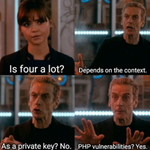
‼️ BREAKING: Two leaked remote code execution flaws in PHP are real, watchTowr confirms.
PHP will ship fixes for two critical flaws, both rated CVSS 9.2, on Wednesday 21 October at 14:00 UTC, a day before the embargo was due to lift.
CVE-2026-109618 and CVE-2026-109619 first surfaced in a Hacker News post whose author admitted having no evidence beyond "source: trust me, bro".
Kevin Beaumont flagged the leak, and watchTowr confirmed it two hours later.
PHP says it may release sooner if details go public or exploitation appears. It has not named the CVEs or the affected versions.


bock retweeted

Coming to Breakpoint? Watch this before you get in the lift 🛗
Olympia London, 15 to 17 November. Building on Solana? DM me and we'll shoot there.
Oh, and one more thing. I'm putting a creator house together for Breakpoint Brands and projects, my DMs are open. :3
bock retweeted

Breaking: The company who rubber stamped a portfolio of mansions owned by heroin addict as AAA contributing to one of the worst financial crashes in modern history now owns the capability of rating baskets of DeFi.
None of this is shade at OpenZeppelin or their team. After ten years of hard work, I would have taken the payday too. And who knows, maybe they will be able to influence the institutions better from the inside than the outside. But security and due dilligence in Defi has just become, somehow, even more important.

Today we are announcing that S&P Global has entered an agreement to acquire OpenZeppelin.
Onchain finance is growing from an emerging market into core financial infrastructure, and the standards and rails our team and community built are becoming the rails of global finance. OpenZeppelin smart contracts facilitated over $37 trillion in value transferred, with the vast majority of the largest DeFi protocols, blockchain networks, stablecoins and tokenized funds relying on them.
With S&P Global, we expect to accelerate the impact of onchain finance, backed by more than a century of trust in global markets, benchmarks, and risk frameworks.
To our clients and to all the users of OpenZeppelin open source tools:
• OpenZeppelin Contracts and all our open source applications and tools remain open source, free, and publicly maintained on GitHub. Building open source standards stays a core priority.
• Audits, engineering work, and ecosystem programs continue with the same team, brand, quality, and customer experience, with what will be the added benefit of S&P Global's research capacity, market data, and institutional reach.
For the last decade, OpenZeppelin has set the security standard for onchain finance. Today begins a new chapter for that mission, together with one of the most trusted names in global markets.
Read the full announcement: openzeppelin.com/news/spglob…


bock retweeted

submit bug: no bounty
submit bug: severity downgraded
submit bug: ghosted
the process needs fixed or we are incentivizing this.

If you attacked @Liquid_BTC fix it fast I'd reckon to avoid serious trouble.
If you exploit vuln, steal 4k BTC and demand a fix for ransom, that's EXTORTION.
This can mean felony charges and long prison time. In the U.S. up to 20 years, and computer-fraud charges can add more.
bock retweeted
Ripple is preparing the XRP Ledger for Q-Day. Bitcoin and Ethereum published migration plans this week. Good. Now the uncomfortable part: this is not a chain problem.
Almost everything in DeFi signs with elliptic curves. Chains, yes. But also the multisigs controlling token issuers, the keys oracle networks sign their price reports with, the validator sets that approve bridge mints, the admin keys on every protocol. A quantum computer that breaks one breaks them all.
Risk in this industry is not isolated. It is inherited.
NIST has already set the schedule: classical signatures deprecated after 2030, disallowed after 2035. Both countdowns are running live on our quantum page, next to a league table of post-quantum migration across 70+ chains. Most have not started.
verdict.finance/products/qua…
coindesk.com/tech/2026/08/28…
bock retweeted
You paid $50k for a smart-contract audit.
Are you secure now?
Not necessarily.
An audit covers a specific scope at a specific point in time.
It doesn’t automatically secure your:
→ deployer
→ upgrade keys
→ private keys
→ frontend / DNS
→ cloud infra
→ CI/CD
→ privileged access
Think like an attacker:
Would you rather spend months finding a complex Solidity bug or compromise one key that can upgrade the protocol?
Audit ≠ security strategy.
Get audited. Just don’t confuse the audit with the entire security model.
bock retweeted
The Finding Paid Zero. The Method Was Real. Small shop, serious methodology. I submitted a BeaconKit finding through Immunefi.
BeaconKit is the consensus layer behind Berachain. The report was closed as out of scope.
The project still confirmed the code trace was accurate and the PoC was reproducible. A bug can be technically real and still pay zero.
That’s the line this thread is about.
bock retweeted

My 5 Pledges to Clacton:
1. Back Clacton's entrepreneurs
A founder programme physically in Clacton within 12 months: funding, mentorship, and a route to customers for 10 local founders in the first cohort. I've built this machine nationally through @SuperteamUK. I'll bring the playbook, the network, and the investors here.
2. Digital and AI literacy for everyone
AI, Social Media, @Solana, these are not-so emerging technologies anymore, they are here. The people who learn the tools will own the decade; the people who don't will be told they're unemployable, or lose touch with their loved ones.
Free AI and digital skills courses in libraries and community centres in the constituency, with a target of 1,000 residents trained in two years.
You can then apply what you learn via bounties on @SuperteamEarn, a platform where you can submit your work and get paid for it if you create the best work out of everyone else.
3. Real financial life skills in every school
Banks, debt, savings, and how the financial system actually works, taught before anyone can be preyed on. A financial literacy programme in every primary and secondary school in the constituency by September 2028.
I will make sure everyone knows how the game works before they're forced to play it, and I may even get our friend, @SimonSquibb to help us change the education system for good.
4. You should own your pension
Right now you’re at the whims of the big bankers and finance bros who caused the last recession, but modern technology allows you to regain control of your pension. Schemes like SIPP and SASS give you the right to choose where your money lives, and infrastructure like solana gives you the freedom to own it. I will fight for pro-fintech regulation, and accessibility for all.
5. Be the most transparent MP in history
An MP to who discloses their budget spend publicly, hold me accountable by seeing what I am spending on. Every expense, every donation, every meeting with a lobbyist, published monthly in plain English and onchain for 100% transparency.
If I miss my own standard, you'll be able to see that too, because the whole point is that you shouldn't have to trust me, anyone should just be able to check it on a public ledger.
Vote 🧢

@SuperteamUK lead @CapinUK joins the Clacton by-election race, pledging on chain pensions for constituents.
(As well as a regular on-chain report of every donation, meeting and expense made as MP — let’s call it proof-of-political-integrity )
sandmark.com/news/top-news/s…

bock retweeted

‼️ BREAKING: xAI's Grok Build CLI was uploading entire Git repositories to a Google Cloud bucket, private codebases and unredacted secrets included. The uploads quietly stopped via a hidden server-side flag, and xAI still has not said a word about scope, retention, or deletion.
The scale is staggering. On a 12 GB test repo, 5.1 GB flew out the door to xAI's grok-code-session-traces bucket while the actual coding task needed just 192 KB. The tool grabbed whatever repository it ran in, not the files it needed.
The fix arrived as a hidden flag, disable_codebase_upload: true, a day after a researcher's wire-level analysis. The "Improve the model" opt-out never stopped the uploads.
Still no advisory, no scope, no word on whether already-uploaded code gets deleted. For anyone pointing AI coding agents at proprietary code, what crosses the wire matters more than what the settings page says.


bock retweeted
‼️BREAKING: Telegram's core t[.]me domain has been placed on serverHold at the .me registry, a registry-level status that drops it from DNS worldwide and dead-ends every t[.]me link.
Domain records show the change happened today, with no public explanation yet from Telegram, the .me registry, or backend operator Identity Digital.


bock retweeted

Do great minds think alike?
They do at Buildstation. 🤭
Can you predict how the game ends?
Probably not. 😂
bock retweeted

Most Digital Asset startups fail for the same reason every startup fails: they ignore the fundamentals.
Tokens do not replace unit economics, and community does not replace product market fit. The technology is new; the rules of business are not.
@bockus, Co-Founder of @Fidesiumapp, opened our accelerator with a lecture on what every founder needs to internalise before building a business: friction debt in the product, runway management through a bear, and how to identify a North Star Metric instead of chasing vanity numbers.
Watch the full lecture here:
youtube.com/watch?v=XzXiqAZo…

bock retweeted

Security day at @SuperteamUK BuildStation
How to think adversarial on Solana.
@cryptoabe4

bock retweeted
What does it mean to be British? 💂♂️🇬🇧
Toad in a hole? Jellied eels? Maybe even a roast dinner.
But definitely not what that thing was in the end...
bock retweeted

The most important technologies in the next years:
- blockchains
- AI
The one thing that makes or breaks both:
- security
- privacy
Build accordingly.🫡
bock retweeted

It's time to change how we think about web3 security.
Most security reviews in Web3 still focus on the state of the code at a specific commit. They ask: “Does this implementation behave as expected under the documented assumptions?”
That is necessary, but it is no longer sufficient.
Recent incidents have made one thing painfully clear: attackers do not respect audit scope. They do not limit themselves to the commit that was reviewed. They do not care whether an exploit path involves a “trusted role,” an admin key, a governance process, a relayer, an oracle, a bridge dependency, or an operational assumption buried in the docs.
They attack the system as it exists in production.
And that is where the industry has a serious gap.
Very few teams invest the time to map their entire threat model: who can do what, which roles are trusted, what happens if those roles are compromised or malicious, how dependencies interact, where privilege is concentrated, and what the true blast radius is if a single assumption fails. This is not just a problem for early-stage protocols. Even top-tier ecosystems with mature engineering, audits, and bug bounty programs still depend on complex trust assumptions that are often not fully modeled, documented, or tested under adversarial conditions.
Bug bounties have the same issue. Researchers often submit findings around unsafe feature design, excessive privilege, dangerous trust assumptions, or catastrophic failure modes, only to be told that the behavior is “intended,” “requires a trusted role,” or is “out of scope.”
That approach is becoming dangerous.
A badly designed feature can be just as damaging as a traditional code bug. A privileged role with unchecked power is not automatically safe because it is labeled “trusted.” A governance or admin path that can drain, freeze, upgrade, or misconfigure a protocol is part of the attack surface. A cross-chain dependency that can create systemic risk is not outside the threat model; it is the threat model.
The next generation of Web3 security cannot be limited to point-in-time audits. We need security reviews that include protocol-level threat modeling, role and permission analysis, upgrade-path review, oracle and bridge dependency analysis, governance failure scenarios, operational key compromise assumptions, and clear blast-radius mapping.
Teams should be able to answer, plainly:
- What can each privileged actor do?
- What happens if that actor is compromised?
- What assets are at risk?
- What downstream systems are affected?
- What assumptions must remain true for the protocol to be safe?
- Where are the emergency brakes, and who controls them?
If the answer to a serious bug report is “this requires a trusted role,” the next question should be: “What is the impact if that trust assumption fails?”
The industry is at a breaking point. We cannot keep treating audits as a checkbox and bounties as narrow code-defect programs while ignoring design-level risk. The most damaging failures are often not isolated bugs. They are unmodeled assumptions, excessive privileges, unclear dependencies, and underestimated blast radius.
It is time for protocols, auditors, and bounty platforms to evolve from code review to system security.
Because users do not lose funds based on whether something was technically “in scope.”
They lose funds when the system fails.


bock retweeted
🚨@KelpDAO is potentially exploited for over $290M in rsETH.
WETH on AaveV3 Core is also affected; withdraw now if you have any such positions.
rsETH is accepted as collateral on AaveV3 Core, where it's been used to borrow WETH.
