

Chinese Wisdom Enthusiast | Marketing Architect Exploring ancient wisdom. Helping Chinese wisdom entrepreneurs thrive in the digital world.
Wherever you need me to be
Joined December 2020
- Tweets3.3K
- Following340
- Followers270
- Likes29.3K



The more I study Chinese metaphysics, the less interested I am in "What will happen to me?"
Better questions:
What pattern am I inside?
What is strengthening?
What is weakening?
What does this timing support?
What requires restraint?
Prediction is interesting.
Orientation is more useful.
16
A simple warm drink can tell you a lot about Chinese dietary thinking.
Ginger warms.
Fennel supports the middle.
Cacao brings its own character.
The interesting part is not "is this healthy?"
It is:
What is the thermal direction?
What does it do in THIS person?
In THIS season?
At THIS moment?
Stop looking for a magic pill, learn to understand the mechanisms lying behind it.
46
I keep finding the same lesson in qigong and Chinese medicine:
Don't wait for a dramatic signal.
The body whispers first.
Breath changes.
Sleep changes.
Digestion changes.
Tension changes.
Attention changes.
Cultivation is partly becoming less deaf to small signals.
17
A FODMAP diet can reduce symptoms.
That does not automatically tell you why your digestion became vulnerable in the first place.
Chinese medicine asks a different set of questions:
cold or heat?
deficiency or excess?
dampness?
qi stagnation?
spleen weakness?
Different model. Different questions.
17
Long-term insomnia is rarely interesting if you only ask:
"How many hours do you sleep?"
I want to know:
When do you wake?
Are you hot?
Irritable?
Dry mouth?
Tension under the ribs?
What does the tongue look like?
The clock gives one clue.
The pattern gives the story.
1
2
28
White fungus is one of those foods that makes Chinese dietary therapy interesting.
Sweet. Neutral.
Traditionally used to nourish yin, moisten the Lungs and support fluids.
So when autumn gets dry - throat, skin, cough, stool - food itself becomes part of the seasonal conversation.
Not a miracle food.
Just good pattern thinking.
27
"Embrace simplicity" sounds easy.
Until you notice how often the mind wants:
another method
another book
another teacher
another tool
another answer
Sometimes cultivation is staying with what you already know long enough for it to become part of you.
1
10
Ge Hong keeps growing on me.
Not because I want to disappear into a mountain cave.
Almost the opposite.
Medicine
cultivation
morality
daily life
All part of the same path.
That idea feels more useful to me than separating "spiritual practice" from normal life.
14
Tinnitus is exactly why pattern thinking matters.
One person has ringing with exhaustion.
Another with stress and tension.
Another with dizziness.
Another with age-related decline.
Same complaint does not automatically mean the same Chinese medicine pattern.
The symptom is the door, not the diagnosis.
15
Chinese medicine organ names can confuse people.
Liver does not always mean liver.
Kidney does not always mean kidney.
Spleen definitely does not mean only the spleen sitting under your ribs.
They describe functional systems and relationships.
Literal translation can create more confusion than clarity. Especially if you ask your Western doctor about it 🤣
17
All these years studying various forms of Daoism changed the way I look at "spirituality".
Less interested in collecting beliefs.
More interested in method.
Practice.
Ritual.
Timing.
Discipline.
Repetition.
A tradition becomes interesting when it asks something from you.
1
12
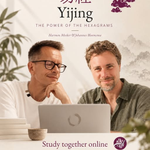
The Yijing becomes much more interesting when you stop treating the hexagram as an answer.
It is a picture of a situation in motion.
Lines change
Timing changes
Relationships change
It's called the book of changes - don't treat it like a static answer
14
Some of the systems I met through my study - Zi Wei Dou Shu, Qi Men Dun Jia - are almost unknown in the West.
Then people call "Chinese metaphysics" vague or superstitious.
Fair enough if you don't know the systems.
But at least criticize the actual system, not the cartoon version of it.
2
54
I went looking for a Daoist book about deep squats.
Came back with the same annoying lesson:
the basics keep winning.
Stand.
Sink.
Open the kua.
Breathe.
Maybe the secret exercise is doing the simple things long enough.
1
43
In Chinese medicine, when we say the Kidneys "open into the ears", we are not talking about Western kidney anatomy.
We are talking about a functional system.
That distinction matters.
Otherwise Chinese medicine becomes a bad translation of biomedicine instead of its own model.
Learn to speak the language of Chinese medicine is your first step in implementing it to improve health
1
1
22
Hair loss is a good example of why I dislike one-symptom-one-answer thinking.
Iron deficiency is not automatically "blood deficiency" in Chinese medicine.
Blood
spleen function
kidney jing
stress
age
Same symptom. Different stories.
Pattern first.
13
My knee taught me a useful Chinese medicine lesson.
Acupuncture reduced the swelling.
Function improved.
The bucket-handle meniscus tear did not magically disappear.
That distinction matters.
Helping the body recover is not the same as pretending structure does not exist.
Traditional medicine gets weaker when we overclaim it.
The fact that I still had no surgery is more about me being stubborn that having too much confidence in my needles. Training however...
13
One thing I dislike about how the Yijing is often presented:
Relating hexagram = the future.
Too simple.
The second hexagram can also help reveal the first. What is moving, unfolding, becoming visible?
I am more interested in how the two illuminate each other than in turning it into a fortune cookie.
22