

Neurologist & Neuroscientist: Lesion Mapping | Lesion Network Mapping | Brain Stimulation
University of Iowa
Joined January 2022
- Tweets607
- Following1.3K
- Followers8.2K
- Likes754






We are hiring 5 new tenure track neuroscience positions at the University of Iowa.
Assistant to full professor. PhD or physician scientist.
I would love to add to our brain stimulation + lesion research groups.
jobs.uiowa.edu/faculty/view/…

Aaron Boes retweeted

Our first-in-human study of low-intensity focused ultrasound targeting the amygdala in MDD is now available on medRxiv.
We found convergent evidence of target/circuit engagement across multiple imaging modalities in an active-controlled study.
Important caveat: this is a preprint and has not yet undergone peer review. It is also a small early-phase study focused primarily on safety and target engagement—not clinical efficacy.
Why post it now? FUS neuromodulation is moving quickly, and we think sharing methods, safety observations, findings, and limitations early is important so others can learn from our work and build on it.
Very grateful to our team, our Veteran participants, and funders @NIH_Innovates @VAResearch @BBRFoundation @FUSFoundation
medrxiv.org/content/10.64898…

We recently saw two people with lesions of the right mid to posterior insula.
What do you guess – they lost all desire to enjoy which of these guilty pleasures:
A. gambling
B. sex
C. eating junk food
D. getting massages

The localization for these two lined up perfectly with a recent large-scale lesion study from Nick Trapp’s lab @NickTrapp13 showing reduced appetite and weight loss associated with right insula lesions.

For a deeper dive into the insula structure and function here's a previously posted overview: xitter.cf/boeslab/status/1771200…

Why is the insula the most interesting region in the brain?
Here are 6 things worth knowing. This is topic #3 for our lab's Friday 'Ode to Neuroanatomy' series.

Keep an eye out for closed loop neuromodulation work coming from Umair Hassan’s new lab at Stanford. Congrats Umair 🔥🔥


Congrats Asmaa!

Nothing is more exciting than being among inspiring neurology leaders and talks.
So honored to be recognized at the AAN as a trainee scholarship recipient. @AANmember
Always grateful to you, @boeslab, for all the support you’ve given me as I take my early steps in research.


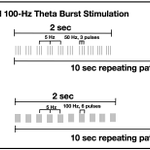
A new TMS protocol:
100-Hz intermittent theta burst TMS. Initial safety testing in press.
If we see triple the modulatory effects, as in rodents (Hanbing Lu) this will be a big step forward for TMS
Rodent: biorxiv.org/content/10.1101/…
Human:
doi.org/10.1016/j.brs.2026.1…

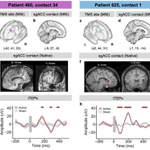
Excellent new paper from Jiang lab demonstrating hippocampal modulation via inferior parietal lobe TMS.

📢 Can noninvasive TMS reach & modulate the human hippocampus? 🧠⚡🧲 Multimodal evidence (TMS-iEEG + TMS-fMRI) from our new @NatureComms paper says YES: shorturl.at/fqtYR
Here’s what we did and why it matters. 👇
#TMS #iEEG #fMRI #Hippocampus #Memory #Emotion

Aaron Boes retweeted

I'm incredibly honored to share that I have been selected to receive one of the American Brain Foundation's Next Generation Research Grants, specifically the award in epilepsy!

Presenting 14 new Next Generation Research Grant recipients for 2026! These brilliant early-career researchers will study brain conditions from ALS to stroke. Their innovative work will make an important difference in the fight against brain disease.
🧠➡️ ow.ly/v5aP50YpoBP

Aaron Boes retweeted

The Third Brain Stimulation Subspecialty Summit (Mar 23-24, Boston) is open for registration!
By popular demand, this year we increased capacity to 400 attendees.
If you are involved in brain stimulation subspecialty training, you will want to be there.
eventbrite.com/e/brain-stimu…

Aaron Boes retweeted

Tsang et al. reviewed 13 studies combining TMS with intracranial EEG in humans and non-human primates. They found that stimulation can rapidly alter neuronal activity and connectivity, with some effects persisting for extended periods. tinyurl.com/yver3s93

Aaron Boes retweeted

A recent paper in @NatureNeuro raised concerns about the lesion network mapping method. Our team of 16 coauthors analyzed >1000 lesions and 34 symptoms and found that "The methodological foundations of lesion network mapping remain sound" biorxiv.org/content/10.64898…
Agree! High spatial correlations of unthresholded network maps is pretty weak sauce. If statistical thresholds are used their only analysis falls apart.

Are connectome-based network mapping methods and the >200 papers that have used it invalid?
New paper out in @NatureNeuro says YES. nature.com/articles/s41593-0…
I have concerns about this new paper's methods and conclusions, but am biased. What do others think?

Is lesion network mapping fatally flawed?
New Nat. Neurosci article suggests high spatial correlation amongst lesion network maps invalidates the method.
nature.com/articles/s41593-0…
Methodological flaw may upend network mapping tool thetransmitter.org/brain-ima…

Aaron Boes retweeted

‘Mapping the neuroanatomy of dystonia using causal brain lesions’ – now out as a preprint! medrxiv.org/content/10.64898… Huge thank you to @JJoutsa @foxmdphd!
We map the brain networks for the different types of dystonia, showing significant differences, somatotopy...and much more!!

Aaron Boes retweeted

Check out our poster on the role of lesion-derived networks in predicting post-stroke epilepsy in children @AmEpilepsySoc
Incredibly honored to receive the AES 2025 Young Investigator Award.
Grateful to my mentor @boeslab whose guidance and inspiration shape my work every day.


