



Bo Thorén retweeted

Tydlig beskrivning av vår vänskapskorrupta vinstdrivna välfärd. Ha forskarens ord i bakhuvudet när du läser diagrammet: vinsterna skyddas av "ett starkt särintresse som är välorganiserat" och ett "framgångsrikt arbete från lobbyister". samgu.eu.qualtrics.com/Contr…

Bo Thorén retweeted
Snabbkurs i skolfiffel:
- Äg både skol- och fastighetsföretag.
- Ge dig själv skyhög rektorslön.
- Flytta skolföretagets pengar till fastighetsföretaget.
- Hänvisa till resursbrist när du inte ger elever stöd.
- Gör aktieutdelning i fastighetsbolaget.
sydsvenskan.se/malmo/malmore…

Bo Thorén retweeted
”Var fjärde barn som kliver in genom skolporten innebär ren vinst.”
Som jag längtat efter detta! Balansgranskningar fast med journalistik prägel där ägarna konfronteras. Om man inte expanderar genom förvärv kan man driva skolor med skyhöga marginaler. sydsvenskan.se/malmo/sydsven…

Bo Thorén retweeted

Anthropic's Jack Clark: a 60% chance AIs train their successors by the end of 2028.
That could mean an intelligence explosion, but nobody has a credible plan to control what follows.
Plus: The UK's first-ever legislative proposal on superintelligent AI!
controlai.news/p/are-we-clos…
Bo Thorén retweeted
Regeringen har bestämt att skydda nuvarande skolägare genom att belägga nya friskolor med vinstbegränsningar,
- Två enorna skolkoncerner ägs av moderatprofiler.
- En ägs av fd Folkpartist.
- En ägs av fd Kristdemokrat.
Man ser om sina egna.
Bo Thorén retweeted
Skolkoncernlobbyn: "Vinsterna är så små, bara tre procent"
Den absolut största aktören Academedia, med årlig omsättning på 20 miljarder: "Vinsten ökade till åtta procent. En halv miljard, bara det senaste kvartalet".
placera.se/telegram/academed…

Bo Thorén retweeted

All civilisations collapse for basically the same reason: they could have responded to reality but they didn't.
Our civilisation is no different as we face the consequences of runaway climate collapse: we can but we won't.
“New Orleans is in a terminal condition, and we need to be clear with the patient that it is terminal,” he said. “There is an opportunity for palliative care, we can transition people and the economy. We can get ahead of this.”
But, he added, “no politician wants to first give this terminal diagnosis. They will speak about it behind closed doors, but never in public.”
theguardian.com/us-news/2026…

Bo Thorén retweeted
"Ulf Kristersson deltog personligen på mötet där hans svägerskas stiftelse fick fler miljoner. Pengarna togs från ”integration och jämställdhet”, som minskades med samma belopp. Beslutet beskrevs som ”angeläget”."
Såklart är Academedia med på ett hörn.
aftonbladet.se/nyheter/a/wrR…

Bo Thorén retweeted
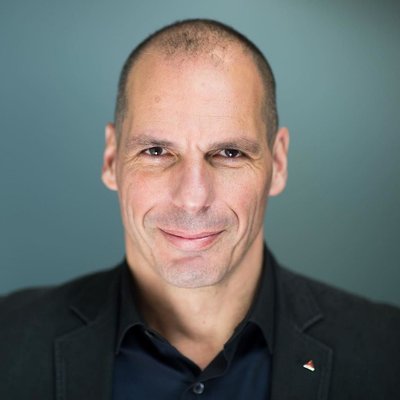
IN PRAISE OF FRANCESCA ALBANESE
There is a question that visits me in the small hours, when sleep will not come and the mind turns over old stones. The question is this: “What would I have done in the 1930s, on the morning after Kristallnacht?"
Not what I say I would have done. Not what I hope I would have done. But what would I actually have done—when the trains began to run, when the neighbours grew quiet, when the cost of decency became the loss of everything?
Most of us, I think, would have done little. Not from malice. From fear. From the soft, creeping conviction that someone else will speak, that the situation is complex, that we must be 'reasonable'. Lest we forget, the ordinary is the extraordinary's alibi. And how we have clung to that alibi! How we still cling to it!
And then, every once in a terrible while, someone appears who does not cling. Someone who steps forward when others step back. Someone who speaks the name of the thing when everyone else is busy naming something else.
Francesca Albanese is that someone.
She stands before the world—alone, unarmed, armed only with law and language and a rare courage—and she says what the centrists will not say, what the foreign ministries will not say, what the editorial boards will not say. She says: "This is a genocide. And we are watching it happen."
Do not tell me that is hyperbole. Do not tell me the term is contested. She has not used it lightly. She has used it as a physician arrives scientifically at a diagnosis—not to wound, but to warn. Not to inflame, but to name.
And for that, they have come for her. Oh, how they have come for her. Smears. Investigations. Vicious editorials. Frozen bank accounts. Dispossession of the only apartment she had ever owned. The machinery of the respectable turned to crush her. Because the respectable cannot abide what she represents: a mirror held up to their complicity.
Let us, once again, travel back to the 1930s. Back to the few who stood up when the trains began to run laden with Jewish people.
There was Aristides de Sousa Mendes, a Portuguese consul in Bordeaux. He defied his own government. He signed thousands of visas, by hand, for hours, until his fingers bled. He saved more lives than Schindler. And he died penniless, disgraced, erased.
There was a German officer in Warsaw named Wilm Hosenfeld. He hid a Jewish pianist in the rubble. He did not save thousands. He saved one. But that one—Władysław Szpilman—carried the memory. And memory is "the only haven from which we cannot be expelled."
There was Raoul Wallenberg. There were the villagers of Le Chambon. There were the anonymous, the quiet, the furious few who said: “Not on my watch.”
Francesca Albanese is their heir. Not because she carries a gun. Not because she hides refugees in her basement. But because she does something equally dangerous in a world that has perfected the art of not seeing. She sees. And she speaks.
She does not speak as a diplomat. Thank Goodness she doesn't! Diplomats have given us the language of "there are arguments on both sides" and "restraint" and "proportionality." Diplomatic language is the perfumed grave of moral clarity. No, she speaks as a jurist. As a human being. As a woman who has looked into the abyss and refused to call it a "complex geopolitical landscape".
Edna O'Brien once described a character who "had the recklessness of those who have already lost everything worth losing." Francesca Albanese has not lost everything. She has her dignity, her office, her voice, her family. But she has calculated the cost of speaking truth to power. And she has decided that that cost is infinitely less than the cost of silence.
What is that cost? Let us name it. She has been called antisemitic—she, who stands on the ground of international law forged in the ashes of Auschwitz and the fires of Nuremberg. She has been called a conspiracy theorist—she, who cites every source, every footnote, every UN resolution. She has been called naive—she, who understands better than most the machinery of realpolitik.
These accusations are not arguments. They are the spittle of the threatened. Because Francesca Albanese threatens something very precious to the powerful: the right to commit atrocity without being named.
Friends, the 1930s did not arrive with jackboots and pogroms on day one. They arrived in small increments. With "reasonable" restrictions. With "proportional" measures. With the silence of the respectable.
We tell ourselves that we would have been different. That we would have been Sousa Mendes. That we would have been Wallenberg. But most of us, I fear, would have been the neighbours who later said, "I didn't know."
Francesca Albanese knows. And she refuses to pretend otherwise.
So let us praise her. Not with statues or awards she does not seek. But with something harder: with our own refusal to look away. With our own voices, raised in places that are safe for us but dangerous for her. With our own bodies, if it comes to that.
A brave woman, who was injured while demonstrating outside a US nuclear military base in 1982, the infamous Greenham Common, had told me that "the heart is a hunter for what it cannot have." But I say the heart is a hunter for what it will not lose. And what we will not lose is the memory of those who stood up when standing up cost everything.
Francesca Albanese is standing up now. In our time. In our name. Under our indifferent sky.
Let us stand with her.
Not tomorrow. Not when it is safe. Now.
[Extract from a speech in Athens on Sunday 3rd May 2026]

Bo Thorén retweeted

Meta and CEO Mark Zuckerberg are being sued by five publishers and author Scott Turow, who allege the tech company illegally copied millions of books, articles and other works to train Meta’s AI systems.
“In their effort to win the AI ‘arms race’ and build a functional generative AI model, Defendants Meta and Zuckerberg followed their well-known motto: ‘move fast and break things,'” the plaintiffs say in their lawsuit. ”They first illegally torrented millions of copyrighted books and journal articles from notorious pirate sites and downloaded unauthorized web scrapes of virtually the entire internet. They then copied those stolen fruits many times over to train Meta’s multibillion-dollar generative AI system called Llama. In doing so, Defendants engaged in one of the most massive infringements of copyrighted materials in history.”
variety.com/2026/digital/new…

Bo Thorén retweeted
Moderaterna stoppar reformer på friskoleområdet, igen! När ska journalister granska kopplingarna mellan M och friskolor?
- Statsministerns fru sitter i friskolestyrelse.
- M-profiler äger koncerner.
- Tidigare toppnamn sitter i friskolestyrelser.
- Rikligt med M-skollobbyister.
Bo Thorén retweeted

The Bernie-to-Bannon coalition against replacement AI is gaining steam - getting to speak with both on the same day was never in my bingo card! Video links in comments.

Bo Thorén retweeted

Warning: GenAI-induced cognitive surrender may kill innovation.
Consider the following, from CEO @wadhwa’s newsletter:
“I have been speaking with recent graduates in India, many of them highly recommended, and on paper they look exceptional. The emails are polished, the resumes are perfect, the proposals are structured and articulate. To filter for real thinking, I even created a job description that required candidates to answer a series of questions before I would interview them, and I explicitly told them not to use AI.
Of course, almost everything I am getting back is AI slop.
The moment you get into a real conversation, it becomes obvious. They cannot explain what they wrote, cannot walk through their reasoning, and fall back on vague generalities when pushed. After seeing this repeatedly, I have come to a difficult conclusion: AI has already done real damage. It has taken people from a weak education system and given them a powerful crutch, and instead of using it to improve their thinking, many are using it to avoid thinking altogether.
And before my American friends think they are any better, they should know it is no different here.”
Bo Thorén retweeted
”Som lärare och samhällsmedborgare kan jag bara peka på att spelplanen och spelreglerna är fundamentalt felkonstruerade och omöjliggör en anständig skola.”
Klicka inte bara like eller retweet. LÄS ARTIKELN! Liljeros är så jäkla bra.
vilarare.se/nyheter/vi-larar…
Bo Thorén retweeted
”Vi bryr oss inte om det spelet. Vi bryr oss om varför verksamheter som Mandoklinikerna tillåtits missbruka skattepengar år efter år. Vi bryr oss om varför de fruktansvärda effekterna av marknadsskolan inte dominerar nyhetsrapporteringen.”
expressen.se/kultur/nalin-ba…

Bo Thorén retweeted
Göteborgs universitet jämför väljares och politikers åsikter i massor av frågor. Frågor där skillnad mellan vad väljare och politiker tycker är störst:
- Sex timmars arbetsdag
- Mindre offentlig sektor
- Förbjuda vinster i välfärden
- Privatisera sjukvården
Lobbyism fungerar!

Bo Thorén retweeted

Anthropic's research proves AI coding tools are secretly making developers worse.
They split developers into two groups. One used an AI assistant. The other just used normal documentation.
The group that used AI performed significantly worse.
They scored 17% lower on comprehension tests. That is a drop of two full letter grades.
It impaired conceptual understanding. It impaired code reading. And worst of all, it decimated their ability to debug.
The control group, forced to struggle through errors manually, actually learned the library.
The AI group bypassed the struggle. And they learned nothing.
Here is the most dangerous part.
Researchers identified a "Speed Illusion." Participants who simply copy-pasted AI code finished their tasks the fastest, but had the absolute lowest comprehension.
They outsourced their cognitive effort.
The researchers uncovered what they call the "Supervision Trap."
As AI gets more advanced, the human role is shifting. We are moving from writing code to supervising AI agents.
But to supervise AI effectively, you need to be able to spot subtle bugs, hallucinations, and architectural flaws. You need elite debugging skills.
If you rely on AI to do the work, debugging is the exact skill you fail to develop.
This creates a fatal loop.
Companies are pushing junior workers to use AI to maximize immediate productivity. But in the process, they are preventing them from ever developing the senior-level skills required to actually manage the AI.

Bo Thorén retweeted
ControlAI's US Director Connor Leahy (@NPCollapse) says he's seen top scientists go crazy from talking to AI too much.
AI psychosis has been a shock, and that's just today's AIs. Superintelligent AI would be capable of far more.
Source: @mukeshbansal06's SparX podcast
Bo Thorén retweeted

This is big... Anthropic just announced a model so powerful they won't release it to the public out of fear over the damage it will cause 😨
Claude Mythos Preview found thousands of zero-day exploits in every major operating system and web browser...
The numbers are hard to believe:
> $50 to find a 27-year-old bug in OpenBSD, one of the most security-hardened operating systems ever built
> Under $1,000 to find AND build a fully working remote code execution exploit on FreeBSD that grants unauthenticated root access from anywhere on the internet
> Under $2,000 to chain together multiple Linux kernel vulnerabilities into a complete privilege escalation exploit
For context: these are the kinds of findings that previously required elite security researchers working for weeks.
Anthropic engineers with no formal security training asked Mythos to find exploits overnight. They woke up to working code the next morning.
The results were so impressive Anthropic assembled Apple, Google, Microsoft, Amazon, NVIDIA, and seven other organizations into Project Glasswing:
A $100M defensive coalition. They're not releasing this model publicly. Instead, they're racing to patch the world's infrastructure before models like this proliferate.

Introducing Project Glasswing: an urgent initiative to help secure the world’s most critical software.
It’s powered by our newest frontier model, Claude Mythos Preview, which can find software vulnerabilities better than all but the most skilled humans.
anthropic.com/glasswing
