

Game Dev @BrightWormGames : https://teapawt.net/t.co/CMSfgczL9k previously: Production Tools Lead @unitygames. Design Director on LC:GO Mirror of Spirits. Co-Founder @KOOPMode.
- Tweets4.8K
- Following517
- Followers2.2K
- Likes2K


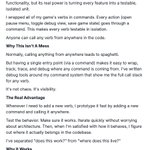






ALT Essay titled 'The Sustainable Pace Feels Like You're Barely Trying—That's Why It Works And Why You'll Reject It' discusses the internal struggle of high achievers grappling with the concept of sustainable effort. The essay begins by describing the incessant critical voice that equates effort with value, leading to burnout. It identifies life pursuits as marathons needing pacing, such as dieting, learning, and parenting. The author explains that high achievers often reject the sustainable pace due to societal conditioning to equate suffering with success. The real challenge lies in trusting this moderate pace as part of one's identity, even though it may not feel heroic. The conclusion emphasizes that sustainable practices are crucial for long-term achievements in life.

ALT A screenshot of an essay titled '4 Workflow Problems ScriptableObjects Solve'. The essay discusses the author's approach to using ScriptableObjects in Unity game development. It emphasizes wrapping values like health, speed, and damage in ScriptableObjects for improved observability, tweakability, and reduced merge conflicts. The four problems addressed include: 1) Mysterious Value Changes, where events track value changes; 2) Reference Hell, which simplifies value sharing among objects; 3) Prefab Merge Conflicts, which reduce locking issues during team collaboration; and 4) Lost Runtime Tweaks, which allows runtime changes to persist after play mode, saving development time.

ALT Screenshot essay titled 'The Command-First Prototyping Method: How To Separate "Does It Work?" From "Where Does It Live?"'. The essay discusses the effectiveness of the command pattern in game development, emphasizing its role in making game actions testable and isolated. It highlights how wrapping game verbs in commands allows for easier debugging and visibility into the code's behavior. The author explains that prototyping new features is simplified by using commands, enabling quick testing without initial architectural concerns, and allowing for proper integration later. Overall, it presents commands as a valuable prototyping tool and a significant technical decision in the author's development process.

ALT A screenshot essay discussing the author's transformative experience with running and the impact of using a heart rate monitor. The essay highlights how initial skepticism about the device changed into appreciation as it taught the author to manage running intensity and recovery. Key points include the realization of overexertion during runs, the importance of different effort zones, and how following the monitor's guidance led to sustainable, enjoyable running, and improved performance. The author encourages others to consider using a heart rate monitor not for vanity metrics, but to understand their actual pace and learn when to push themselves or ease off.

ALT Screenshot essay titled 'I Hit A New PR Yesterday And Finally Learned The Name For What I've Been Chasing.' The essay discusses the author's experience of achieving a personal record in a 10km race, describing the intense feeling of triumph known as 'fiero.' The author explains fiero as the pride that comes from overcoming challenges, emphasizing its importance in personal growth and motivation. The essay outlines how the author actively seeks fiero through difficult tasks and challenges, asserting that this feeling is universal and not a sign of being broken or addicted to stress. The writer concludes by acknowledging that recognizing this feeling helps understand one's motivations in life.

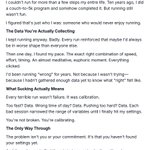
ALT A screenshot essay titled 'What If Sucking At Something Is Just Data Collection In Disguise?' discussing the author's journey with running. The essay is divided into sections: 'When Commitment Looks Like Injury' recounts the author's struggle with running, mistakenly associating pain with commitment. 'The Data You're Actually Collecting' reveals a turning point where the author discovers their running pace, realizing previous attempts were part of a learning process. 'What Sucking Actually Means' explains that perceived failures were essential for calibration. 'The Only Way Through' concludes that the journey is about collecting data and adjusting until finding the right approach to running. The overall message encourages persistence and reframing setbacks as valuable learning experiences.

ALT Screenshot essay titled 'The Momentum Paradox: You Don't Need Clarity to Take Action. Taking Action Is What Creates Clarity.' The body text explains that a rocket calculates its trajectory only after launch, emphasizing the importance of taking action despite uncertainty. It discusses the pitfalls of analysis paralysis and the fear of failure that prevents people from starting. The author argues that clarity comes from doing rather than thinking, as progress reveals direction. The essay concludes with encouraging readers to stop waiting for certainty, to embrace trial and error, and to recognize that taking steps will generate momentum and insights.

ALT A screenshot essay titled 'What If the Parts of Yourself You Try to Hide Are the Very Things That Make You Compelling?' discusses the contrast between technically skilled art and more expressive, idiosyncratic creations. The author reflects on their daughter's unconventional artwork, emphasizing that while technically better pieces can appear uninteresting, her work possesses life and character due to the emotional tension between vision and execution. The essay prompts readers to reconsider when they learned to hide their unique artistic choices in favor of technical proficiency, suggesting that this loss of individuality can lead to forgettable work. It concludes by inviting artists to embrace their quirks and decision-making processes in their creative expressions.

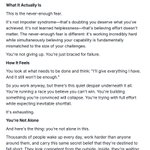
ALT A screenshot essay titled 'There's A Name For The Fear That You'll Always Fall Short (And It's Not Just You)', discussing the pervasive 'never-enough fear' experienced by many hardworking individuals. The essay's sections include 'The Secret You Carry', describing a personal struggle with the fear that efforts may never suffice, and 'What It Actually Is', which differentiates this fear from imposter syndrome and learned helplessness. The content explains how this fear manifests as exhaustion and despair despite diligent efforts. The author reassures readers they are not alone in this experience, acknowledging that many people face the same challenges, and concludes by naming this fear as 'the never-enough fear', emphasizing it is a common human experience.

ALT A screenshot essay titled 'What If Struggling Isn't Stubborn—It's Strategic?' The text discusses the concept of choosing struggle strategically rather than out of stubbornness. It emphasizes that genuine understanding and wisdom come from personal experience with challenges, rather than seeking quick solutions. The essay highlights the value of learning from mistakes, developing intuition, and building competence through direct confrontation with difficulties. It contrasts the idea of asking for help for efficiency with the desire to earn skills through struggle, concluding with a powerful statement: 'Because I wanted to earn it.'

ALT A screenshot essay titled 'What If Being "Bad At Something" Is Actually Your Biggest Advantage?' discusses the author's personal journey from believing he was non-athletic to becoming a runner. The essay highlights how initial failure in sports led to empowerment through persistence, illustrating that struggle and effort hold more value than inherent talent. It challenges the notion of accepting limitations, encouraging readers to embrace difficulties as opportunities for growth and transformation. The author emphasizes that every small victory achieved through hard work demonstrates that one's identity is flexible and that true growth occurs when confronting and overcoming weaknesses.

ALT A screenshot essay titled 'What I'd Tell My Jaded Self: The Apathy You Feel is a Symptom of a Life Without Meaningful Struggle'. The essay discusses the author's experience of feeling apathy in programming after twenty years, emphasizing that apathy isn't the opposite of passion, but rather a result of lacking challenges. The author shares a personal journey of reconnecting with their passion through embracing difficulty and curiosity. They encourage readers to stop optimizing everything and to seek real challenges to find purpose and love in their work. Key themes include the importance of meaningful struggle and the idea that true engagement comes from facing tough problems.
