
Interested in research into ME/CFS, functional disorders, overtraining syndrome and related conditions.
Joined November 2017
- Tweets17.6K
- Following279
- Followers1.3K
- Likes14.3K


Pinned Tweet
New article: How to recover (or significantly improve) from ME/CFS medium.com/@cfs_research/how…

ME/CFS Research retweeted

A review of 46 studies finds that the stress response system may be less responsive in people with ME/CFS compared with healthy controls.
Find out more: tinyurl.com/36ypa7pv
Link to published article: tinyurl.com/mthmkk4z

ME/CFS Research retweeted

The World of Splits and Silos in ME/CFS 🚨
For a multisystem illness, ME/CFS seems to generate an extraordinary number of divisions. Here are some I've observed:
1/ Psychiatrists vs physicians. As though multisystem involvement doesn’t include the brain's role in regulating cognition, activity, emotions, sleep , bodily states etc
2/ Psychology vs biology. Research into immune dysfunction, mitochondria or mast cells is biological.
Research into interoception, predictive processing, active inference and brain–body regulation is dismissed as psychologisation.
3/ The recovered vs the still unwell.
Those who remain ill have ME/CFS. Those who report recovery are sometimes told they never had it in the first place.
4/ Neuroplasticity vs biological treatments.
People reporting recovery through approaches involving brain regulation or neuroplasticity may be labelled grifters.
Meanwhile, interventions such as plasma exchange can be presented as credible biological treatments, despite efficacy for ME/CFS remaining unestablished.
5/ Predictive processing vs mast-cell dysfunction.
Studies implicating altered brain–body integration or predictive processing are treated as attempts to psychologise illness.
Yet mast-cell dysfunction may be invoked as an explanation for an enormous range of symptoms, sometimes with far greater certainty than the evidence supports.
6/ Cure vs recovery.
Reports of recovery are dismissed because there is no established cure.
Yet the absence of a cure is simultaneously used to argue for more research.
Why shouldn't understanding recovery be part of that research?
7/ Acceptable vs unacceptable research.
Research into mitochondrial modulators, immune therapies and novel biological interventions is welcomed.
Research into brain–body regulation, interoception or behavioural mechanisms may be dismissed as ideologically motivated or driven by vested interests before the findings are examined.
8/ Breakthroughs vs failed treatments.
Small studies of biological interventions, sometimes showing no convincing average benefit, can generate excitement about breakthroughs.
But evidence of functional improvement through other approaches may be rejected.
9/ Clinicians who understand MECFS vs those who don’t?
There are levels of understanding here and understanding doesn’t exist as a binary. Far too often an unwanted explanation becomes =I’m not understood.
10/ MECFS vs long Covid vs ME vs CFS
For a multisystem illness, that's an extraordinary number of silos.
Imagine being a patient trying to integrate all these competing messages into decisions about your health, treatment and future.
Can treatment genuinely reflect the whole person when our explanations keep dividing that person into competing systems?
And perhaps most concerning is that these divisions don't arise only in patient forums.
They also come from healthcare professionals.
We should be helping patients integrate complexity, not creating further fragmentation.
A multisystem illness demands an integrated understanding, not a competition between explanatory models.
I say it because I use it for meaningful change in patients - bed bound in wheelchairs etc.
Think about it….
* the post is about exploring the dynamics that many might find themselves in the present ; not about using the past to explain WHY this dynamic is occurring.
The suffering is real. And addressing this suffering requires the clinician to shape change at multiple levels. Not preferred silos. ( esp when change is not occurring over a longer duration)

ME/CFS Research retweeted

🌱 Can reading recovery stories help recovery itself?
There’s growing evidence that hope, positive expectations and shared experiences matter.
#FND and #ME/#CFS and #Chronic pain have important overlaps.
Here is a wonderful collection of recovery stories for ME/CFS/Chronic pain👇
recovery-channel.org/recover…
recovery-channel.org/how-peo…
#FND #MECFS #Recovery
@PaulGarnerWoof @Fionas_Story

ME/CFS Research retweeted

1) Data from five German university hospitals shows that the DSQ-PEM for post-exertional malaise scaled with fatigue and overall symptom burden.
Although CFS and Long Covid patients scored the highest, patients with chronic pain, cancer and MS also had increased scores.

ALT Horizontal bar chart of mean DSQ-PEM post-exertional malaise scores (range 0–46) with standard deviation bars, by patient group. Chronic fatigue syndrome scores highest (29.1), followed by post-COVID (26.2), chronic primary pain (25.0), cancer (20.6), multiple sclerosis (17.3), chronic renal failure (15.8) and inflammatory bowel disease (9.9). All groups are above the healthy reference of 6.25, shown as a dashed line. The standard deviation bars are wide and overlap a lot between groups. Source: Erschens et al. 2026.
ME/CFS Research retweeted
1 🇳🇴) In this Norwegian study, therapists using a psychosomatic approach to ME/CFS expressed "concern about how current approaches might be viewed if future research were to establish a treatable biological dysfunction."

ME/CFS Research retweeted

Inside the Lyme Disease industrial complex...where flawed tests sold by private companies lead to questionable diagnoses and harmful treatments
My latest for @unherd with @mgtmccartney

ME/CFS Research retweeted

In 2021, “bad blood” from #fibromyalgia patients made mice sick. Crazy! So…can lowering those antibodies help PEOPLE? 5 years later, we have a trial: antibodies down 60%… and … and pain didn’t budge. ☹️ A setback for the autoimmune theory. NEW POST, 3m:
painscience.com/blog/fibromy…

ME/CFS Research retweeted

1/ conversion disorder and deconditioning/illness beliefs model have been a simplistic disaster, ME/CFS should be under neuro immunology, not the pseudoscientific dustbin of 'psychogenic illness' - theguardian.com/commentisfre…

ME/CFS Research retweeted

Mentally imagining muscle contractions increased strength without exercise.

ME/CFS Research retweeted
1) The team of Andreas Goebel was the first to transfer autoantibodies of fibromyalgia patients to mice (similar studies later followed in Long Covid).
In this paper, they tested rozanolixizumas: a drug that lowers circulating antibody levels.
A brief summary of the results 👇

ME/CFS Research retweeted
Sleep dysfunction can be a deeply isolating symptom, shrinking individuals' daily functional hours.
The symptom burden and ripple effects can impact mental health. We urge anyone in distress to consider reaching out to appropriate organisations e.g. Mind mind.org.uk/


ME/CFS Research retweeted

Reviewed three recent randomized trials for long Covid.
Two are positive -- exciting news! -- and one is difficult to talk about. Free-to-read link in replies. @NEJM @NEJMClinician

ME/CFS Research retweeted

Medscape "teaches the controversy" of Mast Cell Activation Syndrome (MCAS) w/ 2 long-time quacks (Theoharis Theoharides & Lawrence Afrin), along with two mainstream allergy/immunology experts. Afrin made MCAS an example of the "One True Cause of All Disease" pseudoscience trope.
ME/CFS Research retweeted
1) A genetic analysis of the UK Biobank found 7 ME/CFS hits that were replicated in another cohort such as the All of Us cohort.
One signal matched with expression of the gene CLYBL in the putamen brain region.
But there are many caveats. None replicated in DecodeME.

ME/CFS Research retweeted
1) The pharma company BioVie announced the results of the phase 2 trial of their drug Bezisterim for Long Covid.
Although the primary analysis showed no significant effect, an analysis in subgroups with a great symptom burden suggested an improvement.
A brief breakdown 👇

ME/CFS Research retweeted

"Postural orthostatic tachycardia syndrome in adolescents with ME/CFS — a case control study" Leone et al, Frontiers in Pediatrics. (2026) frontiersin.org/journals/ped… #MECFS #MEresearch #POTS

ME/CFS Research retweeted
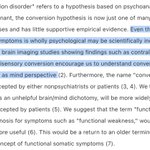
You're cherrypicking. If you read that article, @jonstoneneuro says "Although long dominant, the conversion hypothesis is now just one of many competing etiological hypotheses and has little supportive empirical evidence. Even the notion that the etiology of these symptoms is
ME/CFS Research retweeted
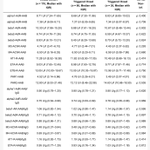
1) There's a new consensus statement on ME/CFS diagnosis and assessment by 19 experts.
The table below shows some of the objective tests they recommend for various symptom domains including a standing test, polysomnography, actigraphy, CPET, NK cytotoxicity, etc.

ME/CFS Research retweeted

Jon Stone has written an excellent response to Scamvougeras and Castle’s argument that FND is fundamentally psychiatric. I agree with all of it. The neurology vs psychiatry framing itself gets in the way of understanding patients and providing effective care.
The patients I evaluate and treat vary considerably. Some have relatively straightforward presentations, with habitual, involuntary movement patterns that respond very well to sensorimotor retraining. Others have no diagnosable psychiatric condition, but psychosocial factors such as fear, shame, cognitive rigidity, etc appear to contribute substantially to symptom onset and persistence. Others have multiple psychiatric comorbidities, and psychiatric or psychological treatment is central to their progress. Across these presentations, I find coordinated multidisciplinary care most useful, with the balance of treatment reflecting each person’s needs.
These differences don’t require placing patients on a line between “neurological” and “psychiatric.” Each person has their own combination of interacting biological, psychological, and social/environmental factors. As Stone explains, describing the brain mechanisms involved in a symptom is different from explaining why that person developed it. Understanding altered motor control doesn’t exclude psychological contributions, and identifying psychological distress doesn’t fully explain how someone develops a particular movement, weakness, or seizure. A psychological contribution also doesn’t require a psychiatric diagnosis, and having a psychiatric diagnosis doesn’t establish the cause of someone’s neurological symptoms.
This is why I love the pie chart analogy created by Julie Hershberg and her team at re+active. I explain to patients that we can think about their condition through the interaction of factors that increased their vulnerability, events that may have triggered symptoms, and things that now keep those symptoms going. Picture a pie divided into slices representing psychosocial, lifestyle, physical impairments, motor control, sensory processing, and autonomic factors. For some people, psychosocial and lifestyle factors appear to make up much of the pie. For others, sensory and physical impairment do. For many, several areas contribute equally. The slices interact, their relative importance can change, and what maintains symptoms may (and often does) differ from what initially triggered them.
The pie is a shared working formulation, rather than a precise measurement of causation. Patients often respond very well to having this visual representation of their difficulties and understanding why we’re recommending particular treatments. It also helps us identify what we may have overlooked. I find it difficult to imagine treating this population well without some version of this individualized, integrated approach.
I see the consequences of narrower thinking in both directions. Some clinicians and patients emphasize neurological mechanisms so heavily that psychological and social contributors go unexplored. Others assume a psychiatric explanation is sufficient and overlook the need for neurological assessment or rehabilitation. In either case, the explanation can start determining what the clinician is willing to see.
One particularly troubling mistake I encounter, especially from mental health professionals but sometimes from neurologists, is concluding that symptoms are too severe to be functional. Patients report being told, “This is clearly neurological; your mind can’t make you have these symptoms.” Symptom severity doesn’t distinguish FND from another neurological condition. Establishing the diagnosis requires neurological expertise, an appropriate examination, and positive clinical evidence. This is why I believe neurologists need to take a central role in diagnosis and remain involved in management where needed.

Scamvougeras and Castle express the view that FND should be framed ONLY in psychiatric terms in a new article @CogNPsychiatry
zurl.co/pSx1u
My reply explains why I think this historical - and dualistic - approach is wrong: zurl.co/OAcPN

ME/CFS Research retweeted
"Total blood volume and red blood cell volume are not associated with orthostatic intolerance in adults with myalgic encephalomyelitis/chronic fatigue syndrome" Yamazaki et al. Physiological reports (2026) physoc.onlinelibrary.wiley.c…
