








Petr Shibanov retweeted

🚨BREAKING: Marco Rubio says radical Islam isn’t only a threat to the US, but the entire world!
If you agree with Rubio, repost this!
Petr Shibanov retweeted

This is the 2025 Mercedes-Benz HWA EVO; a homage to the iconic Mercedes Benz 190E 2.5-16 EVO II🔥📸
Petr Shibanov retweeted

Apparently Blizzard found a hard drive labeled “shit we abandoned 20 years ago” and decided to release all of it.
WoW: Forever is basically vanilla WoW from an alternate timeline where they never ruined it. Level 60. Original world. Original era. But with new zones, 1,000+ new quests, new raids, new dungeons, and all the stuff old WoW might’ve eventually become if they’d just kept building on it.
Warcraft III is getting its first new campaign in 23 years. Diablo V is coming. StarCraft is becoming an open-world shooter for some reason. Netflix is making an animated Diablo series.
This is an irresponsible amount of 40-year-old man bait.
People lost YEARS of their lives to these games. Entire friendships existed inside them. Vanilla WoW meant getting home, logging into Ventrilo, and listening to the same eight guys breathe into their microphones until 3 a.m.
Gaming might actually be all the way back. I’m frightened.


Petr Shibanov retweeted

Когда Z-пропагандисты РФ в следующий раз будут вам рассказывать про русофобию на Майдане и про «гиляку», то обязательно напомните им этот факт:
В 2013-м на Майдане украинцы зажгли свечи в память о погибших в теракте в Волгограде россиянах.
Помните об этом.


Petr Shibanov retweeted

Una presentadora multimillonaria exige a Elon Musk que done su fortuna... Quedo destrozada con la respuesta que le dieron.
«¿Qué hace Elon Musk con su dinero? Va a ser trillonario. Podría salvar países enteros. ¿Lo va a hacer? No. ¿Es que crees que vas a vivir para siempre, Elon?
—Un par de apuntes, Joy. Menos del 0,1% del patrimonio de Elon es dinero en el banco. El 99,9% restante son acciones y propiedad de sus empresas: SpaceX, Tesla y otras.
Esas empresas han creado más de 160.000 empleos directos, 600.000 indirectos y 500.000 más inducidos. Al menos 1 millón de personas en el mundo ponen pan en su mesa gracias a ellas.
Tú, en cambio, tienes 30 millones de dólares. No has creado empleos. Y casi todo tu dinero está listo para gastarse.
¿Vas a vivir para siempre, Joy? ¿Por qué no regalas TÚ tu dinero? Con un tercio podrías alimentar a 3.000 personas un año entero.
¿Cuándo empieza tu donación?»
Readers added context they thought people might want to know
This is a satirical edit created by Damon Imani. He takes an actual clip of Joy Behar and the panel discussing Elon Musk’s wealth, then inserts his own pre-recorded talking-head footage into the segment so it looks like he’s sitting there responding in real time. primetimer.com/features/who-i…


Petr Shibanov retweeted

In Clarkson’s Farm, @JeremyClarkson shared that he has had prostate cancer. We are grateful to him for raising awareness of the UK’s most common cancer in men. We wish him well and hope his story encourages more men to think about their prostate health. bbc.co.uk/news/articles/cqj1…

Petr Shibanov retweeted

🚀 Space exploration timeline:
1903 — Tsiolkovsky publishes the rocket equation
1904
1905
1906
1907
1908
1909 — Goddard writes first paper on liquid propellants as fuel for rockets
1910
1911
1912
1913
1914 — Goddard patents designs for a liquid-fueled rocket and a multi-stage rocket
1915
1916
1917
1918
1919 — Goddard publishes "A Method of Reaching Extreme Altitudes"
1920
1921 — Goddard begins experiments with liquid oxygen and gasoline rocket engines
1922
1923 — Goddard successfully tests first liquid propellant engine
1924
1925
1926 — Goddard launches world's first liquid-fueled rocket
1927 — VfR (Society for Space Travel) founded in Germany; von Braun joins as a teenager
1928
1929 — Goddard launches rocket carrying first scientific payload (barometer & camera)
1930
1931 — Korolev co-founds GIRD (Group for Study of Reactive Motion) in Moscow
1932 — Von Braun becomes chief engineer of German Army rocket program
1933 — Korolev leads launch of USSR's first liquid-fueled rocket
1934 — Von Braun's A-2 rockets reach 2.4 km altitude
1935
1936 — Korolev designs RP-318, USSR's first rocket-powered aircraft
1937
1938
1939 — Von Braun's A-5 rocket reaches 8 km altitude
1940
1941
1942 — Von Braun's A-4 (V-2) rocket becomes first human-made object to reach space (100 km)
1943 — V-2 production begins; JPL formally established in USA
1944 — V-2 used as weapon against London and Antwerp; first ballistic missile attacks in history
1945 — USA recruits von Braun
1946 — USA and USSR independently begin reverse-engineering V-2
1947 — First animals (fruit flies) launched to space aboard a V-2
1948 — Korolev's R-1 rocket successfully launched
1949 — Albert II, a rhesus monkey, becomes first mammal in space aboard a US V-2 rocket
1950
1951
1952
1953 — Korolev begins design of R-7
1954 — Korolev writes letter to Moscow advocating for an orbital satellite program
1955 — USA announces Project Vanguard
1956 — Von Braun's Redstone rocket successfully tested; R-7 development nears completion
1957 — Korolev's R-7 becomes world's first ICBM; Sputnik 1 — first artificial satellite in orbit; Sputnik 2 carries Laika — first living creature in orbit
1958 — USA launches Explorer 1; NASA founded; first US attempt at Moon probe (Pioneer 0) fails
1959 — Luna 1 (USSR) — first spacecraft to escape Earth's gravity; Luna 2 — first human-made object to reach the Moon; Luna 3 — first photos of Moon's far side
1960 — First weather satellite (TIROS-1) launched by USA; first communications satellite (Echo 1); two Soviet dogs (Belka & Strelka) orbit Earth and return safely
1961 — Gagarin — first human in space, April 12; Alan Shepard — first American in space, May 5
1962 — Mariner 2 — first spacecraft to fly by another planet (Venus); Telstar 1 — first active communications satellite
1963 — Tereshkova — first woman in space
1964 — Ranger 7 — first close-up photographs of the Moon's surface
1965 — Leonov — first spacewalk; Mariner 4 — first close-up images of Mars
1966 — Luna 9 — first soft landing on the Moon; first orbital docking (Gemini 8); Surveyor 1 — first US soft Moon landing
1967 — Apollo 1 fire kills three astronauts; Venera 4 — first probe to enter another planet's atmosphere (Venus)
1968 — Apollo 8 — first crewed mission to orbit the Moon; famous Earthrise photograph
1969 — Apollo 11 — first humans on the Moon; Apollo 12 — second Moon landing
1970 — Apollo 13 — Moon mission aborted after explosion; Luna 16 — first robotic Moon sample return; Lunokhod 1 — first lunar rover
1971 — Salyut 1 (USSR) — first space station; Mariner 9 — first spacecraft to orbit another planet (Mars); Apollo 14 & 15 Moon landings
1972 — Apollo 16 & 17 — final Moon landings; Pioneer 10 launched toward Jupiter; last humans on the Moon
1973 — Pioneer 10 — first spacecraft to fly by Jupiter; Skylab — first US space station
1974 — Mariner 10 — first gravity assist maneuver; first flyby of Mercury


Petr Shibanov retweeted
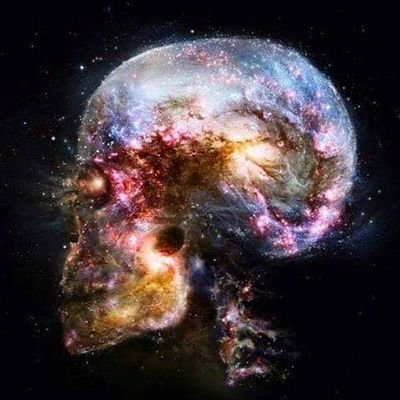
🚨: Astronaut says humanity is 'living a lie' after spending 176 days in space
“I went to space and discovered an enormous lie.”
Former astronaut Ron Garan reveals the "enormous lie" of global division after witnessing Earth's fragile biosphere from the International Space Station.
Ron Garan spent nearly six months orbiting the Earth, a journey that permanently altered his understanding of our world. From the International Space Station, he experienced the "Overview Effect," a profound cognitive shift where political borders and social divisions completely vanish. Looking down at the planet from 250 miles up, Garan was struck by the shocking thinness of the atmosphere—a delicate blanket of gases that serves as the only shield against the lethal vacuum of space. This vantage point replaced the concept of separate nations with the reality of a single, fragile orb suspended in the darkness of the cosmos.
This perspective led Garan to conclude that many of humanity’s greatest challenges, from climate change to biodiversity loss, are actually symptoms of a "lie" we tell ourselves: that we are separate from the environment. Instead of seeing competing economies or political factions, he saw a unified, interconnected biosphere supporting nearly every living thing.
He argues that our survival depends on shifting our collective mindset to match this orbital reality, treating the planet not as a resource to be divided, but as a rare and finite life-support system that requires urgent, global stewardship.
source: Big Think (2024). I went to space and discovered an enormous lie: Astronaut Ron Garan on the Overview Effect. Big Think Media.


