
Journalist NRK (Norwegian Broadcasting Corporation) - [email protected]
Oslo
Joined January 2009
- Tweets767
- Following912
- Followers698
- Likes130







christine svendsen retweeted

A Day 3 recap of the war (with focus on Iranian strategic narrative):
🔹CENTCOM confirms that U.S. strikes on Iranian missile bases used B-1 bombers. The U.S. is trying to dismantle Iran’s fortified underground missile facilities.
🔹Iranian reports suggest Tehran has rejected multiple mediation attempts. Tehran’s apparent assessment is that it can sustain high-intensity conflict for 60-90 days, making early ceasefire acceptance strategically disadvantageous.
🔹Ali Larijani explicitly framed the war as a contest of endurance, stating Iran – unlike the United States – is prepared for a prolonged conflict. The objective appears to be altering Washington’s cost-benefit calculations over time.
🔹Iranian strategic discourse increasingly describes the conflict as a “war without rules” or a “game without red lines,” signaling deliberate unpredictability intended to reshape deterrence dynamics after leadership decapitation failed to halt Iran’s response.
🔹A related concept emerging in Iranian messaging is operating “one level above” adversary actions, i.e., delivering escalatory responses even to indirect threats in order to redefine escalation thresholds.
🔹This logic appears reflected in Iranian strikes toward British facilities in Cyprus, interpreted domestically as retaliation for London allowing U.S. access to Diego Garcia despite not joining offensive operations.
🔹One of the most consequential developments was the loss of three U.S. F-15 aircraft, initially claimed by Iran as shootdowns but later attributed to friendly fire from Kuwaiti air defenses, highlighting the growing risks of coalition battlefield congestion.
🔹Analysts close to Iranian security circles describe a layered missile strategy: first targeting radar systems, then launching low-cost drones and missiles to exhaust air-defense interceptors before deploying advanced weapons later.
🔹Iran’s continuous missile launches therefore appear designed less for immediate damage and more for attritional depletion of U.S. and Israeli defensive systems over time.
🔹Uncertainty over the size and dispersal of Iran’s advanced missile stockpiles may explain intensified U.S. and Israeli strikes against underground facilities and missile infrastructure.
🔹President Pezeshkian expanded emergency authorities across ministries and provincial administrations to ensure continuity of governance, deepening wartime decentralization already initiated before the conflict.
🔹Israel’s targeting pattern has become clearer: strikes now heavily focus on intelligence ministries, police headquarters, IRGC district bases, and internal security institutions, suggesting systematic erosion of regime coercive capacity.
🔹Parallel strikes against western border regions and Kurdistan province have fueled Iranian fears that external actors may seek to enable insurgent infiltration as an alternative to direct ground invasion.
🔹Iran has responded by striking areas in Iraqi Kurdistan while increasing pressure along its borders, indicating concern about a potential indirect ground dimension to the war.
🔹Iran-aligned Iraqi resistance factions – including Kataib Hezbollah, Harakat al-Nujaba, and Kataib Sayyid al-Shuhada – continue their operations on a limited scale, opening another attritional front against U.S. forces.
🔹Hezbollah formally confirmed its participation, firing rockets toward Haifa, though involvement remains limited due to degraded capabilities and domestic political constraints in Lebanon.
🔹Iranian sources claim prewar coordination between the Quds Force and regional partners defined phased entry into the conflict, suggesting activation of the “axis of resistance” is proceeding gradually rather than simultaneously.
🔹The IRGC has reportedly begun enforcing a de facto closure of the Strait of Hormuz, warning commercial vessels against transit and threatening missile strikes. This is a major escalation targeting global energy flows.
🔹Simultaneous attacks on Gulf energy infrastructure, including an Aramco facility near Ras Tanura and gas infrastructure in Qatar, indicate an effort to raise global energy prices and increase economic pressure on Washington.
🔹Iranian authorities signaled zero tolerance for dissent. IRGC intelligence warned that actions undermining stability during wartime would be treated as collaboration with the enemy, implying harsh internal repression.
🔹Negotiation signals remain contradictory. While Trump suggested a potential deal was possible, Larijani publicly rejected negotiations, reinforcing Tehran’s view that talks can occur only after strategic calculations shift.
🔹Iran’s sustained missile tempo against Israel appears designed to impose psychological as well as military pressure, keeping populations under prolonged shelter conditions while conserving firepower for a longer conflict.
🔹Overall, Day 3 shows the war evolving into simultaneous military, economic, psychological, and regional escalation far beyond bilateral confrontation.
🔹The key question now is whether expanding proxy involvement and energy warfare will force external powers into deeper participation or instead accelerate pressure for negotiated containment.
---
P.S: Not sure how long I can keep doing this!
christine svendsen retweeted

My latest study analyzes the discourse and fundraising efforts of diverse IS-linked networks aiding foreign IS women after their escape from #al-Hol.
icsve.org/mass-escapes-of-fo…

christine svendsen retweeted

U.S. intelligence agencies assessed in recent days that some 15,000 to 20,000 people have left Syria's al-Hol detention camp that held families of ISIS affiliates. // Latest with @dnvolz: wsj.com/world/middle-east/u-…

christine svendsen retweeted

1 We known from history the full impact of Israel’s attack on Iran will take years to unfold. It could prevent an Iranian bomb or ensure one. It could destabilize the regime or entrench it. For now, Iran’s capacity to respond is far weaker than a year ago. Initial thoughts🧵
christine svendsen retweeted

An audible cheer went up as day 1 of our @ICSR_Centre conference on Syria ended and this news broke.
Absolutely historic moment, and a real opportunity for Syria to start down the long road of recovery.

christine svendsen retweeted

Check out my latest post: translation & overview of apparent testimony of Islamic State spokesman Abu Muhammad al-Adnani regarding his experiences w/Syria's president Ahmad al-Sharaa inside prison in Iraq & in Syria prior to formation of ISIS in April 2013 aymennaltamimi.com/p/abu-muh…

christine svendsen retweeted

After the infamous Trump administration Signal conversation, I spoke with Middle East expert @Dr_E_Kendall about the US strategy in Yemen:
Aisha Kausar er etterlyst etter terroren i Oslo 25. juni. Påtalemyndigheten håper avtalen mellom SDF og al-Sharaa kan løse utleveringsfloken nrk.no/norge/politiets-utlev…

1
73
christine svendsen retweeted

This is my latest piece from a recent visit to Damascus - A personal exploration of the Syrian revolution's moral complexity. The tension between revolutionary and jihadi narrative, and the blurry space in between.
open.substack.com/pub/tamhus…

christine svendsen retweeted

Syrian Regime Change: The View from #Oman
Many thanks to @ArabCenterWDC for publishing my latest analysis.
arabcenterdc.org/resource/sy… #Syria

christine svendsen retweeted
I wrote this piece several years ago. Given that Damascus has now fallen to the rebels, Islamist fighters and Jihadis, I think this piece remains important especially as HTS’ leader is showing so much ‘moderation’. I noticed this drive towards ‘moderation’ in Jolani then, and I write about the future of the jihadist project: open.substack.com/pub/tamhus…

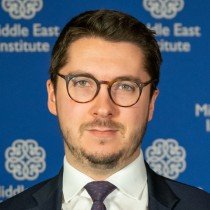
IS-tiltalt drev med cash og krypto i fangeleiren Al Hol, hadde eget banksystem nrk.no/norge/is-tiltalt-drev…

53
christine svendsen retweeted

Here it is, the definitive story of who blew up the Nord Stream pipeline, by my colleague @bopanc
wsj.com/world/europe/nord-st… #ukraine #russia #nordstream

christine svendsen retweeted

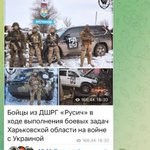
This method was previously used on photographs from Syria by the Norwegian media outlet NRK in 2020 to identify Petrovsky, the Rusich co-leader who is currently detained in Finland. nrk.no/urix/xl/assads-nazist…

The War Turns Gaza Into a ‘Graveyard’ for Children nytimes.com/2023/11/18/world…
61
Utvalgsmedlem kjenner seg ikke igjen forklaringen tidligere PST-sjef Roger Berg gav under høringen om 25. juni. Ny høring i morgen @Jacravn nrk.no/norge/1.16618305

BBC har funnet og verifisert 27 ulike steder som ble angrepet av Hamas lørdag morgen: bbc.com/news/world-middle-ea…

130
christine svendsen retweeted

Oi, dette var store nyheter, etter å ha forsket på disse sakene siden 2015.
Er veldig enig med regjeringen og Utenriksministerens vurdering i saken - barna har levd under farlige forhold og det er riktig å hente de hjem til Norge.
nrk.no/norge/terrorsiktede-s…
