

Wildlife Science PhD candidate 🦉📈 Bioacoustics, owls, camera traps, computer vision. 🐾 Also porcupines. 🍃 Nature nerd, reader. 📚 she/her
PNW
Joined July 2011
- Tweets743
- Following1K
- Followers308
- Likes2.2K





Cara Appel retweeted

I am realizing that we've done a poor job at communicating how important the fired federal scientists and managers are. These are the people who manage our fisheries, wildlife, endangered species recovery, aquaculture production, agricultural productivity, water and air quality/1
Cara Appel retweeted

Fun fact: the name for a baby porcupine is a porcupette. They have soft quills when they are born, but they grow stronger every day.
Once they grow up, they’ll have 30,000 quills, which help them defend against predators and stay warm!
Photo by @glacierbaynps

ALT A brown baby porcupette in dense green foliage, nibbling on a leaf.
Cara Appel retweeted
Beautiful feature on Western Spotted Skunks in the temperate rainforests of Oregon. A few years ago, we knew almost nothing about them.
youtube.com/watch?v=7wKEnwHs…
Cara Appel retweeted

Meet Dakota - the first North American porcupette (baby porcupine) to be born via c-section. When mom Maizey wasn't laboring on her own, our wildlife care team decided to perform a c-section, saving the lives of both mom and Dakota.
Read more: sdzoo.com/maizeys-miracle
Cara Appel retweeted
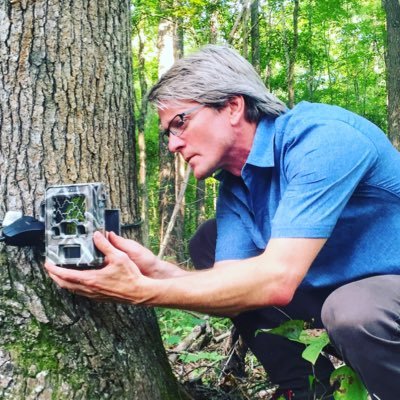
We are gearing up for the 6th annual Snapshot USA national mammal survey this fall and have some camera kits to loan out. Please apply or spread the news.
docs.google.com/forms/d/e/1F…

Cara Appel retweeted

In 2019, we set 10 camera traps from 65-90m in the crown of the world's tallest tropical tree, with no real idea whether they'd get anything at all
They did 🤩
... 🧵
#Borneo #RainforestGiants


excited to share Seattle birds with folks from CVPR tomorrow! 🦅

Cara Appel retweeted

Acoustic individual identification, or "AIID" has the potential to open new frontiers in ecological & evolutionary research.
We reviewed & synthesized studies that identify individuals in acoustic recordings ("AIID") and make some recommendations for next steps!
1/n


Cara Appel retweeted

Are you coming to @CVPR? Do you like birds? Do you like walks? @oisinmacaodha @Grant_Van_Horn @juliachae_ @cl_appel and I are hosting the FOURTH #CVBirdWalk this Thursday morning! All are welcome to join - birding experience and/or CVPR registration not necessary 😁


Cara Appel retweeted
Like working with camera trap pictures and data? join the #SnapshotUSA team this year Aug-Feb @NationalZoo in Front Royal VA


Cara Appel retweeted

📢Applications are still open for these graduate positions on large mammal monitoring in Montana!

🥁Graduate opportunity🥁
I am recruiting 2 graduate students in applied quantitative ecology (1 PhD, 1 MSc) to evaluate large mammal monitoring tools in Montana
jobs.rwfm.tamu.edu/view-job/…
jobs.rwfm.tamu.edu/view-job/…
.@umontana
.@FCFCMontana
.@MontanaFWP
📢Repost is much appreciated!


Cara Appel retweeted
Great article in @CaltechMagazine about the @cv4ecology program! "It was really amazing to see how bridging gaps between disciplines provides an entirely new perspective" 💜💜💜
Can't wait for #CV4Ecology2025 next January!
magazine.caltech.edu/post/wh…

Killing barred owls is a last-ditch effort to save northern spotted owls, old-growth specialists that are plummeting toward extinction. This is nobody’s first choice but is likely the only way to give them any chance at persistence. 🦉 npr.org/2024/04/01/124187470…
It’s easy to advocate for more palatable measures, but nothing short of lethal removal shows promise, and we’re running out of time. I do think there are legit reasons to oppose this effort, but we need to recognize that without it we will almost certainly lose n. spotted owls.
Cara Appel retweeted
Everyone needs a trip to the coast, right? Wolverine sightings continued this year with confirmed reports in Nehalem, Netarts and Newport over the last week and a half! The most recent sighting was in Newport on Thursday, March 21.

ALT Wolverine seen outside a house in Nehalem. Photo by Sharon Williams.

ALT Wolverine seen traveling across a field in the Newport area. Photo by Terry Martin.
Cara Appel retweeted

#NewPaper: Working with a huge team of 220 co-authors representing 102 projects in 21 countries, we analyzed data from 5400 #cameratraps to ask how #wildlife behaviours changed during the COVID-19 “anthropause” nature.com/articles/s41559-0… ..1/