

Born and raised in NYC. Wherever I may travel - Always a New Yorker at heart. My passion: History #nuyorican. Inappropriate tweets & people will be blocked
Manhattan, NY
Joined May 2010
- Tweets22.5K
- Following2.2K
- Followers1K
- Likes12.5K






Today in History
November 4th
1960
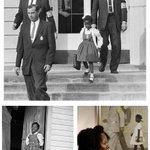
Ruby Bridges: A Six-Year-Old Girl Who Helped Change America
On November 4, 1960, six-year-old Ruby Nell Bridges was preparing to make history in New Orleans, Louisiana. Her mother, Lucille Bridges, encouraged her to be brave, telling her, “Don’t be afraid.” Ruby was about to become one of the first Black children to integrate an all-white elementary school in the American South, challenging generations of racial segregation.
The historic event actually took place on November 14, 1960, ten days after the date often mistakenly associated with her first day of school.
Ruby was born on September 8, 1954, in Tylertown, Mississippi, the same year the United States Supreme Court ruled in Brown v. Board of Education that racial segregation in public schools was unconstitutional. Despite this landmark decision, many Southern communities resisted integration and continued operating separate schools for Black and white children.
In 1960, Ruby was among six Black children who passed an examination designed to determine which students could attend previously all-white schools in New Orleans. Her parents understood the dangers involved. Her father, Abon Bridges, initially feared for her safety, but her mother believed their daughter deserved the same educational opportunities as white children.
On November 14, four federal marshals escorted Ruby to William Frantz Elementary School. Outside, an angry crowd of segregationists screamed insults, shouted threats, and protested her arrival. Ruby, wearing a neatly pressed dress, walked past the hostility with extraordinary composure.
The opposition was so intense that white parents removed their children from the school. For much of that academic year, Ruby was taught alone by Barbara Henry, a white teacher from Boston who refused to participate in the discrimination.
Every morning, federal marshals escorted Ruby through the threatening crowds. Her family also suffered retaliation. Her father lost his job, and her grandparents were forced off the Mississippi land they had farmed. Yet Ruby continued attending school.
One of the most remarkable moments occurred when Ruby appeared to stop and speak near the angry crowd. A marshal later learned that she had been praying for the people who threatened her. Rather than responding with hatred, the young girl demonstrated compassion beyond her years.
Ruby’s courage became a powerful symbol of the Civil Rights Movement. In 1964, artist Norman Rockwell immortalized her historic walk in his painting The Problem We All Live With, depicting the young girl surrounded by federal marshals as she passed a wall marked by racist graffiti.
Ruby was not alone in integrating New Orleans schools that day. Three other courageous Black first graders—Leona Tate, Gail Etienne, and Tessie Prevost—entered McDonogh No. 19 Elementary School. Together, they became known as the New Orleans Four.
As an adult, Ruby continued fighting racial injustice. In 1999, she established the Ruby Bridges Foundation to promote tolerance, respect, and equal educational opportunities. Her story has inspired books, films, monuments, and Ruby Bridges Walk to School Day, observed annually on November 14.
Today, Ruby Bridges remains a living reminder that the struggle for civil rights was not fought only by famous leaders and powerful organizations. Sometimes, history changed because a six-year-old child simply wanted to attend school.
Her journey demonstrated that courage has no age limit and that even the smallest footsteps can leave an enormous mark on history. #OTD

Today in History
November 4th
1842
33-year-old Abraham Lincoln married 23-year-old Mary Todd in an intimate ceremony in Springfield, Illinois, beginning one of the most historically significant marriages in American presidential history. Their union brought together two individuals from remarkably different backgrounds whose relationship would be shaped by political ambition, personal tragedy, the American Civil War, and ultimately assassination.
Mary Todd was born on December 13, 1818, in Lexington, Kentucky, into a wealthy, politically influential family. She received an unusually extensive education for a woman of her era, studying literature, history, French, and politics. Intelligent, outspoken, and socially accomplished, Mary moved to Springfield in 1839 to live with her sister Elizabeth Edwards and her husband, Ninian Edwards.
Abraham Lincoln, born on February 12, 1809, in a Kentucky log cabin, came from considerably humbler circumstances. Largely self-educated, he had established himself as a respected Illinois lawyer and rising Whig politician. By the time of his marriage, Lincoln had served in the Illinois legislature but had not yet been elected to Congress. His single term in the U.S. House of Representatives would begin in 1847.
Lincoln and Mary met in Springfield’s lively political and social circles, probably in late 1839. Despite their contrasting backgrounds, they shared an enthusiasm for politics, intellectual conversation, and public affairs. Mary recognized Lincoln’s extraordinary potential and reportedly believed he would someday become president.
Their courtship, however, was anything but straightforward. The couple became engaged but experienced a painful separation around 1841. Historians continue to debate the precise circumstances, including Lincoln’s emotional uncertainty and opposition from members of Mary’s family, who considered him socially beneath her.
After reconciling in 1842, the couple arranged their wedding with little advance notice. The ceremony took place at the Springfield home of Mary’s sister Elizabeth and brother-in-law Ninian Edwards. Reverend Charles Dresser, an Episcopal minister, officiated before a small gathering of relatives and friends.
Lincoln presented Mary with a gold wedding ring traditionally associated with the inscription “Love Is Eternal.” Their wedding marked the beginning of a partnership that would endure for more than 22 years.
The newlyweds initially lived in a modest room at Springfield’s Globe Tavern. Their first son, Robert Todd Lincoln, was born on August 1, 1843. In 1844, they purchased a house on Eighth and Jackson Streets, which became their family home until Lincoln departed for Washington in 1861.
The couple eventually had four sons: Robert, Edward, William, and Thomas, affectionately called Tad. Tragically, only Robert survived into adulthood. The deaths of Eddie in 1850 and Willie in 1862 brought devastating grief to the family.
Mary became First Lady following Lincoln’s presidential inauguration in March 1861. Throughout the Civil War, she faced intense public criticism, particularly because several of her Kentucky relatives supported the Confederacy. Nevertheless, she remained devoted to her husband’s political career and the Union cause.
Their marriage ended tragically on April 15, 1865, when Lincoln died after being shot by John Wilkes Booth at Ford’s Theatre the previous evening. Mary, who had been sitting beside him, was devastated.
Mary Todd Lincoln died on July 16, 1882, in Springfield, nearly 40 years after their wedding.
What began as a modest ceremony in an Illinois family home ultimately became part of the personal history of America’s 16th president. Their marriage remains a powerful story of love, ambition, sacrifice, and sorrow during one of the nation’s most turbulent periods. #OTD

Today in History
November 4th
1922
British archaeologist Howard Carter made one of the most extraordinary discoveries in archaeological history when his workers uncovered the first steps leading to the tomb of the ancient Egyptian pharaoh Tutankhamun in the Valley of the Kings, near Luxor, Egypt. The discovery would reveal a nearly intact royal burial chamber, offering an unprecedented glimpse into the wealth, religious beliefs, and burial traditions of ancient Egypt.
Tutankhamun ruled Egypt during the 18th Dynasty, approximately 1332–1323 BCE, ascending to the throne as a child around the age of nine. His reign was relatively brief, and he died around age 18 or 19. Although he was not considered one of Egypt’s most powerful pharaohs, his tomb would eventually make him the most recognizable ruler of ancient Egypt.
Howard Carter had spent years searching the Valley of the Kings, convinced that Tutankhamun’s burial place remained undiscovered. His excavations were financed by George Herbert, the 5th Earl of Carnarvon, a wealthy British aristocrat fascinated by Egyptian antiquities. By 1922, after years of disappointing results and considerable expense, Carnarvon was reluctant to continue funding the search. Carter persuaded him to finance one final excavation season.
On November 4, Egyptian workers uncovered a stone step beneath the debris near the entrance to the tomb of Ramesses VI. Further digging revealed a staircase descending toward a sealed doorway bearing ancient Egyptian markings. Carter immediately recognized the potential importance of the discovery and sent word to Carnarvon, who was in England.
Carnarvon arrived in Egypt later that month. On November 26, Carter carefully opened a small hole in a second sealed doorway and peered inside by candlelight. When Carnarvon asked whether he could see anything, Carter famously replied, “Yes, wonderful things.”
Beyond the doorway lay an astonishing collection of ancient treasures, including gilded furniture, ceremonial chariots, elaborate jewelry, statues, weapons, and objects intended to accompany the pharaoh into the afterlife. Many items had remained undisturbed for more than 3,000 years, although evidence showed that ancient robbers had entered the tomb shortly after its original sealing.
On February 16, 1923, Carter opened the sealed entrance to the burial chamber, revealing enormous gilded shrines surrounding Tutankhamun’s stone sarcophagus. Inside were three nested coffins, the innermost made of solid gold, containing the pharaoh’s mummified remains. His magnificent golden funerary mask became one of the world’s most celebrated archaeological treasures.
The discovery sparked worldwide fascination with ancient Egypt, inspiring a cultural phenomenon known as “Tutmania.” Newspapers followed the excavation closely, while Egyptian-inspired jewelry, clothing, architecture, and decorative art became fashionable internationally.
On April 5, 1923, Lord Carnarvon died following an infection associated with a mosquito bite. His unexpected death fueled sensational stories about a supposed “curse of the pharaohs,” although no scientific evidence supports the existence of such a curse.
The excavation and conservation of more than 5,000 objects continued for nearly a decade. Egyptian workers, conservators, photographers, and specialists played essential roles in documenting and preserving the treasures.
Tutankhamun’s tomb transformed modern Egyptology, providing extraordinary evidence about royal life, craftsmanship, religion, and funerary practices during Egypt’s New Kingdom. More than a century later, the discovery remains one of archaeology’s greatest achievements, forever connecting the young pharaoh’s name with the mysteries and magnificence of ancient Egypt. #OTD

Today in History
November 4th
2008
The United States witnessed one of the most historic moments in its political history when Barack Obama became the first African-American elected President of the United States. The 47-year-old Democratic senator from Illinois defeated Republican Senator John McCain of Arizona, breaking a racial barrier that had stood since the nation’s founding in 1776. Obama’s victory represented a turning point in American politics and a powerful milestone in the country’s long struggle for racial equality.
Obama’s journey to the White House began years earlier. Born on August 4, 1961, in Honolulu, Hawaii, he worked as a community organizer in Chicago before becoming a civil rights attorney and entering politics. He served in the Illinois State Senate from 1997 to 2004 and gained national attention with his inspiring keynote address at the 2004 Democratic National Convention. Later that year, he was elected to the United States Senate.
In February 2007, Obama announced his presidential candidacy in Springfield, Illinois, emphasizing hope, unity, and political change. His campaign slogan, “Yes We Can,” became a rallying cry for millions of Americans. He faced a difficult Democratic primary contest against Senator Hillary Clinton, ultimately securing the party’s nomination in June 2008. His nomination was itself historic, making him the first African-American presidential nominee of a major American political party.
The 2008 election unfolded during a period of extraordinary national challenges. The United States was struggling with the wars in Iraq and Afghanistan, rising unemployment, and a devastating financial crisis that threatened the global economy. The collapse of major financial institutions in September 2008 intensified public concerns about economic stability. Obama campaigned on economic recovery, healthcare reform, ending the Iraq War responsibly, and restoring America’s international reputation.
McCain, a decorated Vietnam War veteran and longtime senator, emphasized experience, national security, and conservative economic policies. His selection of Alaska Governor Sarah Palin as his running mate made her the first woman nominated for vice president by the Republican Party. Obama selected Delaware Senator Joe Biden, whose extensive foreign policy experience strengthened the Democratic ticket.
On Election Day, millions of Americans participated in an election marked by extraordinary enthusiasm and voter engagement. Obama won 365 electoral votes to McCain’s 173 and received approximately 69.5 million popular votes, compared with McCain’s nearly 60 million. He captured several traditionally Republican states, including Virginia, North Carolina, and Indiana, while receiving strong support from young voters, African Americans, and a diverse coalition of Americans seeking change.
That evening, enormous crowds gathered in Chicago’s Grant Park, where Obama delivered his victory speech before an estimated 240,000 supporters. He acknowledged the historic significance of his election while emphasizing the enormous challenges ahead. His victory inspired celebrations across the United States and around the world.
For many African Americans, the moment carried profound emotional significance. Just 143 years after the abolition of slavery and 44 years after the Civil Rights Act of 1964, a Black American had been elected to the nation’s highest office. Obama’s victory reflected generations of struggle and sacrifice by civil rights leaders, including Martin Luther King Jr., whose dream of greater racial equality had helped transform American society.
January 20, 2009, Obama was inaugurated as the 44th President of the United States before an enormous crowd in Washington, D.C. His election did not end racial inequality or political division, but it permanently changed American history, demonstrating that a barrier once considered insurmountable could be overcome through democratic participation.
#OTD

Today in History
November 4th
1946
Happy 80th Birthday
Laura Bush
Former First Lady of the United States and Advocate for Literacy and Education
Laura Lane Welch Bush was born on November 4, 1946, in Midland, Texas. She is best known as the wife of George W. Bush, the 43rd president of the United States, and served as First Lady from 2001 to 2009. A former teacher and librarian, she dedicated much of her public life to promoting literacy, education, women’s health, and children’s welfare.
Laura was the only child of Harold and Jenna Welch. Her parents encouraged her love of reading and learning from an early age. She attended Southern Methodist University, earning a bachelor’s degree in education in 1968. She later received a master’s degree in library science from the University of Texas at Austin in 1973. Before entering public life, she worked as an elementary school teacher and librarian in Texas.
In 1977, Laura married George W. Bush. The couple welcomed twin daughters, Barbara and Jenna, in 1981. When her husband became governor of Texas in 1995, Laura served as the state’s First Lady until 2000. During this period, she promoted childhood education, family literacy, and public libraries. In 1996, she helped establish the Texas Book Festival to encourage reading and support libraries throughout the state.
When George W. Bush became president in January 2001, Laura assumed the role of First Lady of the United States. Education and literacy became central priorities of her work. She supported the No Child Left Behind Act and introduced the Ready to Read, Ready to Learn initiative, which encouraged early childhood education and improved teacher preparation.
One of her most notable accomplishments was helping establish the National Book Festival in 2001 in partnership with the Library of Congress. The annual event brought together authors, educators, and readers to celebrate books and encourage Americans of all ages to develop a lifelong love of reading. She also established the Laura Bush Foundation for America’s Libraries to provide financial assistance to school libraries.
Beyond education, Laura advocated for women’s rights and improved healthcare worldwide. Following the September 11, 2001, terrorist attacks, she spoke publicly about the treatment of women and girls under Taliban rule in Afghanistan. In November 2001, she became the first First Lady to deliver the president’s weekly radio address. She also supported international efforts to combat breast cancer, heart disease, HIV/AIDS, and malaria.
After leaving the White House in 2009, Laura continued her charitable and educational work. In 2010, she published her memoir, Spoken from the Heart, which describes her childhood, marriage, and experiences as First Lady. She also became involved with the George W. Bush Presidential Center in Dallas, Texas, supporting initiatives focused on education, women’s empowerment, and global health.
Laura Bush’s legacy is closely associated with her commitment to literacy and education. Through book festivals, library funding, and educational programs, she has worked to expand opportunities for children and families. Her contributions as First Lady and her continued public service have made her an important figure in American educational advocacy and philanthropy. #OTD

Today in History
November 4th
1918
Born on this Day
Art Carney was an American actor and comedian best remembered for his portrayal of Ed Norton, the lovable, wisecracking sewer worker and best friend of Ralph Kramden on the classic television sitcom The Honeymooners. With his remarkable comic timing, expressive face, and natural charm, Carney became one of the most beloved performers in American television history.
Born Arthur William Matthew Carney on November 4, 1918, in Mount Vernon, New York, he was the youngest of six sons. He developed an interest in entertainment early in life and began his professional career in the late 1930s as a singer and comedian with bandleader Horace Heidt. His talent for impersonations and comedy soon led to opportunities in radio.
During World War II, Carney served in the United States Army. He was wounded in the leg during the Battle of Normandy in 1944, leaving him with a permanent limp. After returning home, he resumed his entertainment career, working in radio and eventually transitioning to television.
Carney achieved national fame in the early 1950s when he joined Jackie Gleason’s television programs. His portrayal of Ed Norton opposite Gleason’s Ralph Kramden became legendary. Norton’s playful mannerisms, infectious laughter, and hilarious exchanges with Ralph helped make The Honeymooners one of television’s most enduring comedies. Carney received multiple Emmy Awards for his television performances.
Although widely recognized for comedy, Carney demonstrated impressive dramatic abilities. In 1974, he starred in the film Harry and Tonto, portraying an elderly widower who travels across America with his beloved cat. His sensitive, heartfelt performance earned him the Academy Award for Best Actor, defeating a field of prominent nominees that included Jack Nicholson, Al Pacino, Dustin Hoffman, and Albert Finney.
Carney also enjoyed a successful stage career, appearing in Broadway productions including The Odd Couple, in which he played Felix Unger, and The Prisoner of Second Avenue. His later films included The Late Show (1977), Going in Style (1979), Firestarter (1984), and The Muppets Take Manhattan (1984).
Behind his professional success, Carney struggled with alcoholism and personal difficulties. He married his first wife, Jean Myers, in 1940, and they had three children. After their divorce and his subsequent marriage to Barbara Isaac ended, he reunited with Jean, remarrying her in 1980.
Art Carney died on November 9, 2003, in Chester, Connecticut, just five days after his 85th birthday. His extraordinary career earned him six Emmy Awards, an Academy Award, and a place in the Television Academy Hall of Fame. He remains celebrated as a gifted entertainer whose warmth, versatility, and unforgettable performances helped shape the golden age of American television. #OTD

Today in History
November 3rd
1957
The Soviet Union Launches Sputnik 2, Carrying Laika, the First Animal to Orbit Earth
On November 3, 1957, the Soviet Union made history by launching Sputnik 2, carrying a small dog named Laika into orbit around Earth. The mission marked a major milestone in the Space Race between the Soviet Union and the United States, demonstrating that a living creature could survive the initial forces of a rocket launch and experience weightlessness in space. However, the achievement came at a tragic cost: Laika would never return home.
Laika was a stray dog found wandering the streets of Moscow. She was a mixed-breed female, commonly described as part Siberian Husky and part terrier, weighing approximately 13 pounds (6 kilograms). Soviet scientists deliberately selected stray dogs because they believed animals accustomed to harsh conditions, hunger, and extreme temperatures would better withstand the stresses of spaceflight.
Originally named Kudryavka, meaning “Little Curly,” she became internationally known as Laika, the Russian word for “Barker.” She underwent rigorous training alongside other dogs, including confinement in increasingly small spaces, exposure to loud noises and vibrations, and simulations of rocket acceleration. Scientists also trained her to eat a specially prepared nutritious gel, since ordinary food could not be used easily in weightlessness.
The launch occurred just one month after the Soviet Union successfully launched Sputnik 1 on October 4, 1957, the world’s first artificial satellite. Soviet leader Nikita Khrushchev wanted another spectacular achievement to commemorate the 40th anniversary of the Bolshevik Revolution. Consequently, Soviet engineers, working under chief designer Sergei Korolev, had only weeks to prepare Sputnik 2.
The spacecraft weighed approximately 1,120 pounds (508 kilograms), considerably more than Sputnik 1. It contained a pressurized cabin equipped with oxygen supplies, temperature controls, food, and instruments designed to monitor Laika’s heartbeat, breathing, and movements.
Unlike later space missions, Sputnik 2 was never designed to return safely to Earth. Soviet scientists knew before launch that Laika would die in orbit because the technology necessary to recover a spacecraft from orbit had not yet been developed.
As the rocket ascended, Laika’s heartbeat increased dramatically from the stress and acceleration. Once in orbit, instruments confirmed that she had survived the launch, providing valuable information about the physiological effects of spaceflight.
However, a malfunction in the spacecraft’s thermal-control system caused temperatures inside her cabin to rise dangerously. Laika died from overheating and stress within approximately five to seven hours after launch, likely during the spacecraft’s fourth orbit.
For decades, Soviet officials claimed that Laika had survived for several days before being humanely euthanized or dying when her oxygen supply ran out. The true circumstances of her death were publicly clarified in 2002 by Russian scientist Dimitri Malashenkov, who revealed that overheating had killed her much earlier than officially reported.
Sputnik 2 continued orbiting Earth long after Laika’s death. On April 14, 1958, after 162 days in orbit, the spacecraft reentered Earth’s atmosphere and burned up, carrying Laika’s remains with it.
Laika’s mission generated worldwide admiration but also sparked protests from animal welfare organizations, raising ethical questions about sacrificing animals for scientific advancement.
Despite its tragic outcome, the mission contributed to understanding how living organisms respond to launch acceleration, weightlessness, and the conditions of space. These early experiments helped pave the way for later Soviet missions, including the successful return of the dogs Belka and Strelka in 1960 and Yuri Gagarin’s historic flight as the first human in space on April 12, 1961.
#OTD

Today in History
November 3rd
1639
Died on This Day
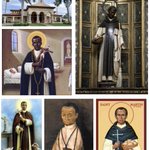
St. Martin de Porres, a Peruvian Dominican lay brother renowned for his extraordinary humility, charity, and devotion to the poor, died in Lima, Peru, at the age of 59. After suffering from a serious illness, he passed away surrounded by his fellow Dominican brothers, who prayed at his bedside. His death brought widespread sorrow to the people of Lima, where he had spent his life caring for the sick, feeding the hungry, and comforting the forgotten. His funeral drew religious and civic leaders, reflecting the deep respect he had earned through his remarkable life of service.
Martin was born on December 9, 1579, in Lima, Peru. He was the son of Juan de Porres, a Spanish nobleman, and Ana Velázquez, a formerly enslaved woman of African descent. Born into poverty and facing racial discrimination, Martin experienced hardship from an early age. Nevertheless, he developed a profound compassion for those who suffered.
At the age of 12, Martin became an apprentice to a barber-surgeon, learning basic medicine, wound treatment, and the preparation of remedies. These skills would later become essential to his religious vocation and his lifelong mission of caring for the sick.
In 1594, at approximately 15 years old, Martin entered the Dominican Convent of the Holy Rosary in Lima as a lay helper. Because of racial restrictions, he was initially prevented from becoming a fully professed religious brother. He accepted humble responsibilities, including sweeping floors, cleaning rooms, and performing manual labor. His dedication eventually led to his profession as a Dominican lay brother in 1603.
Martin became widely admired for his tireless charity. He cared for people regardless of race, wealth, or social position, treating enslaved people and nobles with equal dignity. He helped establish an orphanage and a hospital for abandoned children, distributed food to impoverished families, and devoted himself to nursing the sick.
His compassion extended even to animals, which he treated with unusual tenderness. Religious traditions attribute numerous miracles to him, including extraordinary healings, bilocation, and remarkable encounters with animals.
Despite his growing reputation for holiness, Martin remained deeply humble. He spent long hours in prayer, practiced personal sacrifice, and considered serving others his greatest privilege. His familiar image holding a broom symbolizes his belief that even the simplest tasks could become acts of love and devotion to God.
Following his death, devotion to Martin spread throughout Peru and beyond. Stories of his kindness and miraculous intercession strengthened his reputation for sanctity.
St. Martin de Porres was beatified on October 29, 1837, by Pope Gregory XVI. He was canonized on May 6, 1962, by Pope John XXIII, at St. Peter’s Basilica in Vatican City, becoming the first Black saint from the Americas to be canonized by the Roman Catholic Church.
Today, St. Martin de Porres is honored as the patron saint of people of mixed race, barbers, public health workers, and those devoted to social justice. His feast day is celebrated annually on November 3, the anniversary of his death.
More than three centuries after his passing, his legacy continues to inspire compassion, racial harmony, humility, and service to humanity. His life remains a powerful reminder that true greatness is found not in wealth or status, but in love, kindness, and selfless devotion to others. #OTD

Today in History
November 3rd
1954
72 Years Ago
Godzilla Makes Its Theatrical Debut in Japan
On November 3, 1954, Japanese cinema changed forever with the theatrical release of Godzilla (Gojira), a groundbreaking monster film produced by Toho Studios and directed by Ishirō Honda. More than a simple creature feature, the film reflected Japan’s lingering trauma from World War II, the atomic bombings of Hiroshima and Nagasaki, and growing fears surrounding nuclear weapons. Its enormous, radioactive monster would become one of the most recognizable figures in cinematic history, launching a franchise that has endured for more than seven decades.
The origins of Godzilla were closely connected to the nuclear anxieties of the 1950s. Earlier in 1954, the Japanese fishing vessel Daigo Fukuryū Maru (Lucky Dragon No. 5) was exposed to radioactive fallout from an American hydrogen bomb test at Bikini Atoll. The incident shocked Japan and intensified public fears about nuclear testing. Producer Tomoyuki Tanaka drew inspiration from these events, envisioning a prehistoric creature awakened and transformed by nuclear radiation.
Director Ishirō Honda, who had witnessed the devastation of war firsthand, approached the story with unusual seriousness. Rather than portraying Godzilla as merely an evil beast, Honda presented the monster as a terrifying embodiment of humanity’s destructive technological power. Godzilla’s radioactive breath, enormous size, and unstoppable destruction echoed the horrors of nuclear warfare.
The film’s revolutionary special effects were supervised by Eiji Tsuburaya, who developed techniques that would help define Japanese monster cinema. Actor Haruo Nakajima portrayed Godzilla inside a heavy rubber suit, moving through carefully constructed miniature cities and landscapes. This technique, later known as “suitmation,” allowed filmmakers to create spectacular scenes of destruction without relying on expensive stop-motion animation.
The original film follows Godzilla’s emergence from the Pacific Ocean and devastating attack on Tokyo. As military weapons prove ineffective, scientist Dr. Daisuke Serizawa faces a moral dilemma over using his experimental Oxygen Destroyer, a weapon potentially even more dangerous than the monster itself. The story ultimately raises profound questions about scientific responsibility, sacrifice, and humanity’s ability to control its own inventions.
Composer Akira Ifukube contributed another essential element to the film’s identity, creating its thunderous musical score and helping develop Godzilla’s unforgettable roar. Together, the sound design, special effects, and haunting imagery transformed the creature into a symbol of national anxiety and collective memory.
Although some Japanese critics initially dismissed Godzilla as sensational entertainment, audiences embraced it. The film became a major commercial success, attracting millions of moviegoers and establishing Toho as a leader in special-effects filmmaking. Its success quickly inspired the 1955 sequel Godzilla Raids Again, which introduced battles between giant monsters as a recurring feature of the franchise.
In 1956, an American adaptation titled Godzilla, King of the Monsters! introduced the creature to wider international audiences. Featuring newly filmed scenes with actor Raymond Burr, the edited version reduced much of the original film’s political and nuclear commentary. Nevertheless, it helped transform Godzilla into a worldwide cultural phenomenon.
Over subsequent decades, Godzilla evolved from a terrifying symbol of nuclear destruction into an occasional defender of humanity, battling creatures such as King Ghidorah, Mothra, and Mechagodzilla. The franchise helped establish the modern Japanese kaiju film tradition, influencing generations of filmmakers, television productions, comics, and video games.
#OTD

Today in History
November 3rd
1926
Died On This Day
Annie Oakley, the legendary American sharpshooter and one of the most celebrated women of the Wild West, died at the age of 66 in Greenville, Ohio. Known around the world as “Little Sure Shot,” Oakley had captivated audiences with her extraordinary marksmanship, remarkable precision, and fearless determination. Her death marked the end of an extraordinary life that had challenged traditional expectations of women and established her as an enduring symbol of American frontier history.
Born Phoebe Ann Mosey on August 13, 1860, in Darke County, Ohio, Annie grew up in poverty. Her father died when she was young, leaving her family struggling to survive. By the age of eight, she had begun hunting with her father’s rifle, developing the shooting skills that would eventually make her famous. She sold game to local businesses and restaurants, helping support her family financially.
In 1875, Annie entered a shooting competition against Frank E. Butler, an accomplished professional marksman. Despite Butler’s experience, the teenage Annie defeated him. Their meeting blossomed into romance, and they married in 1876. Butler became her devoted partner and manager, supporting her career rather than competing against her growing fame.
Annie adopted the stage name Oakley and began performing professionally alongside her husband. Her astonishing ability to hit moving targets, shoot objects from great distances, and perform seemingly impossible tricks quickly attracted attention.
In 1885, she joined Buffalo Bill Cody’s famous Wild West Show, becoming one of its greatest attractions. Despite standing only five feet tall, her talent was enormous. She could split playing cards edgewise with bullets, shoot cigarettes from her husband’s lips, and hit targets while looking into a mirror. Her performances earned her international fame and the admiration of audiences across America and Europe.
During European tours, Annie performed before royalty, including Queen Victoria of Britain. The legendary Lakota leader Sitting Bull admired her abilities and reportedly gave her the nickname “Little Sure Shot,” which became forever associated with her.
Beyond her performances, Annie was a pioneer for women’s independence. At a time when shooting was considered a man’s pursuit, she demonstrated that women could achieve extraordinary success through skill, discipline, and determination. She encouraged women to learn firearms safety and marksmanship, believing these abilities could provide confidence and independence.
In 1901, Annie suffered injuries in a train accident, forcing her to reduce her performances. In 1903, she successfully fought false newspaper accusations that threatened her reputation, pursuing numerous libel lawsuits to defend her name.
During World War I, she offered to organize a regiment of female sharpshooters for the United States military, although the proposal was rejected. She continued supporting charitable causes and helping wounded veterans.
A serious automobile accident in 1922 left her with further injuries, but her determination remained unshaken. She continued demonstrating her shooting abilities whenever her health permitted.
By 1925, Annie’s health had deteriorated significantly. She returned to Ohio, where she spent her final months near family. Her husband, Frank Butler, died just 18 days after her death, ending a remarkable marriage of 50 years. They were buried beside one another in Greenville, Ohio.
Annie Oakley’s legacy extends far beyond her astonishing marksmanship. She became an international celebrity, inspired generations of women, and helped redefine what women could accomplish in a male-dominated world. Her life later inspired the celebrated Broadway musical Annie Get Your Gun.
More than a century after her greatest performances, Annie Oakley remains an unforgettable American legend #OTD

Today in History
November 3rd
2024
Died on this Day
Quincy Delight Jones Jr., the legendary American music producer, composer, arranger, conductor, and entertainment executive, died on November 3, 2024, at his home in Bel Air, Los Angeles, California. He was 91 years old. His death marked the end of an extraordinary career spanning more than seven decades, during which he transformed popular music, broke racial barriers, and helped shape the careers of some of the world’s greatest entertainers.
Born on March 14, 1933, in Chicago, Illinois, Jones grew up amid poverty and family hardships. His mother, Sarah Frances Wells, struggled with mental illness, and his father, Quincy Delight Jones Sr., worked as a carpenter. After his family relocated to Washington state, Jones discovered his passion for music. He learned to play the trumpet and developed a friendship with a young Ray Charles, who became an important musical influence.
As a teenager, Jones performed with local bands before joining jazz bandleader Lionel Hampton’s orchestra in the early 1950s. His exceptional talent as a trumpeter and arranger soon brought him international recognition. He later studied music in Paris, worked with prominent jazz musicians, and became one of the first Black executives at a major American record company when Mercury Records appointed him a vice president in 1964.
Jones collaborated with legendary performers, including Frank Sinatra, Count Basie, Ella Fitzgerald, Sarah Vaughan, and Dizzy Gillespie. His arrangement of Sinatra’s “Fly Me to the Moon” became one of their most celebrated collaborations. He also composed music for numerous films and television productions, including In the Heat of the Night, The Pawnbroker, and the television miniseries Roots.
His greatest commercial success came through his partnership with Michael Jackson. Jones produced Jackson’s groundbreaking albums Off the Wall (1979), Thriller (1982), and Bad (1987). Thriller became the best-selling album in history, establishing Jones as one of the most influential producers in modern music.
In 1985, Jones organized and produced “We Are the World,” the historic charity recording featuring dozens of major artists. The song raised millions of dollars for humanitarian relief in Africa and became a defining moment in music history.
Jones also produced the acclaimed film The Color Purple (1985), directed by Steven Spielberg, and helped launch the television series The Fresh Prince of Bel-Air. His business ventures included founding Qwest Records and establishing Vibe magazine, which became an influential voice in hip-hop and contemporary Black culture.
Throughout his lifetime, Jones received 28 Grammy Awards, an Emmy Award, the Grammy Legend Award, and numerous other honors. He was also recognized with the Kennedy Center Honors and the Jean Hersholt Humanitarian Award.
Jones married three times, to Jeri Caldwell, Ulla Andersson, and Peggy Lipton, and was the father of seven children, including actresses Rashida Jones and Kidada Jones. Despite serious health challenges, including two brain aneurysms in 1974, he continued creating music and supporting humanitarian causes.
Quincy Jones left behind an unparalleled legacy of artistic innovation, cultural influence, and mentorship. His ability to bridge jazz, pop, soul, funk, and film music made him a visionary whose contributions reshaped the entertainment industry. His influence continues to inspire generations of musicians, producers, and artists worldwide. #OTD

Today in History
November 3rd
1954
Died on this Day
Henri Matisse died on November 3, 1954, in Nice, France, at the age of 84. His death marked the end of an extraordinary career that transformed modern art. Celebrated for his brilliant colors, expressive forms, and innovative compositions, Matisse became one of the most influential artists of the 20th century, alongside Pablo Picasso.
Born Henri-Émile-Benoît Matisse on December 31, 1869, in Le Cateau-Cambrésis, France, he initially studied law. His artistic journey began in 1889 while recovering from an illness, when his mother gave him a box of paints. Fascinated by painting, he abandoned law and moved to Paris in 1891 to study art.
Influenced by Vincent van Gogh, Paul Cézanne, and Paul Gauguin, Matisse developed a revolutionary style emphasizing vivid colors, simplified shapes, and emotional expression. In 1905, he became a leading figure of Fauvism, an artistic movement whose name means “wild beasts.” Fauvist painters rejected realistic colors in favor of bold, unconventional combinations.
His painting Woman with a Hat (1905) shocked audiences with its unusual colors and energetic brushwork, establishing his reputation as a daring innovator.
Throughout his career, Matisse explored painting, sculpture, drawing, printmaking, and decorative arts. His favorite subjects included women, flowers, landscapes, interiors, and still lifes. During the 1920s and 1930s, he worked extensively in Nice, where Mediterranean sunlight inspired his colorful interiors and elegant figures.
In 1941, Matisse underwent major surgery for cancer, leaving him with serious physical limitations. Unable to paint standing for extended periods, he developed his celebrated paper-cutout technique, which he called “drawing with scissors.” Using painted paper and scissors, he created remarkable compositions filled with movement and color.
One of his final masterpieces was the Chapel of the Rosary in Vence, France, completed in 1951. He designed its stained-glass windows, murals, and furnishings, considering it a crowning achievement of his artistic life.
His Most Famous Works
Woman with a Hat (1905) revolutionized portraiture through its striking, unnatural colors and helped establish Fauvism.
The Open Window, Collioure (1905) depicts a Mediterranean harbor through an open window, capturing sunlight through brilliant colors and expressive brushstrokes.
The Joy of Life (1905–1906) portrays nude figures dancing, relaxing, and playing music in a dreamlike landscape, celebrating harmony and pleasure.
Blue Nude (Memory of Biskra) (1907) presents a reclining woman in powerful blue tones, challenging traditional representations of the human body.
The Dance (1910), one of his greatest masterpieces, depicts five red figures holding hands in a circle against a blue and green background, symbolizing movement, unity, and joy.
The Red Studio (1911) portrays his workspace almost entirely in vibrant red, transforming an ordinary interior into a revolutionary modern composition.
Jazz (1947) is an illustrated book featuring colorful paper-cut designs inspired by music, performance, and imagination.
Blue Nude II (1952) demonstrates his mastery of paper cutouts, depicting a seated female figure through elegant blue shapes.
The Snail (1953) features brightly colored geometric paper shapes arranged in a spiral, revealing his extraordinary ability to create beauty through simplicity.
Matisse believed art should bring beauty, balance, and serenity into people’s lives. His fearless exploration of color and form helped redefine modern painting. More than seven decades after his death, his masterpieces remain enduring symbols of artistic freedom, creativity, and the transformative power of imagination. #OTD

Today in History
November 3rd
2002
Died on this Day
Jonathan Harris, born Jonathan Daniel Charasuchin, died on November 3, 2002, at the age of 87, from a blood clot in his heart at his home in Encino, California. His death marked the end of a distinguished career in American television, film, and voice acting that spanned more than six decades. He was best remembered for portraying the eccentric, cowardly, and comically villainous Dr. Zachary Smith in the science-fiction television series Lost in Space (1965–1968).
Harris was born on November 6, 1914, in the Bronx, New York City, to Russian-Jewish immigrant parents. Growing up in a modest household, he developed an early interest in acting, music, and theater. Before entering show business, he studied pharmacology and worked as a pharmacist. However, his passion for performing eventually led him to abandon pharmacy and pursue acting professionally. He also changed his surname from Charasuchin to Harris.
Harris began his theatrical career in the late 1930s, performing in numerous stage productions across the United States. He made his Broadway debut in Heart of a City in 1942 and later entertained American troops during World War II. In 1953, he made his film debut in Botany Bay, starring Alan Ladd and James Mason. His television career expanded with appearances in The Twilight Zone, Bonanza, and Bewitched. He also portrayed Bradford Webster in The Third Man (1959–1962) and Mr. Phillips in The Bill Dana Show (1963–1965).
His greatest success came in 1965 when he joined the cast of Lost in Space. Originally introduced as a sinister saboteur, Dr. Zachary Smith evolved into a humorous, flamboyant character whose exaggerated mannerisms, elaborate insults, and memorable catchphrases made him a fan favorite. Harris’s distinctive voice and comic timing helped establish the character as one of television’s most recognizable science-fiction personalities.
Following Lost in Space, Harris continued acting and became a successful voice performer. He appeared in Space Academy (1977) and voiced Lucifer in Battlestar Galactica (1978). His later voice work included animated television programs and films, notably portraying Manny the praying mantis in Pixar’s A Bug’s Life (1998) and Geri the toy cleaner in Toy Story 2 (1999).
Harris married Gertrude Bregman in 1938, and their marriage lasted 64 years until his death. They had one son, Richard. He was laid to rest at Westwood Village Memorial Park Cemetery in Los Angeles. Remembered for his theatrical personality, unmistakable voice, and unforgettable portrayal of Dr. Smith, Jonathan Harris left an enduring legacy in classic television and animation. #OTD

National Native American Heritage Month
November is National Native American Heritage Month—a time to honor the histories, cultures, languages, resilience, and achievements of Native American and Alaska Native peoples.
Indigenous peoples have shaped the lands now known as the United States for thousands of years. Their nations developed sophisticated systems of government, agriculture, trade, art, and environmental stewardship long before the founding of the United States. Today, Native communities continue to lead, innovate, create, and preserve traditions for future generations.
A HISTORY OF RECOGNITION
Calls for national recognition of Native American heritage gained momentum in the early 1900s. Advocates, including Dr. Arthur C. Parker and Rev. Sherman Coolidge, worked to increase public awareness. In 1986, President Ronald Reagan proclaimed American Indian Week. In 1990, President George H. W. Bush approved a resolution designating November as National American Indian Heritage Month. The observance is now widely known as National Native American Heritage Month.
CULTURES THAT ARE LIVING AND DIVERSE
There is no single Native American culture. Hundreds of federally recognized tribal nations, along with other Indigenous communities, have distinct histories, languages, governments, and traditions. The Navajo (Diné), Cherokee, Lakota, and many Alaska Native peoples are just a few examples of this diversity.
Across communities, storytelling, language revitalization, music, dance, weaving, beadwork, and other arts carry knowledge and connect generations. These practices are not relics of the past; they remain vital parts of contemporary Indigenous life.
CONTRIBUTIONS THAT CONTINUE
Indigenous knowledge and innovation have influenced agriculture, food systems, medicine, ecological practices, and the arts. Crops such as corn, beans, and squash reflect generations of Indigenous agricultural expertise. Native leaders and professionals continue to make an impact in science, education, healthcare, public service, business, literature, and the military.
HONORING RESILIENCE AND TRUTH
Celebration must also include an honest understanding of history. Native nations have endured forced removal, broken treaties, land dispossession, boarding schools, and policies aimed at suppressing their languages and cultures. These injustices have lasting effects.
Yet Indigenous peoples have maintained their identities, strengthened their governments, revitalized languages, and defended their rights. Tribal sovereignty—the inherent authority of tribal nations to govern themselves—is central to understanding Native American life today.
HOW WE CAN OBSERVE NOVEMBER
• Learn whose ancestral homelands you live on and explore their history through tribal sources.
• Read books and listen to stories by Indigenous authors and educators.
• Visit museums, exhibitions, and public cultural events that center Native perspectives.
• Support Native-owned businesses and buy authentic art directly from Indigenous makers.
• Respect cultural practices and avoid stereotypes or treating distinct nations as interchangeable.
• Advocate for accurate education and continue learning beyond November.
A TIME TO HONOR, CELEBRATE, AND REFLECT
Native American Heritage Month is not only about remembering the past. It is about recognizing living nations, listening to Native voices, respecting sovereignty, and celebrating the contributions Indigenous peoples make every day.
This November, we honor ancestors, celebrate cultural strength, recognize present-day achievements, and support a future in which Indigenous languages, traditions, and communities thrive.
#NativeAmericanHeritageMonth #IndigenousVoices #NativeAmericanHeritageMonth

Today in History
November 2nd
1997
ABC television premiered a groundbreaking adaptation of Rodgers & Hammerstein’s Cinderella, starring Brandy Norwood as Cinderella, Whitney Houston as the Fairy Godmother, and Bernadette Peters as the wicked stepmother. The lavish production introduced a new generation to the beloved fairy tale while making television history through its multicultural casting, elaborate musical performances, and modern interpretation of a classic story.
The musical originated as a 1957 television production written by legendary Broadway composers Richard Rodgers and Oscar Hammerstein II specifically for Julie Andrews, who portrayed Cinderella in the original CBS broadcast. A second television adaptation followed in 1965, starring Lesley Ann Warren. By the 1990s, producers sought to reinvent the musical for contemporary audiences while preserving its memorable songs and timeless message of hope, kindness, and perseverance.
Whitney Houston played a central role in bringing the 1997 adaptation to television. Initially considered for the title role, Houston ultimately chose to portray the Fairy Godmother and supported Brandy’s casting as Cinderella. Brandy, already a successful recording artist and star of the television sitcom Moesha, became the first Black actress to portray Cinderella in a major American television film adaptation of the Rodgers and Hammerstein musical.
The production featured an exceptionally diverse ensemble. Filipino-American actor Paolo Montalban portrayed Prince Christopher, Whoopi Goldberg played Queen Constantina, Victor Garber appeared as King Maximillian, and Jason Alexander portrayed Lionel, the royal steward. Bernadette Peters brought Broadway experience and theatrical flair to the role of Cinderella’s demanding stepmother, while Veanne Cox and Natalie Desselle played the stepsisters.
The casting was particularly significant because it presented a fairy-tale kingdom in which characters of different racial and ethnic backgrounds belonged to the same families without explanation. This creative choice challenged traditional Hollywood casting conventions and emphasized the universality of the Cinderella story.
Presented as part of ABC’s The Wonderful World of Disney, the two-hour musical was directed by Robert Iscove, with choreography by Rob Marshall. Its colorful costumes, magnificent palace sets, and imaginative special effects created an enchanting fantasy world. The musical featured beloved Rodgers and Hammerstein compositions, including “Impossible,” “In My Own Little Corner,” and “Ten Minutes Ago,” along with additional songs such as “The Sweetest Sounds” and “There’s Music in You.”
The premiere became a major television event. Approximately 60 million Americans watched at least part of the broadcast, delivering ABC some of its strongest Sunday evening ratings in more than a decade. Its success demonstrated that traditional television musicals could still attract enormous audiences in an era increasingly dominated by sitcoms, dramas, and reality-based entertainment.
The production subsequently received seven Primetime Emmy Award nominations, winning for Outstanding Art Direction. Its popularity also helped renew interest in producing large-scale musicals for television.
Over the following decades, the 1997 Cinderella became a cherished cultural landmark, particularly among Black audiences who had rarely seen themselves represented as royalty in mainstream American fairy tales. Brandy’s portrayal inspired generations of young viewers, while Houston’s performance remains one of her most celebrated television appearances.
In February 2021, the musical arrived on Disney+, introducing it to new audiences. Its 25th anniversary in 2022 was celebrated with an ABC reunion special featuring cast members reflecting on the production’s lasting influence. #OTD

Today in History
November 2nd
1898
A historic moment in American sports occurred when Johnny Campbell, a student at the University of Minnesota, became widely recognized as the first official cheerleader. His enthusiastic leadership during a college football game in Minneapolis marked the beginning of organized cheerleading, a tradition that would eventually develop into a major athletic and cultural activity across the United States and around the world.
During the late 19th century, American football was rapidly gaining popularity on college campuses. Spectators frequently shouted encouragement, sang school songs, and demonstrated their loyalty to their teams. However, these activities were generally spontaneous and lacked formal organization. At the University of Minnesota, students believed that coordinated cheering could inspire football players, strengthen school spirit, and potentially improve the team’s performance.
The origins of organized cheering at Minnesota can be traced to 1897, when students began experimenting with designated leaders to encourage spectators during football games. In 1898, Johnny Campbell took this idea further by standing before the crowd and directing supporters in a coordinated chant. His famous cheer began, “Rah, Rah, Rah! Ski-U-Mah!” and called for encouragement of the university’s football team.
Campbell’s actions transformed spectators from passive observers into active participants in the sporting event. Rather than simply reacting to plays on the field, fans could now unite their voices in rhythmic, organized support. His leadership helped establish the concept of a designated cheerleader responsible for generating enthusiasm, maintaining crowd energy, and promoting school pride.
Interestingly, cheerleading was originally a predominantly male activity. During its earliest decades, male students typically served as cheerleaders, and the position was often associated with leadership, confidence, and public speaking ability. Organized cheerleading gradually spread from the University of Minnesota to other American colleges and universities, becoming an established feature of campus sporting traditions.
During the early 20th century, cheerleading evolved beyond simple chants. Teams introduced coordinated movements, formations, and increasingly elaborate routines. Women began participating in greater numbers during the 1920s, and their involvement expanded significantly during World War II as many young men entered military service. Over time, women became the majority of participants, fundamentally changing the public image of cheerleading.
One particularly important development occurred in 1948, when Lawrence “Herkie” Herkimer established the National Cheerleaders Association and introduced organized training camps. These initiatives helped standardize cheerleading techniques and encouraged its expansion into schools and communities nationwide. By the late 20th century, cheerleading had developed into a demanding athletic discipline incorporating gymnastics, acrobatics, dance, and competitive team performances.
Today, Johnny Campbell’s historic contribution is remembered as a defining moment in American sporting culture. Although organized cheering existed before 1898, his leadership became the widely recognized starting point of modern cheerleading. November 2 is celebrated as the birthday of cheerleading, honoring the moment when one student’s enthusiasm helped create a lasting international tradition. #OTD

Today in History
November 2nd
1948
Americans went to the polls in a presidential election that nearly everyone believed had already been decided. Incumbent President Harry S. Truman, a Democrat, was widely expected to lose to Republican challenger Thomas E. Dewey, the popular governor of New York. Political experts, newspaper editors, and public opinion polls overwhelmingly predicted a Dewey victory. Instead, Truman would deliver one of the most astonishing political upsets in American history.
Truman had become president in April 1945 following the death of Franklin D. Roosevelt. His administration faced enormous challenges, including the difficult transition from World War II to peacetime, rising inflation, labor strikes, and growing tensions with the Soviet Union. By 1948, his approval ratings had fallen, and even members of his own Democratic Party doubted his chances of reelection.
The Democratic Party was also deeply divided. Southern segregationists, angered by Truman’s support for civil rights, broke away to support Strom Thurmond and the States’ Rights Democratic Party. Meanwhile, former Vice President Henry Wallace ran as a Progressive Party candidate, drawing support from voters dissatisfied with Truman’s Cold War policies.
Despite these obstacles, Truman refused to surrender. He embarked on an exhausting cross-country railroad campaign, traveling thousands of miles aboard his presidential train and delivering hundreds of speeches. At station stops, enthusiastic crowds frequently shouted, “Give ’em hell, Harry!” Truman responded with fiery attacks on the Republican-controlled Congress, accusing it of neglecting ordinary Americans.
Dewey, confident of victory, conducted a cautious campaign, avoiding controversial positions and emphasizing national unity. Pollsters reinforced expectations of his success, with several major surveys stopping their polling weeks before Election Day.
On election night, early returns appeared to support predictions of a Dewey victory. Truman, campaigning from his home base in Missouri, retired to the Elms Hotel in Excelsior Springs, where he slept while the votes continued to be counted. By the early morning hours of November 3, however, the returns revealed a stunning reversal. Truman was winning crucial states that political analysts had expected Dewey to carry.
The final results gave Truman 303 electoral votes to Dewey’s 189, while Thurmond received 39. Truman also won the popular vote by more than two million votes. His victory was powered by strong support from organized labor, farmers, African American voters, and traditional Democratic constituencies.
Perhaps the most memorable moment came when Truman proudly displayed a copy of the Chicago Daily Tribune, which had prematurely printed the now-infamous headline “DEWEY DEFEATS TRUMAN.” The photograph of the smiling president holding the newspaper became one of the most iconic images in American political history.
The election demonstrated the dangers of relying too heavily on opinion polls and political predictions. It also established Truman as a determined campaigner who had defied overwhelming odds. His unexpected victory remains a powerful reminder that elections are decided by voters, not pollsters, newspapers, or political experts. #OTD

Today in History
November 2nd
2019
Died on this Day
Walter Mercado, the legendary Puerto Rican astrologer, actor, and television personality, died at the age of 87 at Auxilio Mutuo Hospital in San Juan, Puerto Rico, from kidney failure. His death marked the end of an extraordinary career that spanned more than five decades. Known for his dazzling capes, dramatic gestures, spiritual messages, and famous farewell, “Con mucho, mucho amor” (“With much, much love”), Mercado became one of the most beloved and recognizable figures in Latin American television.
Walter Mercado Salinas was born on March 9, 1932, in Ponce, Puerto Rico, and grew up in the nearby town of Juana Díaz. From an early age, he displayed an interest in spirituality, nature, and the mysteries of the universe. His mother was Spanish, and his father was Puerto Rican. According to stories from his childhood, neighbors believed he possessed unusual healing abilities, earning him the nickname “Walter of the Miracles.”
Before becoming an internationally famous astrologer, Mercado pursued a career in the performing arts. He studied dance, particularly ballet and modern dance, and became an accomplished performer. During the 1950s and 1960s, he appeared in Puerto Rican television programs and theatrical productions, developing the theatrical style that would later define his public image.
His career changed dramatically in 1969 when he appeared on a Puerto Rican television program hosted by Elín Ortiz. Originally invited as a substitute guest, Mercado began discussing astrology and delivering horoscope predictions. His captivating presentation immediately attracted viewers, leading to a regular astrology segment and eventually his own television programs.
During the 1970s, 1980s, and 1990s, Mercado became a household name throughout Latin America and among Spanish-speaking audiences in the United States. His horoscope segments appeared on major television networks, including Univision, reaching millions of viewers. His elaborate jeweled capes, flowing hair, and distinctive voice made him instantly recognizable.
Unlike astrologers who emphasized frightening predictions, Mercado promoted optimism, compassion, self-confidence, and spiritual harmony. He combined astrology with elements of Christianity, Eastern philosophy, and other spiritual traditions. His messages encouraged viewers to believe in themselves, overcome adversity, and approach life with love.
Mercado also published books, wrote newspaper columns, and appeared on radio programs. His influence extended beyond astrology into popular culture, where he became an icon of individuality and self-expression. His flamboyant appearance challenged traditional expectations of masculinity, while his refusal to publicly define his sexuality contributed to his mysterious persona.
Despite his immense success, Mercado faced professional difficulties, including legal disputes over the commercial use of his name and image. In 2010, he left Univision and briefly adopted the spiritual name Shanti Ananda, meaning “peace and bliss.” He continued sharing horoscopes through newspapers and digital platforms.
In 2011, Mercado suffered serious health complications involving pneumonia and heart problems but eventually recovered. In August 2019, the HistoryMiami Museum celebrated his extraordinary career with an exhibition featuring his famous costumes, personal belongings, and television memorabilia.
His remarkable life was later celebrated in the 2020 Netflix documentary Mucho Mucho Amor: The Legend of Walter Mercado, which introduced his story to a new generation.
Walter Mercado’s legacy extends far beyond astrology. He is remembered as a groundbreaking entertainer, a cultural icon, and a symbol of acceptance and individuality. Above all, he left millions with a simple message that transcended generations: love, kindness, and hope. #OTD

Today in History
November 2nd
1964
Queen Elizabeth II Meets Lena Horne at the London Palladium
On November 2, 1964, a remarkable moment in entertainment and royal history unfolded when Queen Elizabeth II greeted legendary African American singer, actress, and civil rights activist Lena Horne following the annual Royal Variety Performance at the London Palladium.
The historic encounter brought together two influential women from vastly different worlds: Britain’s reigning monarch and one of America’s most celebrated Black entertainers, whose career had challenged racial barriers in Hollywood, music, and popular culture.
The Royal Variety Performance was a prestigious annual entertainment event held in support of the Entertainment Artistes’ Benevolent Fund, a charity dedicated to assisting performers facing hardship. The 1964 production reportedly raised approximately $100,000 for charitable causes.
For Lena Horne, appearing before the Queen represented another milestone in an extraordinary career. Born in Brooklyn, New York, in 1917, Horne rose to prominence during the 1940s, becoming one of the first African American women to secure a major Hollywood studio contract. Despite her fame, she confronted segregation and discrimination throughout her career, refusing to accept the limitations imposed on Black performers.
By 1964, Horne was internationally recognized not only for her extraordinary voice and elegance but also for her commitment to racial equality. She had participated in the historic 1963 March on Washington and supported the growing American civil rights movement.
The meeting occurred during a transformative period in world history. In the United States, the Civil Rights Act of 1964 had been signed into law just four months earlier, making the image of a Black American entertainer being warmly received by the British monarch especially meaningful.
The photograph of Queen Elizabeth II shaking Lena Horne’s hand captured more than a ceremonial greeting. It reflected the international reach of African American artistic achievement during an era when Black performers were continuing to overcome discrimination and redefine cultural boundaries.
November 2, 1964, remains a memorable snapshot of history, where royalty, entertainment, philanthropy, and the continuing struggle for racial equality intersected on one of London’s most celebrated stages. #OTD
