

Maker of Makers, Questioner of Questions, These are a few of my favourite things.
37.891418, -122.086472
Joined February 2008
- Tweets5.9K
- Following2
- Followers516
- Likes15

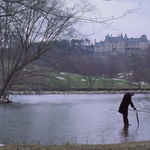



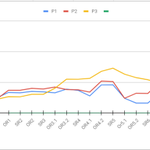
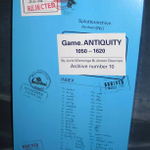


Two 3-player games of 1839 today, each called just as the permanents were breaking as the outcome was mostly clear (the loser was completely clear in both, winner only mostly clear).
Pictures and other commentary: tabletop.social/@jcl/1099127…
#18xx

Doubling the train ranks & making them half-width has been illuminating beyond expectation. However, the roster I'm using for 1839 is...asides from playing a bit with pacing in brown...basically linear. Now I'm wondering about playing with framing. #18xx
tabletop.social/@jcl/1095764…
What if I play with the rusting cadence (AKA pacing) and framing all together. It is so tempting! This is both not where I'd wanted 1813 (the real name of SekritProject) to go, and exactly what I'd intended for 1813. #18xx
tabletop.social/@jcl/1095764…
The rest of the discussion will be on Mastodon: tabletop.social/@jcl/1095764…
Twitter has moved engagement metrics to the top UI from several clicks down. Bad design: pushing derived rather than primary values.
Thing is...I only care if the number is larger or smaller than, umm, about 5. Everything over is noise; anything under that indicates a problem.
Generally, player-options offer improvement; the base incentives for player choices. Can that be credibly reversed? Each option degrades that player's position -- they are worse off -- while placing their opponents under even more threat (eg their choices are now even worse)?
Worth reading. #18xx #gamedesign

Game research, design, #gamestudies peers: I haven't been as intellectually excited about anything like this in a decade (maybe since SDT). In this paper, we propose a new theory for why we enjoy uncertainty in games, drawing on predictive processing. A 🧵
frontiersin.org/articles/10.…