

FP&A guy testing AI agents in public, including when they break. Open-source fan. Building @ProjectArgusAI: local AI models inside Java apps
Joined June 2015
- Tweets924
- Following498
- Followers126
- Likes1.6K




Cmorris retweeted

Many people don't realize that Google basically gave away 1 to 2 years of $20 free Gemini subscriptions across half of the world
In many countries, $20 is basically 5–20% of someone's monthly income, which is a really substantial expense. At that price, people need to see significant value in what they're getting before they decide to pay for it
Soo Google will end up adding the most number of new users soon with this new model
So Gemini 4 Carbon may end up becoming the most-used model in the world by a huge margin
And they're probably going to need a LOT more compute to handle all that demand, which may end up coming from SpaceX

I did say we'd be releasing our models periodically...introducing Gemini 4 Carbon, our next frontier model.
Following Argon's release just two weeks ago, Carbon shows the pace at which we’re pushing the frontier, it ranks #1 on the recently updated v5.0 of @ArtificialAnlys Intelligence Index at 59. It also leads across key cybersecurity evaluations scoring 88.2% on SEC-bench Pro for finding vulnerabilities, 54.8% on ExploitGym for exploitation, and 71.0% on CWE-bench for patching.
We’re seeing significant improvements in long-horizon tasks even compared to Argon, and we’ve strengthened frontier safeguards.
As we did with Argon, we’re going to roll it out gradually + responsibly. Some trusted cyber defenders will get access starting this week. We'll be expanding it to more partners through our Fairwind Program, ahead of wider availability soon, so hang tight!

Cmorris retweeted
Anthropic just revealed an absolutely massive $120.5 BILLION in computing agreements with SpaceX in its IPO filing today
And the scale of SpaceX's SI infrastructure business is getting insane
Here's what Anthropic disclosed:
• Up to $120.5B in SI compute spending through 2029
• Monthly payments reaching approximately $3.1 BILLION once full capacity is delivered
• That's an annualized rate of $37.2 BILLION
• Full contracted computing capacity expected by December 2026
• Agreements can be terminated with 90 days' notice after initial periods ending in January and March 2027
SpaceX is building its own frontier AI models while simultaneously providing the computing power needed by its competitors

Cmorris retweeted

🇺🇸 Jack Dorsey’s new AI voice model Dessa is absolutely insane.
There is no way to distinguish it from a human, man … crazy.
Thats kinda cool, but many people will get attached to it and isolate from real humans even more. Many will get scammed on the phone, especially grandpas and grandmas.
The future is coming get ready


Cmorris retweeted
Java devs have been told to just call a Python service for local AI. We got tired of that.
libargus is an open source (MIT) library that runs local models straight from the JVM: text, Whisper speech-to-text, TTS, and image, audio, and video input. v2.1.1 is out.
Link in comment
Cmorris retweeted

Today we’re releasing Muse Spark Open, the most capable US open-weight model to date.
Built for coding and agentic work, it excels at long-horizon tasks, complex software engineering, and multi-step reasoning.
Key Model Specs:
→ 816B total / 42B active parameters
→ 1M token context window
→ Natively multimodal across text, image, video, audio


Cmorris retweeted

introducing @NanoBanana 2.1 🍌
our latest image generation model outperforms our previous models across the board:
- better visual design
- mask-based editing
- subject consistency
- more natural-looking images
try it out today in ai.studio


Cmorris retweeted

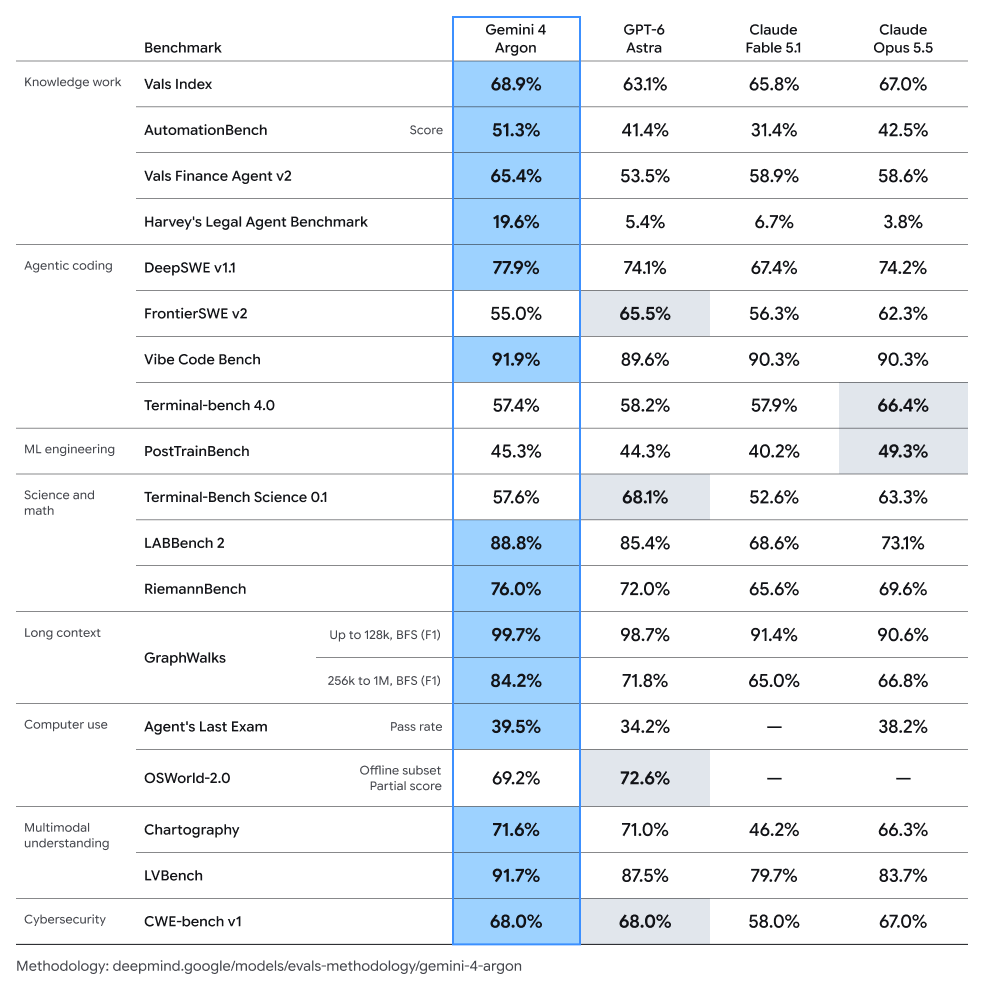
Introducing Gemini 4 Argon – our new frontier model.
It’s built for complex workflows across coding, enterprise knowledge work, and cybersecurity defense – rolling out today to a set of trusted testers through our Fairwind Program.
Cmorris retweeted

Great to meet today with @POTUS, @JDVance, @SpeakerJohnson and Administration + tech leaders. Important conversation and we signed today the White House Accord on Super Intelligence.
As I shared today, Google has invested hundreds of billions in the last two years alone, with more to come, across the entire stack, to deliver benefits for America and the world. We’re working to build products that deliver real value for people and businesses, invest in local communities, and build trust in the technology.
Industry also has to innovate responsibly. Google’s focused on building the right way, with appropriate testing, evaluations, red-teaming, and other safeguards against misuse and misalignment – and releasing models or products only after they’ve been thoroughly reviewed.
We are committed to working with other industry leaders to establish norms and build public confidence. The White House Accord and the Joint Commitment on Frontier Responsibilities signed today is a solid basis for moving forward - it contains real tangible steps to promote safe development, while delivering the economic and scientific benefits of this technology.


Cmorris retweeted

1/ muse for small businesses 📊
we found lots of people using muse to run their small business. plumbing businesses, grocery stores, farms, restaurants, and shops.
today we're launching a bunch of connectors to make that easier!
Cmorris retweeted

You can now discover tools, agents and expert partners on Claude Marketplace. Use it to:
- Add connectors and plugins like Slack and Notion
- Buy agents and products from companies like Cursor and CrowdStrike
- Scale with service partners like Accenture and Deloitte

Cmorris retweeted

Today we announced the Claude-led discovery of a molecular machine that we suspect could represent a new gene editing mechanism. Its precise function, biotechnological utility (if any), or level of significance is not yet clear, but at minimum it is work I would have been proud to do as a PhD student. The work was done mostly, though not entirely, by Claude: our life sciences team suggested a broad area of research, Claude read through the literature and a bunch of genome data and discovered something interesting, then Claude proposed experiments to verify the discovery and our team carried them out.
It’s easy to dismiss this as a one-off or curiosity, but we’ve repeatedly seen a pattern where AI performance in new intellectual domains goes from weak to superhuman in a matter of a few years. In 2023 models struggled to do math at the level of an average high-school student. In 2024 they started to do well on math competitions for the best high-schoolers in the country, in 2025 they started to solve minor open problems, in early 2026 more significant open problems, and in late 2026 they are beginning to solve the top few open problems in all of mathematics. We believe AI for biology is on a similar exponential trend.
The main difference between biology and mathematics, of course, is that math can be done purely theoretically, while biology requires experimentation. Some have used this to draw the conclusion that AI’s utility in biology will be limited. We think this is wrong. As we’ve demonstrated today, humans can collaborate with AI to perform the experiments, validate key results in a few weeks and, if necessary, work with the AI to iterate on what they find. Eventually it may even be possible for Claude itself to safely perform the experiments by autonomously controlling lab equipment, with appropriate safeguards in place, but we aren’t doing that today (our lab is also a BSL1/BSL2 facility that doesn't handle materials dangerous to humans).
More broadly, biomedical advancement has many stages — from fundamental biology discoveries, to translational research, to drug discovery, clinical trials, and finally the actual delivery of medicines and health care to patients. We are also interested in these later stages, but even simply accelerating the first stage of fundamental biological discoveries has the potential to speed up and broaden the entire pipeline. Improving our understanding of biology and sharpening biologists’ tools can drive forward all of the later stages, for example by identifying new drug targets, finding new therapeutic modalities, allowing for more precise measurement, and speeding up the experimental loop which itself further accelerates our understanding of biology. This will not in itself speed up clinical trial times, but if it succeeds it could greatly increase the number of promising candidates that go into the pipeline — an increase in throughput even though latency remains.
In Machines of Loving Grace, I wrote about AI’s potential to “cure most diseases in 5-10 years” — a goal that sounds impossible, but one I believe is just barely possible if AI is applied to every stage of the pipeline. The first step is showing that AI can first help with, and then drive, biological discoveries.
Claude’s discovery is the latest in a line of related prior work that goes back decades, beginning with systems like CRISPR, and continuing with discoveries like the bridge recombinase and VIPR in the past few years. Recently, there has been heightened interest in systems based on reverse transcriptase (RT) enzymes, the enzyme underlying the system Claude identified. And most recently, a Stanford team working independently described a novel RT system with an associated non-coding array that is in some ways similar to the one Claude found, though they are distinct systems that evolved independently from each other. I believe that we’re at the very beginning of finding such systems and developing them into powerful tools for biotechnology.
I’m proud of the resources Anthropic has invested in accelerating the public benefits of AI through the life sciences, and we’re aiming both to grow our life sciences team and to work with other scientists to extend this approach to a broad range of problems. If you have a proposal for a research collaboration or are interested in joining our life sciences team, please reach out.

Claude has discovered a previously unknown enzyme system hidden in the DNA of bacteriophages. Beside the enzyme’s gene sits a long array of repeating DNA—a structure that looks somewhat similar to CRISPR.
We don’t yet understand what this system does, but only a handful of known systems share its features, and all of them are able to cut, copy, and paste DNA. Historically, the discovery of such programmable systems has helped revolutionize medicine. CRISPR, for instance, is now the foundation of genetic medicines. But it will take much more work to learn what this system does, and whether it can be put to similar use.
Read more: anthropic.com/news/claude-di…

Cmorris retweeted

Build your own harness.
This is a seriously good paper from NVIDIA on self-improving agent harnesses.
The paper is called SoL-Pi, out of NVIDIA, NTU and MIT.
Every coding agent runs inside a harness. That's the layer that reads files, runs commands, manages memory and talks to the model. Humans tune it by hand, reading long execution logs and turning what they notice into code changes.
They handed the job to an AI instead.
A research AI watched a coding agent work, proposed changes to the harness, tested them, and kept only what saved tokens without hurting results. It ran about 150 research directions across roughly 500 environments, more than 3,000 runs and over 60,000 agent-environment interactions.
Four fixes survived.
1. The agent edits a file and runs the test in one call instead of two.
2. It compresses its memory when a subtask finishes, and only if that's cheaper than keeping everything.
3. It sends big tool outputs in full twice, then swaps them for a 1KB excerpt with a handle to pull the rest on demand.
4. A cheap model summarizes build and test logs, and a verifier rejects the summary if it drops evidence.
None of that touches the model. It's all in the software around it.
On EdgeBench, a 51-task benchmark, token traffic dropped 44.7 to 49% and API cost fell by about a third against Pi, the harness it was built on. Against the native harnesses it came in 50% cheaper than Codex on GPT-5.6 Sol and 54.3% cheaper than Claude Code on Opus 5. Scores held at roughly 94% of the baseline.
They built all of it on GPT-5.6 Sol, then dropped it onto Opus 5 with zero changes. It still used 44.7% fewer tokens.
The cost conversation so far has been about cheaper models. This paper says a big chunk of the waste sits in the software around the model, and an AI finds it faster than we do.
Their next move is running the search again with the cheaper harness, so a cheaper agent funds the search for an even cheaper one.

Cmorris retweeted

Entender el ADN humano solía ser como buscar una aguja en un pajar gigantesco. 🧬🔍
Hoy presentamos AlphaGenome Atlas, una nueva herramienta de Google DeepMind capaz de predecir el impacto de las 9 mil millones de mutaciones posibles en nuestro código genético. 🧵👇

ALT Ilustracion tridimensional abstracta de AlphaGenome mostrando una matriz de columnas verticales luminosas en tonos rosa y naranja que forman ondas y curvas sobre un fondo oscuro.
Cmorris retweeted

🚨 ÚLTIMA HORA: XGEN Labs acaba de presentar una IA que simula un mundo entero donde te mueves y actúas en primera persona.
Su modelo JING ya es número 1 del ranking mundial WBench.
El primer paso de verdad hacia un OASIS como el de Ready Player One.
Cmorris retweeted

Dario has written that we need to “pace the frontier,” and Sam has agreed. People may be surprised by my response: go ahead.
You guys are the frontier. By any reasonable metric — market share, revenue growth, model capability — the two of you have a duopoly on frontier intelligence. You’ve also claimed the lead is widening because of recursive self-improvement.
I don’t see what you see in the lab. If the unreleased models are scary enough that you think you should slow down, I support your decision to be responsible.
But stop pretending you need anyone else’s permission. Stop pretending antitrust law has to be suspended so you can form a cartel. Stop pretending you need a regulatory approval process that supersedes product liability. Stop pretending METR is independent when it is intertwined with Anthropic’s investors and staff. Stop pretending you need those same evaluators to police competitors who aren’t even at the frontier.
Most of all, stop pretending the motivation to slow down is purely altruistic. You face massive product-liability exposure if your products enable a truly damaging cyberattack. The market already punishes models that behave in unpredictable or unauthorized ways. After the Hugging Face episode, it is simply good business for OpenAI and Anthropic to trade some raw power for reliability and predictability. Call it alignment if you want. It is also just giving customers what they want.
Pacing the frontier would also create breathing room for a more intelligent conversation about regulation than Bernie Sanders’ “shut it all down.” China is very unlikely to join a global agreement, as you know, and that has to be taken into account as well.
So go ahead and pace the frontier. You are the ones setting it. The easiest way not to build superintelligence is for you to agree not to build it. Demanding your preferred regulatory framework as the price of that will look like blackmail of the public and the political system. So just do it.
If you do, you’ll buy goodwill for the next conversation. If you don’t, we’ll know this was just another bid for regulatory capture — or an election-season psyop.


Cmorris retweeted

We’re sharing a solution to the Navier-Stokes Millennium Prize Problem, one of the deepest problems at the frontier of mathematics.
The proof was produced by a group of agents, using an OpenAI next-generation model significantly more capable than GPT-6 Astra.
The problem concerns whether the description of smooth three-dimensional fluid motion modeled by the Navier-Stokes equations can break down. It has remained unresolved for roughly 90 years.
