

Director of Swimming and Diving at The University of Texas at Austin. USA Head Olympic Coach 2016. Author of The Golden Rules.
Tempe, AZ
Joined January 2011
- Tweets13.7K
- Following3.5K
- Followers55.9K
- Likes55.8K






Pinned Tweet
I've coached over 30 Olympic gold medals.
I've worked with some of the greatest athletes in history.
Here are the lessons I wish more people understood:🧵


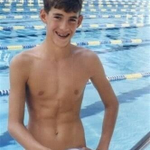
I had Michael Phelps fill out a goal sheet when he was eleven (I coached him through all 5 of his Olympics).
On the front he wrote, "I want to swim in the Olympics."
I didn't find out what he really wanted until I turned the page over. 🧵
When Michael Phelps was a kid, I set goals for him that were 8 to 10 years out (I've coached him for 20+ years).
And I could also tell you what I wanted him doing every single day of the next year. You need both of those, because they do different jobs. 🧵
Bob Bowman retweeted

" Forget about the scoreboard. There is no scoreboard.
You don't focus on what you want to accomplish, you focus on what you have to do to accomplish it.
It's a process of what it takes to be successful.
We talk about playing 60 minutes all the time, but really every play lasts about five seconds, so if you played 70 plays in a game, you'd really be playing 350 seconds, which is about six minutes in the game.
The process is very simple to understand. The process is focusing on the task at hand without anything external to alter your focus.
Do you have the discipline to execute the right thing, the right way, the right time, all the time?
How good do you wanna be? That philosophy was the foundation of what the organization was built on."
ESPN's new Saban documentary dropped this week.
Few coaches have ever had the success Nick Saban has had.
Most of us were coaching while he did it. Getting a deeper look behind the scenes now is rare.
When I was just getting into coaching, I read his book. It showed me a lot about what matters.
We all know it as "the process" now.
We've heard it so much that it's easy to overlook it and write it off as cliché.
That's one of the worst mistakes you can make as a coach.
Whatever you call it, the process is what separates the good coaches from the rest.
And having a process isn't the hard part. Executing it is.
It's one thing to be a disciplined coach who follows your own plan.
It's a whole other thing to get everyone on a team to follow it.
And before you can have a plan, you need a vision.
The vision is where you're taking your team. It decides what goes into your process.
The vision is also what you sell. It's what gets people to believe and join.
So you set the vision. You build the process to get there. Then you relentlessly make sure that process gets followed, day in and day out.
Over time, executing the process gets you results. Those results tell you whether your process is any good.
You adjust the process based on the results, and you keep executing.
None of this is a secret. It's just rarely followed to the level Nick Saban followed it.
1) Have a vision.
2) Build a process to make it real.
3) Execute the process.
4) Adjust the process based on results.
🙏

Don't freaking take your foot off the pedal now.
Some coaches start pulling back in practice.
They're trying to keep players fresh and healthy.
There's a right way and a wrong way.
The wrong way is reducing the intensity of practice and creating an easier environment.
The right way is reducing the amount of TIME at practice.
The intensity stays high.
I talked to a P4 head coach this season about load management.
The number 1 factor they found to manage player load was simply time.
Reduce time for a period and you reduce player load.
Trying to reduce the intensity of a period never works.
And this is backed by GPS data.
Before I ever coached an Olympian, I had decided I was done coaching.
I was going to go to veterinary school and work on racehorses. 🧵

Then the training groups got reshuffled, and this hotshot 11-year-old named Michael Phelps ended up in my group.
It was really rather random.