

photographer, designer, space camera maker https://teapawt.net/t.co/TQDKg9KIGY
Earth
Joined February 2008
- Tweets6.8K
- Following1K
- Followers61.4K
- Likes4.1K




Pinned Tweet
Here's an article that took 4 years to write: A Tale of Two Cameras — Unraveling the Mystery of the First Hasselblad in Space.
spacecamera.co/articles/2023…


Cole Rise retweeted

The Best of @Om Malik from @theleastsirius discovering Om's archives. It makes me very happy that a new generation is revisiting Om's writing, it really shaped a lot of my thinking. 🕉️ elijahpotter.dev/articles/th…
Om was. What a devastating use of past tense. Om was generous with his advice, passionate about his craft, always curious, always humble, infinitely wise and forever kind. Thank you brother man. Thank you for everything.
om.co/2026/06/24/1966-2026/

Cole Rise retweeted

Why not…
Vulcan VC2, Starship Flight 10, and Delta IV Heavy in reverse monochrome.


Taking some inspiration from @astromatthewt, I edited some of my photos to be in inverse monochrome and I cannot believe I’ve never done this before. It’s so cool!


Cole Rise retweeted

Through a Dirty Window
Taken by the Artemis II crew with a Nikon D5 on 2026-04-06 at 22:26:57 UTC.

ALT art002e014277


Cole Rise retweeted

Where is Schirra’s Mercury Σ7 Hasselblad, the first to fly in space?
Is it the camera sold at auction for $275K and featured in the TV show Strange Inheritance? Or is it the camera in my office, that I bought from Schirra via another collector?
Cole Rise's Space Camera Co. has spent 4 years researching this, with encyclopedic expertise, and just published his findings:
“It was the genesis camera — the blueprint for all cameras that flew to the surface of the moon, and the beginning of Hasselblad’s storied connection with NASA that lasted through the shuttle-era. The excitement within the collector community was undeniably palpable.”
And the conclusion? See spacecamera.co/articles/2023… for the findings.


Dinner party theme inspo: What does space smell like? Some accounts say it’s like seared steak, or a metallic gunpowdery smell. Had an opportunity to ask a shuttle astronaut this question, and after some thought, she said when the hatch opened after an EVA, to her it smelled like raspberries. That’s a main course, smoky cocktail, and a fruity sorbet for dessert right there.
Cole Rise retweeted
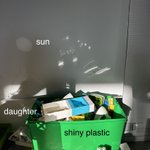
Something for your inner Uber-Geek; capillary rise in a 10mm diameter drinking straw.
Cole Rise retweeted
In space, you can see stars!
I flew a home-made tracking device that allows time exposures required to photograph star fields.
Stay tuned for more photos like this.

Cole Rise retweeted
Reflecting on reflections: working in the @Space_Station Cupola setting up for a night pass of imagery while using a flashlight. I captured this moment as a self portrait.
Nikon D3s, 8mm fisheye, f2.8, 1/10th sec, ISO 1600, Expedition 30, 2012

Cole Rise retweeted

We have been looking at aurora out the cupola windows a lot lately. Starliner was doing some testing today so we decided to check it out from the Dragon windows. Timing was great for the aurora to line up nicely with Starliner’s service module thrusters.

Cole Rise retweeted
During @Space_Station's early days, orbital motion created a challenge to take sharp night #photography.
So I assembled a barn-door tracker from spare parts. Operated by a handheld drill, it counteracted orbital motion, allowing for the first clear images of cities at night.

workspace goals.

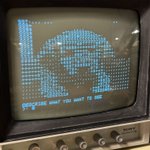
#ThrowbackThursday to 1977, when the CERN Bulletin announced that CERN's computers were then able to handle words, as well as numbers. 🧐
These pictures feature the display console of a CDC 3100 computer at CERN. From that year, these computers had their own special text-handling system, allowing all kinds of users – not just computer specialists – to produce reports, letters, and more.
The latter pictures show the display console being used with a ‘light-pen’ to examine particle track configurations, such as those that could be produced in a new bubble chamber.


Cole Rise retweeted
This star trail I took from the @Space_Station shows how orbital motion can warp visual phenomena.
We @NASA_Astronauts are used to photographing the Earth, but much like different wavelengths of light, there are entirely new and unique ways to perceive the same subject.

interesting thread. makes me think it may be a good analogy applicable for to startups / designers. if you break down problem solving into now / next / future, there’s rarely demand for future, even if you’re right. aiming for what’s next tends to be more widely relatable.

