

Retired Italian-English translator, former narrowboat-dweller, now moved to Shetland to follow my passion for the traditional knitting of the islands.
Shetland Islands
Joined November 2018
- Tweets7.2K
- Following792
- Followers671
- Likes64.2K




Freelance Afloat retweeted

صدر بننے کے بعد، میں نے اپنی سیکیورٹی ٹیم سے کہا کہ آؤ کسی ریسٹورنٹ میں دوپہر کا کھانا کھاتے ہیں۔
ہم بیٹھ گئے، اور ہر کسی نے اپنی پسند کا کھانا منگوایا۔
ہمارے سامنے والی میز پر ایک آدمی بیٹھا تھا جو کھانا آنے کا انتظار کر رہا تھا۔ جب اس کا کھانا آگیا، تو میں نے اپنے ایک محافظ سے کہا:
“جاؤ، اس صاحب سے کہو کہ وہ ہمارے ساتھ آ کر بیٹھ جائیں۔”
سپاہی گیا اور میری دعوت اس آدمی تک پہنچائی۔
وہ شخص اٹھا، اپنی پلیٹ اٹھائی اور آ کر میرے ساتھ والی کرسی پر بیٹھ گیا۔
جب وہ کھانا کھا رہا تھا تو اس کے ہاتھ مسلسل کانپ رہے تھے، اور وہ ایک لمحے کے لیے بھی اپنا سر اٹھا کر نہیں دیکھ رہا تھا۔
جب ہم کھانا کھا چکے تو اس نے سر جھکائے ہوئے ہی مجھ سے مصافحہ کیا اور وہاں سے چلا گیا۔
میرے سپاہی نے مجھ سے کہا:
“مدیبا، وہ آدمی ضرور بہت بیمار ہوگا، کیونکہ کھاتے وقت اس کے ہاتھ کانپ رہے تھے۔”
میں نے جواب دیا:
“بالکل نہیں، اس کے ہاتھ کانپنے کی وجہ کچھ اور تھی۔”
پھر میں نے وضاحت کی:
“وہ شخص وہی جیلر تھا جہاں مجھے قید رکھا گیا تھا۔
جب وہ مجھے اذیت دیتا تھا، تو میں درد سے چیخ کر پانی مانگتا تھا۔
لیکن وہ مجھے ذلیل کرنے آتا تھا — وہ میرا مذاق اڑاتا اور پانی دینے کے بجائے میرے سر پر پیشاب کر دیتا۔
آج وہ اس لیے کانپ رہا تھا کہ وہ ڈرا ہوا تھا — اسے خوف تھا کہ اب جب میں جنوبی افریقہ کا صدر بن گیا ہوں تو شاید میں اسے قید کروا دوں گا یا اس کے ساتھ ویسا ہی سلوک کروں گا جیسا اس نے میرے ساتھ کیا تھا۔
لیکن میں ایسا انسان نہیں ہوں — اس طرح کا رویہ میرے کردار یا میری اخلاقیات کا حصہ نہیں۔”
میں نے کہا:
“بدلے کی روح قوموں کو تباہ کر دیتی ہے،
جبکہ مفاہمت کی روح قوموں کو تعمیر کرتی ہے۔
جب میں گھر سے نکلا تھا، میں جانتا تھا کہ اگر میں اپنے دل میں غصہ، نفرت اور کینہ لے کر چلوں گا،
تو میں ہمیشہ کے لیے ایک قیدی ہی رہ جاؤں گا۔”
سبق:
نفرت کمزور لوگوں کا ہتھیار ہے۔
طاقتور لوگ معاف کر دیتے ہیں۔

Freelance Afloat retweeted

A post on the importance of giving time and appreciation to elderly people:
“Twice this week, I have watched an elderly individual, fade into the busy life in which we all live. One man just needed Panadol for his wife but the shop assistant simply said it’s in ‘6’. But he struggled to navigate the supermarket and as I watched him go in the wrong direction, I left all my groceries and took him where he needed to go.
Today, I watched an elderly man struggle in the heat, who had obviously had a fall with a huge scrape and blood on his leg. He walked past people in the cafe, while he slowly made his way to his car. Not one person stopped. Or looked. Or acknowledged him. I took him to his car and checked he was ok. He told me he had a fall and wasn’t sure how the air con worked in his car so he just didn’t use it. I sat with him, until his air con kicked in and heard him talk about the old frail body that he is in, that fails him now, every single day.
When you see an elderly person walking down the street, searching in the supermarket or struggling to their car, take a minute out of your busy schedule and ask them if they need a hand. Think about your grandparents and your parents and how pissed off you would be if someone didn’t stop to help them. But more, think of them as you.
Once upon a time they were you. They were busy, they had work, they had children, they were able... Today, they are just in an older body that is not going as fast as it used to and this busy life is confusing. They deserve our utmost respect and consideration.
One day it will be you, it will be us. I wish more people gave a shit about them and acknowledged them for their admirable existence and geez I hope someday, not that far away, someone does it for me.”
Credit: Adele Barbaro

Freelance Afloat retweeted

Halloween artificial cobweb material:
It may be a bit of fake fun for you, but it's a very real and terrifying death for them.
And it's not only birds.
Last year I had my first call of the season of a hedgehog trapped in this horrific fake 'cobweb', made especially for gullible halloweeners to spread over their greenery, trapping all unsuspecting birds, insects and mammals, including hedgehogs.
The fine synthetic fibers are difficult for animals to see and can quickly wrap around their legs, spines, and neck, leading to severe injuries.
When a hedgehog struggles to free herself the web tightens, cutting off circulation and causing deep wounds.
These constriction injuries often lead to permanent damage or death.
Unfortunately the call was from Manchester, so all I could do was talk them through getting the poor creature to a rescue.
Clearly she had been trapped there for at least one night, and her struggles had pulled the strong nylon strands so tightly that one of her toes had been amputated.
Can you imagine the pain and the sheer terror?
And then seeing dawn approach, while hanging there, tightly bound and helpless.
Aside from being stressed, dehydrated, starving and exhausted to the point of near death, she also had horrific bite/peck wounds to her face, where she had been held there, helpless, unable to curl and defend herself, while a predator tried to eat her alive.
If you have used this deadly cruel trap to 'decorate' your garden, please take it down now.
Please don't be conned by the greedy makers and sellers of this rubbish into hurting defenceless animals.

Freelance Afloat retweeted

RT if you think Trophy Hunting is a CRIME & should be BANNED!
#WorldLionDay #bantrophyhunting

Freelance Afloat retweeted

We don't have a "climate problem". We have a greed problem. The planet isn't dying, it's being killed. And those killing it have names and boardrooms. #ClimateJustice #StopEcocide

Freelance Afloat retweeted
Stop calling them "natural disasters."
Floods after deforestation. Heatwaves after deforestation. Famines after corporate land grabs.
It's not nature being cruel. It's human greed being careless.
There is no climate catastrophe without a human choice behind it. 🌍
#ClimateJustice

Freelance Afloat retweeted
Retweet if you think there should be a worldwide ban on trophy hunting.
#BanTrophyHunting

Freelance Afloat retweeted

A young humpback whale, fatally injured by a krill trawler, is thrown away like trash.
An eminent marine biologist, Leonid Pshenichnov, a Ukrainian known for his kindness, who devoted his life to the research and protection of krill and marine life in the Antarctic, was illegally jailed for up to 20 years by Putin, because he tried to protect these whales with marine protected areas.
Dr Pshenichnov is 71 and seriously unwell. He will die in prison—and we must understand the implications of unlawfully jailing an innocent scientist whose only desire was to protect a vitally important marine ecosystem.
Trump's pal Putin is ruthless and merciless. Make no mistake:
Putin's crimes and future plans are far-reaching and Trump backing him will enable even worse genocidal, lawless behavior and make this world a more dangerous place for all.
(Sources and petition for Dr Pshenichnov's release in 🧵)

Freelance Afloat retweeted
Conservation conference urged to demand Russia release Ukrainian scientist Leonid Pshenichnov abc.net.au/news/2026-10-19/u…
👉Petition to free Dr Leonid Pshenichnov: secure.avaaz.org/campaign/en…
Analysis of Putin's plans: brookings.edu/articles/how-t…

Freelance Afloat retweeted
Please be the first to like, comment, and repost if you believe the remaining forests of the Amazon and Congo Basin must be protected.
No to deforestation. No to ecocide.

Freelance Afloat retweeted
We don't have a "climate problem". We have a greed problem. The planet isn't dying, it's being killed. And those killing it have names and boardrooms. #ClimateJustice #StopEcocide


Freelance Afloat retweeted

"...Anne Carson revela cómo al día de hoy citamos de manera errónea la frase más popular de la Antigüedad: “Descartes dijo esta famosa frase: Cogito ergo sum . Pienso, luego existo . Por eso, soy. La frase que todos conocen y aprenden en la escuela. Pero si observas bien la frase, en realidad lo que dice Descartes es: Dubito ergo cogito ergo sum . Dudo, luego pienso y por eso existo . ¿No es sorprendente? Se imprimen camisetas por todo el mundo que dicen ‘Pienso, luego existo’. Dubito (dudar) tiene mala prensa. Eso me resulta muy provocativo. Todo comienza con la duda”...
latfem.org/el-nobel-de-anne-…

Freelance Afloat retweeted

C. S. Lewis on why you NEED to read old books. This has never been more vital than it is today

Freelance Afloat retweeted
Protecting the heritage and the future of the British countryside is a hill I will die on.
Not because I hate cities. I have spent 20 years of my 52 years on this planet living in cities. Not because I want the countryside frozen in a postcard. But because this beautiful green and pleasant land is the one thing Britain still has that money cannot easily fake and policy cannot easily replace.
I come from a farming background. I see farming and the countryside for its true value. It is the hedgerow that has been laid for three hundred years. The country lane that still follows a Saxon boundary. The church tower rising over a field of hay. The dry-stone wall that someone stacked by hand decades ago and that still holds firm. The dawn chorus. The smell of wet earth after rain. The harvests that reap what has been sowed. The community spirit of the village pub. The footpath that belongs to everyone and to no one. This is not scenery. It is the country’s memory and heritage made visible.
Blake called it a green and pleasant land. He was not writing a travel brochure. He was naming the thing we were supposed to keep while the mills rose. We kept enough of it that people still know what he meant. That is the inheritance. You do not get another one. Because once the farmland is gone, it’s gone forever. Never to return. We lose our green and pleasant land our own peril.
A country can survive ugly architecture. It can survive bad fashion, bad governments, even bad decades. It cannot survive the slow conversion of its living rural landscape into a corporate development opportunity, a solar panel farm, a data centre or an energy industrial estate.
We need homes. We need power. We need food. Those are not optional. What is optional is the government habit of treating the countryside as leftover space: the place you put the housing target; the place you put the solar farm on a real farm that feeds the nation when a warehouse roof or car park would show more common sense. The place called a “development” when governments have already decided the field is in the way and that somehow, food supply from farmland isn’t deemed to be a “development”.
Once a village is ringed by a data centre, it is not a village. Once the best land is under glass and steel, it is not a farm. Once the view that made a place itself is gone, no planning approval can bring it back.
Farmers are not extras in this picture. They are the reason the green and pleasant land of Britain still exists. A countryside without people who work it becomes either a theme park or a ruin. If we make it impossible to pass on a farm, impossible to grow food at a living return and easy to rent the same acres to a developer or an energy company, we should stop pretending we are “protecting nature.” We are just changing the land owner to a corporate asset stripper.
This is my hill because the alternative is a Britain that still has a flag, a language and a history, but no longer has the thing those things were supposed to belong to. A nation that cannot recognise its own ground, soil, crops and trees has already started to forget who it is.
I am not asking for nostalgia. I am asking for continuity. Build homes. Generate power. Feed people. But do it without flattening the last ordinary miracle we have: a small, crowded island that is still, in places, beautiful enough to break your heart. These places often live in the countryside. They should be protected.
Working farmland is not in the way of the future. It is the reason the future is worth having.


Freelance Afloat retweeted

Hedgehogs Need More Than Public Love — They Need Legal Protection - Sign the Petition! c.org/hNgSjZC7Fq via @UKChange

Freelance Afloat retweeted
It’s absurd that Britain prioritises foreign food over what we can (and do) grow on our own soil.
Britain has some of the best farmland in Europe. We produce excellent wheat, potatoes, dairy, beef, lamb, apples, berries, brassicas and more. Our climate and soil are perfectly suited to a huge range of high-quality produce.
Yet year after year, supermarket shelves and government trade policy tilt toward imports — often at the direct expense of British farmers.
Cheap Spanish tomatoes, Dutch peppers, Polish chicken, New Zealand lamb and out-of-season fruit flown halfway around the world routinely undercut local growers.
Why? Lower production costs abroad, weaker environmental and animal-welfare standards in some cases, and a retail system that chases the lowest unit price above everything else.
The result: British producers face razor-thin margins, rising energy and labour costs, and the constant threat of being replaced by imports that would never meet the same rules if grown here.
This is not free trade in any meaningful sense. It’s a one-way preference for distance over quality, seasonality and national resilience.
Food security is treated as an afterthought until a supply shock hits. Carbon footprints from long-haul transport are waved away while British growers are lectured about sustainability. And rural communities that keep the countryside working are told to compete with subsidized or lower-standard overseas production while absorbing every new regulation.
Supporting what is grown here does not mean autarky or higher prices for everything. It means fair competition: applying the same standards to imports that we demand of our own farmers, prioritising seasonal British produce in public procurement and retail, and recognising that a country that cannot feed itself is strategically weak.
Preferring the imported option simply because it is slightly cheaper on the day is short-sighted policy dressed up as consumer choice.
Freelance Afloat retweeted

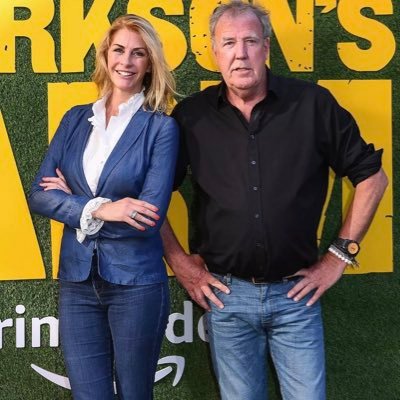
Jeremy Clarkson lets slip a number on Clarkson's Farm that explains almost everything wrong with British food. A sausage from his own pigs costs 74p. The identical sausage made from imported pig meat costs 18p.
Most people hear that and assume the foreign farmer is simply better at it.
Britain outlawed the sow stall in 1999, alone in Europe bar Sweden, because the public here decided a pregnant animal ought to be able to turn around. The national pig herd then fell by roughly half.
British people did not eat half as much bacon.
Work out where the difference went. Twenty-seven years on, the National Pig Association reckons around 95 percent of the countries selling pork into Britain still permit the stall. Most of the EU allows four weeks of every cycle. Much of America allows the full sixteen-week gestation. Brazil allows it outright.
The sow was never spared. She was moved abroad, into a shed with looser rules and no British inspector, and the farm that would have kept her shut its gate.
Now watch the same thing happen to beef and lamb, on a far bigger scale.
British beef is grass. Native cattle standing out in the rain on ground that grows nothing else, doing what they have done on those hills since before the language was written down. What the NFU says we are being asked to compete against is a feedlot finishing up to 50,000 head on one site, which it called unacceptable here on both moral and environmental grounds.
The deals were signed anyway. Australian and New Zealand beef rises to a quota of 110,000 tonnes by 2033, and after that there is no tariff at all. Lamb runs to 60,000 tonnes this year and climbs from there, and we already import between a quarter and a third of what we eat.
Every one of those deals was announced with a firm assurance that food standards would not fall. That assurance is true, and it is beside the point.
The standards enforced at our border cover what is in the meat. Hormones stay banned, and rightly. What crosses untouched is how the animal lived. There is no border check for a feedlot, no tariff on a gestation crate, no form anywhere asking whether the thing we made illegal here was used to make the thing arriving here.
So a minister can say food standards are protected and back British farming in the same breath, and be telling the truth twice, while signing the document that finishes the job.
The pattern runs through the lot. Barren cages banned here in 2012, egg products still arriving from countries that use them. Force-feeding outlawed in 2007, foie gras on sale every Christmas.
And the campaigners who won those bans never once came back to see what happened next, because the victory was legislative and the consequence was six thousand miles away. Nobody counts sows in Iowa. Nobody films a feedlot in Queensland.
Clarkson absorbs that 56p on every plate that leaves his kitchen, on television, which is the only reason anybody can see the number at all. Inside a supermarket price it has been invisible for a quarter of a century.
Fifty-six pence is what this country charges a man for obeying it.
He is not competing with foreign farmers. He is competing with his own ban, on a shelf, standing next to the version of himself he was forbidden from being.

