

Championing Democracy, Accountability, and Transparency. Mathematician and Academic Leader Committed to Safeguarding Rights Dignity Truth, and Access to Justice
Joined September 2012
- Tweets1.2K
- Following1.1K
- Followers365
- Likes1.7K


Pinned Tweet
IS IRELAND DRIFTING TOWARDS AUTHORITARIANISM AND DEMOCRATIC DECAY THAT THE FRAMERS OF OUR CONSTITUTION COULD NEVER HAVE ENVISAGED?
A Warning About the Erosion of Constitutional Rights, Institutional Accountability and the Protection of Ordinary Citizens
Dr Cora M Stack, PhD
Award-Winning Academic and Independent Researcher
I am issuing a serious warning about what I believe may be a dangerous drift towards authoritarianism and democratic decay within Ireland's State institutions.
My warning arises from my own experiences of challenging powerful institutions, attempting to secure nomination as an independent candidate in the 2025 presidential election, pursuing constitutional litigation and conducting independent investigative research into Ireland's protected disclosures and family law regimes.
I believe the timing, consistency and cumulative consequences of the institutional actions and omissions I have experienced raise grave concerns about deliberate penalisation, obstruction of justice and potentially coordinated efforts to protect established institutional interests from accountability.
My concern is that an ordinary citizen who challenges powerful State interests may face obstruction at virtually every level, until the practical exercise and vindication of constitutional rights become almost impossible.
The consequences for my professional standing, financial security, health, housing security and access to justice have been devastating.
This is not merely a warning about my personal circumstances. It is a warning about what can happen to constitutional democracy when the institutions entrusted with protecting citizens become resistant to scrutiny, correction and accountability.
The framers of the Irish Constitution could scarcely have envisaged a future in which fundamental constitutional rights might remain protected on paper while ordinary citizens face such formidable obstacles to exercising them.
Authoritarianism does not have to arrive through the abolition of elections, courts or constitutional guarantees. It can emerge gradually, through institutional practices that concentrate power, obstruct accountability and make constitutional rights increasingly difficult to enforce.
The patterns I believe I have witnessed in Ireland bear striking similarities to concerns being raised internationally about democratic erosion, declining institutional trust, growing public unrest and the marginalisation of ordinary citizens.
These are global problems, but Ireland must examine its own institutions rather than assume that constitutional democracy is automatically protected simply because a written Constitution exists.
My central warning is that Ireland risks allowing a widening gap to develop between the rights promised to citizens in law and the rights they can actually exercise in practice.
This is the fundamental problem at the centre of my research on the Constitutional Blind Spot, Constitutional Time and the Remedial Time Window.
And it may be one of the structural reasons democratic decay can occur without any formal alteration to constitutional protections.
When justice arrives too late, when remedies become practically unattainable, and when citizens face every possible obstruction to challenging institutional power, constitutional rights can become dangerously weak.
My intention has always been constructive. I want to help bridge this gap through practical, workable reforms that provide earlier intervention, independent oversight, affordable dispute resolution, institutional accountability and effective remedies.
I want a fairer, more harmonious, more just and more peaceful society — not one in which ordinary citizens are financially, professionally or personally exhausted by the very systems established to protect them.
The Constitution belongs to the people. State institutions exercise authority on behalf of the people, not above them.
My warning is therefore direct: If Ireland fails to confront institutional obstruction, ineffective accountability and the erosion of constitutional rights in practice, it risks allowing democratic decay to become entrenched within its own institutions.
The greatest danger is that we may continue to call ourselves a constitutional democracy while ordinary citizens progressively lose the practical means of holding powerful institutions to account.
The question Ireland must now confront is whether its institutions are protecting citizens from the misuse of power — or increasingly protecting power from the citizens who challenge it.
That question cannot safely be ignored.
Dr Cora M Stack, PhD
Award-Winning Academic and Independent Researcher
#ConstitutionalDemocracy #DemocraticDecay #Authoritarianism #IrishConstitution #ConstitutionalRights #RuleOfLaw #AccessToJustice #InstitutionalAccountability #AcademicFreedom #ProtectedDisclosures #ConstitutionalBlindSpot #ConstitutionalTime #JusticeReform #Democracy #Ireland
Should Ireland — and Other Countries — Be Examining New Models of Justice?
The Case for Affordable, Independent and Multidisciplinary Dispute Resolution
Dr Cora M Stack, PhD
Award-Winning Academic and Independent Researcher
The current dispute between Ireland's Minister for Justice and the legal profession raises a much wider question: Are our traditional legal systems too expensive, too adversarial and increasingly inaccessible to ordinary citizens?
This question is relevant not only to Ireland but to many countries where legal costs, lengthy proceedings and difficulties obtaining representation create serious barriers to justice.
Consider the number of disputes involving wills, inheritance, property boundaries, fences, rights of way, family breakdown, employment, financial disagreements and complaints involving public authorities that continue for years.
The financial costs can be enormous, but the human consequences may be even greater.
Prolonged litigation can contribute to psychological injury, deteriorating health, financial hardship, family estrangement and relationships damaged beyond repair.
In some cases, the process intended to deliver justice may become a greater source of injury than the original dispute itself.
A New Layer of Justice: Multidisciplinary Problem-Solving
I propose that Ireland, and potentially other countries, should examine the establishment of a new, independent and publicly funded layer of dispute resolution operating alongside the existing courts.
Rather than relying exclusively on solicitors, barristers or individual mediators, this service could involve multidisciplinary panels of appropriately qualified professionals.
Depending on the nature of the dispute, these could include:
Solicitors and legally trained mediators.
Psychologists, trauma specialists and family welfare professionals.
Accountants, financial and pension experts.
Chartered surveyors and property specialists.
Employment relations and organisational behaviour experts.
Trained Garda or community mediators, where appropriate, alongside independent policing specialists for suitable complaints involving policing.
Other professionals with specialist knowledge relevant to the particular dispute.
No single profession, and no single individual, possesses all the skills necessary to resolve every complex human dispute.
For example, a boundary dispute may require a surveyor and mediator. An inheritance dispute involving longstanding family conflict may require legal, financial and psychological expertise.
A complex family or employment dispute may require several different forms of specialist knowledge.
The objective would be to identify the underlying problems, assess the relevant evidence and develop practical, fair and sustainable solutions.
Importantly, complex cases should not place excessive responsibility on one mediator. A suitably constituted panel could bring together the expertise needed to support effective resolution.
Should This Be a Normal Step Before Litigation?
For suitable disputes, I propose that an initial independent assessment and dispute-resolution process should normally take place before court proceedings.
The service should be publicly funded, free or available for a modest fee, making early dispute resolution accessible regardless of financial circumstances.
There must, however, be exceptions for cases involving domestic abuse, coercive control, serious power imbalances, urgent constitutional matters, immediate threats to safety and other circumstances requiring judicial intervention.
Access to the courts must remain protected, and participation must never require a person to accept an unfair settlement or surrender legal rights.
This approach could also create valuable opportunities for existing solicitors trained in mediation, working alongside experts from other professional disciplines.
Justice Should Not Create Further Unnecessary Harm
My developing research on the relationship between time, rights and justice raises a fundamental issue:
Delay does not merely postpone justice. It can change the nature of a dispute, increase the injury suffered and sometimes make meaningful correction impossible.
A disagreement that might initially have been resolved through early intervention can become years of expensive litigation, escalating conflict and serious personal harm.
While the courts remain essential for protecting rights and making binding legal determinations, should they necessarily be the first destination for every dispute?
Perhaps we need to rethink not simply the cost of litigation, but the way disputes are understood and resolved.
The purpose of a justice system should include preventing avoidable harm, not merely determining legal outcomes after that harm has occurred.
The current debate in Ireland provides an opportunity to examine whether a more accessible, affordable, independent and multidisciplinary model could improve the delivery of justice.
This is not simply an Irish question. It is one that deserves consideration internationally.
Should Ireland — and other countries — be examining a new layer of justice focused on early intervention, multidisciplinary expertise, fair problem-solving and the prevention of unnecessary human and financial harm?
I would welcome views from legal professionals, mediators, psychologists, academics, policymakers and others working in dispute resolution and access to justice.
Dr Cora M Stack, PhD
© 2026 Dr Cora M Stack. All rights reserved.
#AccessToJustice #JusticeReform #Ireland #LegalReform #DisputeResolution #MultidisciplinaryJustice #Mediation #LitigantsInPerson #PublicPolicy #HumanRights

Dr Cora M Stack PhD retweeted

A champion on the court. A powerful voice beyond it 🎾
@naomiosaka has shown that courage isn't just about winning titles.
It's also about standing up for what you believe in.
Happy birthday to a woman who continues to make her voice count 💙
#OnThisDay

Dr Cora M Stack PhD retweeted

Thanks everyone for the support.
Please help and repost and share 🫶
🇮🇪 – at Kildare, Ireland
Sexual Abuse, Psychological Predation and Misogyny: What About the Thousands Who Never Get a Hearing?
The ongoing Russell Brand trial has brought allegations of sexual abuse, predatory behaviour, manipulation and the exploitation of women into sharp public focus. Mr Brand denies the allegations and is entitled to the presumption of innocence.
Sexual abuse is rightly treated as an extremely serious matter. But these proceedings raise another fundamental question that deserves far greater public attention.
What about the thousands of women and other victims who report sustained psychological coercive control, predatory manipulation, intimidation, humiliation and emotional abuse, but whose experiences never receive a meaningful investigation, let alone a court hearing?
There may be men who hold similarly degrading, entitled and misogynistic attitudes towards women but who would never engage in physical or sexual violence. Instead, they may exercise power through calculated psychological abuse, coercive control, financial domination, intimidation, isolation, humiliation and the systematic undermining of another person's independence, confidence and identity.
Psychological predation can be every bit as calculated as physical or sexual predation, even though the nature and consequences of the harm may differ.
Of particular concern is the possibility that some perpetrators understand the weaknesses of investigative and legal systems. They may deliberately engage in forms of psychological abuse that are difficult to establish, unlikely to be properly investigated and less likely to result in accountability.
In such circumstances, institutional weaknesses may become part of the mechanism of abuse.
The perpetrator may not simply escape accountability. They may behave in the expectation that the system will protect them.
This brings us to a deeply troubling problem.
In sexual abuse proceedings, evidence of manipulation, intimidation, domination and exploitation may be central to understanding the alleged wrongdoing.
Yet when similar patterns of psychological behaviour are reported independently of physical or sexual violence, they may be minimised, overlooked or filtered out at the very beginning of an investigation.
If an investigation is restricted to narrowly defined incidents or excludes sustained patterns of psychological abuse from its terms of reference, the most damaging elements of the reported behaviour may never be examined.
The psychological harm has not disappeared. It has simply been filtered out of the investigation.
Once excluded, it may count for nothing in the findings, the official record, the accountability process or any subsequent remedy.
Women and other victims of these forms of abuse may be repeatedly let down by the very systems designed to protect them. Their experiences may be questioned, fragmented, minimised or dismissed, while the wider pattern of coercive and predatory behaviour remains unexamined.
The consequences can be devastating: psychological injury, loss of independence, family relationships, financial security, professional standing and years of a person's life.
Ireland has recognised coercive control as a criminal offence since 2019. Yet serious questions remain about how psychological abuse is recognised, investigated and addressed across domestic, workplace and institutional settings.
We need to ask some very uncomfortable questions.
How many people report serious psychological abuse but never receive a meaningful hearing?
How many investigations exclude the very behaviours that caused the greatest harm?
How often are victims required to prove their experiences within procedures that are poorly equipped to recognise sustained psychological coercion?
And how often does institutional silence or inaction reinforce the power of the alleged perpetrator?
My research into coercive control, workplace harm, institutional omissions, abuse of dominant positions and constitutional justice increasingly identifies a common problem: the gap between rights formally guaranteed by law and the practical ability to obtain protection, accountability and an effective remedy.
We must not create a hierarchy of abuse in which psychological coercion becomes visible only when accompanied by physical or sexual violence.
Nor should we allow investigative procedures to filter out serious harm and then treat the absence of findings as proof that nothing happened.
This is not an argument for abandoning due process or the presumption of innocence. It is an argument for investigations that are sufficiently independent, comprehensive and properly equipped to examine the full pattern of alleged harm, while protecting the rights of everyone involved.
A system cannot claim to deliver meaningful justice if its own investigative procedures make certain forms of serious abuse practically invisible.
We must measure justice not only by the cases that reach the courts, but also by the complaints that are never properly investigated, the victims who are never meaningfully heard and the psychological harm that never enters the official record.
The ultimate question is this: are our systems genuinely designed to protect victims of psychological abuse, or do their investigative blind spots sometimes provide protection for those who perpetrate it?
That question deserves serious, independent national examination.
Dr Cora M. Stack, PhD
2025 Ramanujan Memorial Award for Excellence in Academic Leadership
#PsychologicalAbuse #CoerciveControl #Misogyny #SexualAbuse #PsychologicalPredation #AccessToJustice #InstitutionalAccountability #AbuseOfPower #WorkplaceHarm #ConstitutionalJustice #WomensRights
A Tribute to Ireland’s Public Service Workers – 14 October 2026
Today, I want to pay tribute to all the public service workers across Ireland who sacrificed a day's pay to stand up for fair pay, dignity and respect.
Taking industrial action comes at a personal financial cost, particularly when so many households are already under pressure. Their determination deserves recognition.
Dolly Parton's wonderful song 9 to 5 reminds us that hard work should be fairly rewarded and that workers deserve recognition, respect and a fair share of the rewards of their labour.
Fair pay is not just about money. It is about dignity, fairness and the value we place on those who serve society.
To everyone who stood together today: your sacrifice must not be taken for granted, your voices must not be ignored, and your contribution must not be undervalued.
Now it is time for those responsible for negotiating a settlement to listen, act in good faith and deliver a fair pay agreement. Respect for public service workers must be demonstrated not merely in words, but in meaningful action. 📷 Dolly Parton – 9 to 5 youtube.com/watch?v=UbxUSsFX… #FairPay #PublicServiceWorkers #Solidarity #WorkersRights #DignityAtWork #Respect #Fairness #Ireland #DollyParton #9to5

Dr Cora M Stack PhD retweeted

Sentencing of Predatory Paedophile George Gibney (after 30 years) was raised in Seanad -Justice Delayed is Justice Denied -In that context I raised the Powerful Advocacy of @Mick_Finnegan for all Survivors of Systemic Sexual Abuse in St Johns Ambulance -A Burden Borne in Darkness
THE EXPLOITATION OF GIRLS AND WOMEN: WHEN AUTHORITY BECOMES A MEANS OF ABUSE
The sentencing of former Irish swimming coach George Gibney at the Central Criminal Court on 12 October 2026 is a deeply disturbing reminder of how positions of authority, trust and professional prestige can be exploited to perpetrate serious sexual abuse.Gibney, once one of Irelands most prominent swimming coaches, was convicted of 40 sexual offences involving four girls.
Mr Justice Mícheál P. O’Higgins described him as a “manipulative predator” and imposed a sentence of 16 years and eight months, with 14 months suspended.What makes this case particularly disturbing is not simply the gravity of the offences, but the sustained exploitation of power, vulnerability and trust.Predatory behaviour must be understood as a pattern, not merely a collection of isolated incidents.This case raises questions extending far beyond sport.How do individuals in respected positions acquire such power over vulnerable people? How can professional standing and institutional reputation make wrongdoing more difficult to challenge? Why can victims spend decades seeking recognition, accountability and justice?These questions are relevant across sporting, educational, professional and other institutional environments.The wider lesson is that institutions must be capable of recognising manipulation, exploitation, coercion, intimidation and abuse of authority before the consequences become irreversible.No professional achievement, public reputation or institutional position should ever place an individual beyond scrutiny or accountability.And no victim should have to spend decades seeking justice.The courage and persistence of the survivors deserve recognition. Their experiences remind us that justice must involve not only punishment after wrongdoing, but also effective prevention, early intervention, independent oversight and the willingness to confront patterns of abuse
.Dr Cora M. Stack
#Justice #WomensRights #SexualExploitation #AbuseOfPower #Safeguarding #InstitutionalAccountability #CoerciveControl #Survivors #AccessToJustice #Ireland
1
📢 NEW RESEARCH PAPER — NOW AVAILABLE ON ACADEMIA.EDU AND RESEARCHGATE
Beyond Data Analytics: A New Vision for Mathematics Education in the Age of Artificial Intelligence
Mathematical Rigour, Analytical and Independent Thinking, Creativity, Curriculum Coherence and New Interdisciplinary Frontiers
I am pleased to share my latest research paper, now available on my Academia.edu and ResearchGate profiles.
As artificial intelligence becomes increasingly capable of performing sophisticated mathematical tasks, I believe we need to ask a fundamental question:
What should mathematics education seek to achieve in the age of artificial intelligence?
My central argument is that mathematics education must not be reduced to computational proficiency, data analytics or the use of increasingly sophisticated technologies.
Mathematics is a fundamental intellectual discipline that develops analytical thinking, critical thinking, logical reasoning, abstraction, pattern recognition, structural understanding, independent thinking, creativity, originality and advanced problem-solving.
This paper makes several contributions to the continuing debate about the future of mathematics education.
1. Are we sufficiently challenging mathematically talented students?
One of my longstanding concerns is that some mathematically capable children are not receiving sufficiently challenging mathematical problems, beginning at primary school. Excellent examination results do not necessarily mean that students have been given opportunities to develop their full mathematical potential.
2. Are we preserving mathematical rigour and depth?
The paper revisits the Project Maths controversy in Ireland, including the concerns raised by university mathematicians and experienced teachers, and considers the implications for curriculum coherence, mathematical standards and preparation for advanced study.
3. What can international evidence tell us?
I examine mathematical attainment, advanced proficiency and opportunities for challenging problem-solving, drawing upon international comparisons and debates about advanced mathematics pathways.
4. Does artificial intelligence make pure mathematics less important?
I argue quite the opposite. AI depends upon sophisticated mathematics, including linear algebra, calculus, probability, optimisation and mathematical analysis. Its development strengthens the case for preserving rigorous pure and applied mathematics.
5. Should mathematics extend into entirely new interdisciplinary areas?
A major proposal in this paper is the development of mathematically rigorous degrees combining mathematics with law, constitutional justice, governance, human rights, psychology, political science, history and public administration, while preserving substantial advanced mathematical theory.
The paper also proposes a framework for assessing the mathematical depth of existing international interdisciplinary degree programmes.
My overarching argument is that the age of artificial intelligence should not lead to the narrowing of mathematics education. It should provide an opportunity to strengthen its theoretical foundations, develop mathematical talent more fully and expand the intellectual reach of mathematics.
Above all, we need to give students opportunities to develop the capacity to think independently, recognise underlying structures, investigate unfamiliar problems, reason rigorously and discover new mathematical relationships.
I hope this research will encourage discussion among mathematicians, mathematics educators, curriculum developers, university academics, policymakers and researchers working in artificial intelligence and interdisciplinary education.
I warmly welcome comments, critical perspectives and suggestions for further research.
📚 The full paper is available through my profiles on Academia.edu and ResearchGate.
Dr Cora M. Stack, PhD
Recipient of the 2025 Ramanujan Memorial Award for Excellence in Academic Leadership and Outstanding Contributions to Education
#MathematicsEducation #ArtificialIntelligence #Mathematics #HigherEducation #CurriculumReform #MathematicalThinking #CriticalThinking #Research #InterdisciplinaryResearch #STEMEducation
Dr Cora M Stack PhD retweeted

The billionaire class is going all-in to keep Trump and the GOP in power because they don't want to pay their fair share in taxes.
Here's how we fight back.
Dr Cora M Stack PhD retweeted
A lifetime of breaking barriers. A legacy of fighting for justice.
Congratulations to Navi Pillay on being awarded the 2026 #NobelPeacePrize! 🕊️
Her recognition is a reminder that progress takes courage, persistence and people who refuse to give up.
#ForAllWomenAndGirls

Dr Cora M Stack PhD retweeted

Multiple recent polls show that citizens do not agree with the current trajectory of AI development. According to a national poll conducted in the US by @QuinnipiacPoll last week:
- 73% are concerned that future AI systems could potentially threaten human survival
- 86% support requiring AI companies to meet independent safety standards, even if it slows down development
- 81% believe safety is more important than staying at the forefront of innovation when it comes to AI
- 77% believe we should slow down or stop developing powerful AI systems until their safety can be evaluated
Such decisions will most likely deeply transform our societies and human experience. Yet, just a few companies and governments are calling the shots without meaningful democratic input. This failure of representation cannot continue.
poll.qu.edu/poll-release?rel…
Dr Cora M Stack PhD retweeted
A dangerous myth has gained traction after the recent hacks perpetrated by the AI agents developed by leading companies: That these incidents are just cyber security problems, that it's only a matter of fixing the sandboxes in which they’re trained.
In my latest op-ed for the @FinancialTimes, I share why I believe listening to this narrow perspective would leave us exposed to more similar incidents, while offering solutions for an alternative safer path.
Read my op-ed: [ft.com/content/7afaf77b-b027…]
Dr Cora M Stack PhD retweeted
We have a choice in front of us. In my latest op-ed for Transformer, I invite employees of frontier AI companies to ask themselves if their work is truly leading us toward a safer future. Reflecting on these questions is hard, but we no longer have the luxury of time. We must act now.
Read my full op-ed: [transformernews.ai/p/yoshua-…]

Dr Cora M Stack PhD retweeted
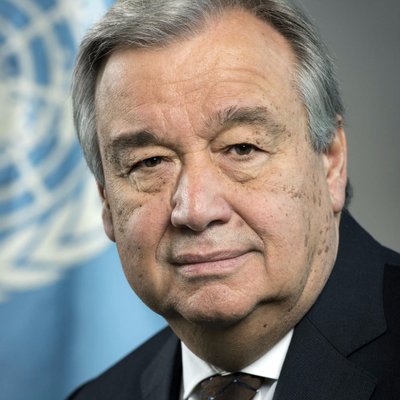
As a former parliamentarian, I know the critical role parliamentarians play in making institutions more inclusive, government more accountable & rebuilding trust on which our societies depend.
Amid global challenges, I call on all parliamentarians to take a stand & make good governance a source of confidence & opportunity for all.
Dr Cora M Stack PhD retweeted

In all my years engaging with whistleblowers in Ireland, I am not aware of a single whistleblower who would say that they were properly protected and looked after under their organisation’s Protected Disclosures Policy.
Policies may look impressive on paper, but the real test is what happens to the person after they speak up.
Too often, whistleblowers describe isolation, retaliation, damage to their careers, lengthy processes and having to fight simply to have their concerns independently examined.
Ireland does not just need Protected Disclosures Policies. It needs evidence that those policies actually protect the people who use them.
Dr Cora M Stack PhD retweeted
One of the unacknowledged advantages of this awful era is that it's revealing for all to see the putrid connections between great wealth and great power.
The intentions of the oligarchs are fully exposed and more blatant than ever.
But remember: We outnumber the oligarchs.