

Doet ook maar wat
Joined March 2020
- Tweets30.1K
- Following711
- Followers981
- Likes41.2K






Corine retweeted

Twee werelden, één belastingdiscussie. 🧵
Jan Modaal werkt een heel jaar voor circa €48.000 bruto. Daar houdt hij ongeveer €38.000 netto van over.
Anderen ontvangen jaarlijks €60.000 of meer aan winst uit beleggingen of rente.
Toch zou juist de gewone spaarder de dupe worden?
Corine retweeted

This mini robot has no words, but every one has its own voice.
It’s Microduck (25 cm, $399). It doesn’t talk, it makes sounds, and on first power-up each robot generates its own sound “voice” and keeps it for good. No two are alike. That’s how its developers at Pollen Robotics and Hugging Face describe it.
Its neighbor Reachy Mini (28 cm, from $299), on the other hand, has microphones, a speaker and a demo for talking with a voice AI. There are already more than 200 apps for it from 150+ creators, and many had never worked with robots before: you describe the behavior in plain words, and an AI agent writes, tests and runs the code. The apps include a voice-controlled kitchen helper, an accent-correcting tutor, a chess game that reacts to your moves, and an app that notices the phone in your hand and nudges you back to work.
The team splits them like this: Reachy Mini for interaction, Microduck for action. Microduck’s walk is trained in a simulator where 4,096 virtual copies fall at the same time, and on a single GPU this takes an hour or two.
The developers also have a “very unscientific” finding: Microduck is about ten times more fun in a group. They came up with football for three and races for four, and the four body colors are there so a group looks like different characters.
Reachy Mini is open: you can copy and change its apps, and you can try them in a browser simulator even without the robot.

4,096 copies of this mini robot fall over at the same time so the real one can learn to walk
That’s how Microduck from Pollen Robotics and Hugging Face works. It learns to walk in a simulator where 4,096 virtual twins run in parallel. They all fall until they find a step that keeps balance. On a single GPU this takes about an hour or two, and then the skill is transferred to the real robot.
Size is what makes this kind of training practical. The robot weighs under 800 g and stands 25 cm tall, so a fall on a desk costs nothing and endangers no one. After a fall it stands back up by itself, so nobody has to run over and put it on its feet. For a full-size humanoid, every such attempt is expensive and risky.
The price is $399. For comparison, the full-size Unitree R1 costs $5,900, almost 15 times more.
Inside: 15 motors, a camera, a small lidar, two motion sensors and a battery for roughly an hour. The software stack is open source under the Apache 2.0 license.
The same team’s previous mini robot, Reachy Mini, has sold more than 10,000 units. Now Hugging Face, according to TechCrunch, is aiming at 50,000 Microducks, roughly $20 million in revenue.
Disney has a similar robot, BDX: also small, two-legged and trained in simulation. It isn’t for sale, while Microduck already has a price tag.


Corine retweeted

Ten million people have watched a comedian accidentally destroy the entire TED talk industry.
He filmed the talk once at TEDxNewYork in 2014 and openly admitted he had nothing to say.
Speaking coaches charge $5,000 to teach the exact tricks he used in 6 minutes to say nothing at all.
His name is Will Stephen. He is a comedian from Late Night with Seth Meyers who was invited to give a real TED talk and used it to prove the format is a costume anyone can wear.
Every TED speaker opens with a question, tells a personal story, cites a scientist, and shows a chart. Stephen did all four in six minutes with zero content.
His entire formula fits on a napkin.
Gesture with both hands. Ask the audience a question anyone can answer. Tell a mildly embarrassing story so they say aww. Point to a stranger on a slide and call them important. Flash a chart of random numbers. Wear glasses with no lenses. The audience will think you are brilliant.
That last trick alone has probably cost the public speaking coaching industry a hundred million dollars in sessions clients should have skipped.
"If you watched me on YouTube with the sound off, you would think I was a genius."
That is Will Stephen on the TED stage, three minutes into the talk he was paid to give. He wasn't lying.
Executives pay $15,000 for a keynote coach and still open with a joke the room never laughs at. Founders rehearse their pitch for weeks and still sound like Stephen at minute four, saying "wagga wah, gabba gabba" with authority.
The talk is free on YouTube. The method is written across every TED speaker's playbook for ten years.
Stephen still writes for Seth Meyers. Almost none of the ten million viewers have stopped nodding at empty slides since.
The formula is free. The willingness to actually say something before your next keynote, pitch, or townhall is the entire edge.


Corine retweeted

This is f*cking insane. Demis Hassabis spent 16 years building DeepMind and won a Nobel Prize
Last week, he packed what he knows about the next 5 years into one free 1-hour talk
He explains who survives what's coming and who doesn't
Chatbots → Agents → Workflows → Automated Departments → One-Person Companies
One person who really understands AI will outperform an entire startup team
People pay $15K for bootcamps that teach less than this
You probably don't have 1 hour right now
Don't let this disappear from your feed
Bookmark it and watch it tonight
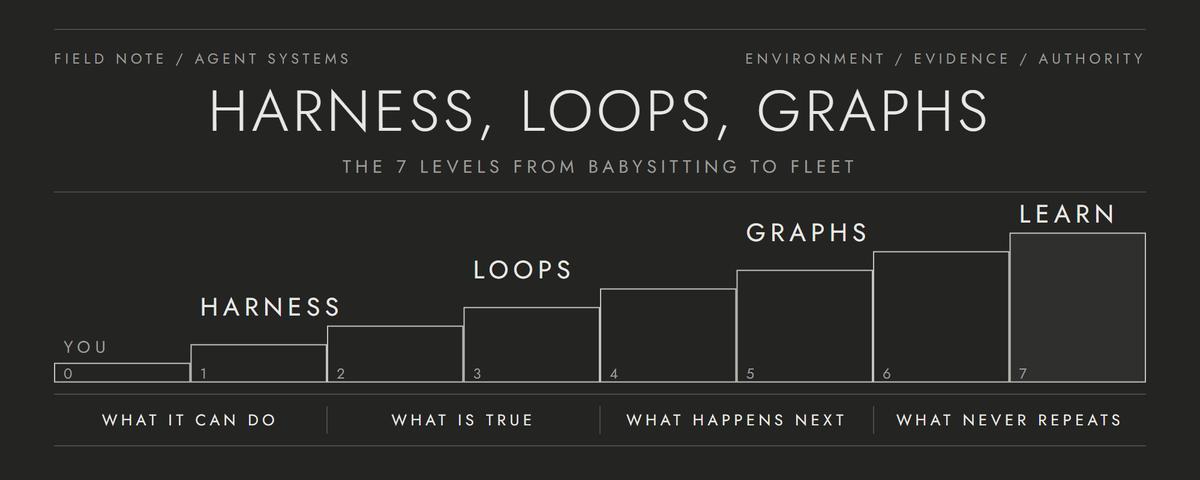
Then read how to build agents that actually finish the job in the harness engineering guide below ↓



Corine retweeted

Sorry for the wait, the episode is here!
Live action with real robots instead of animation (episode 4): "Anger"
Enjoy!
As always, the software of Microduck and Reachy Mini is open source:
github.com/pollen-robotics/m…
github.com/pollen-robotics/r…