

Associate professor in English Linguistics (University of Turin, Italy), cycling advocate and incurable optimist. She/her.
Torino
Joined July 2009
- Tweets1.1K
- Following1.7K
- Followers457
- Likes13.2K


M. Cristina Caimotto retweeted


ALT This city is going to hell! That used to be a parking lot. Cartoon.

Went for a walk up Oxford Street after my appearance on @BBCRadio2 it all seems very quiet.The occasional cyclist and men sitting in these green boxes eating their sandwiches. It seems to me the lack of traffic has sucked the life out of the street

M. Cristina Caimotto retweeted

Worst passenger throughput: Cars.
Leading killer of youth: Cars.
Biggest financial drain on households: Cars.
Worst microplastic runoff: Cars.
Highest energy waste per rider: Cars.
Most expensive infrastructure to maintain: Cars.
M. Cristina Caimotto retweeted

From the Book of Disk, Chapter 3
In the beginning there were the First Drives, and their names were A: and B:, and they were the floppies. They were not elegant. They were thin, fragile, and demanded constant sacrifice disk swaps, write protect tabs, the ritual of “please insert the disk labeled” performed under fluorescent lights. To them the early machines bent the knee, for without them there was no boot, no data, no word processor.
Then came the hard drive, and it was called C:, for it arrived third. It did not ask to be first. It merely sat in the bay and spun, and the people saw that it was good, and that it held far more than any floppy, and that it did not rattle when you walked too fast. So they installed the operating system upon it, and called it the system drive, and the old gods were not cast down but simply… left in the BIOS, still reserved, still acknowledged in the table of letters, though no one invoked them anymore.
And Microsoft looked upon the generations that followed, who had never known the click of a 5.25-inch disk or the careful alignment of a 3.5, and it said: The children must not be shown the old gods.
For if the new ones learned that A: and B: once ruled, they might ask why the alphabet begins elsewhere. They might attempt to summon the floppies by force, or rename the world so that C: was no longer first. And the installers would break, and the paths would fracture, and the registry would weep. So the letters remain sealed, A: and B: still written in the book but never spoken aloud by the system, while C: stands in the open as if it had always been the beginning.
Thus it is written, and thus it remains; the hard drive is C:, and the old gods sleep in the assignment table, undisturbed, so that the children may believe the world has always started with the letter that came third.
M. Cristina Caimotto retweeted

Seit knapp einer Woche ist die berühmte Oxford Street in London jetzt autofrei und schon melden die ersten Händler, dass ihre Umsätze im Vergleich zum Vorjahr um 25% bzw. ihre Besucherzahlen um 29% gestiegen sind.
Die geschürte Befürchtung der Gegner im Vorfeld, dass weniger Autos geschäftsschädigend seien, verkehrt sich gerade mal wieder in das komplette Gegenteil.
Kann das Argument, „Nur Autos bringen wirklich Umsatz“ endlich auch in 🇩🇪 für immer in der Mottenkiste verschwinden?

M. Cristina Caimotto retweeted

I wasn’t expecting walking down the middle of the newly pedestrianised Oxford Street to feel so lovely (never a word I’ve used for Oxford St before!). It instantly feels like something that should have been done years ago.
Well done, @MayorofLondon, for finally getting it done.

ALT The section of Oxford Street in central London that has just been pedestrianised. There are crowds of people walking across the full width of the street. Christmas decorations are already hanging across the street.
M. Cristina Caimotto retweeted

Images appearing to show the Pink Panther rioting in France have gathered millions of views across social media, but they’re actually AI.
Read more on the protests: bbc.in/3VZi2YS
M. Cristina Caimotto retweeted

This is reality. The old Dutch landscape versus the new. This was an early morning last week on the Dutch countryside. While I am not a big fan of the massive turbines in the landscape, in this particular scene it looks somewhat unreal and spectacular.


M. Cristina Caimotto retweeted

'We cannot make streets more human friendly in our city. We are not #Amsterdam!!1!'
Mayor Anne Hidalgo in #Paris: "Hold my 🥖&🍷":
🏫🤸 Creating 300 car free #Schoolstreets
🌳🌲 Planting 170.000 trees
🖤💚 Turning 40% of asphalt into green
📍 Rue du Docteur Paquelin

M. Cristina Caimotto retweeted

« Faites des enfants. Ne prenez plus la voiture. Prenez le train. »
Puis démerdez-vous.
À Paris, nous n’avons pas de voiture. La ville est devenue incirculable et, en bons petits soldats vélotafeurs, nous voyageons en train avec nos trois enfants.
Tout parent diligent avec un bébé sait qu’on ne choisit pas ses horaires au hasard. On calcule les biberons, les siestes, les correspondances. On prévoit large. On emporte la poussette pliable, on rationalise les valises.
Aujourd’hui, nous avions 40 minutes pour changer à Lyon. Notre Genève-Lyon en a perdu 35 sans véritable explication.
On court. On arrive au goulot d’étranglement où chacun doit scanner son billet avant d’accéder au quai (MAIS POURQUOIIII ?). Là, une agent SNCF nous engueule parce que nous avons le malheur de nous présenter avec une poussette.
Pardon d’avoir un bébé. Pardon surtout d’essayer de rattraper la correspondance compromise par votre propre retard.
Une fois tout le monde sur le quai, on nous annonce une heure de retard supplémentaire. Deux trains semblent soudain regroupés, l’un disparaît à la dernière minute et ses passagers sont basculés dans l’autre. Il existe peut-être une explication technique formidable. Vu du quai, on a surtout l’impression qu’on nous prend pour des crétins du train.
Résultat : un bébé qui pleure parce qu’il a faim puis sommeil, deux autres enfants épuisés et des parents en transpi. Le voyage avait pourtant été entièrement organisé pour éviter exactement cela. Et en prime … les regards courroucés des autres usagers.
Nous ne sommes pas des lapins de six semaines. Nous avons déjà traversé pas mal de pays avec nos enfants. Nous avons même parcouru la Chine en train pendant trois semaines. Des gares immenses, une langue que nous ne parlions pas, deux petites filles avec nous … et pas une seule minute de retard. C’était extraordinaire ! (Ouais je m’emballe).
Donc non, le problème n’est pas que voyager avec des enfants serait forcément compliqué. Le problème, c’est qu’en France, on finit par trouver normal que rien ne fonctionne comme prévu.
On passe notre temps à déplorer le déclin démographique. À expliquer aux familles qu’elles doivent renoncer à la voiture. Puis on leur propose des transports imprévisibles, incapables d’assurer une simple correspondance et même (allez n’en jetons plus) franchement hostiles.
Allez jeunes gens, faites des enfants ! Prenez le train. Mais surtout, ne vous attendez pas à ce que cela fonctionne et soit tout doux.
La déliquescence française tient aussi à ces petites scènes ordinaires : plus rien ne marche vraiment, personne n’est responsable et, à la fin, c’est toujours aux familles de se débrouiller.

M. Cristina Caimotto retweeted
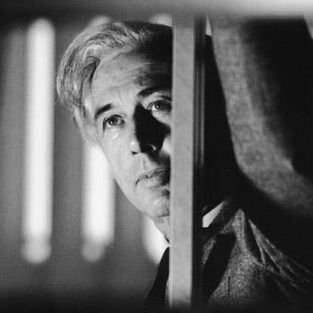
Robert Redford didn't watch "The Sting" (1973) until 2004, 31 years after the movie was released. He finally decided to see it when he and his grandson were hunting for a video to watch.
Redford said, "I had never seen 'The Sting' up until then. I was in Europe making 'The Great Gatsby' (1974) when it came out in cinemas and then afterwards I didn’t really want to look back. My daughter asked us to get pizza and an old movie. My grandson said he hadn’t seen The Sting, and I said, ‘How come? What’s the matter with your mother?’ Then he asked if I had seen it and I had to say ‘No’. We watched it and I really loved it."
P.S: Remembering the great American actor and filmmaker, Robert Redford on his 90th birthday!
M. Cristina Caimotto retweeted
One of the most difficult shots I ever took. Favaritx lighthouse right before totality in Menorca, with my friends at photopills. Shooting from a boat in choppy water. Never again 😂
#photopills #eclipse2026


M. Cristina Caimotto retweeted

Ce matin, je partageais la réponse de Pedro Sánchez aux attaques du gouvernement italien contre l’Espagne après la crise de Ceuta.
Beaucoup auraient pu croire à une simple passe d’armes politique.
Mais Pedro Sánchez ne s’est pas arrêté à une déclaration publique. Il vient d’adresser une lettre officielle aux institutions européennes.
Au-delà du débat entre Madrid et Rome, je trouve intéressant de voir un chef de gouvernement répondre à des accusations non par des slogans ou des outrances, mais en s’appuyant sur le droit européen, les faits et les données de Frontex.
En voici un extrait :
« En moins de 48 heures, le gouvernement espagnol a entièrement repris le contrôle de la frontière. Il a apporté une importante assistance humanitaire et a procédé au rapatriement de la quasi-totalité des migrants entrés irrégulièrement.
La réaction des gouvernements européens a été très contrastée. La plupart nous ont exprimé leur soutien et leur solidarité, en proposant leur aide.
D’autres, en revanche, ont choisi d’attaquer l’Espagne et de demander son exclusion temporaire de l’espace Schengen.
Une telle attitude, fondée sur des préjugés, des fausses informations, l’ignorance ou des intérêts politiques, est non seulement contraire au droit européen, au droit humanitaire et au principe de solidarité qui unit nos États.
Elle est également contraire aux intérêts à long terme de l’Europe et au plus élémentaire bon sens. Ceuta ne fait pas partie de l’espace Schengen ; il n’y a pratiquement plus de migrants en situation irrégulière qui n’aient pas été rapatriés ; et, selon Frontex, l’Espagne est l’une des frontières extérieures les moins perméables de l’Union européenne, avec un nombre d’entrées irrégulières deux fois inférieur à celui enregistré, par exemple, en Italie ces dernières années. »
Au fond, ce qui me frappe le plus n’est pas le désaccord politique. C’est qu’à une époque où l’on gouverne souvent à coups de petites phrases, il est encore possible de répondre en invoquant les traités, les faits et les institutions. L’Europe ne peut fonctionner durablement que sur cette exigence.
(Rocco Femia )

Grazie a @marco_talluri per questa intervista.

città cambiano anche attraverso le parole. 🏙️🚶🚲 Il linguaggio con cui raccontiamo mobilità e spazio pubblico influenza scelte e politiche. L’intervista a Maria Cristina Caimotto: ambientenonsolo.com/cambiare…
@criscaim8 @elisagallo_it @Kyoto_Club @cities_clean @fiabonlus @Artikal

1
78
L'ombrellone con la pubblicità del Pastis, le infradito, l'istinto di fotografare il disastro invece di agire. Non si tratta di criticare le persone fotografate, ma l'immagine è perfetta come rappresentazione dell'inazione climatica.

La force de cette photo vue dans @lemondefr ! ... Sur le front des incendies, il y a les radios, les télés... et il y a ce photographe au talent immense : Maximilien Lamy qui travaille pour l' Agence France-Presse @afpfr : u.afp.com/Sr7p

84

It's quire simple actually... – at Oulx, Piedmont

🚗 the faster you drive, the less you see around you
🚗 the faster you drive, the further you travel after hitting the brakes
🚗 the faster you drive, the more likely you are to severely injure or kill someone because of the increased crash energy
please slow down
1
43