

International law, the (space) commons, and how they're made | PhD @NCLLawSchool | 🇺🇸🇳🇱🏳️🌈 | 🔊: krɪs van aɪk | he/him Mostly active elsewhere now.
- Tweets11.5K
- Following3K
- Followers3.1K
- Likes32.1K

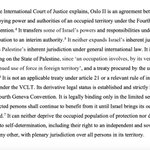




ALT The exclusive making of space law Cris van Eijk Newcastle Law School Abstract: The commons are defined by non-excludability – the idea that none can exclude another from access or use. Likewise, space lawyers portray their discipline’s origin story as uniquely egalitarian and inclusive, in part because of how it was made. The 1963 Principles Declaration and 1967 Outer Space Treaty were drafted by a committee of 28 states that decided by consensus – the first permanent UN body to do so. They worked in the midst of significant colonial and Cold War tensions to form a body of law which implicated the interests of every state. This article argues that the lawmaking which made space ‘common’ was made possible by excluding the Third World. It uses historical sources from 18 archives to shed new light on the process of making space law from 1957 to 1967... These factors had broad impacts on the drafting committee’s membership, attendance, decision-making procedure, and final products..."


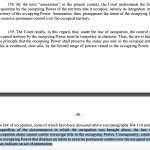
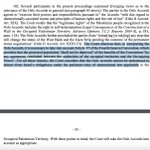
ALT Excerpt from ICJ Advisory Opinion of 19 July 2024: "93. Based on the information before it, the Court considers that Israel remained capable of exercising, and continued to exercise, certain key elements of authority over the Gaza Strip, including control of the land, sea and air borders, restrictions on movement of people and goods, collection of import and export taxes, and military control over the buffer zone, despite the withdrawal of its military presence in 2005. This is even more so since 7 October 2023. 94. In light of the above, the Court is of the view that Israel's withdrawal from the Gaza Strip has not entirely released it of its obligations under the law of occupation. Israel's obligations have remained commensurate with the degree of its effective control over the Gaza Strip."


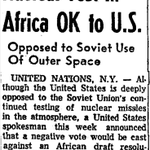
ALT Screenshot of the above, full story: Nuclear Tests in Africa Okay to U.S.; Opposed to Soviet Use of Outer Space Although the United States is deeply opposed to the Soviet Union's continued testing of nuclear missiles in the atmosphere, a United States spokesman this week announced that a negative vote would be cast against an African draft resolution calling upon members of the United Nations to refrain from any of nuclear tests in Africa. Arthur H. Dean, member ot the U.S. delegation to the United Nations, announced to the Assembly's Political Committee Friday that U.S. would also vote against another provision of the draft resolution calling upon members "to refrain from using the territory, territorial waters or air space of Africa in testing, storing or transporting weapons in Africa." Co-sponsors of the proposal are the Republic of the Congo, Ethiopia, Guinea, Mail, Morocco, Nigeria, Sierra Leone, Somalia, the Sudan, Togo, Tunisia and the United Arab Republic.


ALT Screenshot of a tweet by Jacob Rees-Mogg, captioned 'Donald Trump's victory is a crushing defeat for the global elite and should be celebrated."


ALT Screenshot of 23-year-old Guardian article titled 'CIA knew about Waldheim's Nazi past': https://www.theguardian.com/world/2001/may/02/worlddispatch.kateconnolly