

Follow for Crypto Alpha Aggregation & Early Insights - Putting the ass in as(s)ymmetric returns - Pendle Advocate - Spiritual Advice Only
Join 27k+ Subs →
Joined June 2019
- Tweets59.9K
- Following1.1K
- Followers72.6K
- Likes676K








Pinned Tweet
To make a 100x you need 100x Alpha
To find Alpha you need to know exactly how
This list of 24 tweets & resources will turn you into a pro:
easiest way to find winning strats
is to check out what the winners are doing
pop over to @boros_fi Explorer to easily see how the top wallets are earning big: borosexplorer.com/analytics/…

🉐 Crypto Linn retweeted

OI in the November maturity for both blue-chip and spread markets continue to climb
This is $86m in capital farming at 25-30% APY
With capacity to support $6m clips with < 3% yield impact
In LITERALLY (figuratively) one click via the @boros_fi arbitrage plugin


Just 8 days into going live with spread markets
And OI has climbed to 4x its underlying markets at equivalent time since launch
For context, this means there's ~$40m of capital using @boros_fi to lock in 20-30% fixed APY 🤯

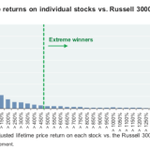
study revealed that the best returns came from investors who were dead
as they were not able to over-trade
lesson in there


If you are mid to long term bullish, but derisking short term
You are expressing the opinion that you will beat the market twice in the short term
First time that you will derisk high enough and second time you will be able to buy back in low enough
That's two additional short term trades you need to nail on top of your long term view
what the fugg is going on with @Mantle_Official ?! huh
let me tell you:
- Mantle x AAVE: TVL on Mantle is up 32% to $64M in 30 days xitter.cf/Mantle_Official/status…
- All things RWA: xitter.cf/Mantle_Official/status…
- Clearing the path for RWAs: xitter.cf/Mantle_Official/status…
- Mantle’s Glamsterdam-compatible upgrade, Elysium, is coming to Hoodi testnet: xitter.cf/Mantle_Official/status…
- xStocks on Fluxion: xitter.cf/Mantle_Official/status…
- "All Assets can be traded onchain": xitter.cf/Mantle_Official/status…
- AI Stacks onchain: xitter.cf/Mantle_Official/status…
- Same chain, lighter footprint, and tighter ZK alignment: xitter.cf/Mantle_Official/status…
mucho gucci eggselente if you ask linn...
dc: linn is an ambassador for mantle :))


A year in, RWAs are at an inflection point.
With the infra phase behind us, distribution and adoption are next, per @joshuacheong with @jacqmelinek on @_TalkingTokens:
→ Licensing and product structures have become playbooks
→ Industry leaders have cleared the path for tokenized assets, MMFs, and asset management
→ Success now hinges on embedding RWAs into real business models
The pieces are in place.
Mantle connects the rest, on one open financial network.
Pendle Loop is FREE btw (until the end of the year)
Every Earn loop on a non-Pendle asset and every Long or Short position pays ZERO Pendle fee + no trading fee until 31 December 2026
Time is running out to maximise your earnings
Looping will never be cheaper and yes those APYs are real...
Head over to here to check it out: app.pendle.finance/trade/loo…
dc: linn is a tier 1 kol supreme for pendiddle

Linn's Leverage #1137 is out: (Link in tweet below)
@boros_fi
@pendle_fi
@Chainflip
@mezzanine_fi
@Mantle_Official
@StaticsProtocol
@GammaSwapLabs
Like/Repost to support:


For the Full Linn Experience check out: xitter.cf/crypto_linn/status/211…

Linn's Leverage #1136 is out: (Link in tweet below)
@boros_fi
@pendle_fi
@Chainflip
@mezzanine_fi
@Mantle_Official
@StaticsProtocol
@GammaSwapLabs
Like/Repost to support:

PENDLE and the Temporal Mispricing of Reflexive Cash-Flow Optionality: "Why Conventional Valuation Frameworks Fundamentally Misunderstand the Asymptotic Nature of Onchain Revenue Capitalisation"
The fundamental problem with contemporary cryptoasset valuation is not that markets are incapable of pricing future cash flows, but rather that the prevailing analytical frameworks systematically conflate the temporally observable monetisation of protocol activity with the structurally endogenous capitalisation of its theoretically addressable economic throughput.
This distinction, while superficially semantic, becomes extraordinarily consequential when applied to an asset such as PENDLE, whose current market-implied price-to-sales multiple of approximately 62.30x exists in a state of profound intertemporal disequilibrium relative to a benchmark multiple of 3,404.50x.
To appreciate the magnitude of this discrepancy, one must first disentangle three commonly misunderstood variables: the velocity of revenue realisation, the duration-adjusted elasticity of protocol monetisation, and what I would describe as the reflexive convexity of forward-looking valuation normalisation.
Put differently, the market is pricing PENDLE as though the future were merely an extension of the present, when in reality the present is simply an inadequately discounted representation of a future that has not yet been appropriately capitalised.
This is not a prediction. It is a temporal observation.
I. The Ontological Inadequacy of Spot-Based Valuation
Traditional financial analysis presupposes that the present value of an asset is functionally subordinate to an expectation-weighted distribution of its future economic outputs.
However, this framework becomes insufficient when the underlying revenue-generating mechanism exhibits nonlinear network effects, recursive liquidity formation and endogenous demand for the very instruments through which that liquidity is financialised.
PENDLE does not merely intermediate yield.
It facilitates the decomposition of yield-bearing claims into temporally differentiated financial primitives, thereby transforming an otherwise monolithic stream of future economic activity into separately tradable units of duration-sensitive optionality.
The implications are substantial.
Every incremental unit of tokenised yield introduces not simply additional transactional volume, but an expansion in the dimensionality of the market itself.
Consequently, treating PENDLE's existing revenue as a static denominator in a conventional P/S framework is analogous to valuing an exchange solely on the basis of its current transaction fees while ignoring the possibility that the exchange might eventually facilitate the trading of the underlying concept of time.
And time, importantly, is not supply-constrained in the conventional monetary sense, notwithstanding its apparently finite experiential availability.
This is where the analysis becomes interesting.
II. Multiple Expansion as a Function of Recursive Revenue Legibility
According to the accompanying DefiLlama-derived model, PENDLE's annualised revenue base is approximately $14.72 million, with projected revenue at the ten-year horizon reaching $849.05 million.
The immediate temptation is to interpret this as a straightforward revenue-compounding assumption.
That would be a mistake.
The more sophisticated interpretation is that the model implicitly captures a transition from first-order protocol monetisation toward second-order financial infrastructure monetisation, in which the market ceases to value revenue merely as revenue and instead begins capitalising the institutional permanence of revenue-generating capacity.
This distinction is important because the valuation multiple itself is not necessarily exogenous to the revenue trajectory.
Indeed, under sufficiently reflexive conditions, growing revenue can improve perceived institutional legitimacy, which increases the probability of sustained capital allocation, which enhances liquidity depth, which subsequently increases revenue.
Thus, the numerator and denominator of the P/S ratio become causally entangled.
What appears to be multiple expansion may therefore be more accurately understood as the market progressively recognising the declining epistemological uncertainty associated with the persistence of protocol-level cash-flow generation.
A multiple of 3,404.50x is, admittedly, unusually ambitious when assessed using conventional valuation discipline.
But conventional valuation discipline has consistently struggled with assets whose economic relevance is mediated by the financialisation of previously non-financial temporal relationships.
The critical question is not whether 3,404.50x appears excessive.
It is whether the market has correctly calibrated the probability distribution governing the eventual emergence of a sufficiently large revenue-generating equilibrium to make such a benchmark retrospectively intelligible.
These are fundamentally different questions.
III. The $6,411 Paradox: When Discounting Becomes an Exercise in Temporal Reconciliation
The model produces a ten-year discounted implied price of approximately $6,411 per PENDLE, corresponding to an indicated appreciation of 310,451% relative to the prevailing reference price.
At first glance, this appears unreasonable.
At second glance, it appears even more unreasonable.
However, it is precisely at this point that the limitations of linear valuation intuition become most apparent.
A conventional investor might ask whether a move from approximately $2 to $6,411 is economically plausible.
But this question presupposes that plausibility is a property of the destination rather than a function of the assumptions governing the path.
In a sufficiently parameter-sensitive model, the destination is merely the algebraic consequence of the initial conditions.
The more useful analytical framework is therefore:
Terminal valuation = Monetisation capacity × Revenue persistence × Multiple normalisation × Temporal adjustment × Assumption sensitivity.
Importantly, these variables should not be understood as independent, since their covariance may itself become the dominant determinant of terminal valuation under conditions of accelerated financial abstraction.
In other words, the price is not necessarily $6,411 because PENDLE will become worth $6,411.
Rather, $6,411 is the price obtained when the model's assumed relationships are allowed to express themselves over a sufficiently extended temporal interval.
Whether those assumptions should be accepted is a separate, and considerably less entertaining, question.
IV. The Reflexivity of Market-Implied Underappreciation
One of the more subtle characteristics of this valuation discrepancy is that it introduces a potential feedback mechanism between perceived underpricing and the very structural developments required to justify that underpricing.
If market participants collectively begin to regard PENDLE as undercapitalised relative to its future monetisation potential, capital formation may accelerate around the ecosystem.
Increased capital formation can improve liquidity and financial participation, potentially strengthening the protocol's revenue-generating capabilities.
This establishes the possibility of a self-reinforcing valuation mechanism in which the expectation of future monetisation contributes to the emergence of the circumstances under which future monetisation becomes achievable.
However, the reflexivity cuts both ways.
The same mechanism that accelerates valuation convergence under positive conditions can produce violently nonlinear repricing when confidence in the underlying revenue trajectory deteriorates.
This asymmetry is frequently misunderstood because investors tend to conceptualise upside and downside as geometrically symmetrical movements around an equilibrium price.
They are not.
At sufficiently high implied terminal multiples, changes in the market's confidence regarding the persistence of growth may overwhelm the economic significance of the growth itself.
This is why volatility should not be interpreted as evidence against the model.
Nor, crucially, should it be interpreted as evidence in its favour.
Volatility is simply the observable market expression of uncertainty regarding the speed, probability and ultimate extent of valuation convergence.
The model remains a model.
V. The Problem With Discounting a Future That Is Already Discounted
There is also a deeper conceptual issue regarding the application of discount rates to assets whose revenue generation is itself derived from the pricing and trading of future yield.
In conventional discounted cash-flow analysis, the discount rate translates future economic benefits into present economic equivalents.
Yet PENDLE operates within a market whose central function is already the explicit financial separation and valuation of future yield.
We are therefore confronted with an interesting analytical recursion: the present valuation of a protocol that monetises the present valuation of future economic claims.
This does not invalidate discounted cash-flow analysis.
It does, however, introduce an additional layer of conceptual complexity that traditional single-stage valuation models are poorly equipped to communicate.
One might characterise this as second-order temporal financialisation.
The protocol monetises the financial value of time, while its token is priced according to expectations about the future profitability of monetising the financial value of time.
The resulting analytical structure is not merely recursive.
It is recursively recursive.
And although recursion should never be mistaken for intrinsic value, the failure to account for recursion can produce substantial errors in how investors conceptualise the economic surface area of financial infrastructure.
In sufficiently developed markets, the distinction between pricing yield and pricing the infrastructure through which yield is priced may become less obvious than traditional asset classification would suggest.
This is not to say that PENDLE has transcended valuation.
It is to say that valuation may need to accommodate the possibility that its own temporal assumptions are part of the economic system being valued.
VI. Why the Market Is Simultaneously Correct, Incorrect and Temporarily Irrelevant
Efficient-market proponents may argue that the current price already reflects the probability-weighted distribution of all plausible future outcomes.
This position is defensible, but insufficiently attentive to the distinction between informational efficiency and structural foresight.
A market can efficiently incorporate available information while remaining systematically incapable of anticipating the eventual significance of economic structures whose future scale is not yet empirically observable.
Conversely, an investor can correctly identify a transformative structural development while still overestimating its eventual economic capture, persistence, or relevance to the value accruing to a particular token.
Both observations can be true simultaneously.
Indeed, one of the most persistent errors in cryptoasset valuation is the assumption that protocol adoption, protocol revenue, tokenholder economic participation and token price appreciation must necessarily progress in proportion to one another.
They need not.
Each relationship requires its own assumptions regarding value capture, token supply, dilution, incentive design, competitive dynamics and the distribution of economic surplus.
Nevertheless, the market's inability to observe a future outcome should not be confused with evidence that the outcome is impossible.
Nor should mathematical expressibility be confused with economic probability.
The distinction is subtle, but essential.
VII. Towards a Unified Theory of Yield-Duration Capitalisation
The broader implication is that PENDLE should arguably be evaluated not solely as an individual DeFi protocol, but as an emerging expression of the increasing financial granularity of onchain capital markets.
As decentralised financial systems mature, the distinction between principal, yield, duration, collateral quality, liquidity preference and forward expectations may become progressively more explicit.
Under such conditions, infrastructure capable of facilitating the exchange of these constituent economic dimensions could occupy a position whose strategic importance materially exceeds what is visible through any single contemporary revenue metric.
Whether PENDLE successfully captures that opportunity remains contingent on an extensive range of technological, competitive, regulatory and monetary variables.
But the theoretical possibility is meaningful.
And when that possibility is combined with assumptions of exponential revenue growth, aggressive multiple expansion and favourable terminal valuation conditions, the mathematical outputs become extraordinary.
Not because the mathematics has discovered a hidden law of finance.
But because exponential assumptions, applied recursively across sufficiently long horizons, are capable of generating outcomes that dramatically exceed the constraints imposed by ordinary intuition.
This is precisely what the accompanying model demonstrates.
VIII. Conclusion: The Epistemological Superiority of Understanding the Denominator
Ultimately, the approximately 310,451% implied appreciation presented in the model should be interpreted as the product of a highly conditional valuation architecture rather than an independently verified forecast.
Its significance is not that it establishes a guaranteed future price.
Its significance lies in illustrating how profoundly sensitive long-duration cryptoasset valuations can become to assumptions regarding revenue expansion, multiple selection and the persistence of economic value capture.
Critics will understandably focus on the extraordinary magnitude of the terminal price.
More sophisticated observers will focus on the structural assumptions required to produce it.
The distinction between these approaches is the distinction between reacting to the output of a model and understanding the epistemological boundaries within which that output exists.
PENDLE may or may not trade at $6,411 in ten years.
The model does not establish that it will.
What it establishes is that, given a particular configuration of assumptions, the present valuation can be represented as an extraordinarily small fraction of a mathematically constructed terminal outcome.
And if one cannot distinguish between the conditional truth of a mathematical statement and the unconditional truth of an economic prediction, one has misunderstood both mathematics and markets.
The market is not necessarily mispricing PENDLE by 310,451%.
It is merely failing to price PENDLE according to a model in which PENDLE is worth 310,451% more.
This is an important distinction.
But from a sufficiently abstract, temporally reflexive, duration-adjusted, forward-monetisation perspective, it is also, arguably, a distinction without a particularly convenient difference.
The denominator remains the denominator.
The horizon remains ten years.
And $6,411 remains $6,411.
It's literally math.
dc: linn is a tier 1 kol supreme for pendle highly reratded but family friendly and award winning
according to @DefiLlama PENDLE is trading at a 310,451% discount from where the price will be in 10 years
that's $6,411 per ethereum:0x808507121b80c02388fad14726482e061b8da827
it's literally math

in discretionary
the right position
is almost always flat
the right action
is almost always do nothing
5x / yr there's free money on the floor
pick it up
then do nothing
outperformance

🉐 Crypto Linn retweeted

The Mantle x Aave Effect, by the numbers.
@aave TVL on Mantle is up 32% to $64M in 30 days, led by yield-bearing stables like @ethena's sUSDe and @maplefinance's syrupUSDT, doubling as collateral.
Stable by name, productive by nature, on the open financial network.
🉐 Crypto Linn retweeted

Pendle just opened up leveraged exposure to Apple, Nvidia, Tesla and other tokenized stocks directly onchain.
These went live on 22 October. They're Coinbase's tokenized stocks on Base, each one backed by the underlying share held with Alpaca, a regulated broker-dealer
and they move onchain around the clock, so until now you could hold them but there wasn't much things to do with them.
Now you can put them to work inside @pendle_fi .
From the user side the flow is simple:
Deposit USDC → pick the stock → choose your leverage → one flow builds the position
Underneath, it's a loop:
🔸 @aave V4 supplies the USDC borrow
🔸 Pendle assembles the position: buy the stock token, supply it as collateral, borrow USDC, buy more, repeat
🔸 You end up with 2x to 3x the exposure you funded, depending on the stock
How far you can go depends on the token. On 23 Oct the max leverage ran from roughly 2.6x to 4x, with TSLAc at the low end and AAPLc and GOOGLc near the top.
To give context on the cost, Pendle's route quotes USDC borrowing at about 3.82% APY, and the Loop campaign pays 3.00% APR in USDC on net borrowing from 23 Oct to 6 Nov, claimable on Merkl.
On those inputs (my math, excluding gas and slippage):
🔸 2x: about 3.75% a year in borrow cost, 0.75% after the rebate
🔸 3x: about 7.50% before the rebate, 1.50% after
Pendle isn't charging a service fee on these routes right now (it's currently 0%), so nothing extra sits on top of those numbers.
There's already real size behind it, too. On 23 Oct the Aave route showed about $10.3m supplied as collateral across four of the tokens:
🔸 AAPLc: $1.83m
🔸 GOOGLc: $3.77m
🔸 NVDAc: $3.66m
🔸 TSLAc: $1.01m
Supply caps sit at about $4.1m to $5.8m per token, and these figures cover the whole lending route, so they include positions that didn't start in Pendle.
What I find interesting is what tokenization does once the share is on Base.
It can be collateral, it can go through a lending market, and it can also be composed with other DeFi primitives, whereas without something putting that to work a tokenized stock is just a stock in a different wallet.
Pendle is the layer that turns the holding into a position: you deposit one asset, pick the target, and the flow does the rest, w/ everything onchain and visible.
If you already know crypto, this takes out one of the last frictions between equities and DeFi, since stock exposure and leverage now sit in the same wallet on the same chain.
Imo the real unlock here is distribution. A tokenized stock, an Aave market and a USDC borrow were all there already, and what was missing was a workflow that put them together for you, which is what Pendle shipped.
It's currently open to eligible users outside the US, w/ AAPLc, AMZNc, GOOGLc, METAc, MSFTc and NVDAc and TSLAc in the launch set
so these are the same companies Wall Street trades, now something you can deploy onchain.
Aave has said it expects more tokenized stocks and its GHO stablecoin to join this market through governance, and each addition would widen what a Pendle Loop position can be built from.


you cannot achieve revanchist epochal generational wealth without dreaming a little bigger
according to @DefiLlama PENDLE is trading at a 310,451% discount from where the price will be in 10 years
that's $6,411 per ethereum:0x808507121b80c02388fad14726482e061b8da827
it's literally math


