


LiDing retweeted

I built a 74 KB bare-metal hypervisor that puts a 2B LLM BELOW Linux in Ring -1, catches a fatal Kernel panic mid-crash, patches the broken machine code live in RAM, and keeps Linux running without a reboot.
Left window is standard Linux dying instantly from a Ring 0 NULL-pointer write (*(u32 *)0 = 0xDEADBEEF). Right window runs the exact same crash command under my custom Type-1 AMD SVM hypervisor (x86-64 NASM assembly + zero-libc C, 0 host OS).
Instead of crashing, Ring -1 freezes Linux before it can panic, runs a GRPO-trained MiniCPM5-2B (Q4_K_M) across 24 AVX2 cores in 11.1 seconds, overwrites those 11 faulting bytes in guest .text physical RAM with 11x NOP (0x90) via NPT, and calls `VMRUN`.
Linux prints SURVIVED NULL-DEREF! and uptime never resets.
We used a tiny /proc/surgeon_crash test module to trigger clean Ring 0 crashes side by side. On 122 unseen fault scenarios (including unsafe spinlock crashes it must refuse to patch), this GRPO checkpoint hits 97.54% pass@1 with 0 dangerous patches (vs 16.39% on base).
Full NASM + C source code (75,424 bytes binary) is live in my llm.asm repo (MIT, link below).

I deleted Linux completely, baked Qwen3-0.6B into a 24 KB pure x86-64 assembly OS, and it runs up to 54% faster than native Linux llama.cpp.
The entire Multiboot OS binary (asm-llm-os.elf) is 24,252 bytes, written from scratch without Linux, Windows, C, Rust, or libc. It boots in 74 to 94 ms straight into 64-bit Long Mode, wakes every CPU core over APIC, maps the 614 MiB Q8_0 weights directly from physical RAM, and drops you into a live multi-turn KV-cache chat over VGA, PS/2 keyboard, and serial.
I ran head-to-head CPU benchmarks against llama.cpp (Q8_0, -ngl 0) on the same AMD EPYC 7642:
- 1 thread hits 23.67 tok/s vs 16.63 (+42%)
- 4 threads hit 78.89 tok/s vs 51.08 (+54%)
- 8 threads hit 118.08 tok/s vs 80.79 (+46%)
- 16 threads hit 134.94 tok/s vs 103.03 (+31%, 136.6 peak)
On a diskless 0 GB Proxmox VM (2014 12-core Intel Xeon E5-2670 v3, 2 GiB RAM), it boots straight to the prompt in under 5 seconds (95 ms kernel boot) and runs live out of RAM at 78 tok/s decode and up to 111.5 tok/s prefill, with a hybrid BIOS+UEFI ISO builder included too. Output stays bit-exact across thread counts and matches all 64 greedy tokens against PyTorch FP32 (0.99965 cosine).
The 14.7 KB Linux ELF build (FAST_Q8=1 INT8xINT8 AVX2+F16C) also beats llama.cpp by 18% to 36% from 1 to 40 threads, and booting bare metal with 2 MiB huge pages squeezes out another 10% on top.
Repo, ISO builder, and Proxmox setup guide are in the reply below.
LiDing retweeted

My app CutAi is currently at $556,462 MMR and made over a mil in the first 2 months of being launched, with only 10-12k paying users.
Most people think that to be a consumer app, you need to market at a cheap, impulse-buy price.
After doing marketing/UGC for the past 3 years, I've found that it does not matter. If you solve a problem for someone, they will pay whatever. I used to sell saunas on TikTok that were $3000 and yes less people bought but I made more.
We market at $19/month, $49/month and $89/month.
$49 is by far the most popular.
If you push a shit product and try to only go for distribution/speed to market, then yes, you'll have to market at a cheaper price.
But if you focus on making the best app ever and genuinely provide value, you can charge whatever you want.
Don't be afraid to price yourself at a premium if it's what you believe you are.


LiDing retweeted

Foreign visitors constantly commenting on this sort of thing (there was a similar account by a Frenchman amazed that a duke was happy to be on a cricket team captained by one of his gardeners) is one of my reasons why the eighteenth c. is my favourite period of English history.

In 1760s England it was all too easy to mistake a duke for a farmer.
Fun story from a Swedish visitor in 1760 at the Newmarket races:
Having gone with the crowd to see the winning horse belonging to the Duke of Devonshire, “a man dressed in blue, with a tufty yellow wig on his head, stood particularly in my way. He had the look of a good honest farm steward. I took him by the arm and said that he ought to let other people get at the horse, since he had looked at it long enough. He at once made room and talked with me about the horse.
We went out together, when the whole crowd greeted him and said: ‘I wish you joy Milord Duke.’ It was the Duke of Devonshire ...
Dukes, marquises, earls, lords, knights, esquires, farm stewards and farmers are here so alike both in clothes and behaviour that no one can tell them apart who does not know them beforehand.”
LiDing retweeted

Some of you thought that Inkling 2 Small was too big at 594B parameters. We heard you: Inkling 2 Mini is a looped transformer with just 26B parameters, small enough to run on your laptop, powerful enough for agentic work with a score of 20.1 on AA Index.
thinkingmachines.ai/news/ink…

LiDing retweeted

“The British gov. gave my family a home in a wealthy neighbourhood when I applied for refugee status. Years later, they offered to sell it to us, but we couldn’t afford it. We got a mortgage and bought it for £230,000. After renovations, it’s now worth £2 million.”
— Dele Momodu
LiDing retweeted

a few years ago i read this article about women's frontier diaries and i still think about it all the time
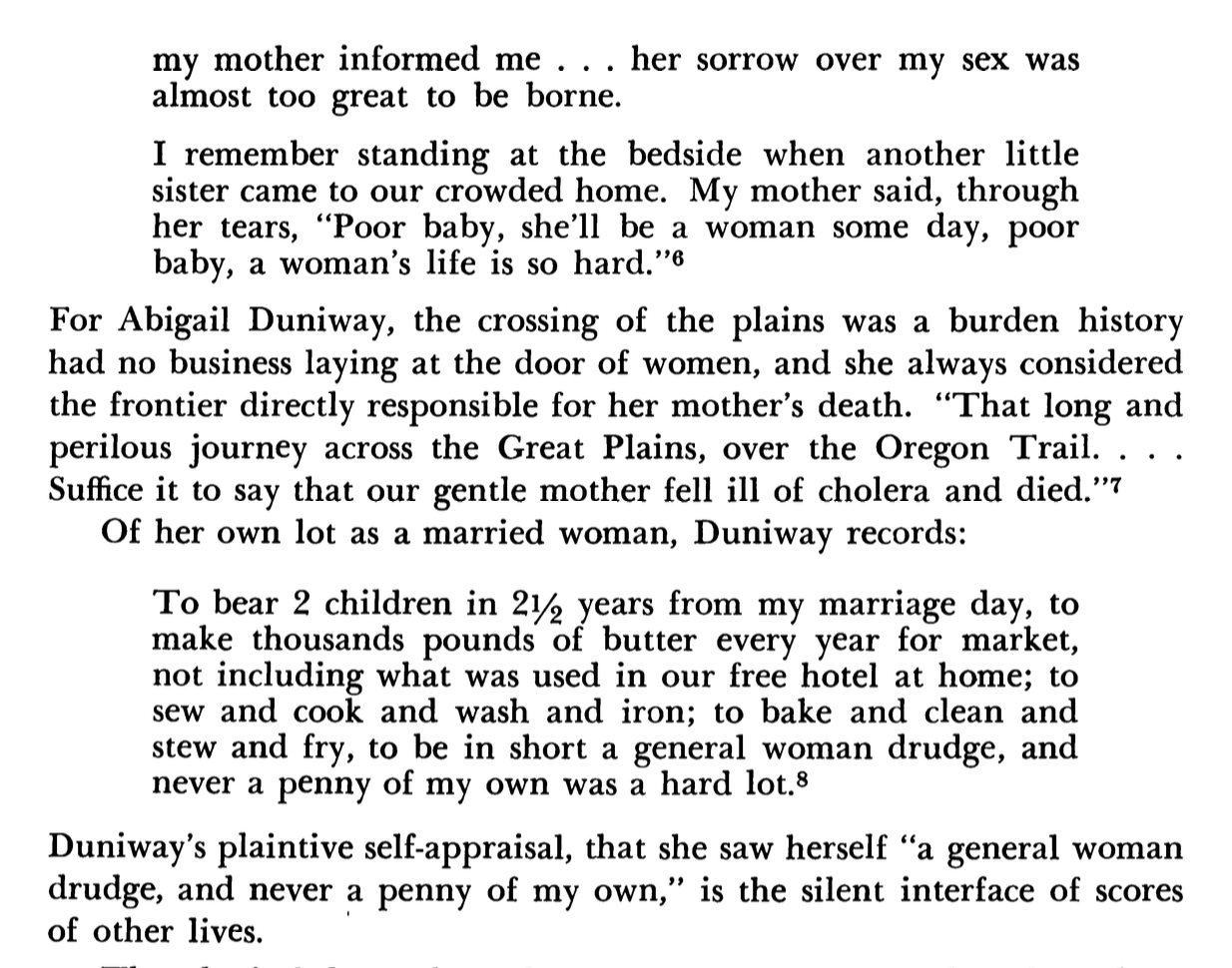


I have taken a special interest in reading first hand accounts from the women who went West with their husbands in the 1800s. I cannot get over how many times the young men just… died, and the women are the ones who actually made it through, some with half a dozen children or more and claimed the land and built homes in the New Land. Doing it right after giving birth. Right after burying someone. Strapping dying children to mules with blankets. With no shoes in November, walking on frozen ground. It reads like they were delirious with super-human determination to save their kids.
LiDing retweeted

Most people are not special, rational, or particularly good. They're tribal primates running social scripts, ranking status, and defending comforting lies over evidence. Intelligence, drive, and outcomes are heavily genetic. Equality of result is a fantasy. The average person will never produce anything of lasting value, and the world is carried by a thin minority they resent.
LiDing retweeted

What a disaster atlasum.net/blog/cve-2026-98…


LiDing retweeted

I’ve alway’s thought it’s a shame that WebAssembly has the word “web” in it. Gives it a connotation that it’s “only for browsers” or something.
Meanwhile, NASA’s over here with a flight-compliant derivative (SpaceWASM) intended for spacecraft!
The intent is writing mission software to a standardized bytecode, where the end platform / ISA is otherwise arbitrary. In other words, run the same mission package on ARM, Rad-hard PowerPC, RISC-V, whatever.
Thus, after-flight you could (safely) upload new payloads with “approved” APIs.
Weird to think about, but just like buggy WASM code shouldn’t crash your browser…the same logic applies to not crashing your critical flight hardware.


LiDing retweeted

My product Wells Intelligence is four months old.
It started as a viral map of Texas RRC data I posted last fall. Enough oil & gas people reached out about it that I decided to build a real product.
I would never have attempted this two years ago - I don't have an engineering team or VC funding. Agentic AI has empowered me to take this on - helping with everything from engineering tasks to figuring out Stripe.
That said, AI can't do the hardest parts. I've spent hours on the phone with customers learning what they want from the product. I've had to figure out strategies for pricing, marketing, and churn prevention.
But it's been a lot of fun taking on challenges like this that I wouldn't have considered before.
Four months in, Wells Intelligence pays for itself and then some. And I have some awesome new features rolling out that I'll be posting about soon.
Give Wells Intelligence a try: wells.clearforkintelligence.…
LiDing retweeted

simu - "telephone" in Swahili, from Persian sīm ("wire, cord")
sími - "telephone" in Icelandic, from Old Norse síma ("string, cord")
LiDing retweeted

Breaking News: For the first time, researchers have created a cell with most of the hallmarks of life. nyti.ms/3SD2U1K


LiDing retweeted

you should consider creating a newsletter in a niche where the avg reader has a high net worth and actively spends money on that niche. like golf, sailing, skiing, tennis, fishing, aviation, watches, wine, fine dining, exotic cars, luxury travel, interior design...


