

PhD candidate studying the role of somatic mutations in human aging with Vijg & Sidoli Labs @EinsteinMed
Bronx, NY
Joined June 2018
- Tweets2.8K
- Following994
- Followers529
- Likes4.8K



Ronnie Cutler retweeted

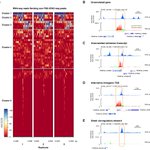
1/4 One DNA sequence, many chromatin states.
Excited to share SMFNet, a diffusion model predicting single-molecule chromatin accessibility. Explainer video below!
With co-first author Till (his thread: bsky.app/profile/tschwammle.…), Yuliya, Roze, @anshulkundaje & Arnaud Krebs.
Ronnie Cutler retweeted

Thrilled to share new work from our experimental biology lab at @AnthropicAI. Led by world-class biochemist Januka Athukoralage, we built a rapid method for the isolation and structural characterization of vaults. It turns out these massive structures are not just found in eukaryotic cells, but also in prokaryotes and even phages. We solve the structure of one of these phage vaults, and then demonstrate we can engineer additional repeats into the wall to make it bigger.
One thing I can't get over about these vaults. They seem to be widespread across life - we assembled them from 8 different bacteria and bacteriophages. But they are just so massive - bigger than ribosomes, AAV, and even some phage capsids. Why devote so much energy to making these huge complexes? They have to be doing something useful - I hope that's the question that gets answered next.
Amazing collaboration with @PeterHYoon, @amirshanehsaz, @eric_kabrams, and @mgdurrant! Grateful to our team for making Claude an amazing labmate and to Anthropic for supporting this type of work on fundamental biology.
Natural mysteries abound - let's get to solving them!
Links here:
Blog: anthropic.com/research/inves…
Technical report: www-cdn.anthropic.com/76e55f…

Ronnie Cutler retweeted

Biology advances in leaps, and the leaps follow measurement. Sequencing DNA gave us genomes and transcriptomes.
The next leap will come from embracing the molecules and processes animating life.
1/
blog.slavovlab.net/2026/10/3…

Ronnie Cutler retweeted

Chaperone-mediated autophagy curbs senescence
nature.com/articles/s43587-0…

Ronnie Cutler retweeted

Excited to see the results of this huge effort out. Congrats to Sharif and the Gladyshev lab - there’s so much in one paper. Young ovaries make babies in old mice. Old ovaries make babies in young mice. Young ovaries also shift the age of brain, liver and uterus in old mice. And the age of the ovaries is shaped by the body they’ve been placed in. Overall great stuff.
biorxiv.org/content/10.64898…
Thread below

Ronnie Cutler retweeted

Our paper is out in @NatureAging. We looked for factors that make old cells' gene expression young without erasing their identity. SRSF1 came out as a promising rejuvenation target that reduced aging hallmarks in human cells and extended median lifespan of aged mice by 14%.
1/4

ALT Watercolor-style graphic of two overlapping cells split by a curved diagonal. On the left, a muted gray cell with a dark nucleus and faint white circuit traces. On the right, the same form in luminous blue, its circuitry lit up. Short dashes standing for RNA transcripts scatter loosely in gray on the left and fan outward in blue and pale green arcs on the right. Art by Helen H. Wang.
Ronnie Cutler retweeted

Very good news for the future of longevity trials!
HHS has announced the SURPASS program to develop new methods to make clinical trials faster, less expensive, and less burdensome to patients.
Researchers could make better decisions as evidence accumulates and test new treatments without rebuilding the infrastructure for each study.
For longevity, more efficient trials could expand the range of treatments we can afford to test. Promising biology can only become medicine if we can study it in people. When trials are too costly or difficult to run, treatments can be ruled out before we learn whether they work.
SURPASS could give more longevity medicines that chance:
hhs.gov/press-room/hhs-arpa-…

Ronnie Cutler retweeted

We are all mosaics with our cells accumulating somatic mutations as we age. Now that is getting fully comprehensively quantified @CellCellPress
cell.com/cell/fulltext/S0092…

Ronnie Cutler retweeted

Our Nature Medicine paper is out: menopause isn't a slow slope. Across 300M+ lab tests from 1M+ women, many body systems jump at the final menstrual period. Men show no such jump. 1/4
nature.com/articles/s41591-0…

Ronnie Cutler retweeted

Thrilled to share that our work reconstructing a cell fate map of the mouse embryo is out now in @CellCellPress! doi.org/10.1016/j.cell.2026.…
Ronnie Cutler retweeted

Incredibly, incredibly excited to introduce SpliceAI2, the next generation of splicing prediction! 🧬🚀🧵
Ronnie Cutler retweeted

Out now in @CellCellPress: ✨SPARCS✨, a
platform for discovering the genes behind complex cellular phenotypes.
SPARCS combines Al-powered image analysis with automated laser microdissection to precisely isolate cells from large mutant libraries.
Paper and highlights👇(1/9)
Ronnie Cutler retweeted

Just a few quick things.
1. Nice rigorous study of the importance of being careful with performance metrics and taking into account data issues.
2. This should be done BEFOFE one fits big models & make lots of big claims. Nevertheless better late than never. 2/

The "Single-cell foundation models don't work for perturbation prediction" narrative was a measurement problem.
Our new paper is out in @NatureBiotech : "Deep Learning Perturbation Models Can Outperform Baselines on Calibrated Metrics"
Last year, several papers concluded that deep learning perturbation models couldn't beat simple baselines, a finding that cast doubt on the entire Virtual Cell direction.
We asked a different question: can the metrics used in those comparisons reliably tell a good prediction from a bad one?
Often, they can't.
Common metrics like MSE and control-referenced Pearson Δ frequently rank uninformative baselines above positive controls. With calibrated alternatives (eg, WMSE, weighted R²Δ, NIR), deep learning models do outperform mean, control, and linear baselines.
The data matters too. Norman19 is approximately 96% additive, and models see less than 1% of possible gene combinations during training. The ceiling for beating an additive baseline is nearly zero, and the training signal for non-additive interactions is almost absent. Some dataset rankings aren't model rankings, but just noise!
To address this, we developed the Dynamic Range Fraction (DRF): a measure of metric calibration. Before trusting a model ranking, verify that your benchmark can detect a useful prediction at all.
The models aren't shiny toys. The field just needed better rulers.
Paper: nature.com/articles/s41587-0…
Code: github.com/shiftbioscience/P…
Huge congratulations to the first authors @Henrymiller2012 and Gabriel Mejia, and the team of Shift Bio!


Ronnie Cutler retweeted
Written in development and lost in ageing: the grammar of cellular identity
nature.com/articles/s41586-0…

Ronnie Cutler retweeted

Interpreting human genetic variation at atomic resolution
nature.com/articles/s41588-0…

Ronnie Cutler retweeted
Protein interactions reveal the hidden wiring of the genome
nature.com/articles/s41588-0…

Ronnie Cutler retweeted

Cell–cell interactions are key to all biological processes, but there hasn't been a good way to perform inter-cellular screens for genetic regulators of these interactions in vivo.
We developed match-seq (multiplexed associative tagging of cell interaction histories) - using engineered virus-like particles to transfer barcoded mRNAs from 'sender' to neighboring 'receiver' cells, so you can reconstruct cellular interactions with sequencing alone, no imaging required.
We coupled match-seq with CRISPR + scRNA-seq in cancer, revealing cancer-immune interaction neighborhoods at scale, and new cancer genes that can be targeted for tumor rejection via immune cell interactions.
Led by the brilliant @peterdu_ with Bassik lab!
biorxiv.org/content/10.64898…


Ronnie Cutler retweeted

Beautiful paper on how to tease apart cis vs. trans contributions to differences in gene expression. Work of Ingileif Hallgrímsdóttir and Maria Carilli just out in Genetics academic.oup.com/genetics/ad…
1/🧵

Ronnie Cutler retweeted
cGAS-deficient mice display premature aging associated with derepression of LINE1 elements and inflammation
nature.com/articles/s43587-0…

Ronnie Cutler retweeted

Inspired by Gibson cloning, we describe prime assembly, now published, for in cellulo targeted integration of gene-sized DNA fragments using prime editing. nature.com/articles/s41586-0…
