

My greatest revelation has been learning that objects are innocent.
Joined February 2010
- Tweets2.2K
- Following861
- Followers170
- Likes5.8K





Often, when I think of my dad, as I did today, I find myself thinking of this song and others from Lata Mangeshkar’s album Shradhanjali. He used to play these songs during our long drives in Mumbai and Indore
And surprisingly, it was during those drives that I also discovered how every city has its own distinct smell and personality, almost a feminine or masculine side to it.
Mumbai, to me, has always felt like an old lady, nurturing, warm and positive.
youtu.be/D3wCddFF-7o?si=r6-C…

59
fruit ripens by waiting.
grief unfolds by waiting.
certain questions become clearer only when they are left alone.
2
86
I was pleasantly surprised to notice how the installations at #bangalore #Terminal2 #kempegowdaairport echo the sculptural language of Ruth Asawa (1926–2013), the Japanese American artist whose work transformed the possibilities of sculpture.
Known for her intricate looped-wire forms, Asawa drew inspiration, in part, from traditional basket-weaving techniques she encountered in Mexico. She created delicate, almost organic structures that explore transparency, light, shadow and the relationship between form and emptiness. Her sculptures seem to occupy space while simultaneously allowing it to breathe.
Looking at these suspended forms, I was thinking of her extraordinary ability to find beauty in repetition, simplicity and everyday materials...
A lovely artistic association to stumble upon in an airport.


Words can give us access to thoughts, memories, fears, dreams, and experiences that may otherwise remain invisible.
2
43
A chair, a cup, a window, a room..these things endure longer than moments do. They become containers of time.
1
47
Under The Same Sky
When does documenting suffering become exploiting suffering?
Photography has always occupied an uncomfortable space between witnessing and exploiting.
think of photographs taken during wars, famines, natural disasters and humanitarian crises. Some of the most consequential photographs in history have emerged from human suffering.
We cannot say that photographers should stop documenting misery because the subjects are vulnerable. In fact, refusing to document such realities can make suffering invisible.
But there is a distinction between:
-Photographing someone to make their circumstances visible.
-Photographing someone’s vulnerability to create an aesthetically compelling image.
-Turning that image into a commercially or professionally rewarding asset without considering what happens to the people in it.
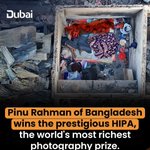
The photographer Pinu Rahman receives $200,000 for his image “Under The Same Sky”
most troubling aspect of this particular photograph is the question of consent and dignity.
-Did the family know they were being photographed?
-Did they consent to their image being submitted to an international competition?
The photograph derives much of its power from the family’s loss.
But should we then discourage photographers from documenting poverty?
What would have made this situation ethically stronger?
We admire the photograph and congratulate the photographer. Meanwhile, the people in the photograph return to the same circumstances. Is this photographer’s fault ?
However on the other hand,
If a photographer makes money from an image of someone who is not suffering, is that exploitation any less significant?
Is every photograph a transaction ?
Are we celebrating the photographer's ability to see something beautiful in another human being, while overlooking that the human being himself or herself has no ownership over the value that their presence has created?
It is a conversation about the ethics of looking, representation and the economics of art.

1
90
I am practising slowing down with my 8-year-old. We put the clock away and let our work decide when it is time to stop.
By doing so, I want him to work mindfully, without rushing towards a definite ending, without any fear or anxiety about how the outcome might be evaluated. The intention is to forget about time altogether. We often paint or draw, ask each other questions, read, or build different things using basic 3D Jenga blocks.
During one of our drawing sessions, he said he wanted to darken the lines once he was sure he had drawn them correctly.
I asked him, “You are drawing from your mind, without any reference in front of you. How exactly do you know when to stop, or how to turn the lines in a particular direction?”
He said, “I stop when it matches my mind and when it feels right. My lines tell me how long they want to be stretched, or whether they don’t want to move at all.”
perhaps this is what happens when we stop measuring time, the hours don’t necessarily become longer..we simply begin to notice how much life fits inside them.
#art #life #time #winter


2
5
110


Had this banger of a conversation with my 11-year-old today.
I was telling her how, when I was her age, neither I nor my parents were particularly aware of nutrition and health, and that’s why I am more careful about what she consumes.
She paused and asked, “Am I the correction of your mistakes?”
I was stunned. And honestly, to some extent, she is right. But the question left me thinking about my parenting approach.
Later, we were discussing her habit of procrastination. I pointed out that she rarely procrastinates the things she genuinely loves doing, even if it means working out or practising gymnastics at 10 pm.
She thought about it and said, “Maybe I procrastinate life so that I can live longer.”
She almost suggests that postponing life might somehow extend it.
What fascinates me is that both statements have a quality of abstract thinking… she is interpreting human behaviour through ideas.

2
78
Junta, if you’re in Bangalore tonight, you wouldn’t want to miss this event at 8 pm at Cohoots.
My friend Jonathan will be performing with his brothers in their band, Steel Falcon, which won an award at the Hornbill Festival.
#music #bangalore #event


3
124
"Human" was announced as Cambridge Dictionary's word of the year for 2026 on Tuesday. In the age of artificial intelligence, the low-tech word stands out.
Editors of the dictionary aim to capture the zeitgeist with their decision, examining online searches and looking at "collocation," which refers to instances in which one word is paired with another. Terms like "human governance," "human offered,"
"human written" and "human need" were coming up often, Jessica Rundell, the dictionary's commissioning editor, said.
People might have made those searches wondering whether their jobs would exist in a few months. Or maybe in the middle of sleepless nights, haunted by warnings from the creators of A.l.
“Maybe language is the best resistance we have; maybe if we say' human' often enough the bots will not own us,”
the New York Times reporter Ginia Bellefante writes.

WHAT KEEPS A KITE IN THE AIR?
THE WIND.
THEN WHAT IS THE STRING DOING?
HOLDING IT DOWN.
CUT THE STRING.
DOES IT FLY INTO THE STARS?
NO... IT CRASHES.
WHY? IT'S COMPLETELY FREE NOW.
BECAUSE WITHOUT TENSION, THE WIND JUST KNOCKS IT DOWN.
SO THE THING PULLING IT DOWN IS THE ONLY REASON IT RISES?
TELL ME... WHAT DUTY FEELS LIKE IT'S HOLDING YOU BACK RIGHT NOW?
EVERYTHING I'M
FORCED TO CARRY.
AND YOU THOUGHT FREEDOM MEANT
DROPPING ALL OF IT.
WOULD’T THAT MAKE ME FLY ?
YOU DON’T NEED LESS RESISTANCE TO RISE.
YOU NEED THE STRING THAT TURNS THE STORM INTO LIFT.
Via #instagram #victorianpoetry
2
120