







Pinned Tweet
Could AI leapfrog the web?
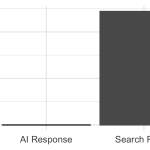
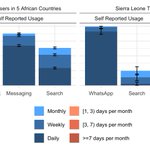
Only 37% of sub-Saharan Africans use the internet. Cost is the #1 constraint. In a study with 469 teachers in Sierra Leone, we find AI works better than the web--and is 87% cheaper.
(more)

Daniel Björkegren retweeted

1/ Modern AI systems are built on human expertise which is accumulated by paying humans. We measure this market: in a new note with @zoebcullen and @andrewjkoh we track ~213,000 expert hires and ~$540m in estimated compensation at posted rates on one leading platform.
iemlab.org/projects/human-wo…

Daniel Björkegren retweeted

AI is already being used by teachers, students, and entrepreneurs in low-income countries. How much could it change their economies, and who will benefit?
For Episode 6 of The Interlude Show, I spoke with Daniel Björkegren (@danbjork ), a development economist and professor at Columbia studying how AI is being used in low-income countries and what it will take for its benefits to reach the people who need them most.
We explore why teachers in Sierra Leone use AI on WhatsApp, how bandwidth costs affect access to information, local languages and model usefulness, and whether AI could open a different path for economic development. We also discuss measuring AI's economic impact and what robotics could mean for low-income economies.
Enjoy!
Chapters:
00:00 - AI beyond traditional knowledge work
01:00 - Introducing Daniel Björkegren
02:15 - How AI is being used in low-income countries
03:38 - Teachers, WhatsApp, and the cost of information
10:14 - Local languages and model usefulness
17:09 - AI, services, and economic development
20:57 - Measuring AI's economic impact
27:05 - Should AI be a public utility?
33:01 - Robotics and low-income economies
37:58 - What experiments can and cannot tell us
44:05 - What bond markets might tell us about AI
47:44 - Who benefits
Daniel Björkegren retweeted

I'm hiring 2-3 Associate Program Officers or Research Fellows for my team at Coefficient Giving.
The job involves grant-making and research on AI x global health and development. We're aiming to spend ~$100M in the next year, on questions ranging from how LMICs can grow if AI eats the export-services path, to whether AI-read TB X-rays work in clinics without a radiologist.
Apply here by Oct 4 if it sounds interesting: jobs.ashbyhq.com/coefficient…
Very much agree--we need to triangulate between different kinds of evidence, quickly. I wrote about this challenge in Nature last year--though I'd give real time signals more emphasis now: rdcu.be/eUPN2

A few (personal) thoughts on reading empirical AI papers on the economy.
Economists have gotten used to reading papers with super clean identification, arguing about the validity of an instrument, making sure parallel trend assumptions are satisfied. This is what gets you into a top journal, and it is *very* important research (no question here). But it also takes years and sometimes decades to get these types of papers right---people often don't find a good instrument to answer a specific causal question decades after the natural experiment. We will eventually have this type of research for AI as well, and it is absolutely necessary.
But right we also need signals *right now*, even if they are noisier than what we are used to. We need papers where we can trust that researchers did their best methodologically, while at the same time acknowledging that the space is moving way too fast to wait for perfect identification. This will allow us to accumulate enough signals, coming at the same question using different angles, for example, to say "yes, X is likely happening in the economy".
The AI exposure and early career hiring papers are a good example of this. There is no silver bullet paper with super clean identification. But at this point we have several independent teams reaching the same general conclusion, enough where we can say "there seems to be a slow down in AI-exposed, early career hiring."
Daniel Björkegren retweeted

Lovely paper in AER from @danbjork & friends. ML models train to predict (y,x). But economists from Lucas to mechanism design know people make "fake their type". They derive a more-robust-to-manipulation training, then apply it cell-based credit in Kenya. It works quite well! 1/2

We're hiring an assistant professor in AI/data science and public policy at Columbia University!
For best results apply by Sept 30
apply.interfolio.com/190715
How should we rethink our institutions for machine intelligence? Excited for this publication!

Powerful AI will change our institutions. Yet most of our attention is on aligning or regulating AI, while treating our institutions as fixed.
Introducing Pax Machina: a new publication about the institutions we need for powerful AI.
It is edited by @MaxKronerDale, @sebkrier, @NoemiDreksler, @LiamPatell, @chelcott9, @synchroaphasia, @ryan_t_lowe, @edelwax, and @klingefjord.
The editorial board consists of Peter Railton, @sethlazar, @saffronhuang, @AmmannNora, @xuanalogue, @IasonGabriel, @hamandcheese, and @deanwball.
Our goal is to seed rigorous debate about what a world of humans and powerful AI could and should look like.
We will publish proposals for new institutions, counterproposals, well-justified design principles, and analyses that change how a class of institutions should be designed.

Daniel Björkegren retweeted

Today, we published the research agenda for our $200M Economic Futures Research Fund.
We plan to fund large-scale pilots & RCTs to help society navigate the transition to powerful AI, whatever the future might hold. anthropic.com/news/economic-…

Exciting work automating verification of policy evaluations

Project APE update! 🚨
"Verifying the Verifiers: Towards Autonomous Policy Evaluation", new paper with @OlafWillner
Reminder: Project APE is an experiment in building a system that learns how to do policy evaluation autonomously. The potential upside is that we could then scale up our understanding of what policies to, cheaply and reliably in many countries.
Premise for this paper: With *generation* of plausible-looking research becoming cheap, *verification* is a key bottleneck.
But can we automate verification, cheaply and reliably?
We need to verify the verifiers, somehow.
A thread on what we did so far... 👇

This looks like a great fellowship

Announcing a 3 wk AGI Governance Fellowship at @JHUBloombergCtr School of Government and Policy.
Join me, @ghadfield, @nickacaputo and guests for an intensive schedule of deep dives into AI governance at the frontier, covering topics such as societal resilience, AGI and democracy, and the new institutions that governing in/with AGI will demand; we will range from foundational philosophical questions to the tip of the legislative spear.
The arrival of AGI would be challenging enough if our ~250yo institutions were in full health. That they aren’t both increases the scale of the challenge, and creates a unique opportunity to imagine the institutions that will carry us through the next 1/4 millennium.
We are looking for ~20 fellows, aiming to attract and shape the people who will start to build those institutions: future leaders in AGI governance. We expect you to come from many different backgrounds, so hope this call will be shared far and wide. Details, eligibility, and how to apply here: sogp.jh.edu/agi-governance-f…
Governing the AI transition is going to be a central focus of our new school, and we have many more initiatives coming. And we will be hiring in many different kinds of role, from tenured and tenure track faculty to research scientists to ops and comms and students and beyond.
Important grants for the global implications of transformative AI

AI has huge implications for global health and economic wellbeing.
So we @coeff_giving are putting out a $10-30M RFP to fund work that helps us prepare for and respond to the potential impacts of AI on economies, health systems, scientific research, and more. 🧵
Daniel Björkegren retweeted

We're launching the OpenAI Economic Research Exchange: a new program for external researchers conducting independent research on the economic impacts of AI.
We are looking for rigorous empirical projects on questions that matter for workers, firms, institutions, and the broader economy.
openai.com/index/economic-re…

In my class on AI institutions, the first assignment was to fight over what the assignments should be. That resulted in chaos--which was the lesson.
AI will disrupt many parts of society. My class asks: what do we build next? 🧵 danbjork.substack.com/p/the-…

I did make all my students build demos—and they were great. I was impressed by how even nontechnical students made use of AI tools to build creative projects. The accompanying blog post shares a few!
We were also grateful for a guest visit from @sebkrier
Ultimately, our future won’t be figured out only in AI labs. It will require tinkerers, entrepreneurs, and policymakers who can see a bit ahead. We need the next generation to think deeply about how to make the future good. danbjork.substack.com/p/the-…

Daniel Björkegren retweeted

Excellent essay from @danbjork on the implications of AI for low and middle income countries—a critical topic that deserves way more attention.
dan.bjorkegren.com/blog/2026…

Will advanced AI allow lower income countries to leapfrog human knowledge work—or leave them behind? New essay here dan.bjorkegren.com/blog/2026…

AI labs are releasing great data on how AI is affecting the jobs of knowledge workers. But we have almost no data on how it's reaching the world's poorest.
New post: statistics the labs could release next week, and what we'd learn. (1/2)

We can learn whether AI is reaching low-income people based on users' devices (cheaper phones), languages (minority), and location (remote). They are likely to be using AI in creative ways not currently captured.
Post here:
dan.bjorkegren.com/blog/2026…
