

Building general agents for the physical world. Prev @GoogleDeepMind @UCBerkeley @UofT
SF
Joined August 2013
- Tweets2.7K
- Following1.3K
- Followers34.8K
- Likes11.3K


Danijar Hafner retweeted

Over the past week, I’ve been overwhelmed by the love and support of friends, industry colleagues, and people I've never met. Thank you to everyone who has shown kindness to my family and me. It means the world to me.
I came to the United States 53 years ago, and becoming an American citizen is one of the greatest gifts and proudest moments of my life. NVIDIA has been my life’s work. Building it into the company it is today alongside my colleagues has been a privilege and an honor. Nowhere but in America could a company like NVIDIA be possible. I love our country, and I love NVIDIA.
I did not live up to the standards expected of everyone at NVIDIA, and I have made serious mistakes in my personal life. I created problems for the Board that I deeply regret. I own my mistakes completely, and I am committed to cooperating with the Board’s independent investigation.
Since my departure, I’ve seen an outpouring of calls from NVIDIA’s employees, investors, business partners, and customers for me to return as CEO. Many continue to reach out to me directly as the company navigates complex technology, market, competitive, and geopolitical dynamics. NVIDIA is a once-in-a-generation company. If the Board of Directors decides that my return is in the best interest of our shareholders, our employees, the company, and America, I would be honored to answer these calls and return as CEO.
Thank you again to everyone who has shared their good wishes. I am profoundly humbled by your support. To my family: I love you, and I will spend the rest of my life being worthy of yours.
Jensen
Danijar Hafner retweeted

Releasing the model weights and technical report of Kimi K3.
Kimi K3 is our most capable model: a 2.8T MoE model with native visual understanding and a 1M-token context window.
New model architecture: 2.5x the intelligence per unit of compute, not just more params.
Alongside Kimi K3, we're opening up more of the stack behind it — high-performance attention kernels, MoE communication library, and infrastructure for running agent environments at scale.
Model weights: huggingface.co/moonshotai/Ki…
Tech report: github.com/MoonshotAI/Kimi-K…
Tech blog: kimi.com/blog/kimi-k3

Danijar Hafner retweeted

Introducing OpenDreamer, an open reproduction of Dreamer4.
We supported @FrancescoSacco1, @martidiegom, and @edward_s_hu to build a frontier-level world model, and we've open-sourced everything: the model, the training code, and every hard-won lesson from building it.
Danijar Hafner retweeted

🚀 SANA-Video 2.0 is here!
A full-stack optimized video model designed for efficiency — while still delivering high quality.
We combine a hybrid architecture closely related to the recent Kimi K3 design, adopt Self-Flow from FLUX 3, and further accelerate it with our own Sol-Engine.
Key technical ingredients:
🧠 Hybrid Linear–Softmax Attention
3 gated linear layers + 1 gated-softmax anchor (75% linear / 25% softmax)
🧱 Block Attention Residuals (AttnRes)
Boosts deep-layer effective rank by ~12%
🏗️ Unified 5B & 14B models
Trained from scratch under very limited resources:
• 5B → only 16 nodes of H100
• 14B → 48 nodes of B200
Results 📊
• 84.30 VBench Total
• 3.2× faster DiT forward than matched full-softmax at 720p/60s
• 720p/5s in 13.06s on a single H100 with Sol-Engine
• 120× faster than Wan 2.2-A14B under the same one-H100 setup
SANA-Video 2.0 shows that high-quality 720p video generation can be both efficient and practical on a single GPU.
🎬 Project: nvlabs.github.io/Sana/Video2…
📄 Paper: arxiv.org/abs/2607.21553
💻 Code: github.com/NVlabs/Sana
Proud of the team! 🎉 More details below 🧵
Danijar Hafner retweeted

AMI Labs just raised $1.03B. World Labs raised $1B a few weeks earlier. Both are betting on world models.
But almost nobody means the same thing by that term.
Here are, in my view, five categories of world models.
---
1. Joint Embedding Predictive Architecture (JEPA)
Representatives: AMI Labs (@ylecun), V-JEPA 2
The central bet here is that pixel reconstruction alone is an inefficient objective for learning the abstractions needed for physical understanding. LeCun has been saying this for years — predicting every pixel of the future is intractable in any stochastic environment. JEPA sidesteps this by predicting in a learned latent space instead.
Concretely, JEPA trains an encoder that maps video patches to representations, then a predictor that forecasts masked regions in that representation space — not in pixel space.
This is a crucial design choice.
A generative model that reconstructs pixels is forced to commit to low-level details (exact texture, lighting, leaf position) that are inherently unpredictable. By operating on abstract embeddings, JEPA can capture "the ball will fall off the table" without having to hallucinate every frame of it falling.
V-JEPA 2 is the clearest large-scale proof point so far. It's a 1.2B-parameter model pre-trained on 1M+ hours of video via self-supervised masked prediction — no labels, no text. The second training stage is where it gets interesting: just 62 hours of robot data from the DROID dataset is enough to produce an action-conditioned world model that supports zero-shot planning. The robot generates candidate action sequences, rolls them forward through the world model, and picks the one whose predicted outcome best matches a goal image. This works on objects and environments never seen during training.
The data efficiency is the real technical headline. 62 hours is almost nothing. It suggests that self-supervised pre-training on diverse video can bootstrap enough physical prior knowledge that very little domain-specific data is needed downstream. That's a strong argument for the JEPA design — if your representations are good enough, you don't need to brute-force every task from scratch.
AMI Labs is LeCun's effort to push this beyond research. They're targeting healthcare and robotics first, which makes sense given JEPA's strength in physical reasoning with limited data. But this is a long-horizon bet — their CEO has openly said commercial products could be years away.
---
2. Spatial Intelligence (3D World Models)
Representative: World Labs (@drfeifei)
Where JEPA asks "what will happen next," Fei-Fei Li's approach asks "what does the world look like in 3D, and how can I build it?"
The thesis is that true understanding requires explicit spatial structure — geometry, depth, persistence, and the ability to re-observe a scene from novel viewpoints — not just temporal prediction.
This is a different bet from JEPA: rather than learning abstract dynamics, you learn a structured 3D representation of the environment that you can manipulate directly.
Their product Marble generates persistent 3D environments from images, text, video, or 3D layouts. "Persistent" is the key word — unlike a video generation model that produces a linear sequence of frames, Marble's outputs are actual 3D scenes with spatial coherence. You can orbit the camera, edit objects, export meshes. This puts it closer to a 3D creation tool than to a predictive model, which is deliberate.
For context, this builds on a lineage of neural 3D representation work (NeRFs, 3D Gaussian Splatting) but pushes toward generation rather than reconstruction. Instead of capturing a real scene from multi-view photos, Marble synthesizes plausible new scenes from sparse inputs. The challenge is maintaining physical plausibility — consistent geometry, reasonable lighting, sensible occlusion — across a generated world that never existed.
---
3. Learned Simulation (Generative Video + Latent-Space RL)
Representatives: Google DeepMind (Genie 3, Dreamer V3/V4), Runway GWM-1
This category groups two lineages that are rapidly converging: generative video models that learn to simulate interactive worlds, and RL agents that learn world models to train policies in imagination.
The video generation lineage. DeepMind's Genie 3 is the purest version — text prompt in, navigable environment out, 24 fps at 720p, with consistency for a few minutes. Rather than relying on an explicit hand-built simulator, it learns interactive dynamics from data. The key architectural property is autoregressive generation conditioned on user actions: each frame is generated based on all previous frames plus the current input (move left, look up, etc.). This means the model must maintain an implicit spatial memory — turn away from a tree and turn back, and it needs to still be there. DeepMind reports consistency up to about a minute, which is impressive but still far from what you'd need for sustained agent training.
Runway's GWM-1 takes a similar foundation — autoregressive frame prediction built on Gen-4.5 — but splits into three products: Worlds, Robotics, and Avatars. The split into Worlds / Avatars / Robotics suggests the practical generality problem is still being decomposed by action space and use case.
The RL lineage. The Dreamer series has the longer intellectual history. The core idea is clean: learn a latent dynamics model from observations, then roll out imagined trajectories in latent space and optimize a policy via backpropagation through the model's predictions. The agent never needs to interact with the real environment during policy learning.
Dreamer V3 was the first AI to get diamonds in Minecraft without human data. Dreamer 4 did the same purely offline — no environment interaction at all. Architecturally, Dreamer 4 moves from Dreamer’s earlier recurrent-style lineage to a more scalable transformer-based world-model recipe, and introduced "shortcut forcing" — a training objective that lets the model jump from noisy to clean predictions in just 4 steps instead of the 64 typical in diffusion models. This is what makes real-time inference on a single H100 possible.
These two sub-lineages used to feel distinct: video generation produces visual environments, while RL world models produce trained policies.
But Dreamer 4 blurred the line — humans can now play inside its world model interactively, and Genie 3 is being used to train DeepMind's SIMA agents.
The convergence point is that both need the same thing: a model that can accurately simulate how actions affect environments over extended horizons.
The open question for this whole category is one LeCun keeps raising: does learning to generate pixels that look physically correct actually mean the model understands physics? Or is it pattern-matching appearance? Dreamer 4's ability to get diamonds in Minecraft from pure imagination is a strong empirical counterpoint, but it's also a game with discrete, learnable mechanics — the real world is messier.
---
4. Physical AI Infrastructure (Simulation Platform)
Representative: NVIDIA Cosmos
NVIDIA's play is don't build the world model, build the platform everyone else uses to build theirs.
Cosmos launched at CES January 2025 and covers the full stack — data curation pipeline (process 20M hours of video in 14 days on Blackwell, vs. 3+ years on CPU), a visual tokenizer with 8x better compression than prior SOTA, model training via NeMo, and deployment through NIM microservices.
The pre-trained world foundation models are trained on 9,000 trillion tokens from 20M hours of real-world video spanning driving, industrial, robotics, and human activity data.
They come in two architecture families: diffusion-based (operating on continuous latent tokens) and autoregressive transformer-based (next-token prediction on discretized tokens). Both can be fine-tuned for specific domains.
Three model families sit on top of this.
Predict generates future video states from text, image, or video inputs — essentially video forecasting that can be post-trained for specific robot or driving scenarios.
Transfer handles sim-to-real domain adaptation, which is one of the persistent headaches in physical AI — your model works great in simulation but breaks in the real world due to visual and dynamics gaps.
Reason (added at GTC 2025) brings chain-of-thought reasoning over physical scenes — spatiotemporal awareness, causal understanding of interactions, video Q&A.
---
5. Active Inference
Representative: VERSES AI (Karl Friston)
This is the outlier on the list — not from the deep learning tradition at all, but from computational neuroscience.
Karl Friston's Free Energy Principle says intelligent systems continuously generate predictions about their environment and act to minimize surprise (technically: variational free energy, an upper bound on surprise).
Where standard RL is usually framed around reward maximization, active inference frames behavior as minimizing variational / expected free energy, which blends goal-directed preferences with epistemic value. This leads to natural exploration behavior: the agent is drawn to situations where it's uncertain, because resolving uncertainty reduces free energy.
VERSES built AXIOM (Active eXpanding Inference with Object-centric Models) on this foundation.
The architecture is fundamentally different from neural network world models. Instead of learning a monolithic function approximator, AXIOM maintains a structured generative model where each entity in the environment is a discrete object with typed attributes and relations.
Inference is Bayesian — beliefs are probability distributions that get updated via message passing, not gradient descent. This makes it interpretable (you can inspect what the agent believes about each object), compositional (add a new object type without retraining), and extremely data-efficient.
In their robotics work, they've shown a hierarchical multi-agent setup where each joint of a robot arm is its own active inference agent. The joint-level agents handle local motor control while higher-level agents handle task planning, all coordinating through shared beliefs in a hierarchy. The whole system adapts in real time to unfamiliar environments without retraining — you move the target object and the agent re-plans immediately, because it's doing online inference, not executing a fixed policy.
They shipped a commercial product (Genius) in April 2025, and the AXIOM benchmarks against RL baselines are competitive on standard control tasks while using orders of magnitude less data.
---
imo, these five categories aren't really competing — they're solving different sub-problems.
JEPA compresses physical understanding.
Spatial intelligence reconstructs 3D structure.
Learned simulation trains agents through generated experience.
NVIDIA provides the picks and shovels.
Active inference offers a fundamentally different computational theory of intelligence.
My guess is the lines between them blur fast.
Danijar Hafner retweeted

Proud to share the final project of my PhD, RoboCasa365! There has been so much progress in robot learning in the last couple of years but it’s starting to feel like running large-scale experimentation is increasingly out of reach for independent researchers and there is no consensus yet on benchmarking in the field. During my PhD I wanted to build something that would allow myself and other researchers to study robot learning on large datasets in a meaningful way.
So I dedicated my time to building RoboCasa, a large-scale simulation framework for training and benchmarking generalist robot policies. We released the original framework in 2024 and today we are releasing a major new release, RoboCasa365. Compared to the original release, RoboCasa365 feels a lot more like a “full stack” simulation framework:
- 2500 kitchen scenes
- 365 everyday tasks
- 600+ hours of teleportation data and 1600+ hours of synthetically generated trajectories
- Benchmarking on sota VLA models
By current industry standards, 600 hours of teleportation data is considered modest, but I think this is a good sweet spot of data to study how well robot foundation models can adapt to downstream applications. Right now the benchmark is far from solved. This makes it a useful tested to develop the next algorithms and architectures to push the boundaries on robot learning, be it VLAs, world models, RL algorithms, etc. There is a lot of work left to push generalization, reliability, and throughput for general purpose robots.
I was incredibly lucky to have the support of my adviser @yukez, who gave me all the creative freedom, resources, and time to build RoboCasa. I am also very fortunate to work with two hardworking and passionate students, @abhirammaddukur and my brother @SepNasiriany. We spent countless long nights together on this project and it was really fun working as a lean team. I also want to thank @bgxc and the team at @LightwheelAI for being a major supporting force in sourcing assets and collecting the data that we used in this project. Also thank you to the RPL lab and Nvidia for supporting our work.
You can now check out RoboCasa365 at robocasa.ai!
Danijar Hafner retweeted

SONIC is now open-source!
Generalist whole-body teleoperation for EVERYONE!
Our team has long been building comprehensive pipelines for whole-body control, kinematic planner, and teleoperation, and they will all be shared.
This will be a continuous update; inference code + model already there, training code and gr00t integration coming soon!
Code: github.com/NVlabs/GR00T-Whol…
Docs: nvlabs.github.io/GR00T-Whole…
Site: nvlabs.github.io/GEAR-SONIC/
Danijar Hafner retweeted
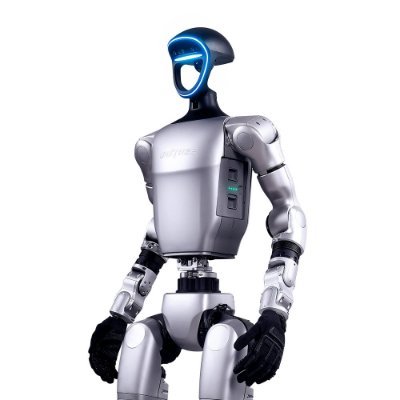
Unitree Spring Festival Gala Robots —a Full Release of Additional Details 🥳
Dozens of G1 robots achieved the world’s first fully autonomous humanoid robot cluster Kung Fu performance (with quick movement), pushing motion limits and setting multiple world firsts! H2 made striking appearances at both the Beijing main venue and the Yiwu sub-venue, clad in the Monkey King’s heavy armor and riding a “somersault cloud” played by B2W quadruped robot dogs, delivering New Year blessings from the clouds.
Danijar Hafner retweeted

Introduce HumanX, a full-stack framework that compiles human video into generalizable, real-world interaction skills 🏀⚽️🥊📦 for humanoids, without task-specific rewards.
Paper: arxiv.org/abs/2602.02473
Page: wyhuai.github.io/human-x/
#humanoid #ai #hkust #robotics #sports
Danijar Hafner retweeted

mjlab v1.0.0 is officially out and considered stable.
Huge thanks to everyone who contributed code, reported issues, and gave feedback. This release wouldn’t have happened without you.
github.com/mujocolab/mjlab


Danijar Hafner retweeted

Key points from my recent conversation with @danijar
- Architecture doesn’t matter to achieve AGI. What is missing: algorithmic advances and objective function improvements. More compute still matters.
- AI shouldn’t be limited by human reasoning. It will be able to go beyond it and develop much more advanced reasoning.
- We are way past LLMs. When you chat with Gemini, Claude, or ChatGPT, you are not talking to an LLM but with a complex multimodal system.
- Robotics will see significant improvements and much better generalization in the next 3–4 years, even without continual learning.
- Once we have serious advances in continual learning, it will converge with existing advancements.
Watch the full conversation on the @buZZrobot YouTube channel (link below).
Timestamps:
00:00 Intro
01:03 Best AGI strategies
07:37 Continual learning
11:23 Dreamer
13:04 Nested learning
19:02 Objective functions
22:38 Embodiment in training
24:55 Scaling world models
29:27 Transferring knowledge to robotics
31:56 Pre-training vs. reinforcement learning
36:57 Future direction for AI
Danijar Hafner retweeted

Which pre-LLM methods matter most in the LLM era? We hosted an off the record event with @danijar (world models for robotics), @ashvinair (RL @cursor_ai) and @nikishin_evg (reasoning @OpenAI) to share their takes @spc. – at San Francisco, CA

Danijar Hafner retweeted

JUST IN: Google unveiled its smart glasses project with XREAL, called Project Aura.
• 70° FOV for a giant virtual screen anywhere
• run full Android apps in floating windows
• Circle to Search on anything you look at
• lightweight frame powered by a small compute puck
• hand tracking for pinch, zoom and window control
Launching in 2026.


Danijar Hafner retweeted

Our presentation was interrupted and everyone was forced out, yet we somehow received an award in the chaos.
But no one got distracted and the talk continued in the corridor, with almost all my audience staying. 💛
This means more to me and I hope I made your stay worth it.


The toughest moment in a PhD:
>spend a year building smth you’re proud of
>travel across world with advisors’ support to share it
>when your moment finally comes
>your mic gets cut because the previous schedule ran late
Heartbroken, but thanks to whom stayed for me @NeurIPSConf
Danijar Hafner retweeted

🔥 We are pleased to announce the talk title for our #LAW2025 #NeurIPS workshop
Join us on 📅Sunday, Dec 7th in📍Upper Level Ballroom 20D
Full schedule here: sites.google.com/view/law-20…
We look forward to seeing you all this Sunday! #NeurIPS2025 #AI #ML #WorldModel #Agents #LLMs

Danijar Hafner retweeted

LAW 2025: Bridging Language, Agent, and World Models
Looks interesting, seems @fchollet @danijar and others are speakers at this workshop at #NeurIPS2025
sites.google.com/view/law-20…

Danijar Hafner retweeted

Sim-to-real learning for humanoid robots is a full-stack problem. Today, Amazon FAR is releasing a full-stack solution: Holosoma.
To accelerate research, we are open-sourcing a complete codebase covering multiple simulation backends, training, retargeting, and real-world inference.
Danijar Hafner retweeted

Zero teleoperation. Zero real-world data. ➔
Autonomous humanoid loco-manipulation in reality.
Introducing VIRAL: Visual Sim-to-Real at Scale.
We achieved 54 autonomous cycles (walk, stand, place, pick, turn) using a simple recipe:
1. RL
2. Simulation
3. GPUs
Website: viral-humanoid.github.io/
Arxiv: arxiv.org/abs/2511.15200
Deep dive with me: 🧵