
CTO at @zocomputer, previously @uber, @triple_byte, @venmo
San Francisco, CA
Joined May 2009
- Tweets414
- Following316
- Followers463
- Likes342
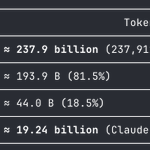


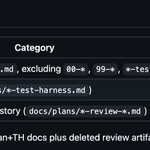
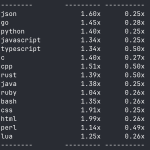
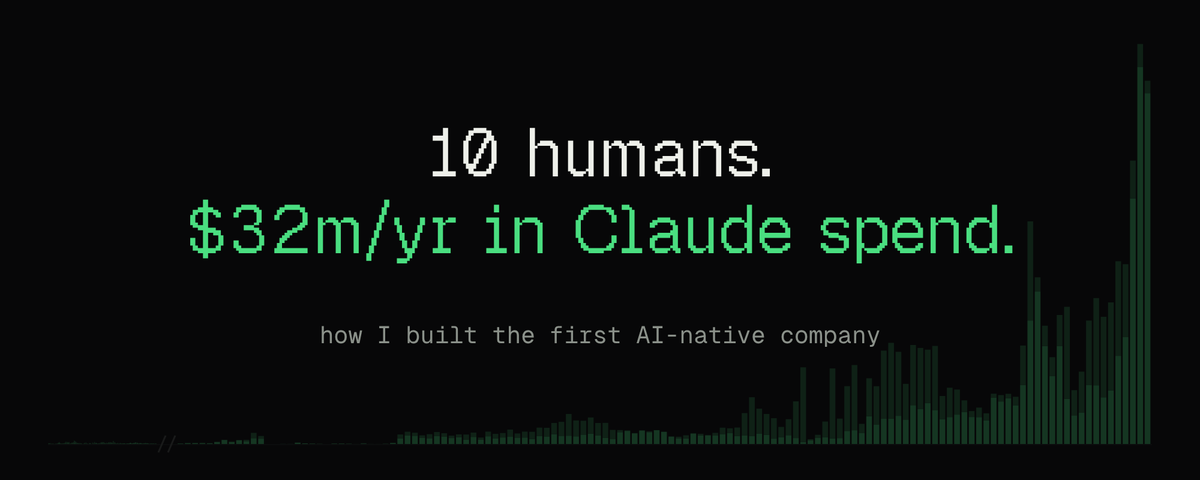
One of the best posts I've read about AI usage in a while.
We're moving quickly in this direction at Zo, our PR count is up 260% in the past 2 months.
And we're retooling @zocomputer itself to be the best way to build and run these kinds of whole business closed loop factories for any project or team. More to share soon!

3
14
667
I can't get over this part either, why do they think they're the only ones tokenmaxxing? You are literally watching the whole world do this, you're footing the bill!
"Before we explore what we built, we should acknowledge how unusual our workload is"
"While we don’t expect many organizations to have these problems in the very near term"

New on our Engineering blog: Creating in-house source control.
In May, we merged around 2,500 code changes per day. In September, we merged more than 30,000 per day. As a result, we became bottlenecked by developer infrastructure built for human (rather than agent) scale.
Here, we share how we built a new version control system—and fully migrated our monorepo from git—in five months: anthropic.com/engineering/re…

2
5
514


This is really neat, I just don't get why they're downplaying it as a bespoke pattern only for massive monorepos or why they're not open-sourcing it.
It seems like a better architecture than git for anyone coding with cloud agents (which should be everyone).
Agents can potentially write code without any persistent sandbox at all. Testing can be done in CI and QA environments so it also doesn't require a local agent sandbox either.
When an agent does need to build and run some code to reproduce a bug or profile a slow path or something it can spin up a small short-lived sandbox and check out specific parts without needing to clone the whole repo.
We're already building for this future at @zocomputer, there are just more image snapshots and stuff that you need to make it work well with git even on moderate sized repos. So moving off of git seems like an obvious future optimization that will make these workflows faster and more seamless.
New on our Engineering blog: Creating in-house source control.
In May, we merged around 2,500 code changes per day. In September, we merged more than 30,000 per day. As a result, we became bottlenecked by developer infrastructure built for human (rather than agent) scale.
Here, we share how we built a new version control system—and fully migrated our monorepo from git—in five months: anthropic.com/engineering/re…
2
8
701
I have a hard time reconciling my belief that ORMs are worthwhile to use with how terrible they all are every time I peek under the hood.
Every one of them is an ugly rats nest of too much meta-programming, random workarounds for bugs in old versions of drivers that nobody can be bothered to remove, and lowest common denominator targets that prevent you from using latency-improving features your database stack supports.
Now that agents are here I think I'm ready to throw in the towel altogether. No more ORMs. Just have your agents do more performant object mappings and write more performant sql directly.
1
7
240
Danny Cosson retweeted

we at @zocomputer have been saying this and building toward this since the beginning (even if it seems like zo is a personal agent). it has always been about the private cloud, which agents of all kinds will be consumers of in well-permissioned ways.
a big release coming soon 👁️

My toddler came over to watch my computer screen and I got to show her how coding works. You watch the little yellow spinners on the PR and if the button turns green you press it, but if it turns red you tell your agents "make it green" then wait a bit and then press it.
16
488
I don't get why everyone is so against ai comments. I mostly just don't care enough to set a rule one way or the other.
The argument against obvious comments was that they'll get out of date and lead you astray, but now that's automated by AI so they won't.
I feel like they're occasionally a marginal benefit, when glancing through code it can be a little bit quicker to be able to jump back and forth between comments and code vs reading code with no comments. Especially if you're not super familiar with the language (which will very soon be all of us, in every language)

People talk about the diminishing returns of writing unit tests in the agentic era, but what’s even less useful? Comments.
As a rule, drop all comments. If something is important enough to need a comment, make an exception for it and audit the comment so it actually makes sense.
1
3
426
Opus 5.5 is really a breath of fresh air. It had become tedious the past couple of months to juggle all the model routing.
GPT 5.6 Sol was the best for doing the bulk of coding but it has this tick that it is often not proactive enough so you come back and something you though you queued up was not done. It was decent but not great at non-slop talking.
Opus 5 was just useless, I was still using 4.8. It is proactive, but was starting to noticeably lag at coding ability, and was terrible at non-slop talking.
Fable and then Astra were clearly the best but lit money on fire so you had to always keep cost/size of task in mind with them.
Now I feel like Opus 5.5 can pretty much do everything good enough. And GPT 6 Sol probably can too, I haven't kicked the tires on it as much yet. So those two seem to be all you need and they're both somewhat interchangeable again.
2
15
436
I was experimenting with lean and TLA+ back in March before it was cool :)
An interesting thing about it is I have no idea if it ever helped or not, and I don't think @bcherny has any idea if the 24 bugs he caught were real either. But he does now have 3,900 more lines of tests to run in perpetuity!
It's still probably a net positive, especially for an app with as wide of distribution as Claude Code. But a provably broken flow does not mean it's an error that will ever be hit in real-world scenarios. And aside from growing test suites, there are often other costs like latency introduced in the happy path in order to solve these edge cases.
Basically, it's an interesting area to explore with agents but it's not necessarily a given that you always want 100% capital-C Correct code.

We've got theorem provers running, simulations, golden master tests, load tests, benchmark suites.
All these things that we were way too lazy to worry about before and only added to the playbook when we absolutely had to after a big incident or something, are now almost free.
3
273
Whoa end of an era.
Imagine how many millions of symlinks around the world can now be cleared.

We're adding support for AGENTS.md to Claude Code.
Starting today in version 2.1.277, if there is no CLAUDE.md in a folder, Claude will check for and use AGENTS.md.
You can toggle this behavior in /config.
6
260
The best part about Jev is it won't "Need to give you one honest caveat". Just A or B man, life is good again
1
91
Ok it's getting too hard to stay a hater, I'm going all in on Jev. Fuck the bitter lesson, let's make some classifier-driven workflows
1
118
We're back to building 2018 level AI demos just to find something to do with Jev lol
Guys, did you forget we already have god??? We don't need to keep tweaking autocomplete

Function calling without waiting for Enter. Answers only when needed.
@typesafeai Jev understands intent and arguments as you type, then executes ahead of time once everything is in place.
2
4
341
It's kind of amazing that Github spent 5 years or whatever building the stacks feature, then shipped something that is unusable for agentic workflows.
2
2
237
Or more accurately it's unusable for any busy repo in general, even if it's a lot of humans instead of agents writing the code.
1
1
40
New idea - have the strong model request reviews from a weaker model but don't tell them it's a weaker model. Not too weak but like an Astra plan gets a review from Sol.
Very limited data so far but maybe this keeps things from going off the rails belt-and-suspenders wise.
3
2
391