

Assistant Professor. NIH/NIGMS R35 Awardee https://xitter.cf/t.co/gdFSOdKUZ9
Dallas, TX
Joined October 2012
- Tweets380
- Following272
- Followers179
- Likes831



Pinned Tweet
Now out at Nature Communications from our lab and in collaboration with @MorcosLab!
Huge congrats to co-first authors Medel and Cheyenne and the undergraduates who experimentally validated the predictive model of protease specificity!
nature.com/articles/s41467-0…
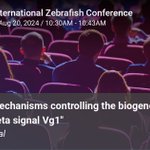
I am beyond excited to present our work on Vg1 and SynPro system at the 18th International Zebrafish Conference in beautiful Kyoto! #izfc2024

Dave Dingal at Dallas retweeted

#SynBYSS 10AM USA CT
128th on Jun 13 with Prof Michael Elowitz
@ElowitzLab & Brendan Camellato @nyuniversity
129th on Jun 20 with Prof Chris Myers at CU Boulder @CUBoulder & Dr Jingchuan Luo at Whitehead Inst. @WhiteheadInst
Zoom for general audience👇
us02web.zoom.us/j/8838050483…

Dave Dingal at Dallas retweeted

Figeno, my visualization tool for genomics🎨🧬, is now published in Bioinformatics! doi.org/10.1093/bioinformati…
It can generate publication-quality figures for sequencing data along genomic coordinates: bigwig, HiC, @nanopore data with base modifications, and WGS with CNAs and SVs.

Dave Dingal at Dallas retweeted

Our latest: a new optogenetic system for precise spatiotemporal control of gene expression
We use it to dissect the dynamics of Shh gradient formation & patterning
A thread 🧵
biorxiv.org/content/10.1101/…

Dave Dingal at Dallas retweeted

After nearly 7 years, my PhD work is out in @Nature! Big big thank you to everyone involve within the @realRihellab and the 🐟 floor @uclcdb
nature.com/articles/s41586-0…


Our preprint 'Sleep pressure modulates single-neuron synapse dynamics in zebrafish' just dropped on @biorxivpreprint - A concerted effort from @realRihellab @ZWithTheFishes @_LizBroom 🐟💤 🧵👇🏻
Dave Dingal at Dallas retweeted

We’re very excited to share the first preprint from my lab along with @h4rrymcnamara, @BillZJia, @AdamEzraCohen, and Alex Schier. We describe a set of methods for exerting spatial control over Nodal signaling in zebrafish development.
biorxiv.org/content/10.1101/…

Dave Dingal at Dallas retweeted

Short summary thread of our recent review on de novo protein design:
(Poster-sized figure (36 x 48 inches) for printing: drive.google.com/file/d/1sG3…)


Dave Dingal at Dallas retweeted

Do you need a billion parameters and millions of sequences for #proteindesign? Maybe not! See our paper: shorturl.at/novMO
We show that interpretable, non-autoregressive structure-based protein design can work!
Original thread: shorturl.at/cdgCP
Dave Dingal at Dallas retweeted

Today we report in @NatureComms the development of laboratory-evolved CBE6 cytosine base editors that offer high on-target C•G-to-T•A editing, virtually no A•T-to-G•C editing, low off-target editing, broad sequence context compatibility, and compatibility with multiple Cas domains.
/1

Dave Dingal at Dallas retweeted

1/1 "SpRYgest, takes the die out of digest" - @RachelSilvers11
We recently repurposed our PAMless Cas9 enzyme SpRY for in vitro DNA digests (so-called “SpRYgests”), as a substitute to overcome the limitations of restriction enzymes . A 🧵:
biorxiv.org/content/10.1101/…

Dave Dingal at Dallas retweeted

Our first paper is out in @CellCellPress! Led by @born2raisecell, we present a programmable reaction-diffusion system that generates synthetic protein waves, oscillations, and patterns for spatiotemporal circuit design and FM data-encoding in human cells. authors.elsevier.com/a/1iN8Z…
Dave Dingal at Dallas retweeted

Exciting news! Our latest research on "Cell type directed design of synthetic enhancers" has been published in @Nature. We've harnessed deep learning to design enhancers with cell-type specificity. Find our paper here: nature.com/articles/s41586-0…. Highlights below: [1/n]

Dave Dingal at Dallas retweeted

And Spatial VDJ is out! More to follow, but for now, joy and gratitude for the privilege to work with the wonderful @thrane_kim @Qirongliiin @Jeff_Mold @FrisenJonas @joalunatkthse and many more collaborators. @karolinskainst @scilifelab @KTHuniversity science.org/doi/10.1126/scie…

Dave Dingal at Dallas retweeted

When you're diving into a new field, it can be difficult to know where to start. But if the new field is synthetic biology, @NikoMcCarty's got you covered! Learn more in our latest blog post:
hubs.la/Q022c1pz0
Dave Dingal at Dallas retweeted

Congratulations to this constantly amazing group of students, postdocs, staff & collaborators including the indomitable @yoon_Seok_Kim, with @emekato, @sokosoko_seeya & our whole structure team! A new mechanism for K+ selectivity->new tools for biology.
shorturl.at/pqDM1
As physiologists know, K+ selectivity in membrane ion channels is not easy to achieve. Once a solution emerged in the ancient oceans (fourfold symmetry to coordinate K+ ion chains and replace the hydration shell), all life on earth, from microbes to metazoa (it seemed), adhered to the same basic motif of fourfold symmetry– suggesting that very few solutions, and perhaps even just the one (with variations on its theme) were evolutionarily accessible. The competing high concentration of sodium ions in physiological systems (and natural environments like oceans)—with radius close to that of potassium ions—poses a challenge.
As we reported last year (biorxiv.org/content/10.1101/…), solving the initial KCR structures allowed us to show that channelrhodopsins (the family of microbial light-activated ion channels that we’ve studied for nearly 20 years! and developed for optogenetics) do things completely differently. This finding also allowed us to design, create, and validate new channelrhodopsins for inhibitory optogenetics in mammals (biorxiv.org/content/10.1101/…) – including C110T (for long-lasting inhibitory K+ photocurrents) and H225F (the KALI variants, for enhanced K+ selectivity and more potent optogenetic inhibition)… Nature continues to surprise us!

1. Excited to share our work-the formal version of last year's first preprint of K+ selective ChR (KCR) structures shorturl.at/achP8 'Structural Basis for Ion Selectivity in Potassium-Selective Channelrhodopsins' published in @CellCellPress!
shorturl.at/dfvT6 (1/9)

Dave Dingal at Dallas retweeted

Know anyone curious about 21st century bioengineering? Prof. Jenn Brophy (@jennbrophy7) & I are sharing ~40 videos comprising most of Stanford's introductory bioengineering course:
introbioe.stanford.edu/ We'll push updates; feedback welcome #bioe4all #2xplaybackftw

We are ecstatic to have support from @NIGMS through R35 ESI-MIRA award! Our major goal is to understand and control the formation of signaling protein complexes.


Dave Dingal at Dallas retweeted
OK, I'm now ~3 years into being a #newPI, and I finally feel like I basically know what the job is and how to do it. One important part was finding an organizational method. Here's what works for me! 🧵 1/