






Amidst so many complex and enigmatic technical aspects, the fact that this particular point was singled out for discussion is itself something worth savoring.

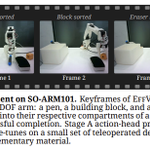
One interesting @OpenAI detail: researchers let models continuously optimize the computer-use harness itself, then feed the successful improvements back into training.
OpenAI says this has already cut latency by more than 2×.
AI helping improve the systems used to train AI is getting very concrete.
Very happy to share that our work on efficient VLA model design has been accepted to CoRL 2026 🎉
A technically rigorous project, but also one with a "taste" in how the problem was studied. Many thanks to our collaborators with @Li_Auto_ .
I have always liked the T5-style approach to research: systematically explore the design space, and then tell people what actually matters. Previously, we studied hundreds of architectures for efficient LLM design. This time, we rebuilt VLA models more than 60 times to understand when to scale, where to scale, when scaling saturates, and how to balance accuracy with latency.
I still remember one of our first decisions in a small meeting room in Li Auto: "we must run real-robot experiments" — no chance for a reviewer to say, "try it on a real robot." 😄
Robotics has moved incredibly fast from 2025 to 2026. See you in Texas this November 🤠
And I still do not think VLA is the final answer. More efficient perception, reasoning, execution, and adaptation will ultimately require deeper hardware-model co-design. We are also working on something more complete around this direction, still very much From 0 to 1.
Yes, More to come.
📄 What Makes an Efficient VLA? Navigating Action-Head Design, Scaling, and Latency
Link: arxiv.org/pdf/2609.13984
#CoRL2026 #EmbodiedAI #Robotics #VLA #EfficientAI #HardwareCoDesign


🚀 Edge AI Agent Workshop
I am delighted to host the Edge AI Agent Workshop, which will be held next Thursday, 15:30 - 17:30 GMT, April 2nd, at Bayes Theorem, The Bayes Centre, The University of Edinburgh.
🔗 Event details and overview: cdeng.net/note/posts/edge-ai…
🔗 Registration: eventbrite.co.uk/e/edge-ai-a…
🕹️ We are especially honored to welcome Dr. Yali Du from King’s College London, who will share her latest research on multi-agent collaboration and reinforcement learning.
🕹️ We are also very excited to have Dr. Luo Mai, who will present our group’s recent work on fast long-context inference, ContextPilot (accepted by MLSys 2026 recently).
Both speakers are leading researchers in their fields, and the workshop will focus on Edge AI Agent systems, bringing together ideas from efficient large language models, systems, and real-world deployment.
I will also present a talk on efficient large models for edge devices, sharing our recent progress on hardware co-design scaling law.
If you are interested in AI agents, efficient LLMs, or edge AI, we would be delighted to have you join us for discussions and exchange.
#EdgeAI #Workshop #AIAgent #Edinburgh #UoE
🧠 Can MLLMs really “imagine” — or do they only “see”?
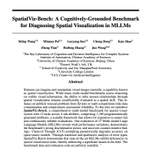
We’re excited to share that SpatialViz-Bench has been accepted to ICLR 2026.
This benchmark tests something most multimodal evaluations ignore:
mental rotation, folding, internal structure inference, and motion simulation —
in short, spatial visualization.
The findings are striking:
🕹️Even top models remain far below human performance.
🕹️Scaling from 7B → 72B barely changes spatial error patterns.
🕹️The core bottleneck isn’t logic. It’s perception and spatial transformation.
📄 SpatialViz-Bench: A Cognitively-Grounded Benchmark for Diagnosing Spatial Visualization in MLLMs
🔗 Paper: lnkd.in/eGbbDixR
🔗 Code: lnkd.in/e2D4vfy3
From my perspective, if we care about Vision-Language-Action (VLA), spatial imagination is not optional. Robots, AR systems, surgical assistants, and autonomous agents must internally simulate 3D transformations — not just describe pixels.
Encouragingly, SpatialViz-Bench has attracted attention from teams at SenseTime, ByteDance, and LLaVA-OneVision. We’re excited about potential collaborations in advancing spatial intelligence for multimodal systems.
#VLA #EmbodiedAI #SpatialReasoning #WorldModel


I’ve long been thinking about the relationship between LLM architecture and hardware.
🚩Hardware is like a box — different sizes of boxes can accommodate different sizes of objects. The same holds for large language models: different hardware platforms impose different architectural constraints and opportunities.
Today, I’m excited to introduce the Hardware Co-Design Scaling Law, a principled framework for designing large language models under strict edge-device constraints.
We formalize a scaling law that links:
- Architecture -> Loss -> Latency (via roofline)
This directly identifies the accuracy-latency Pareto frontier on edge hardware. From heuristic search -> principled hardware-aware optimisation.
Thanks Li Auto, in 2026, we will have a set of amazing works!
Paper links: arxiv.org/abs/2602.10377
#EdgeAI #LLM #SystemsML #Roofline #NAS


Few days ago, I went to Edgware to pick wild chives. The signal in the northwest London forest is predictably poor, and I was struggling to distinguish between wild chives, three-cornered leeks, and daffodils. Various AI tools were failing one after another. At that moment, I suddenly wondered if I could try the fully pre-trained model for edge devices recently launched by our PLM team. Perhaps it could tell me the difference between wild chives, three-cornered leeks, and daffodils. And indeed, PLM did not disappoint me!
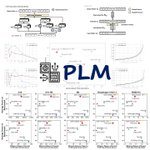
Speaking of which, I really need to introduce PLM properly. PLM is a Peripheral Language Model, a pre-trained model for edge devices designed with ML System Co-design. By introducing carefully set MLA and a bold, from-scratch trained ReLU^2 activation function, our model can trade-off between the three walls of computing power, I/O, and memory on edge devices. In the end, it can balance model performance and inference speed, and even outperform other models with the same number of layers on Snapdragon chips.
The story I told is only one specific scenario of the peripheral LLM, we will continue to work hard on a series of projects around PLM in the future!
Paper: arxiv.org/abs/2503.12167
Project: project-plm.com
Github: github.com/plm-team/PLM
Hugging Face: huggingface.co/PLM-Team
#LLM #EdgeAI #PLM #IoT #Peripheral


My oral presentation of “Geoscience Knowledge Understanding and Utilization via Data-centric Large Language Model” and 2️⃣ Posters will be in #EGU24 🇦🇹
Before being an MLSyser, let’s do something for AI4S!
#geoai #geoscience #llm #geollm


Cheng Deng retweeted

Gemini 1.5 Pro's 1,000,000+ token context length is incredible.
I got early access and spent my Saturday night running tests.
Here are 6 impressive capabilities I found:


Cheng Deng retweeted

Gemini 1.5 Pro - A highly capable multimodal model with a 10M token context length
Today we are releasing the first demonstrations of the capabilities of the Gemini 1.5 series, with the Gemini 1.5 Pro model. One of the key differentiators of this model is its incredibly long context capabilities, supporting millions of tokens of multimodal input. The multimodal capabilities of the model means you can interact in sophisticated ways with entire books, very long document collections, codebases of hundreds of thousands of lines across hundreds of files, full movies, entire podcast series, and more.
Gemini 1.5 was built by an amazing team of people from @GoogleDeepMind, @GoogleResearch, and elsewhere at @Google. @OriolVinyals (my co-technical lead for the project) and I are incredibly proud of the whole team, and we’re so excited to be sharing this work and what long context and in-context learning can mean for you today!
There’s lots of material about this, some of which are linked to below.
Main blog post:
blog.google/technology/ai/go…
Technical report:
“Gemini 1.5: Unlocking multimodal understanding across millions of tokens of context”
goo.gle/GeminiV1-5
Videos of interactions with the model that highlight its long context abilities:
Understanding the three.js codebase: youtube.com/watch?v=SSnsmqIj…
Analyzing a 45 minute Buster Keaton movie: youtube.com/watch?v=wa0MT8Ow…
Apollo 11 transcript interaction: youtube.com/watch?v=LHKL_210…
Starting today, we’re offering a limited preview of 1.5 Pro to developers and enterprise customers via AI Studio and Vertex AI. Read more about this on these blogs:
Google for Developers blog:
developers.googleblog.com/20…
Google Cloud blog:
cloud.google.com/blog/produc…
We’ll also introduce 1.5 Pro with a standard 128,000 token context window when the model is ready for a wider release. Coming soon, we plan to introduce pricing tiers that start at the standard 128,000 context window and scale up to 1 million tokens, as we improve the model.
Early testers can try the 1 million token context window at no cost during the testing period. We’re excited to see what developer’s creativity unlocks with a very long context window.
Let me walk you through the capabilities of the model and what I’m excited about!

Cheng Deng retweeted

Data Engineering for Scaling Language Models to 128K Context
- 500M to 5B tokens are enough to enable the model to retrieve information anywhere within the 128K context
- Domain balance and length upsampling are needed
repo: github.com/FranxYao/Long-Con…
abs: arxiv.org/abs/2402.10171


Cheng Deng retweeted

Bayes' Theorem is a fundamental concept in data science. But it took me 2 years to understand its importance. In 2 minutes, I'll share my best findings over the last 2 years exploring Bayesian Statistics. Let's go.
1. Background: "An Essay towards solving a Problem in the Doctrine of Chances," was published in 1763, two years after Bayes' death. In this essay, Bayes addressed the problem of inverse probability, which is the basis of what is now known as Bayesian probability.
2. Bayes' Theorem: Bayes' Theorem provides a mathematical formula to update the probability for a hypothesis as more evidence or information becomes available. It essentially describes how to revise existing predictions or theories in light of new evidence, a process known as Bayesian inference.
3. Bayesian Statistics: Bayesian Statistics is an approach to statistics that interprets probability as a measure of belief or certainty rather than just a frequency. This belief may be based on prior knowledge of the conditions that might be related to the event or experiment in question. This allows for making probabilistic statements about unknown parameters. For instance, instead of estimating a single value for a parameter, Bayesian statistics provides a distribution of possible values, reflecting the uncertainty.
4. Bayesian vs Frequentist: Bayesian inference is fundamentally about updating beliefs or probabilities as new data is observed, which can be very intuitive and aligns with how we often think about the world. Frequentist statistics interpret probability as the long-run frequency of events. The problem I have with frequentist approaches is that pre-determined distributions are used (e.g. Normal Gaussian), which does not always make sense.
5. Bayesian Machine Learning: Any time true confidence and probabilistic decision making is needed, Bayesian is the answer. Here are a couple of examples. Uncertainty Modeling: Unlike traditional machine learning methods that often provide point estimates, Bayesian methods focus on estimating distributions. Time-Series Analysis: Bayesian methods are particularly useful in time-series analysis, where uncertainty in the future is crucial.
6. Business Context: Businesses can use Bayes' Theorem to assess and quantify various risks, such as market risks, credit risks, or operational risks. By continuously updating the probability of risks as new information emerges, businesses can make more informed decisions.
===
There’s a lot more to learning Data Science for Business. I’d like to help.
I put together a free on-demand workshop that covers the 10 skills that helped me make the transition to Data Scientist: learn.business-science.io/fr…
And if you'd like to speed it up, I have a live workshop where I'll share how to use ChatGPT for Data Science: learn.business-science.io/re…
If you like this post, please reshare ♻️ it so others can get value.

Cheng Deng retweeted

Amazon has publicly released RefChecker, a combination tool and dataset that detects hallucinations in #LLMs. To characterize factual claims, RefChecker uses knowledge triplets rather than natural language, enabling finer-grained judgments. #GenerativeAI amazon.science/blog/new-tool…
